
Ever since the back-to-back buoyancy of his initial guest feature (“MmmHmm” from Flying Lotus, 2010) and his 2011 debut full-length album (The Golden Age of Apocalypse), bassist, composer, one-time Suicidal Tendencies member and colorfully sartorial Los Angelino Thundercat has made a compelling brand of progressive funk-jazz based, in part, on his past and the work of his family — dad Ronald Bruner Sr. jammed with Gary Bartz, brother Ronald Jr. played with Wayne Shorter and Roy Hargrove, brother Stephen toured with Stanley Clarke.
Combine Thundercat’s work with saxophonist and lifelong friend Kamasi Washington as part of the West Coast Get Down collective, as well as with Alice Coltrane’s grand-nephew Flying Lotus, not to mention sessions with his pal, the late LA expressionist piano genius Austin Peralta, and the T-Cat’s jazz bona fides are a go.
With that, Thundercat’s new album, Distracted, has the future-forward jam-jam feel of his solo work, but with a melodic pop sheen courtesy co-producer Greg Kurstin, to say nothing of its shabby chic indie-hop vibe with collaborators such as Remi Wolf, Beck, Flying Lotus, Tame Impala, A$AP Rocky, Willow Smith and a posthumous feature from Mac Miller.
Fortunately we got Thundercat to hash all this out with us. Our conversation has been edited for length and clarity.
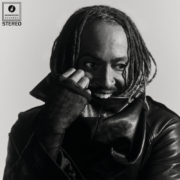 There’s little linearity to what you do, save for the fact that you come mostly from a jazz place. What does that mean to you, as jazz — by its very definition — is malleable and fluid?
It’s very much connected to the improvisational aspect, the improvisational muscle. As things need a title to be institutionalized — put in boxes so to function in the places it must — there are many different angles to jazz which just get blurred. That’s the only way that things move forward and get the chance to grow.
I think that’s what the frontier of jazz was. Whether it was a language you learned or had a deep knowledge to use as a base to create, the music is a representative of the instrument you use to speak through. Jazz is foundational for me and my music.
You’re having many different conversations within Distracted. There’s the composer and co-producer you, the melody-making artist who’ll release the videos, the bassist. How does the improviser speak to those separate roles?
It’s definitely like having multiple personalities for sure. In a way, with technology — goodness gracious — with things becoming more fractured and everyone having more control over the data right at their fingertips, the root of everything in being a musician, there’s a big chunk of the engine that exists through those multiple channels. It’s how those multiple roles inform each other relative to where it’s needed.
Can you give me an example of that on the new album?
Working on “Candlelight” with JD & Domi [keyboardist Domi Louna and drummer JD Beck, the viral young jazz duo], we’re creating pieces of music together that aren’t a far cry from what we do when we’re not working as one. The hats and titles are more about the business angle or the selling of it.
Look at Quincy Jones. He’s known to most as one of the greatest producers of all time, where to others, he’s this guy who played the trumpet and composed music. To me, the latter sticks out as it shows how he was doing this the whole time, long before he was producing records. It’s a weird hat. The more that you understand as a musician, the more you know, the more you can choose from — being aware.
See, you bringing up Quincy Jones is particularly poignant because so much of who he was came down to the relationships that he had and made early, especially guys such as Ray Charles who play a part of Jones’s continuum from start to finish; how all that history played out whenever they got together, even later in their careers.
Right. Exactly. It’s like Voltron, this whole transformative thing. It only translates in those moments, by way of demonstration when you see things like that. The spectrum that all of that exists on; it’s important to do the homework. You have to want those things, to reach into the unknown. The fun part of it all is that it all ultimately stems from… I have to pick up my instrument, my bass, in order to make that all move. I can also not do that. I can be in a session where it’s not me leading from the bass. As it pertains to my music, however, it’s me creating from my bass.
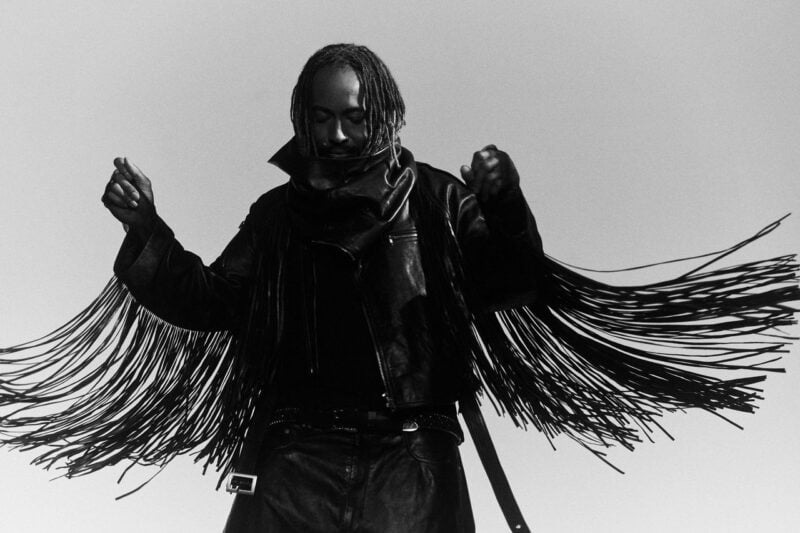
The further that you go along, does it become ever-so-slightly less about the bass? I ask because, to be honest, not every bassist has the profile that you do. Not just talent and spirit, but the whole thing — the writing, the being out there, the name recognition.
I think I am learning, now, that it has reached a bit further. In a joking manner, at different points — it could be a girlfriend or a buddy — someone would say, “You’re Thundercat.” And I wasn’t sure what that was supposed to mean. I’m still adjusting to that part of the narrative. It took adjusting to know that that is attached to my name.
Distracted. What were its first moments when it came to concepts, writing, recording?
I think, in a way, I didn’t realize the shape that it would take until the last 12 months or so. I feel like the ways that I create changed. From Flying Lotus being my producer to working with [Greg] Kurstin. Just getting more comfortable with my writing again. A lot of intense life changes happened that disoriented me for some time. I didn’t see that the album had shape or started taking shape until the last year.
I know several, I think, but can you tell me what specific things affected this album?
One of my best friends died. That was hard to process, as Mac [Miller] was one of my closest friends. That was complicated, and the world mourned him too.
I was lucky enough to have had a work relationship with him from album one until his last, so I can say that his loss was estimable and his struggles immense. Can you tell me about your song together on Distracted? [both pause, becoming emotional]. That just got me.
It hits a nerve. I get it. It’s a very emotional moment in life to have to fight through. I’m grateful to be able to see his effect on everything, knowing we all felt that way about Mac. That helped me get through it.
I remember the moment of the track with him, the changes in his life at that time. I remember where we were, and the time of day that we did it — and that’s not something that I do. I rarely have that, and it was a beautiful moment. With “She Knows Too Much,” it felt as if it was done as soon as we began it. We just captured it. It was a perfect circle of who he was, who I was, and it was the first thing that came out of us after us having not seen each other for a minute.
Mac too had gone through his own changes at the time, and this is a moment of him settling into the next phase. This was fresh, like it was our first-ever thing. It was emotional stuff, us bouncing stuff off each other. Even when it leaked after we first did it, it was like “What is this?” as if it wasn’t even us.
What motivated the change from Flying Lotus to Greg Kurstin, and how did you realize that you wanted a more open relationship with producers — because Lotus is on the new album?
I feel as if, in this moment, once Greg and I got a hold of each other, it took this shape. What was being created, what took shape, Greg can genuinely see the lines. Especially as he was creating those lines with me. It was just very natural and easy. And you’re right, I do work with Lotus as well.
Are they harder lines, more structured, less broken, as I see Kurstin as a more architectural producer?
This is JazzTimes, yes. OK, let’s talk. He’s a monster. His squiggly lines are straight. He’s like a young jazz legend, a young Zappa. That first tune, “Candlelight,” watching him, it was like watching Darth Vader man the Death Star. Greg is from another planet. He paints very intentionally. Jackson Pollock-like. You say straight, yes, but, with him, it could go anywhere. In-between writing songs, we’d listen to standards all day — Milton Nascimento. We’d watch some Zappa videos. Then go back to work. Straight for us was all over the place.
You work with Willow on this album, and she’s another multi-everything talent. She’s a monster jazz musician. What led each of you to each other’s door for this?
I love Willow, man. Our relationship started years ago with Lotus and “Until the Quiet Comes.” Maybe even her mom’s band, Wicked Wisdom before that, seeing her with my brothers. Every now and again, she’d approach me out of nowhere, pose a bunch of questions, I’d scratch my head and that was that… I don’t have a lot of people to share music with, and she’s one. It’s a bit unexpected when it happens, but it always happens right on time. This is the first thing that we put down as co-writers, but there will be more. You’re hearing this in real time, as it happened.
You’re talking about these happenings, these gatherings of friends. In the last year, I’ve spoken with Los Angeles jazz-based crews such as the Jazz Is Dead people, Carlos Niño, the Jeff Parker-Josh Johnson circle, the Sam First crew. Everyone was generous. Everyone was certain to include you and your scene. As a Los Angeles native who came up as part of its intricate tapestry, what say you about the town and its players?
Now it’s a bunch of “For Lease” signs. We got to get the band back together. We’re on a mission from God. Shoot, man. Los Angeles for me is very nurturing and very loving. And that reaches across many spans and many eras and many crowds.
The life that you grow with in LA? I personally feel fortunate for the life that I’ve led and the personnel within and around it. When you’re in it, growing up, you’re not… me, Kamasi, my brothers, Cameron, Miguel Edward Ferguson: the younger us grew up doing what we loved. When we run into each other or work together… you look up, and you become something.
Did you realize your good fortune as it happened?
No, not until I could take a step back. Then I realized our connectivity. Especially when I look at kids now. They have computers. We had each other and still do. Kamasi was the first one of us to have a car and used to pick me up to play our gigs. Miguel and I met working together with Leon Ware in our teens. Mr. Andrews was my music teacher [Ed.: Reggie Andrews worked with Patrice Rushen, Terrace Martin and Kamasi Washington]. My brother toured with George Duke and Stanley Clarke and was a big part of why the Duke-Clarke Project came together again.
Those records were a big deal to me. Those moments were special. I look at Kamasi now and the way that the world views him, and all I can think is “Good Lord, it’s such a blessing.” I mean, his dad and my dad hung out. We used to rehearse in his dad’s garage. You know what I mean?
So does all of this then tie into this comment that I saw of yours, calling yourself a working-class musician, someone who at heart has made it a 24-7 job and lifestyle since you were a kid?
Absolutely. When you close your eyes, and you think of a musician — idealize that image — the place that I come from, playing in church, playing in bars, playing in jazz bands, auditioning, getting paid under the table with a few drink tickets.
The life of a musician is relative to the success in where and how you can see him. And success is based on the ability to thrive and survive as a musician. That’s never guaranteed. I’ve spent my life as a working musician. Maybe I was getting drink tickets or getting what I get today … maybe I heard from my girlfriend’s dad, “Oh, you make money playing bass?” This is our life’s work. Yours and mine. Be it five dollars or five thousand dollars. For better or worse. Any day that you get the chance to play is a good day. JT