
As shoppers seek out more sustainable and ethical fashion options, made-to-order ethical men’s clothing is re-entering the chat.
The lines separating genders and gender norms are disappearing. We’re seeing it with beauty— the last few years have been huge for men’s personal care and beauty categories. And the ethos holds true when it comes to fashion, too. While women are still the dominant category driving ethical fashion forward, recent data found that men are making up an increasingly larger part of the market share. Ethically made clothing for men has never been in higher demand.
A report published by Fashion Revolution found that 75 percent of shoppers, regardless of gender, want to see brands do more to improve the lives of the women who make their clothes. That number was up from 72 percent in the year prior. Sixty-nine percent of shoppers said they want to know how their clothes are made, up from 59 percent in 2019. Seventy percent said governments need to play a more prominent role in sustainable practices in the clothing industry.
Buying clothes that don’t harm animals was important to 24 percent of men, compared with 34 percent of women. And the majority of all respondents, 72 percent, said it’s important that all fashion brands have ethical certifications. For sustainability criteria, that number jumped to 80 percent.
Timothée Chalamet, Jaden Smith, and Pharrell Williams have been leading the trend in sustainable mens fashion for years. Joaquin Phoenix remains the defining case study in men’s red carpet sustainability: he wore the same custom Stella McCartney tuxedo to every major awards show throughout the 2020 season — the Golden Globes, BAFTAs, SAGs, and the Oscars — explicitly to reduce waste. McCartney publicly backed him, writing on social media that “he has chosen to wear this same Tux for the entire award season to reduce waste.”
The craft of custom
The difference between a good suit and the right suit comes down to precision. Off-the-rack menswear is engineered to fit a statistical average, which means it fits almost no one particularly well. Custom clothing works from the opposite direction. The gap between bespoke and made-to-measure is worth understanding. Made-to-measure takes a standard block pattern and adjusts it to individual measurements — a meaningful improvement over standard sizing, typically with faster delivery.
True bespoke begins with no pattern at all; a tailor drafts one from scratch, calibrated to the client’s proportions, posture, and movement. Paolo Martorano, who opened his New York atelier at just 25 and has since become one of the most closely watched young tailors in the country, works entirely in this tradition: hand-sewn jackets, padded lapels, basted fittings, and a custom paper pattern for every garment. Angel Ramos takes a middle approach with a made-to-measure program built on 30 body measurements, producing a custom pattern for each client rather than modifying a standard block.
When every piece in a wardrobe fits correctly and pairs with every other piece, the morning routine shortens, the backup suits disappear, and what remains is a toolkit rather than a closet full of aspirational pieces that never quite come together. Custom menswear and men’s personal styling make this possible, providing a competitive edge through curated advice, wardrobe audits, and strategic outfit direction. For the man who wants a polished look without the time investment, professional styling is a critical shortcut.
The fast fashion pile-up
The shift is happening not a moment too soon. According to the United Nations, our obsession with fast fashion is putting immense burdens on secondhand markets, predominantly in the Global South. The U.S. exports more clothes than any other country — more than 1.58 billion pounds per year. African nations are feeling the brunt of our throwaway culture, clogging landfills and flooding local resale markets.
“The textiles travel from retail secondhand stores to private third parties and containers and are eventually sold to overseas entities, which upcycle — or revamp — the clothes before reselling them,” reported U.S. News & World Report.
In Ghana, these clothes are dubbed “dead white man’s clothes.” While this was once a reliable source of income — traders buy the clothes by the bale and repair and revamp them—the quality has degraded so much as a result of fast fashion that the items are useless. This sends them to already-taxed landfills that can’t handle the excess.
Made-to-order ethical men’s clothing
New York-based menswear brand Onsloe, which launched in May 2020, takes a custom approach to menswear with made-to-order staples. And the brand means made-to-order. Nothing goes into production until an order has been placed. Turn around can happen in as few as ten days. “The whole idea of Onsloe is averting the traditional model that always existed in fashion, which is to buy a lot of inventory and then sell from your inventory,” Bjorn Bengtsson, a fashion veteran and advisor to Onsloe told the Robb Report.
The made-to-order model isn’t new — it’s how things were done for centuries. Retail changed our approach to fashion, losing fit for speed and price.
Onsloe says that not only does custom clothing reduce the impact on the production side, but because you’re getting a better fit tailored to your body, it’s more likely you’ll keep the product and wear it longer.
The label’s current sizing options allow clients to specify inseam lengths and select regular or slim-fitting shirts. It’s also working to launch an app next month that will allow the customer to scan their measurements. Bengtsson says the app’s measurements will be 95 percent accurate, “which means that we don’t even have to ask you for your size. We will make it automatically.”
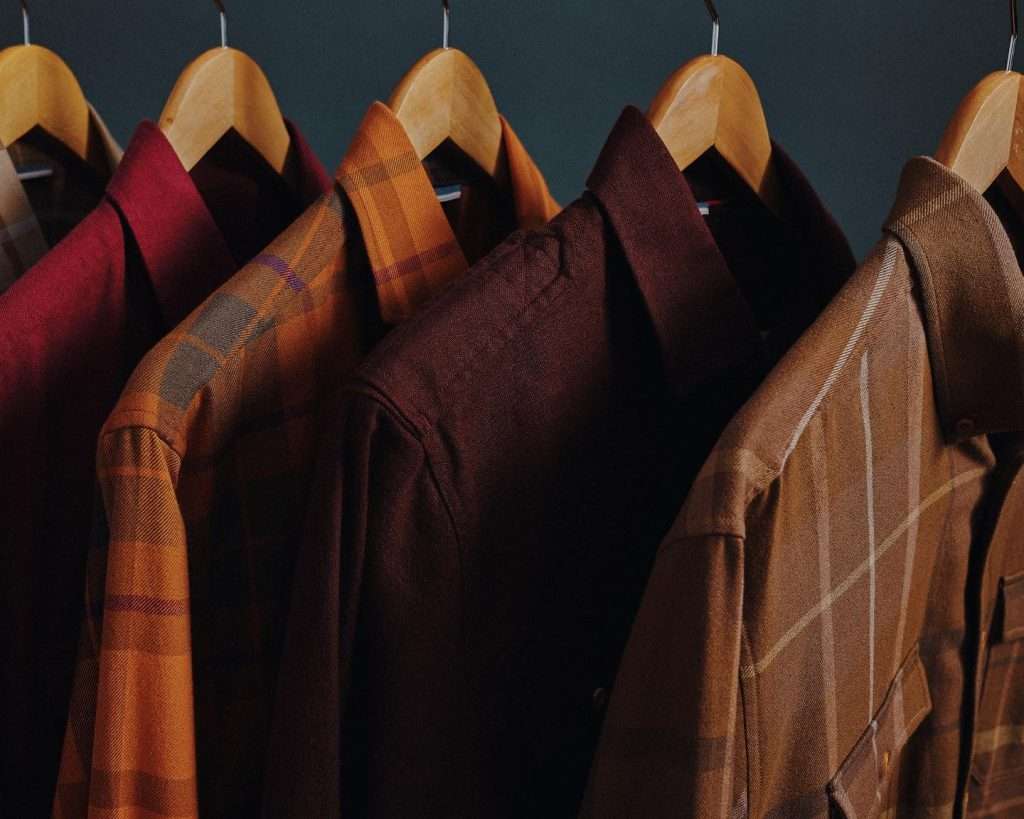
Materials are sourced from higher-end producers and deadstock, Onsloe says, which allows for better transparency and vetting source and quality. It turned waste material into a line of sleepwear in 2022. “Instead of taking a markdown and getting rid of them, we still use it to make affordable pajamas,” Bengtsson says. “We’re not going to make a lot of money on it, but we’re still going to use it for something.”
Onsloe is also working to keep its customers in their purchases by offering a three-year warranty on its ethical men’s clothing; the brand will make minor wear-and-tear repairs for three years on any item at no charge beyond the shipping.
The label is also embracing take-back programs when items have reached their end-of-life, the company will use the materials to make something new.
“Instead of throwing this away, I make a new jacket, or I make a new shirt, or a laptop cover,” Bengtsson says. “Whatever it is, it deserves to live another life.”
Related on Ethos: