
Building a Science Communication Practice: From Strategy to Collaboration
April 01, 2026
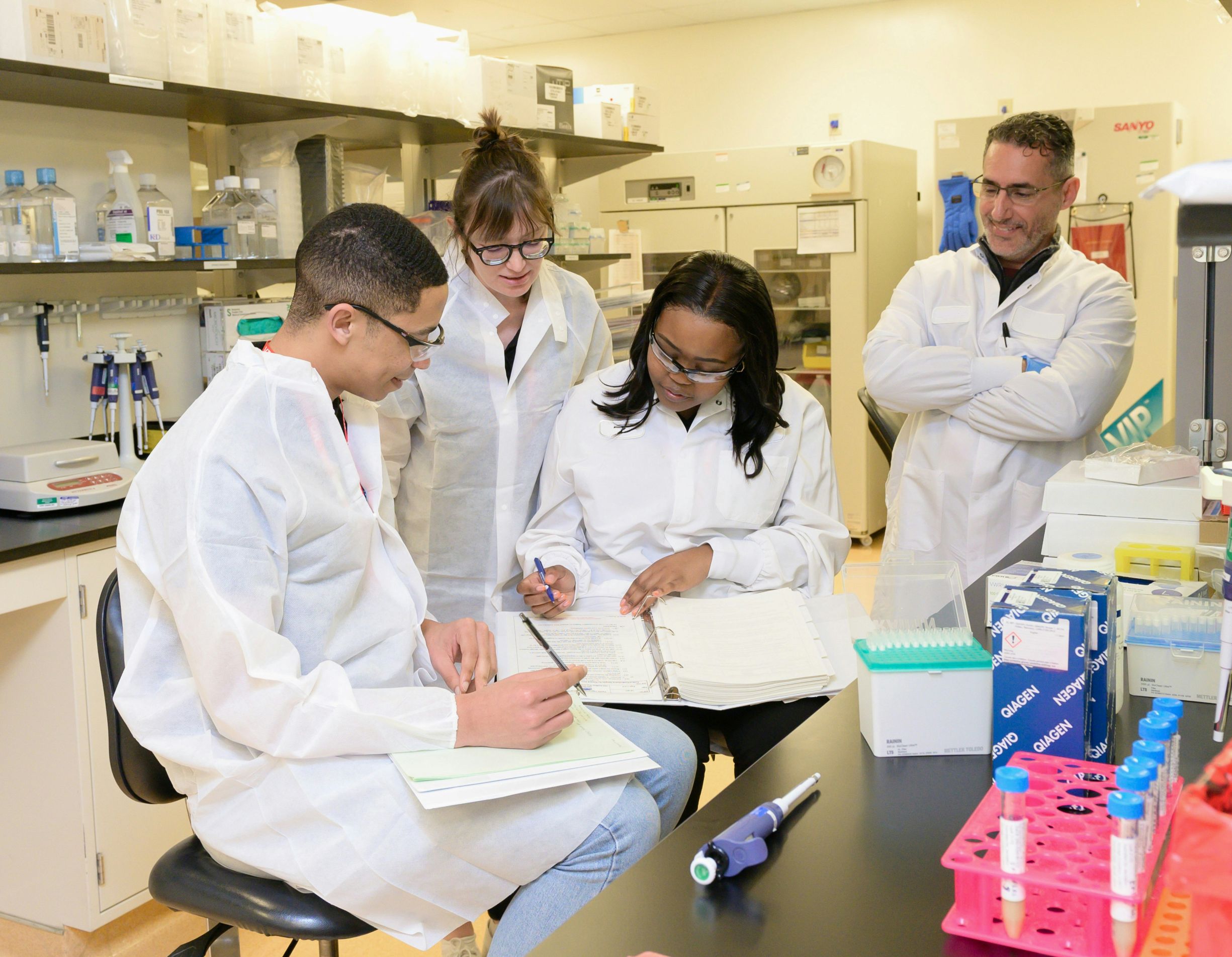
Science communication is expected but rarely taught as a sustained practice. This ‘SciComm Spotlight’ highlights an open-access book and UMB webinar offering practical ways to build that practice.
Read about current trends in science communication and science communication-related activities around the University of Maryland, Baltimore (UMB) in SciComm Spotlight, the monthly column of the University of Maryland School of Graduate Studies’ Science Communication (SciComm) certificate program. To see previous SciComm Spotlight columns, visit the School of Graduate Studies’ Elm page.
Science communication is not a one-off activity (a social media post, a talk, a press kit), but an ongoing, reflective practice. It is a practice that scientists at every career stage can intentionally build. But when in our training do we receive guidance on that?
As researchers, we are expected to communicate our work effectively, yet few of us receive sustained training in how to do so. Writing-focused instruction often appears sporadically (an undergraduate course here, a grant-writing workshop there), usually tied to traditional academic genres. What is often missing, especially in many PhD programs in STEMM (science, technology, engineering, mathematics, and medicine) and beyond is a curricular pathway that treats communication as a practice developed over time, across audiences and contexts. This gap affects not only graduate students and postdocs, but also faculty, staff, and research leaders who are increasingly asked to communicate across disciplines, institutions, and communities.
While many colleagues of mine in Science Communication (SciComm) programs across the United States and overseas are actively working on building sustainable programs that focus on teaching science communication practices and skills, what do we do in the meantime?
Selfishly, I will of course encourage you to check out our 12-credit online SciComm certificate program in the University of Maryland School of Graduate Studies, but I am a realist. Not everyone has the time and/or funds to invest in a nine-month program.
So, what then can we do?
Luckily, a recent publication by some of the leading voices in SciComm in the United States fills some of this gap. The 2026 book “Science Communication for Scientists: Linking Strategy with Creativity, Practice, and Respect” by Routledge is a shared, open-access resource you can engage with right now. The open-access version of this book has been made possible by support from the Rita Allen Foundation and the Kavli Foundation. It’s a book that you can use for your own work if you are a researcher at any stage, or you can use it as a teaching tool. The authors had the foresight to develop instructional resources for the book that you can download from the publisher’s website.
What I love most about this book is that it reframes science communication as intentional and audience-centered. Many of its chapters focus either on specific genres or types of communications, like social media, or they center on specific audiences, like policymakers. As you are reading through chapters (either in order or piecemeal), the book invites you to reflect on why we communicate, not just how.
The book also demonstrates that science communication has matured into a research-informed field of practice, not just a loose collection of “tips and tricks.” Plus, a physical copy of the book makes a great graduation gift for those early-career researchers in your labs and research teams!
While reading about science communication is an important first step, building a sustainable SciComm practice requires engagement, dialogue, and feedback. One opportunity to see how this work happens in practice (across roles, formats, and collaboration) is the upcoming webinar “Leveling up your SciComm with Collaboration” from 12-1 p.m. ET on Tuesday, April 13, on Zoom. The SciComm certificate program hosts Paige Jarreau, PhD, director of research communications at Louisiana State University, whose career bridges science, media, and institutional communication.
I am looking forward to learning more about how collaboration expands what’s possible in science storytelling.
Whether you start by reading, attending, teaching with these materials, or simply reflecting on your own communication goals, each step contributes to building a more intentional science communication culture at UMB.
Photo by National Institute of Allergy and Infectious Diseases on Unsplash