
Graduate students from William & Mary and other institutions around the United States recently had a chance to showcase their work as part of the university’s annual Graduate Research Symposium, Feb. 26-27.
Organized by a committee of student volunteers and hosted by William & Mary’s Graduate Center, this event brought together over 100 graduate students from across the university’s schools alongside 30 students from external universities to present cutting-edge research and catalyze interdisciplinary discussion.
The events of 2026 clustered around the theme “Building Bridges.”
“This theme highlights the interdisciplinary spirit of the event,” said Carly Barnhardt, a W&M Ph.D. candidate in American studies and chair of the symposium’s student-led organizing committee. “We designed the symposium to spark conversations between historians and biologists, economists and literary scholars, chemists and anthropologists. When we engage in dynamic discussion with those outside our individual disciplines, that’s what creates unexpected insights and new possibilities for research and growth.”
This gathering of scholars speaks to William & Mary’s position as one of the nation’s premier research institutions. In February of last year, the university received the R1 research classification from the Carnegie Classification system. This is the highest level of classification for universities that grant doctorates, growing W&M’s publication and grant opportunities.
“At William & Mary, students are invited to ask bold questions and break new ground. This is true throughout all levels of the institution, from our freshman to our doctoral candidates,” said Sarah Glosson, director of William & Mary’s Graduate Center. “Events like the Graduate Research Symposium give them a place to articulate their research to the broader community, make new connections and engage in dynamic discussion.”
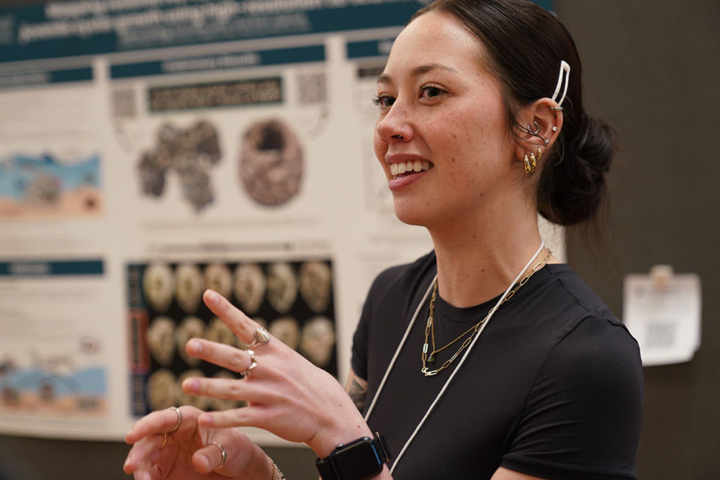
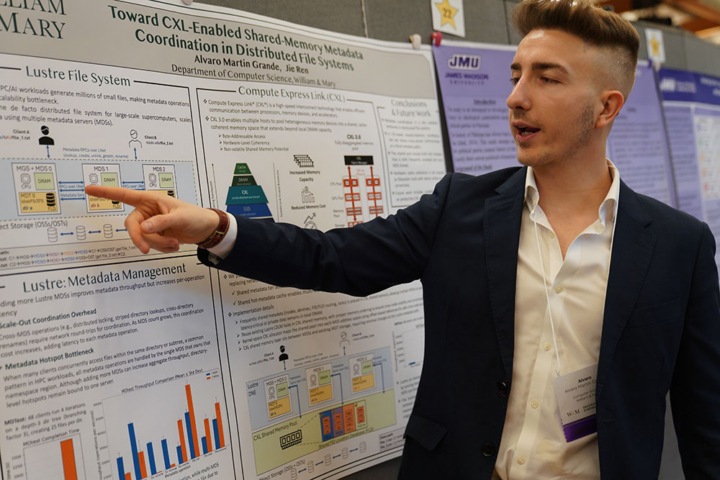
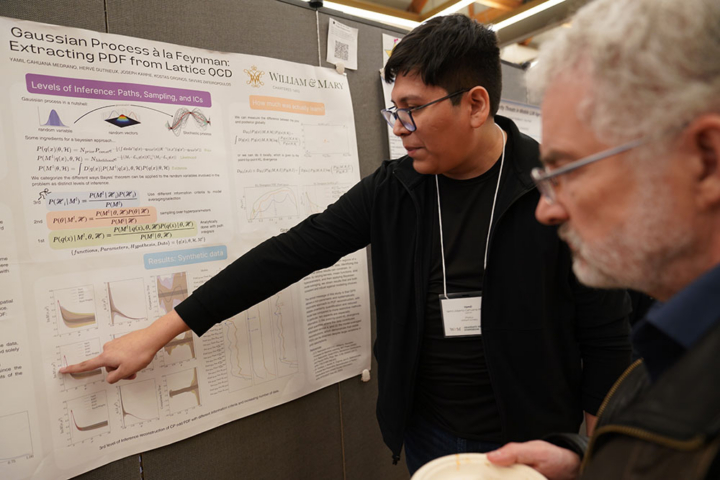
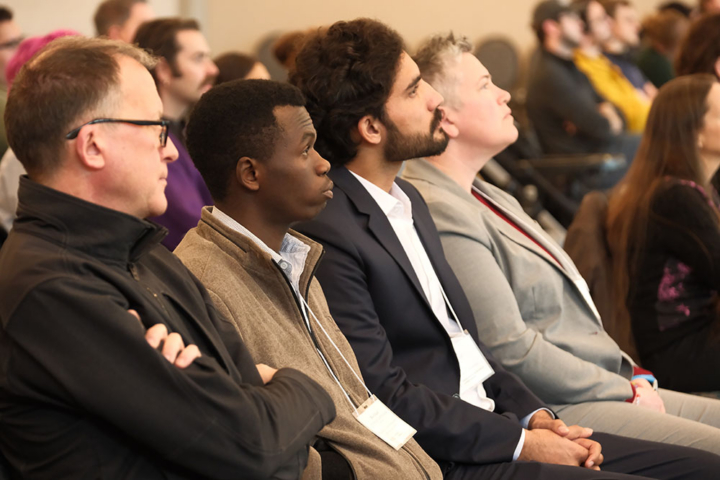
Thursday and Friday featured thematically grouped presentations. Students represented William & Mary’s School of Education, the College of Arts & Sciences, the School of Computing, Data Sciences & Physics and the Batten School of Coastal & Marine Sciences & VIMS. Topics ranged from the mind-bending properties of quantum physics to the nuanced role of language in society to the challenges facing coastal ecology.
Examples of presentations by William & Mary students are outlined below. To learn more, check out the detailed schedule.
Supporting conservation of the African elephant
Swostika Thapa, first-year Ph.D. student in applied science with a concentration in data science
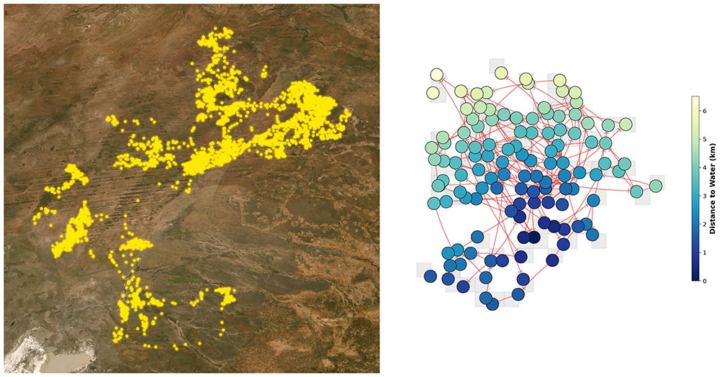
African elephants play a critical role in sustaining savanna ecosystems. However, since the 1960s, their population has plummeted by 70%. This is partly explained by habitat loss, which decreased by 67% between 1997 and 2007. SwostikaThapa’s research is dedicated to informing conservation efforts for this keystone species. Using GPS data for six female elephants and a novel graph-based machine learning approach, she’s been tracking how they move and use the landscapes they inhabit. Her research is helping explain the seemingly random movements of these elephants by linking GPS data with factors such as vegetation, temperature, water and season.
The applied science doctoral program with a concentration in data science is one of seven graduate degrees offered by the School of Computing, Data Sciences & Physics. The Wall Street Journal ranked W&M the 16th top public college for tech salaries. Thapa’s Ph.D. advisor is Jennifer Swenson, associate professor of data science and director of W&M’s Center for Geospatial Analysis.
The impact of derelict crab traps in the Chesapeake Bay
Danielle Recco, second-year master’s student in marine science
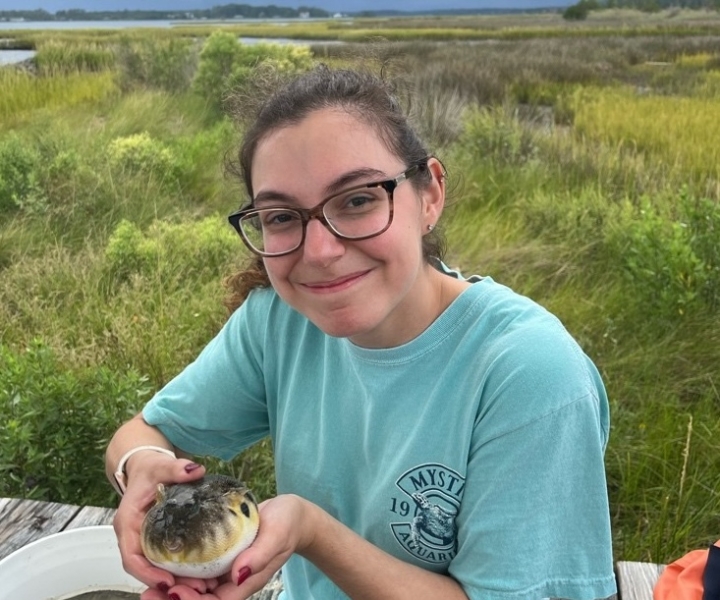
When lost or abandoned, derelict crab traps pose a serious threat to marine life. No longer monitored, they continue to lure in, capture and kill crabs and other species, including diamondback terrapins. In addition to posing a needless danger to marine life in the Chesapeake Bay, these traps provide unwanted competition for fishers. Utilizing an ecosystem modeling approach, Danielle Recco hopes to paint a clearer picture of how these derelict traps are impacting the bay’s food web and the economics of major fisheries. Her research aims to inform management solutions in the Chesapeake Bay.
William & Mary’s Batten School of Coastal & Marine Sciences & VIMS are among the nation’s premiere marine science research and education centers. They combine VIMS’ legal mandate to deliver solutions-oriented research and advisory services to the Commonwealth of Virginia with immersive undergraduate and graduate degree programs at the Batten School. Learn more about VIMS’ role in the Trap Removal, Assessment & Prevention program.
Photographs as a medium of Indigenous diplomacy
Grace Helmick, second-year master’s student in anthropology
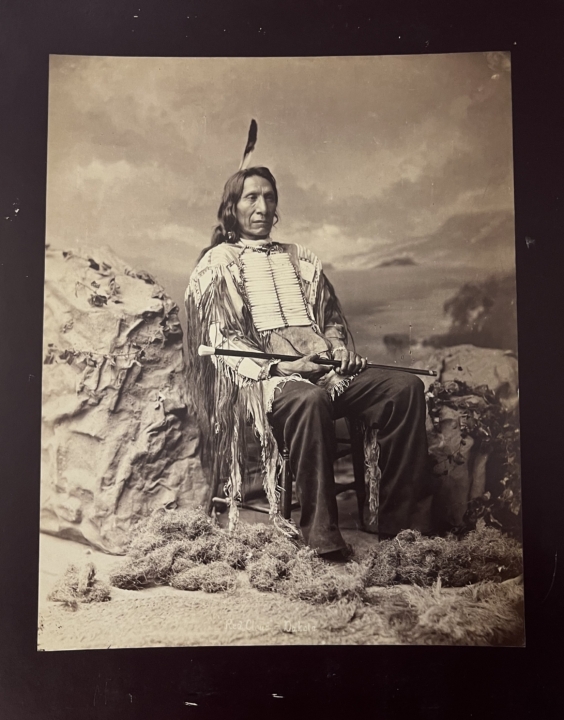
Coming across a portrait of Oglala Lakota leader Red Cloud in Swem Library’s archives, Grace Helmick was intrigued by this artistic phenomenon. Despite strategic refusals to be photographed in traditional regalia, this portrait, taken in Washington, D.C., by renowned photographer Charles Milton Bell, captured Red Cloud replete with traditional Native American garb. Helmick’s research analyzes Red Cloud’s motivations for this outstanding photograph and its multiple reinterpretations against the backdrop of 19th-century American political diplomacy.
William & Mary’s College of Arts & Sciences offers a variety of degrees across eight graduate programs. These include degrees in history, American studies, anthropology, biology, chemistry, public policy, psychological sciences and computational operations research.
Friday included an awards ceremony for the top student researchers, honoring W&M students Morgan Brittain, Jordan Ferré and Jack Gabriel, from American studies, marine science and physics, respectively. The symposium ended with a poster session and networking reception.
Catherine Tyson, Communications Specialist