
A performance at Carnegie Hall, a study away trip to Hawaii, a mock trial at the Pomona Courthouse. These learning opportunities don’t happen by accident. They are designed, cultivated and championed.
At Cal Poly Pomona, faculty are vital in helping students find their way to graduation and future career success. They share their knowledge, mentor students, and open doors to new experiences and networks.
In honor of Women’s History Month in March, we are highlighting women faculty who lead PolyX learning opportunities for students, allowing them to explore their curiosity, test their skills and make new connections. Here are a few stories of faculty who are leading hands-on learning experiences outside of the traditional classroom.
Opening Doors to the Legal Profession
For CPP students considering a career in the legal field or applying to law school, the Judicial Internship is a critical PolyX experience. Throughout the course, students observe legal proceedings at the Pomona Superior Courthouse, talk to lawyers and judges, and participate in a mock trial at the courthouse as a culminating experience.
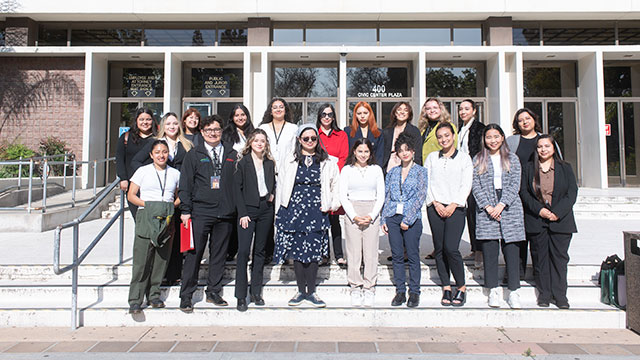 Political Science Professor Elli Menounou, who has been teaching the course since 2022, said that students can get a holistic experience in the courtroom before they commit to a law school.
“A lot of students have an idea of law and courts through movies or television series,” Menounou said. “If they go to law school and take out loans, and then in one or two years decided that it is not for them, that’s a lot of money they owe. Internships provide students with an excellent opportunity to see if this is for them before they go into debt.”
Self-reflection and knowledge exchange are built into the internship program, which was established two decades ago. Students meet every other Friday to discuss what they’ve observed. They also write a 10-page paper analyzing a phenomenon they’ve observed in court.
“The polytechnic experience is crucial because you get that hands-on experience. That goes for political science as well,” she said. “Being in the courtroom, seeing it and experiencing it firsthand provides background information and can help you further your career. The internship provides you with opportunities and connections. If you want to go to law school, you can talk to people in the court that you meet.”
Leading Science Fieldwork after Dark
Although bats appear in pop culture and science fiction, most people have never seen a live bat or know much about them.
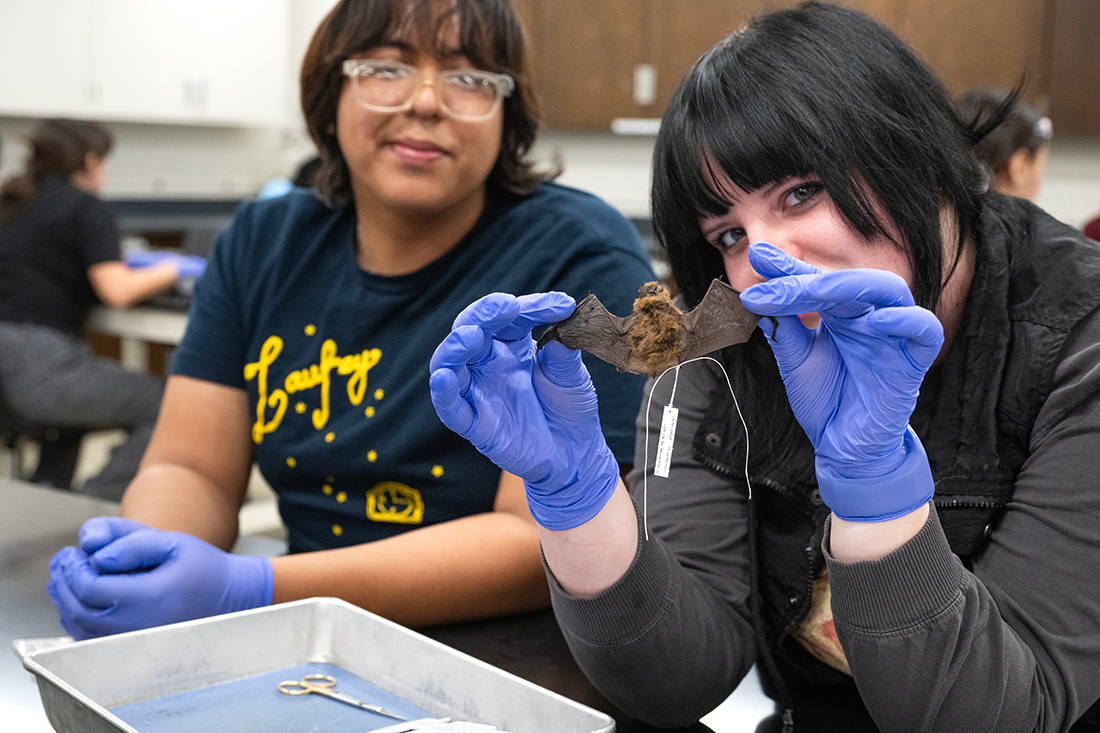 Biology Assistant Professor Rachel Blakey’s curiosity was piqued when she worked for an environmental firm in Australia and was tasked with catching the flying mammals.
“They really fascinated me. Seeing them call but not being able to hear what they were saying, I realized they had so many superpowers. It’s something that not everyone gets to see,” said Blakey, who researches how humans co-exist with wildlife.
At CPP, she and students from the Bat Advocacy and Tracking Society (BATS) held CPP Bat Night last October and hope to make it a reoccurring event. Guests saw bats from CPP’s mammal collection and live bats brought to campus by LA Bat Rescue, made bat boxes, and took bat walks with detectors and a bat echolocation station.
“Hands-on fieldwork brings our students so much joy! Nothing beats new experiences, and so many of my students have had limited access to nature,” Blakey said. “Connecting with the environment helps our students to understand the ecological principles we learn in class and makes them more curious about ecology.”
Through the club, which Blakey advises, student members learn to build bat boxes (small wooden houses for bats), train in the latest bat acoustic technologies, and have the rare opportunity to help catch and identify a bat on campus. Later this semester, students will set up bat detectors at the Lyle Center to capture video and record their calls and the calls of nearby predators.
“In a practical sense, many employers in the field of environmental biology want to know that students can handle themselves in the field, and it’s a bonus if they have experience in relevant contemporary field techniques.”
Building Partnerships for Sustainable Development
A few days before spring semester, a group of graduate students found themselves using handsaws to cut down 10-foot invasive trees in Hawaii. It was hands-on learning at its best.
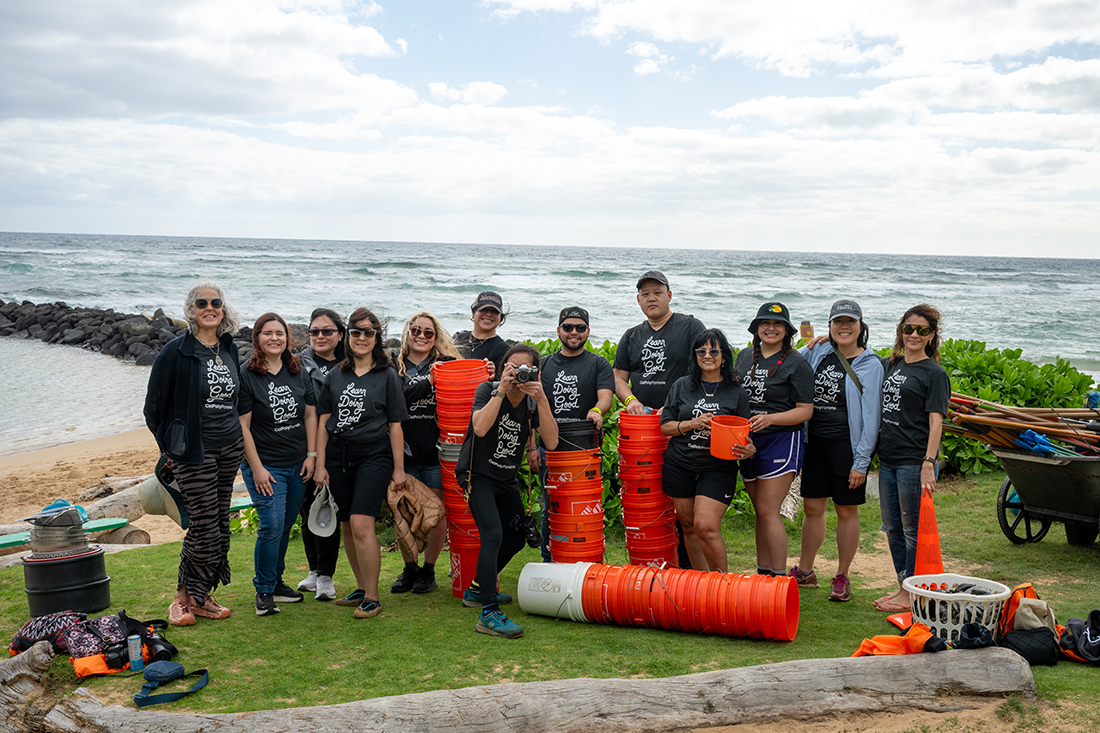 Just a few months earlier, the MBA students were enrolled in Sustainable Development in Marketing Service Learning (GBA 6400S), taught by Adjunct Professor Lydia Chen Shah. She led in-depth discussions on sustainability, community, business and values. The class also partnered with a Los Angeles farm to develop marketing plans and recommendations. However, the learning experience was largely confined to Zoom presentations and in-person discussions in Building 163.
Chen-Shah (’01, marketing management) knew her MBA students needed to get out of the classroom. She wanted them to see how their business acumen could benefit organizations committed to sustainable development.
So, she proposed a five-day study away trip to Kauai, Hawaii. Kauai is heavily reliant on tourism, so businesses must balance profitability, local residents’ needs and the island’s unique ecosystem.
“The Study Away on Kauai program is a powerful service-learning immersion. It offers students unique opportunities for leading beyond business as usual. By developing communities of practice focusing on land stewardship and cultural preservation, they contribute to sustainable solutions in a real-world setting,” Chen-Shah said.
On the study away trip, students cut down invasive silver oak trees for a voluntourism experience at Waipa Foundation; they toured cacao groves and tasted Hawaiian-origin chocolate at Lydgate Farms; and they picked up trash, microplastics and other debris along the beach with the Friends of Kamalani & Lydgate Park nonprofit. Throughout the trip, the group discussed ideas to increase awareness for eco-tourism, scaling up operations and the growth impacts on the community.
“On our trip to Kauai, I learned how complex it is to balance tourism, economic growth and environmental preservation. Seeing sustainability in action made the concepts we study feel real and community centered,” said MBA student Emia Arenas. “It’s important for MBA students to step outside the classroom because real-world exposure helps us understand the human impact behind business decisions.”
Digging Up Opportunities for Exploration
As a college student, Anthropology Assistant Professor Annie Danis spent her summers doing field work, a chance for experiential learning that resonated with her.
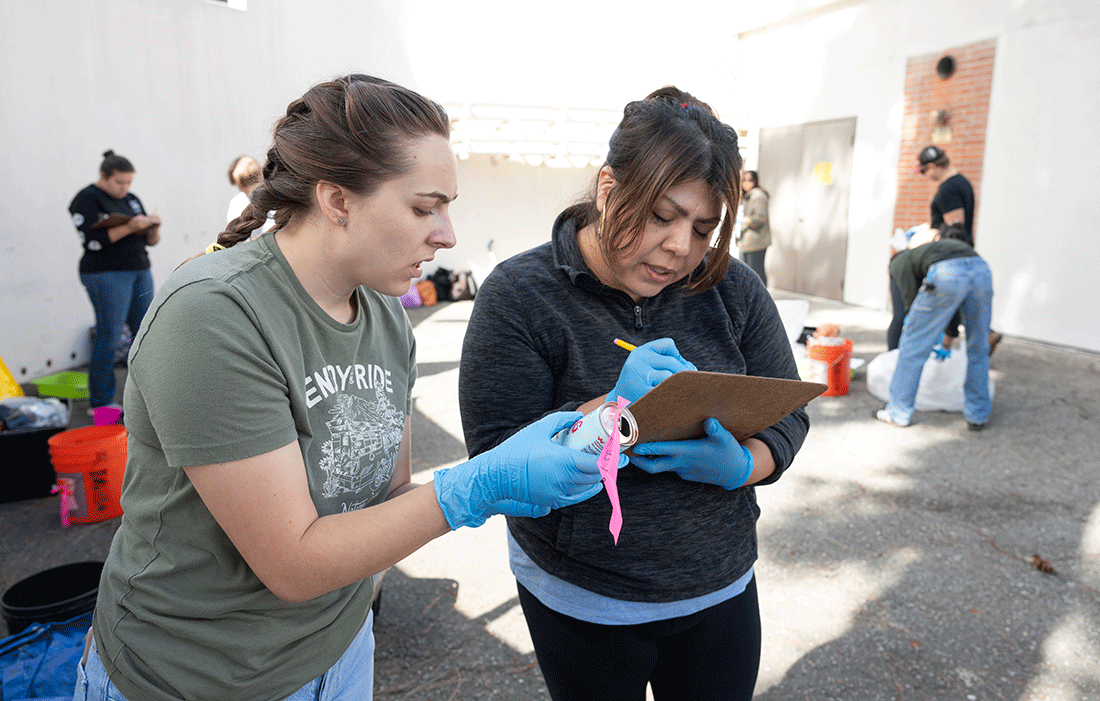 Fast forward to 2022 — she arrives at CPP buoyed by the opportunity to work at a university with hands-on learning as the core of its philosophy. It’s a philosophy she embraces, often trading the traditional classroom setting for the great outdoors, where getting their hands dirty — literally — is part of the learning experience.
On any given day, her students can be found studying in the various gardens on campus to learn more about the human connection to the environment, taking trips to museums for lessons on caring for artifacts or digging through the trash and recycling bins at CPP to determine how to collect, clean and record discarded items.
Research activities outside of the classroom and hands-on learning helps students understand how their anthropology courses apply to the real world and their future careers.
This confluence fuels a mutual curiosity between student and professor, which creates a better learning environment, Danis said.
“We go out and meet people and learn how exhibits are made. We see how people are continuing traditions that go back to time immemorial,” Danis said. “Students also learn faster because they have unique experiences that they can tie to the information they receive and the skills they learn. Hands-on helps solidify learning. And it’s fun. You learn more when you’re having fun.”
Opening Global Stages for CPP Musicians
Nadia Shpachenko-Gottesman is a Grammy-winning music professor who brings fresh, contemporary music to concert stages around the world. In January, her students followed in her footsteps, performing music by a Ukrainian Australian composer at the renowned Carnegie Hall in New York.
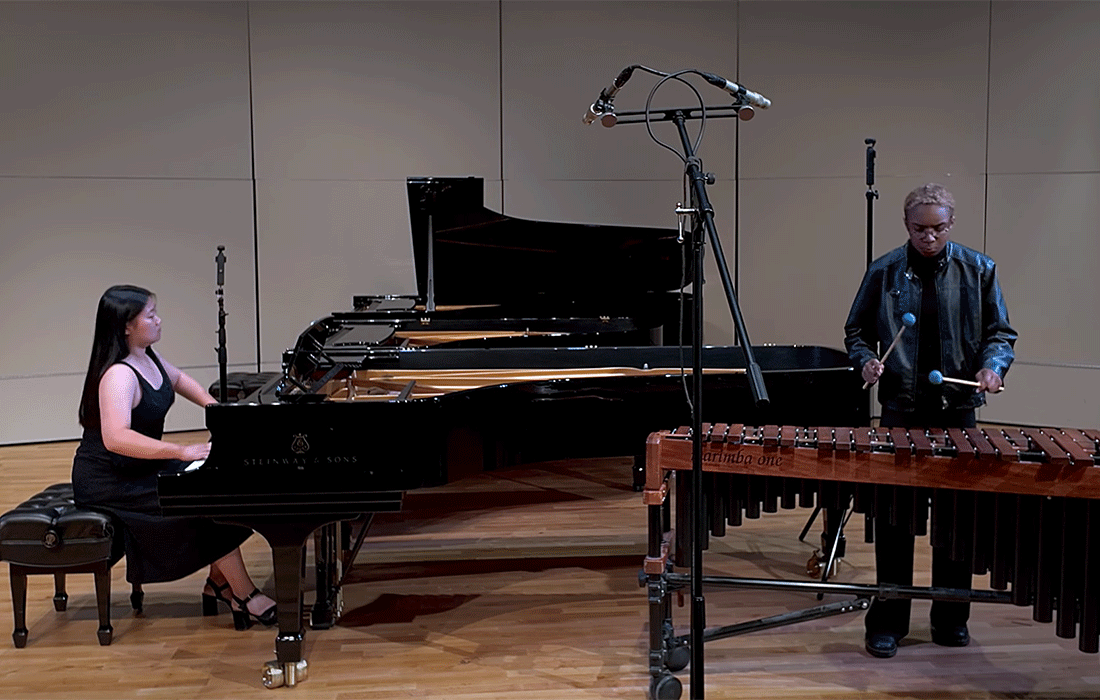 The five-person piano ensemble had won first place in the International Ukrainian Music Competition in 2025, earning the honor of performing at Carnegie Hall.
Shpachenko-Gottesman’s teaching philosophy is that there is always something more to learn. She requires a lot from her students and encourages them to achieve their absolute best. She also looks for opportunities outside of the classroom that will add to students’ professional success, including entering the ensemble into the competition.
“To me, the greatest reward is seeing them thrive, make progress, and put their heart and soul into their practicing,” she said. “Seeing them shining and doing their absolute best on stage makes me so proud and brings me so much joy. It’s the best feeling seeing my students thrive and having their dreams fulfilled.”
Katie Bernardoni, who is double majoring in music and animal science, said it was a great honor to play on such a storied stage.
“Carnegie Hall has been one of the biggest achievements for piano in my life,” she said. “I am so grateful that Dr. Shpachenko found this opportunity for me, and I’m really happy that I got to do it with my friends in piano ensemble. It was so fulfilling to feel like I finally made it.”
Exploring Local Wildlife in CPP’s Backyard
Curiosity about the wild parrots in her backyard motivated Biology Professor Janel Ortiz to create more hands-on field work experiences for students. That led to establishing a new program, Womxn in the Wild.
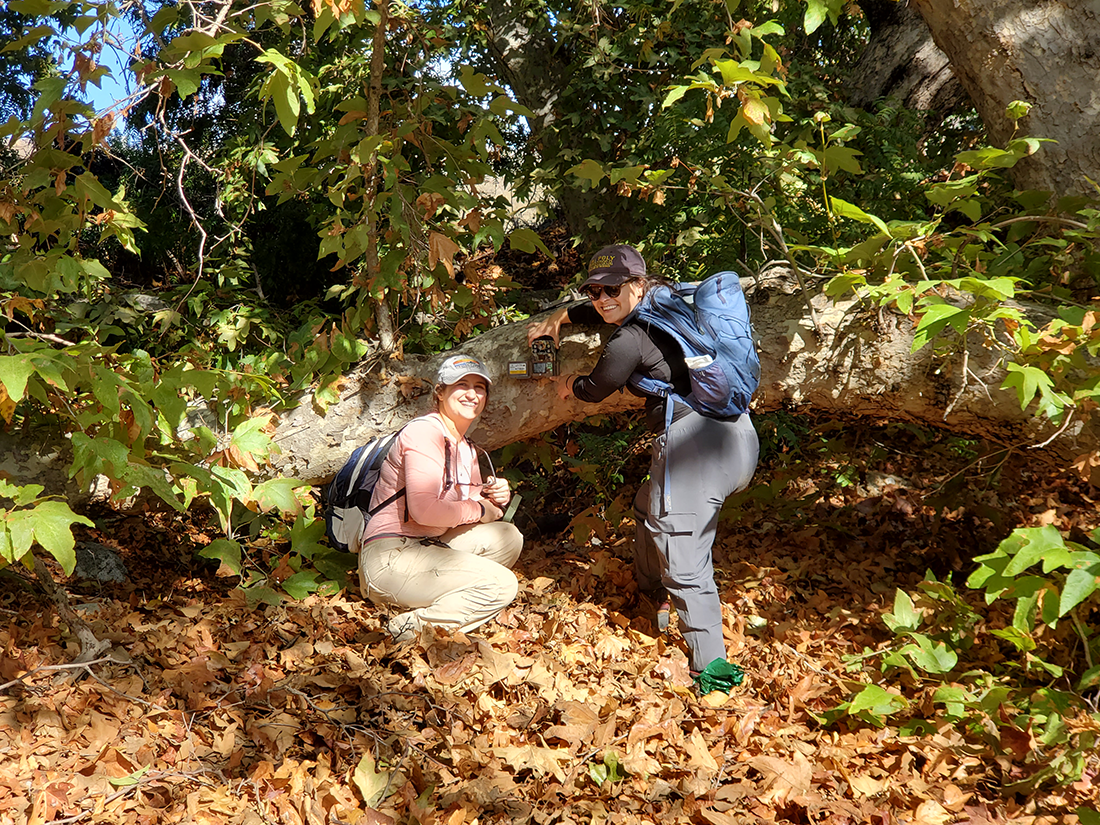 Womxn in the Wild is a fully funded five-day summer field experience for students to deepen their understanding of local wildlife, natural resources and agriculture. Participants immerse themselves in on-the-ground projects and workshops that focus on career and graduate school readiness, scientific communication and resume development. While the program supports women in science, it is open to all students.
“I really wanted to prioritize students that had little to no experience. It’s such a joy giving back to my community and to people like me,” Ortiz said.
Traditionally, the fields of natural resources and agriculture have been male dominated, though the number of women is growing. Even with this shift, gender gaps still exist in pay and experiences.
“Meeting and seeing successful women like Dr. Ortiz in a STEM field is very encouraging,” said agricultural science student Gabriela Avalos. “Hearing her story and participating in the program gave me the confidence I need to pursue my career path.”
Womxn in the Wild is one of several initiatives in her Ortiz Lab. The lab also runs a camera trap research program, CPP Wild, and contributes to the Urban Parrot Project, which Ortiz started at the University of San Diego. She also serves as the program director of Science Educational Enhancement Services, which supports about 600 students annually at Cal Poly Pomona.