
Their research, published last week in the journal Physical Review Letters, relied on microwave-based control rather than the hardware-intensive error-suppression methods used by Google. The Chinese approach “could offer a more efficient route than Google’s” to building large, fault-tolerant quantum computers, the team said in a statement on Monday.
Joseph Emerson, a physicist at the University of Waterloo in Canada who was not involved in the research, said the study tackled one of quantum computing’s most difficult problems: qubits drifting out of their intended states and quietly spreading errors through the system.
Writing in the American Physical Society’s Physics magazine, Emerson described the experiment as “an impressive feat”, while cautioning that it remained far from the scale needed for practical, real-world applications.
05:04
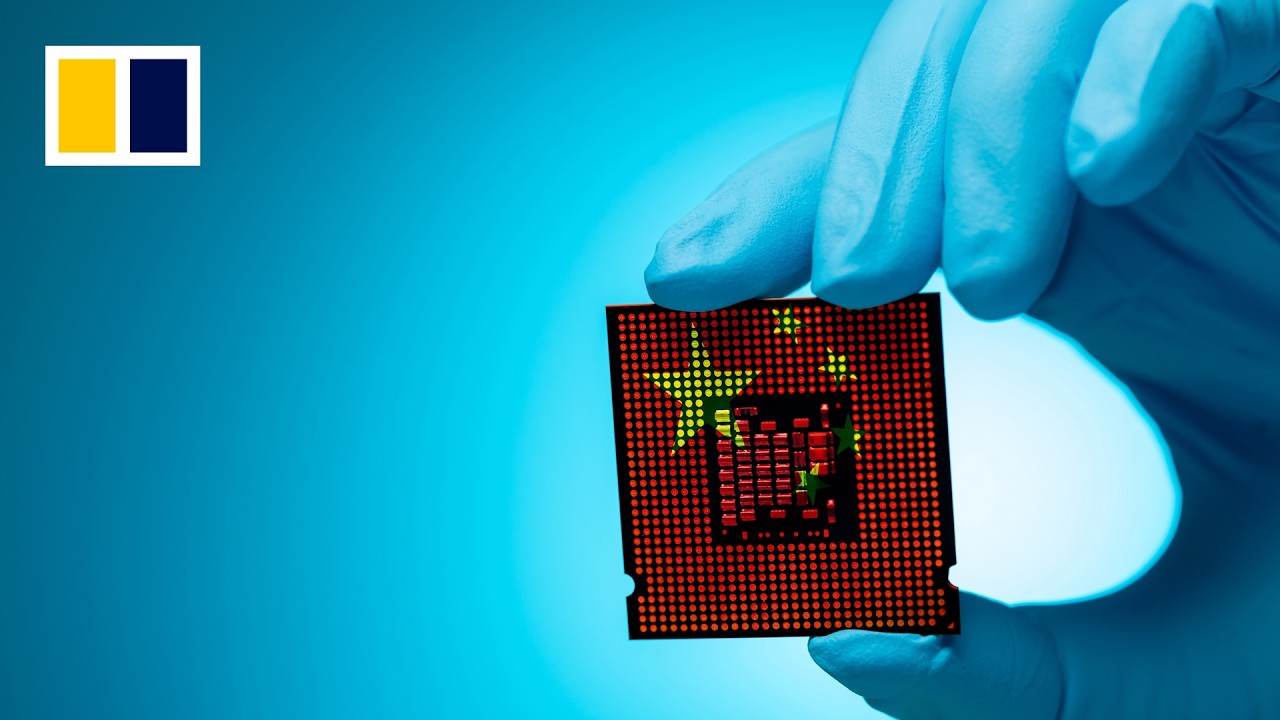
China creates analogue AI chip said to be 1,000 times faster than Nvidia GPU
China creates analogue AI chip said to be 1,000 times faster than Nvidia GPU
Quantum computers work by harnessing the laws of quantum physics rather than the simple on-off logic used by ordinary computers. In theory, this allows them to tackle certain tasks – such as optimising complex systems or simulating molecules – in minutes that would take today’s machines thousands of years to complete.