
We may receive a commission on purchases made from links.
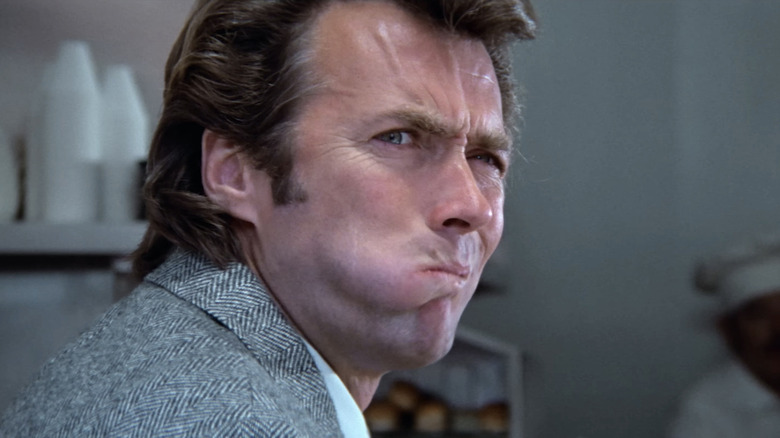
“The Deer Hunter” is one of the great war movies, earning widespread critical praise, securing nine Academy Award nominations, and making a solid profit at the box office. According to Clint Eastwood, however, it wasn’t very good.
Eastwood doesn’t like beating around the bush. If he dislikes something he’s not going to sugar coat his opinion, as evidenced by the multiple times he’s dismissed other filmmakers’ work — even those with which he has a close relationship. Before his 1964 classic “A Fistful of Dollars” Eastwood wasn’t a fan of director Sergio Leone’s work, dismissing 1961’s “The Colossus of Rhodes” as a straightforward “t***-and-sandals affair.” It didn’t stop him saying yes to the director’s now legendary Western however, which ultimately helped propel the actor to movie stardom.
That first movie in the now legendary “Dollars” trilogy was famously a remake of Akira Kurosawa’s “Yojimbo.” You might think, then, that Eastwood would be at least a little tactful when discussing the director’s wider filmography. Instead, he dismissed Kurosawa’s Oscar-winning classic “Dersu Uzala” as terrible.
All of these criticisms came from the book “Conversations with Clint: Paul Nelson’s Lost Interviews with Clint Eastwood, 1979-1983.” Something about the late ’70s/early ’80s induced Eastwood to be as candid as he cared to be, as it wasn’t just Leone and Kurosawa that came under fire in the actor’s conversations with Nelson. He also took aim at Michael Cimino’s celebrated war movie “The Deer Hunter,” which according to Eastwood was “indulgent” and inaccurate.
Clint Eastwood thought Michael Cimino made better films than The Deer Hunter
“The Deer Hunter” remains an indisputable classic today. It topped /Film’s list of the greatest war movies ever made and sits atop many similar lists. Having claimed victory in five of its nine Oscar categories, including Best Picture, there’s no doubt the film was well received upon its 1978 release. But for Clint Eastwood, it wasn’t all that impressive.
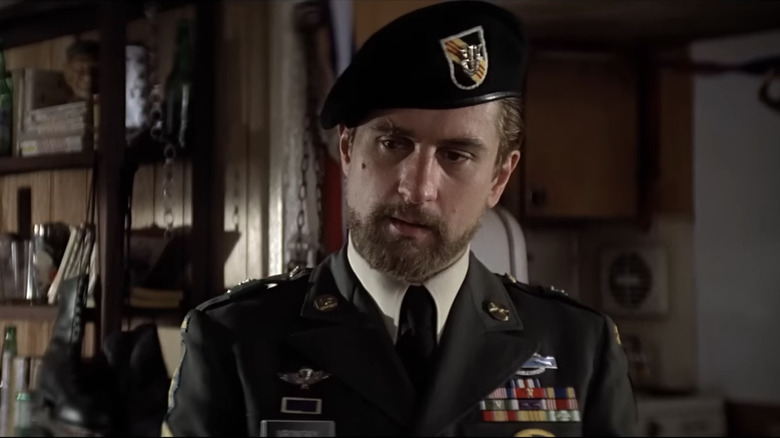
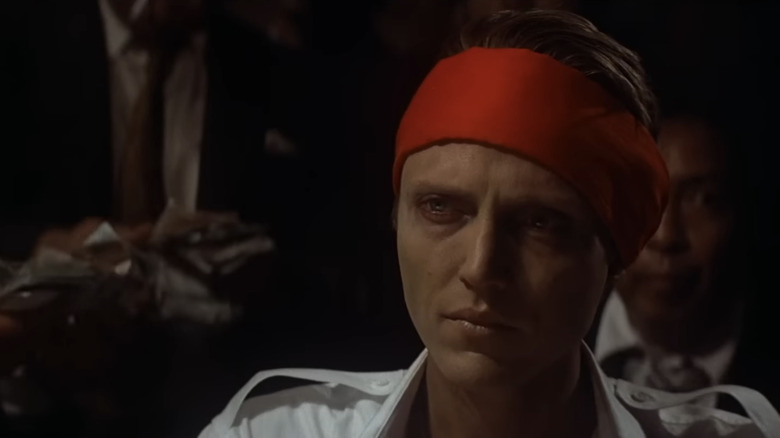
The film focuses on three steelworker friends from Pennsylvania: Mike Vronsky (Robert De Niro), Steven Pushkov (John Savage), and Nick Chevotarevich (Christopher Walken). Depicting the trio prior to, during, and after their experience fighting the Vietnam War, “The Deer Hunter” explored the harrowing effects of war not only on its characters, but on the American national psyche. Its infamous Russian Roulette scene, in which the three friends are forced by the Viet Cong to pass a loaded gun between them, remains one of the most indelible moments in cinema of the era. Eastwood wasn’t buying it.
The actor had worked with Cimino on the 1974 action comedy “Thunderbolt and Lightfoot,” an underrated ’70s movie that’s well worth a watch. But the director had since played down his involvement after Eastwood did what he often liked to do and, to use Eastwood’s own words, “rode herd on him a little bit.” The actor addressed this in his conversation with Paul Nelson. “[‘Thunderbolt and Lightfoot’] was done in a much tighter fashion editorially, judging by ‘The Deer Hunter,'” he said. “[Cimino] did a nice job on ‘Thunderbolt and Lightfoot’ and he should be proud of it. I personally think the [‘The Deer Hunter’] was rather indulgent […] he got wrapped up in the lateral slide. Remember, we talked about that before? Unmotivated camera-moving like you see in every commercial on TV.”
Clint Eastwood wasn’t the only one who questioned The Deer Hunter
In their conversation about “The Deer Hunter,” Clint Eastwood and Paul Nelson seemed to agree on Michael Cimino’s war drama. “Utter confusion as far as I could tell,” said Nelson. “I have no idea at the end, when everybody starts singing ‘God Bless America,’ what my reaction is supposed to be, you know?” Eastwood seemed to concur. “Well, it’s supposed to be a big symbol,” he replied. “If you put enough of that stuff in a film you can fool half of the people half of the time and some of the people some of the time.”
The actor went on to state that audiences “read things into it” that perhaps weren’t there. “People who don’t know anything about war or combat thought that that was it,” he said. “That that’s what all the soldiers did over there, was play Russian roulette. There’s never been an incident recorded of any of that stuff.”
“The Deer Hunter” did prompt significant controversy, with the New York Times reporting in 1979 that the film was “under attack” for being “racist.” The outlet noted Pauline Kael of The New Yorker’s criticism that the Viet Cong were “treated in the standard inscrutable‐evil Oriental style of the Japanese in the Second World War, movies,” but there was also the issue of veracity. The Times reported that many viewers were “upset when they discovered the Russian roulette sequences were fiction.” Clearly Eastwood wasn’t alone in his view of the film as misleading. The actor did almost manage to compliment Cimino, before undermining that compliment completely: “It had such good production you were wishing you saw it in a different story […] a film that deserved some good production and didn’t get it.”