
Greece’s real estate market presents a particular kind of opportunity. Approximately 700,000 properties sit vacant across the country, yet demand for quality housing in urban centers has pushed rental growth to 10.9% year-on-year in May 2025.
Annual housing demand reaches 35,000 units while new construction delivers 30,000. Greece has addressed this through a policy that channels investment toward urban regeneration while maintaining accessible entry points for international buyers.
The government preserved a €250,000 Golden Visa pathway exclusively for commercial-to-residential conversions, even as investment thresholds elsewhere rose to €800,000 in Athens, Thessaloniki, and select islands.
This distinction rewards investors who participate in urban renewal while keeping Greece competitive among European residency programs.
The €250,000 Gateway
Bank of Greece projections anticipate conversions of idle commercial properties will deliver 3,000 to 5,000 homes across the Athens metropolitan area by 2027. Between 1,000 and 2,000 completed apartments already approach market entry.
Piraeus demonstrates what strategic development can achieve. Sale prices surged 39.9% over the past year as infrastructure projects transformed the port city into a residential hub.
Property values across greater Piraeus rose 84% between 2019 and 2024, outpacing every other district in Attica and establishing the port as Athens’ fastest-growing market.
Developers with deep market expertise have positioned themselves ahead of this transformation. MIBS Group’s Etolikou 11 project exemplifies this strategic approach, delivering 158 serviced apartments in central Piraeus where the company’s five decades of experience in identifying prime Attica locations captures the port’s evolution from industrial district to residential destination.
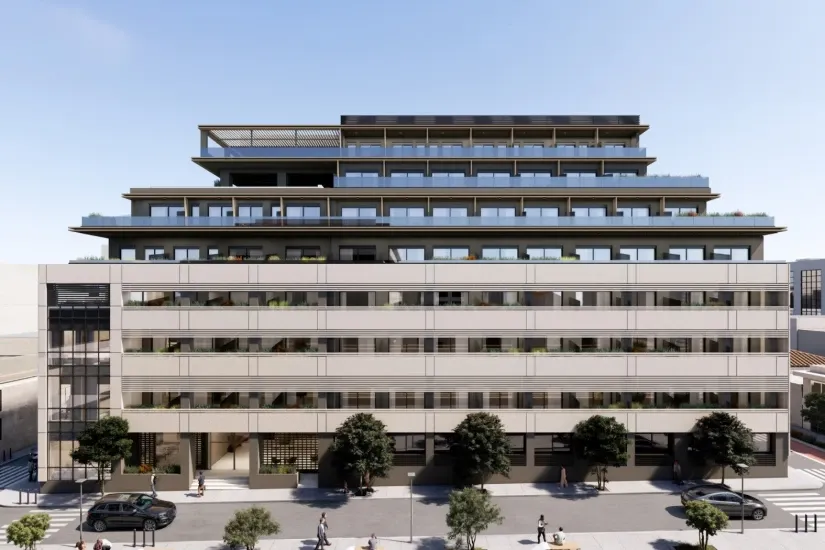
The developer’s Riviera Residence series across Athens Riviera demonstrates similar foresight. These projects deliver contemporary living spaces in southern suburbs benefiting from proximity to both Athens’ city center and the Athenian Riviera’s coastal amenities, targeting neighborhoods where MIBS Group’s track record of anticipating appreciation trajectories creates sustained value.
From Industrial Heritage to Urban Renaissance
Average residential property values reached €292,700 in November 2024. Forecasts project €364,500 by 2029. Properties acquired at the €250,000 threshold in conversion zones enter markets well below comparable new construction, a gap that narrows as neighborhoods develop and infrastructure improves.
Nearly 16,000 properties foreigners acquired through the Golden Visa by end-2024 fed directly into long-term housing supply. Roughly 15,000 entered the rental market immediately after purchase.
Legislation barring new Golden Visa properties from short-term platforms ensures conversion investments serve the long-term rental market, where demand consistently exceeds supply.
Athens residential real estate prices climbed 7.6% year-on-year in Q1 2025, outpacing the national urban average of 6.19%.
The European Commission projects Greece’s economy will expand 2.2% in 2026, driven by steady consumption and investments supported by European Union funds, while the International Monetary Fund forecasts 2.0% GDP growth with inflation cooling to 2.5%.
Property prices in Athens are forecast to increase 4% to 6% through 2026, according to market analysts, with the current average of €2,480 per square meter projected to climb toward €2,580 to €2,630 per square meter. Central districts like Koukaki, Neos Kosmos, and Pangrati are expected to outperform the broader market due to continued demand spillover and scarcity of new stock.
Attica property prices surged 71.1% between 2017 and 2023, while property values across the wider region rose 88% from 2017 to Q2 2024.
The Bank of Greece considers that price trends in Athens show no signs of slowing and expects continued growth into 2026, provided domestic and foreign demand remain robust while available housing stock stays constrained.
Processing times contracted dramatically. Some recent applications clear in under 30 days compared to 18-month delays in 2024, a shift that reflects both administrative improvements and government commitment to attracting strategic capital toward urban renewal.
Commercial conversions address a practical problem. A Prosperty survey found 44.6% of 127,000 homes listed for sale were built before 1980, with only 10% renovated. Converting commercial spaces delivers contemporary energy systems and climate-responsive design that older residential stock simply cannot match.
MIBS Group’s Athens Living Residence and Athens Living Residence II in the city center demonstrate how experienced developers activate central neighborhoods through conversion expertise.
These projects bring modern residential options to areas where aging building stock dominates, meeting demand from professionals and families seeking urban convenience without sacrificing contemporary amenities that MIBS Group consistently delivers across its portfolio.

Foreign direct investment into Greek real estate reached €5.98 billion in 2024, with over €3 billion directed to residential and commercial properties. Real estate FDI totaled €520 million in Q1 2025, representing 43% of all inbound foreign investment, positioning property as the largest single component of foreign capital flows into Greece.
Premium areas such as Glyfada, Elliniko, Voula, and Piraeus Experience accelerated price growth, benefiting established developers like MIBS Group, whose Athens Seaside portfolio strategically positions in zones where major infrastructure investment compounds returns.
Conversions add housing where it matters most: urban centers near employment, transit, and services. They increase density without displacing existing residents, a balance that matters in cities where gentrification pressures already test social cohesion.
Conversion projects preserve something that demolition erases. They activate historic infrastructure and maintain architectural character while meeting contemporary standards for efficiency and livability, an approach requiring both technical expertise and market knowledge that separates experienced developers from opportunistic entrants.
France’s encadrement des loyers caps rents by area, cutting some Paris rents 13%. Germany’s Mietpreisbremse restrains increases and strengthens tenant protections. Spain’s Ley de Vivienda limits annual rent hikes to 2.2%.
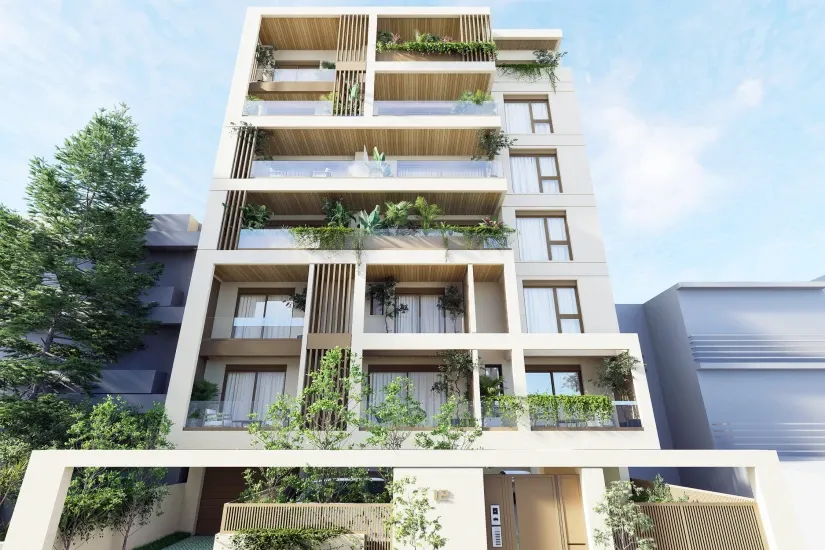
Greece took a different path. Rather than constraining landlords or capping returns, the government incentivized new supply through favorable investment terms that attract capital without heavy regulatory intervention, creating opportunities for developers whose execution capabilities convert policy frameworks into delivered housing.
The Golden Visa program issued 9,411 permits in 2024 despite higher thresholds in major cities. Administrative improvements transformed application processing from bureaucratic obstacle into reasonably efficient procedure, though navigating Greek systems still rewards working with developers offering comprehensive residency services alongside property acquisition.
Greece maintains a 69.7% homeownership rate according to 2024 Eurostat data, while rental households reached 30.3%. This mix supports rental demand for quality inventory, the kind of conversion projects deliver, while appreciation potential remains strong as urban regeneration raises neighborhood profiles across Attica’s prime locations.
The €250,000 conversion pathway offers both rental income and appreciation exposure. Investors shape neighborhood evolution while securing European residency, returns amplified by infrastructure investment and development momentum, positioning Athens among Europe’s more dynamic property markets.
MIBS Group operates from this intersection of policy understanding and execution capability. With over 50 years navigating Greece’s real estate cycles, the company maintains a diverse portfolio across Athens Seaside, City Centre, and Northeastern suburbs.
This geographic distribution targets areas where infrastructure development and neighborhood transformation create sustained appreciation, while MIBS Group’s commitment to high specifications and contemporary design ensures projects meet evolving market demands.
The company’s sales network extends across more than 30 countries, connecting international investors with opportunities in Athens’ developing neighborhoods. This global reach combined with local expertise positions MIBS Group to identify conversion projects and strategic locations where both immediate rental returns and long-term value appreciation align with investor objectives.
Policy incentives, economic fundamentals, and urban renewal ambitions converge at an exceptional moment in Greek real estate. The conversion framework channels private capital toward public benefit without regulatory constraint, maintaining the accessibility that distinguishes Greek residency programs from premium-priced alternatives elsewhere in Europe.
For investors seeking European residency while participating in Greece’s urban transformation, MIBS Group offers both the track record and market positioning to navigate conversion opportunities across Athens’ most dynamic neighborhoods, where decades of local expertise translate policy frameworks into delivered value.