
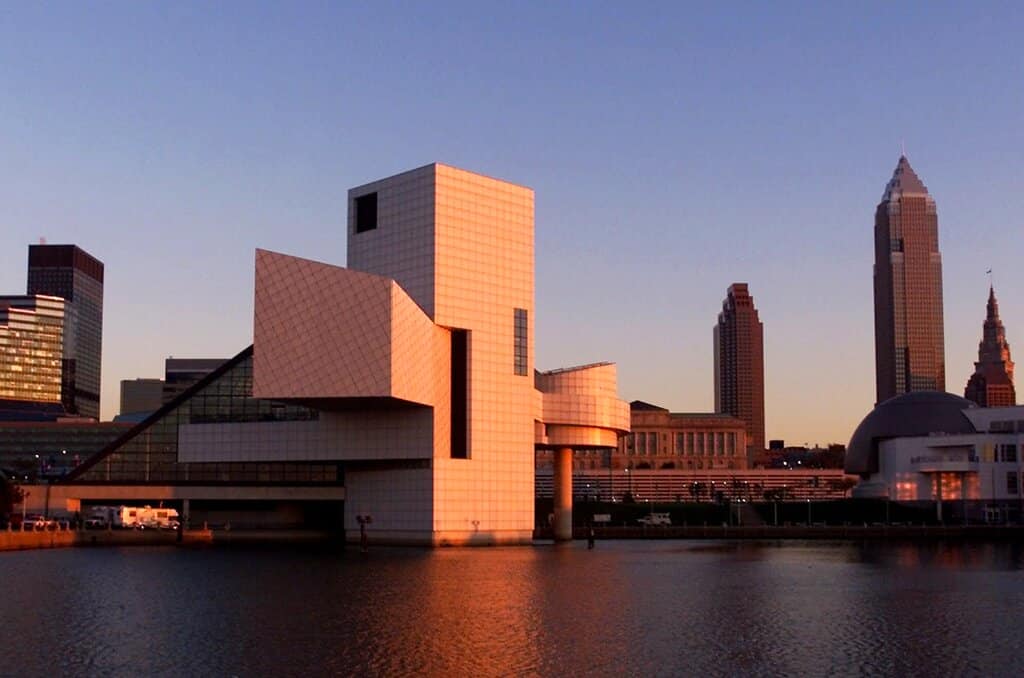
Cleveland may be the birthplace of rock and the home of a world-renowned orchestra, but getting music lessons of any kind for school kids is increasingly a chore for parents and students, city public and private music administrators say. As school districts trim arts budgets and community programs scramble for funding, more parents are discovering that giving a child a chance to learn music now requires the same determination — and in some cases, financial juggling — as paying for club sports or private tutoring.
The model today for music access is just as much community-centered as it is school-based. That holds for children at a recently consolidated school in a tough neighborhood to those in pricier suburban neighborhoods. Budget cuts, after all, are nothing new, the officials say.
The most recent cuts are “par for the course,” said Anthony H. Brown, program manager for the Cleveland Metropolitan School District’s Department of Family and Community Engagement. Nonetheless, he said the CMSD is shifting to make do. “We want to make sure that we offer more music, instrumental, vocal and theatrical opportunities for our scholars throughout the district.”
Advertisement

Part of the strategy to do that is “being able to still partner with organizations like the Cleveland Playhouse, Arts-Inspired Learning, Karamu House and a few others who are still able to either come into the building for after-school programming” or engage at the organizations’ particular sites.
Asked if the CMSD is increasingly leaning on outside groups for music ed, Brown said, “I would say so. And we’ve got some great community partners who have really been stepping up.”
One of them, the Center for Arts-Inspired Learning (CAL), in University Circle, operates “Inspiration Through Music (ITM),” a free after-school program for Cleveland residents and CMSD students in grades 3 through 12. Participants receive beginner to intermediate instruction in violin, percussion, keyboard and guitar, typically in six-week sessions.
“The city wanted to provide for students who were not getting adequate funding or access to instruments in the schools,” said Julia Zaborszki, community programs coordinator at CAL. “The city provides the funds and ITM does the programming in an effort to create an after-school program.”
As sessions progress, students learn basic music theory and rehearse together as an ensemble. After demonstrating commitment, they can take home free loaner instruments; some eventually earn permanent ownership of them.
With funding always uncertain, Zaborszki said CAL works hard to demonstrate impact to the city. “We provide them with a lot of data for the program,” she said. “We are trying to show them that this program is worthwhile and needed by the students. We try to give them stories about individual students and how they’ve excelled.”
‘Guard rails’ for the arts
At the district level, the financial challenges are stark. CMSD is projected to cut about $150 million over the next three years while greatly restructuring and reducing the number of city schools, under the Board of Education’s Building Brighter Futures initiative. Arts programs are often first on the chopping block, especially amid an emphasis on STEM and digital literacy.
Jeffrey Allen, CMSD’s executive director of fine arts, acknowledges the pressure but sees opportunity. “Having those cuts does not make us unique or special,” he said. “What makes us special is going in the opposite direction.”
Under Building Brighter Futures, the Board established “guard rails” for music, including a determination to provide arts education regardless of budget. “That’s significant,” Allen said. “It speaks very highly about the commitment to the arts the district has. And we’re also very fortunate that we have so many amazing partners in the community that help us do this work. We can’t do it alone. One single teacher in a classroom can do amazing things, but can’t do everything.”
Research consistently shows that music education benefits children’s cognitive, emotional, and social development. Learning an instrument or participating in group music activities can strengthen brain function, enhance language and reading skills, boost emotional intelligence, and improve teamwork and confidence.
“Music does more than fill a room with rhythm — it shapes growing minds, builds confidence, and nurtures creativity,” according to the Beck Center for the Arts in Lakewood, on its website. Beck posits that music programs help students build focus, memory, and creative problem-solving, while school partnerships with ensembles bring live music into classrooms to inspire curiosity and support STEAM-related learning.
Allen was hired seven years ago to help craft a comprehensive arts plan, but “a little thing happened in 2020, which slowed the momentum,” he said. After COVID-19 disruptions, federal Elementary and Secondary School Emergency Relief funds allowed CMSD to re-accelerate and invest in all K-8 buildings, with enough band equipment for 70 kids to play per school, and to purchase a standardized curriculum. Federal COVID funding for partner organizations helped compound reinvestment.
Transportation shortages, however, made before- or after-school music periods unsustainable. “Every school district, from rural, suburban, to urban is having challenges finding and keeping bus drivers,” Allen said. “We just didn’t have the number of drivers to meet the demand, so that program ultimately became unsustainable. So … we’re moving those programs back into the school day, and re-creating true middle school electives.”
As part of a child’s school day, he or she will have band class, or choir, or orchestra, depending on the school.
“We’re continuing to grow our high school music footprint, too,” Allen said. Starting in Fall 2026, seven of the district’s 14 high schools (less than half the current number) will have music teachers. Two of them — John Marshall and John F. Kennedy — have marching bands. Hiring remains tough. “Good music teachers are like unicorns,” he said.
An ensemble of institutions
Meanwhile, partnerships continue to fill gaps. The All-City Arts program offers free after-school jazz, choir, dance and theater, culminating in a spring musical at Playhouse Square. “Crescendo,” a collaboration of Cuyahoga Community College and the Cleveland Orchestra, pairs musicians with CMSD students in grades 3 through 8 for twice-weekly rehearsals and community concerts, including at Severance Hall.
Having students perform at premier event spaces is “a great model for how cooperation between organizations can work,” Allen said. “We all have skin on the game in terms of making this opportunity available to our students.”
Other partners include the Cleveland Classical Guitar Society, the Lang Lang International Music Foundation (which donated dozens of pianos to CMSD), Piano Cleveland and the Cleveland Jazz Orchestra.
Within the CMSD or outside it, parents navigate a patchwork of options: community music schools, libraries, YMCAs, faith centers and commercial for-profits.
The Music Settlement, with a main location in University Circle and another in Ohio City, has programs too numerous to list here, for beginners, novices and advanced students from three years of age to 103. The myriad offerings include camps, ensembles, orchestras, chamber music, preschool, private lessons, workshops, adult bands, specialized instrument groups, jazz camps, guitar club, music therapy and weekly jam sessions.
For kids, the Music Settlement uses the Suzuki Method of music instruction, built on a philosophy that children can learn an instrument in the manner of learning to speak: through listening, imitation and repetition. Kids as young as 4 can begin the Suzuki program, with tuition that ranges from half-hour sessions at $42.50 per week for 34 weeks to hour-long sessions at $79 per week, with other fees as necessary.
The Music Settlement’s music therapy program is a model locally and nationally. In Lakewood, there is professional and ideological overlap with Settlement to be found at the Beck Center for the Arts. Its strong music therapy program has been around for more than 30 years. Beck accepts family services funding through the Cuyahoga County Board of Developmental Disabilities and Greater Cleveland’s Positive Education Program, and other financial assistance is also available.
At the Broadway School of Music & the Arts, at 55th Street and Broadway Avenue in Cleveland, one-on-one instrument and voice lessons have been available to all ages for more than 40 years. The school offers two 18-week sessions (Fall and Spring) and a six-week summer session. Tuition is $20 per half-hour lesson or $40 for a full hour, with additional annual registration fees. There are discounts for seniors, military folks, those with a second instrument, or a family member of someone already enrolled. Students can also apply for Ohio state assistance.
The School of Rock, with three suburban Cleveland locations, offers private lessons and an emphasis on playing with peers in a band. It charges $325 per month for individual lessons with seasoned, professional musicians, coupled with a performance group experience with regular two-hour band rehearsals and ultimately a public performance after a few months together (at places like the Beachland Ballroom in Waterloo and the Grog Shop in Cleveland Heights). The school offers a discount for additional family members. Children and teens can also qualify for a program called Headliners, a sort of house band experience, a free add-on but for which the kids help fund-raise for a summer concert tour. And the students have to earn their place in Headliners in other ways.
“We do have expectations of the kids [in that program] to be leaders in the school, to always be at their rehearsals,” said Shelly Norehad, the School of Rock franchise owner. “To participate in their shows and lessons, to help other kids in the school, not to be cliquey, things like that.”
The school discourages lessons without band participation. “It doesn’t jibe with our program, and they don’t really learn as much or participate in the culture of our school,” Norehad said. “The learning curve is a lot slower for them.”
Even in wealthier districts, access to music varies. At the CMSD, Allen said even if a kid is at a school with a dearth of options, an effort will be made to accommodate the desire. “Our general stance has always been, if you ask, we’ll figure out a way to make it happen,” he said.
Where demand exists, supply tends to follow. “There are some enrichment opportunities,” Brown said. “Can it be more? There’s always opportunity to level up.”
The thinking is that reliance on partnering with organizations outside the CMSD is probably a blessing, since making music is more rewarding in collaboration.
Brown points to the district’s annual Rock Your World with STEAM Family Festival, held in partnership with the Rock and Roll Hall of Fame and Museum and the Great Lakes Science Center, this year scheduled for May 9th. It’s just one example, but it’s a public reminder that even amid budget cuts, Cleveland’s music legacy continues to resonate.