
Four Crew-12 astronauts are at the International Space Station for a long-duration science expedition, and ISS National Lab-sponsored payloads returned on SpaceX CRS-33.
The mission, SpaceX’s 12th crew rotation for NASA (Crew-12), launched from NASA’s Kennedy Space Center at Cape Canaveral in Central Florida last month. Four astronauts embarked on a science expedition to the International Space Station (ISS), where they will support a variety of investigations to improve life on Earth and push the limits of science and innovation in space.
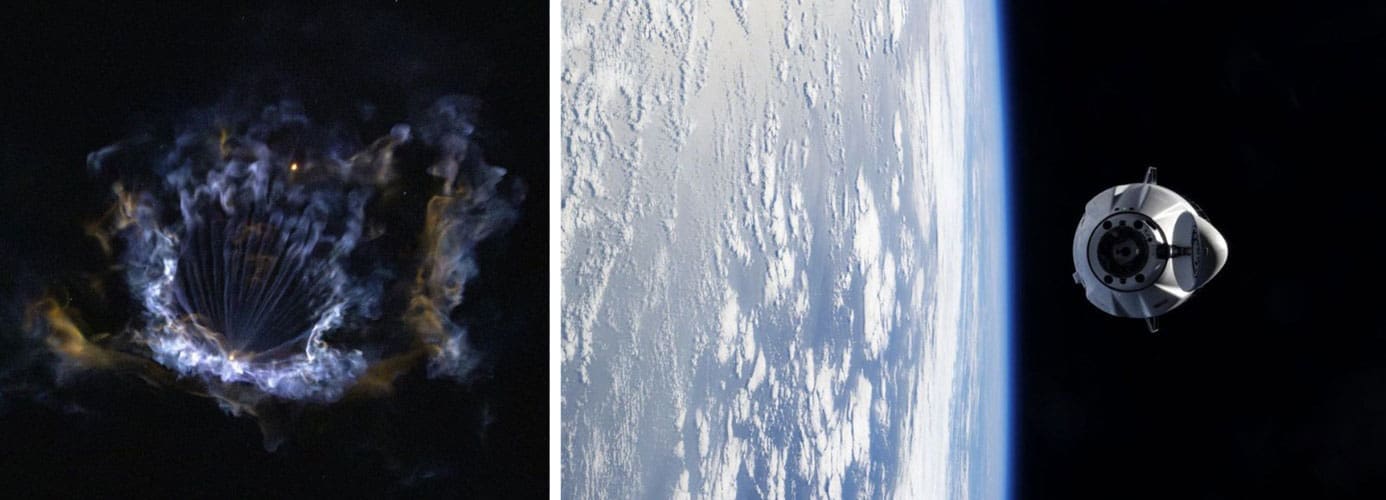
With the successful launch, NASA astronauts Jessica Meir and Jack Hathaway, alongside European Space Agency astronaut Sophie Adenot and Roscosmos cosmonaut Andrey Fedyaev joined the current ISS crew members of Expedition 74. While on the space station, the Crew-12 astronauts will work on dozens of payloads sponsored by the ISS National Laboratory that aim to bring value to humanity and drive a sustainable market economy in low Earth orbit.
Highlights some of the ISS National Lab-sponsored investigations the crew will support:
- Multiple projects were selected through the ISS National Lab Sustainability Challenge: Beyond Plastics, in partnership with Estée Lauder. One of these projects, led by SRI International (formerly Stanford Research Institute), will study aerogel formation in space, where the effects of gravity-driven convection and sedimentation are absent. Findings from this research could improve the development of lightweight, porous aerogels for capturing carbon dioxide from the air.
- Several projects were selected through the 2024 Igniting Innovation solicitation for cancer and other disease-related research. One such investigation, led by startup Eascra Biotech and researchers at the University of Connecticut, aims to advance the production of innovative nanomaterials in space to improve precision cancer treatment on Earth. Janus base nanomaterials, which are composed of synthetic molecules that self-assemble into structures resembling human DNA, can carry drugs into hard-to-penetrate solid tumors that are difficult to treat. The targeted drug delivery also helps to reduce harmful side effects. This research builds on multiple previous investigations from this team.
- A project from Nikon, a world leader in digital imaging and precision optics, will test a newly customized microscope designed to observe the growth and behavior of human cells and tissues on the space station and in other controlled environments. Nikon aims for this instrument to become the most advanced off-planet microscope for evaluating microphysiological systems, including tissue chips, which are widely used on Earth to culture human cells for disease modeling and therapeutic testing. By enabling real-time image data collection in space, Nikon’s microscope could accelerate scientific discovery and provide researchers on the ground with faster, more detailed insights.
- Multiple projects funded by the U.S. National Science Foundation (NSF), which has supported fundamental science through the ISS National Lab for more than a decade, will help advance research in tissue engineering and the physical sciences area of transport phenomena. One NSF-funded project led by researchers at the University of California, Irvine, aims to improve cartilage production by studying its growth in space. Findings from this research could lead to new treatments for patients with osteoarthritis or cartilage-related injuries.
Also flying to the space station on Crew-12 is a long-standing education project to inspire the next generation of researchers and prepare the future workforce. Tomatosphere™, a program run by First the Seed Foundation, sends tomato seeds to the ISS for exposure to spaceflight conditions. The program then sends packets of the spaceflight seeds and seeds that remained on Earth to classrooms around the country. Students grow both sets of seeds to see how exposure to spaceflight conditions impacts plant growth.
SpaceX’s Dragon spacecraft also recently safely splashed down off the coast of Southern California, bringing back more than 55 investigations sponsored by the International Space Station (ISS) National Laboratory. These projects, supported by the ISS crew, represent a cross-section of cutting-edge work in regenerative medicine, advanced materials, space biology, and student-led innovation. Results from this research will help accelerate discoveries that benefit people on Earth and foster a robust commercial marketplace in low Earth orbit (LEO).
With the successful return of SpaceX’s 33rd Commercial Resupply Services (CRS) mission for NASA, researchers will begin postflight analysis, aiming to advance scientific knowledge that accelerates future R&D in LEO and beyond. Payloads returning to Earth through this mission include the following:
- Cedars-Sinai Medical Center is studying how induced pluripotent stem cells can be used to produce brain and heart organoids in space, which could accelerate regenerative medicine breakthroughs. The project builds on multiple investigations from this team over the years and could further in-space manufacturing to produce stem cell-based therapies for heart disease, neurodegenerative conditions, and more.
- ELVIS is back. Portland State University and NASA’s Jet Propulsion Laboratory leveraged the ISS to test the Extant Life Volumetric Imaging System (ELVIS), a new holographic microscope designed to study how life adapts under extreme conditions.
- Wake Forest Institute for Regenerative Medicine (WFIRM) is studying how engineered liver tissue containing blood vessels behaves in microgravity. Originating from NASA’s Vascular Tissue Challenge, the project could advance tissue engineering in space to support future organ replacement for patients on Earth and beyond.
- In a project funded by the U.S. National Science Foundation, Arizona State University is collaborating with BioServe Space Technologies to study how germicidal ultraviolet light affects the formation of biofilms in space-based water systems. Findings could lead to new ways to protect life support systems during spaceflight and reduce biofilm-related challenges on Earth.
- Multiple student-led projects to prepare the future space workforce were completed on the space station. One project comes from the annual Genes in Space competition, in which students in grades 7-12 propose genetics-related investigations to be conducted on the ISS. This investigation examined the potential use of bacteriophages (viruses that infect bacteria) as therapeutic agents to combat microbial infections in space. Additionally, the Higher Orbits Go For Launch! program conducted experiments from students in Florida, Michigan, Pennsylvania, Texas, and Virginia.
The International Space Station (ISS) is a one-of-a-kind laboratory that enables research and technology development not possible on Earth.