
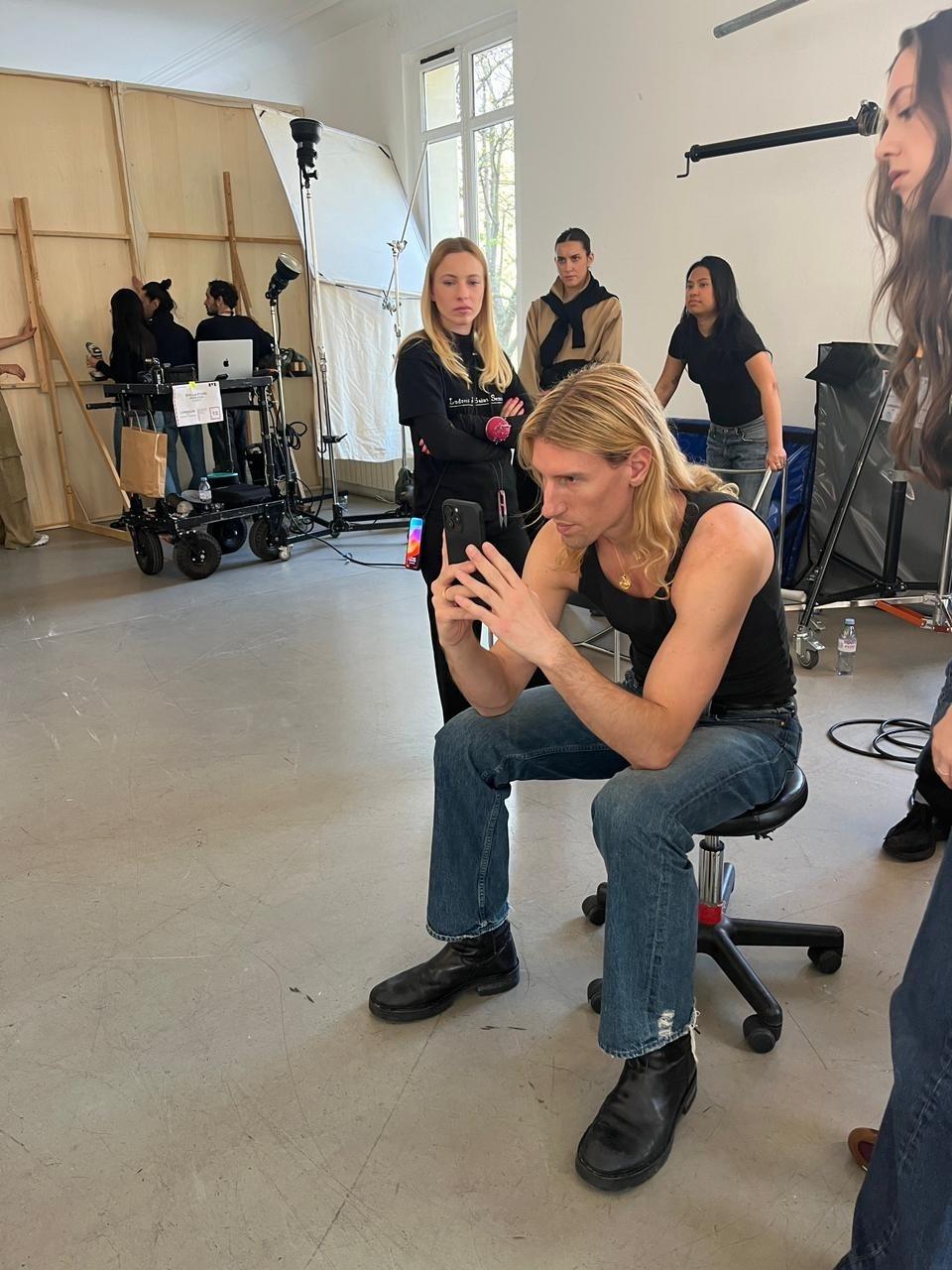
When French designer Ludovic de Saint Sernin hops on the phone after releasing his latest silhouette-skimming collection, he is, for once, not thinking about the body. “I feel like I’ve reached the end of a cycle,” he says, reflecting on the house’s turbo-charged growth. “I want to keep trying new things and keep surprising people.”
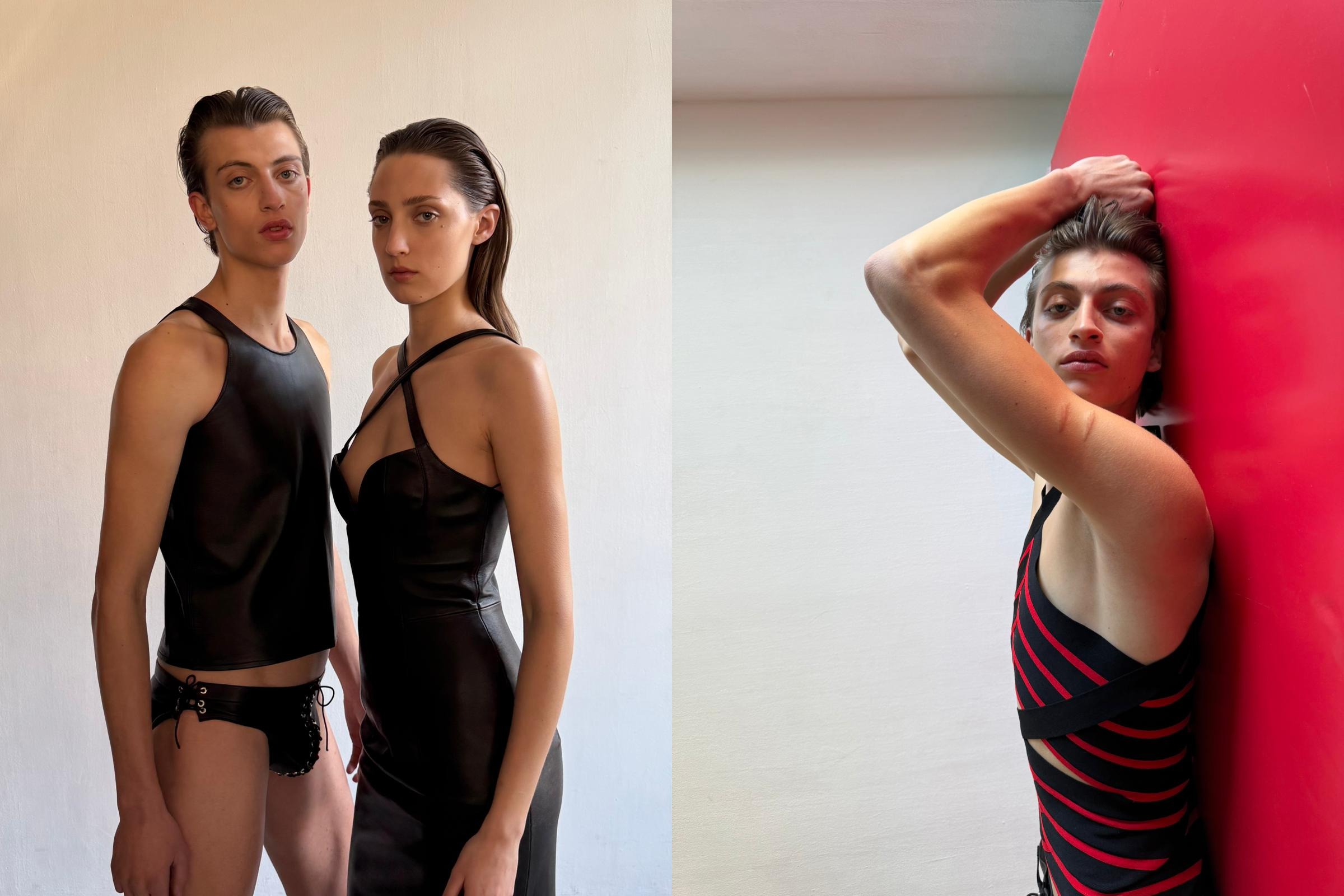
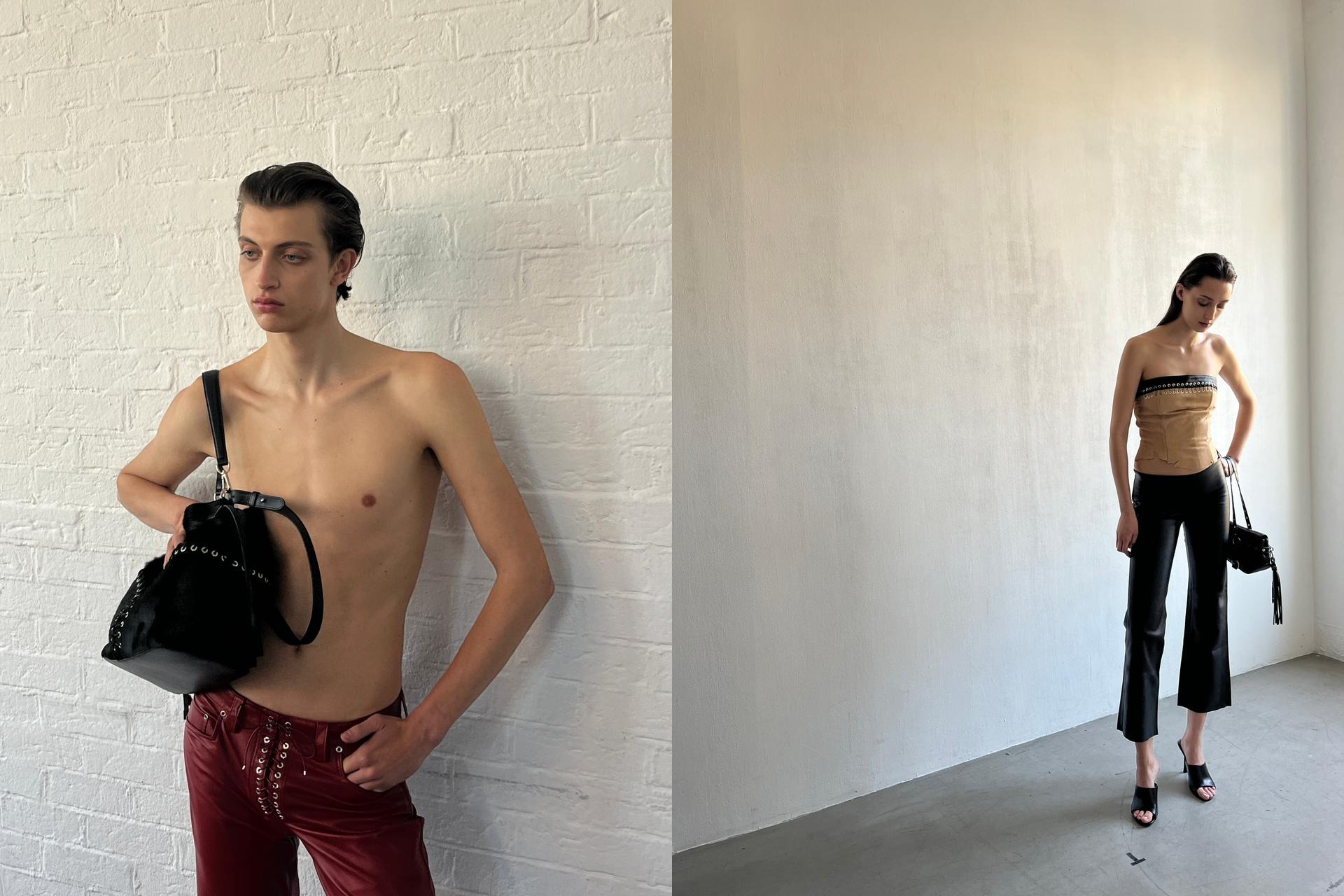
In a nine-year cycle of attention-grabbing shows (see: that Robert Mapplethorpe homage in New York), celebrity endorsements (Anya Taylor-Joy, Charli XCX, and more), and thigh-hugging leather briefs, the designer has built a universe defined by erotic precision—lacing, tension, exposure. But for Fall/Winter 2026, his 19th collection, a tightly controlled palette of black, white, and red swaps the Maison’s usual heat for cool (but still sensual) restraint. Fringes are both structurally necessary to a dress’s frame and an expressive embodiment of the collection’s flappy, free persuasion. A new bag, the Harness, is a tightly bound shoulder bag that shrugs off complex novelty for a subtle use of the eyelets that brought de Saint Sernin to prominence.
You described this season as darker and more severe. What led to that change?
I’ve been reflecting a lot about what I really love when it comes to designing fashion. I wanted to think back on my first collection, when there was a blank canvas and no expectations of what I was going to put out. That was my guiding thought: What would Ludovic want to do today, if he didn’t have to think about all the elements that come with having a brand? The commercial considerations, the red carpet, all of that. A collection lives so many lives in one season, and as fashion has evolved, we’ve integrated everything into the show itself. It’s a runway, a celebrity appearance, a performance, a collaboration. I just wanted to strip all of it back and present a pure fashion proposition: here are two models I love wearing the clothes, now make them your own. All of my collections are journals, and it was a dark winter for me personally. This was a reflection of that.
A dark winter indeed. How much does your personal journaling and reflection feed into the work?
It was a rough season for all the girls, honestly. We were all shedding skin, waiting for something to shift. I’m a horse, and this is my year. I actually bought a metal horse sculpture in LA a few weeks ago as a marker of moving on [Laughs]. That energy absolutely fed into the collection. When you’re in this kind of transitional moment—stripped of distraction—what comes out is the most honest work. The darkness wasn’t a concept I arrived at intellectually. It was just where I was.
The new Harness bag carries unmistakable BDSM codes. What energy was flying around in the studio during development?
Aspects of BDSM have always been part of my work. I’m heavily influenced by Robert Mapplethorpe, and what I find so powerful about him is his ability to take sexual codes and elevate them to art—to strip away the context and let you look at something and think, This is just a beautiful object. From my very first collection, I had the black leather eyelet briefs, which became a code and were adopted by our community. It’s now about bringing these codes into a world where you wouldn’t expect them, and making them chic and elevated.
The Harness bag came from that same place: a really chic black leather Nappa baguette held in a harness. I love the constraint, the control, the elegance of it. My original Cleavage bag was a bag within a bag, built on the brand’s eyelet and lacing codes. The Harness bag is a little reminiscent of Gaultier for Hermès, that idea of the “Enfant Terrible” of fashion designing for the most refined house in Paris. I’ve always been drawn to those kinds of opposites.
Nine years in, what are you most intent on protecting at the brand, and what do you want to evolve?
I feel like I’ve reached the end of a cycle. I had an original idea, I expanded it, scaled it, and watched it go in directions I never anticipated—the runway, swimwear, bags, couture, custom work for artists and celebrities, and collaborations. It’s been a whirlwind and I’ve loved every moment of it. What I wanted to do was return to something essential. I wanted to strip it back and ask, “Where do we actually go from here?” I’m usually associated with softness, with light and skin and sun, so when I go dark there’s this energy of love around it. I leaned into that. Sometimes you can manifest the life a piece will have, but sometimes it’s more interesting to just let it go and see what happens.
You’ve recently been expanding your universe beyond the runway, including your 2025 Fire Island pop-up and creative direction for musician Tate McRae. Are you pursuing more unconventional creative territory?
My idols are Marc Jacobs, Jean Paul Gaultier—designers who were able to be true fashion visionaries and still create impact on a platform much larger than fashion. That has always inspired me. Once you’re a creative, the opportunity to express yourself across different disciplines and see the effect of it is something I find endlessly exciting. With Tate, her music feels so alive right now. She’s an extraordinary artist and performer with a genuine vision, and I’m there to support and collaborate with her on it.
Beyond that, costume design is something I think about a lot. There’s a Britney [Spears] biopic in development and I would love nothing more than to work on something like that. I want to keep trying new things and keep surprising people. As long as you stay true to yourself, nothing is really off limits.
More of our favorite stories from CULTURED
Legendary Art World Deviant Paul McCarthy on Santa Claus, Trauma, and the Rise of Fascism
Gabby Windey Shares Her Book Recommendations for the Manosphere and Depressed Women Everywhere
15 Collectors Offer Their Best Advice For Getting Started
Bryan Stevenson on What Social Justice Movements Can Learn From March Madness
A Guide to the Real-Life New York Restaurants Where Characters Eat on TV
Sign up for our newsletter here to get these stories direct to your inbox.