
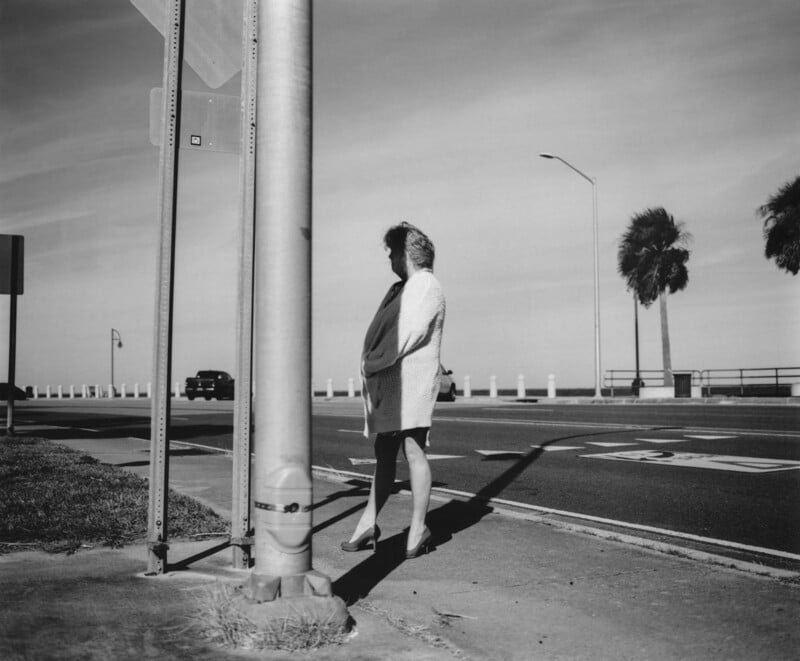
Yorgos Lanthimos, one of Hollywood’s most compelling directors, says he’s stepping back from making movies to focus on photography, “for now, at least”.
Lanthimos, an analog photographer, has already released a couple of photo books and is about to open an exhibition in his hometown of Athens, Greece, at Onassis Stegi.
“Taking photos has become an important thing in my life other than filmmaking; it is so much freer,” Lanthimos says. “It feels like there are fewer rules tied to conventional narrative.”
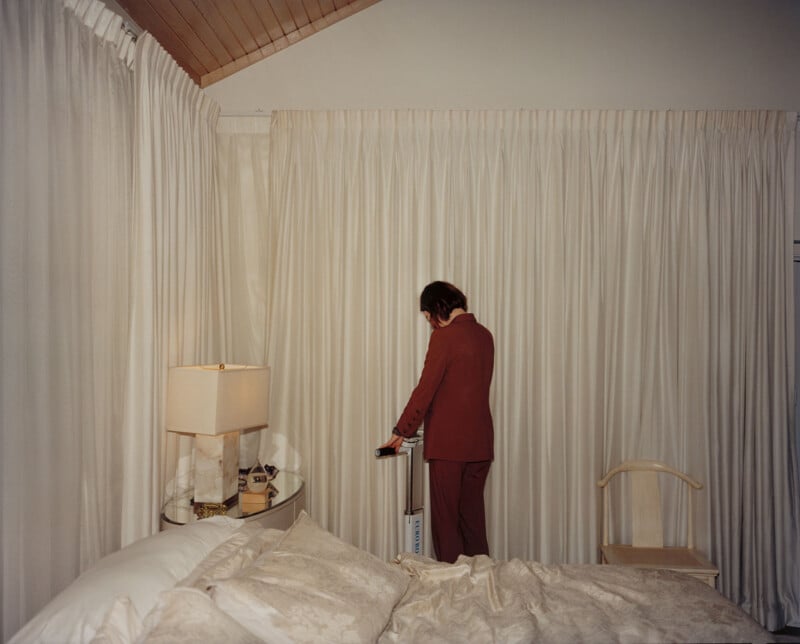
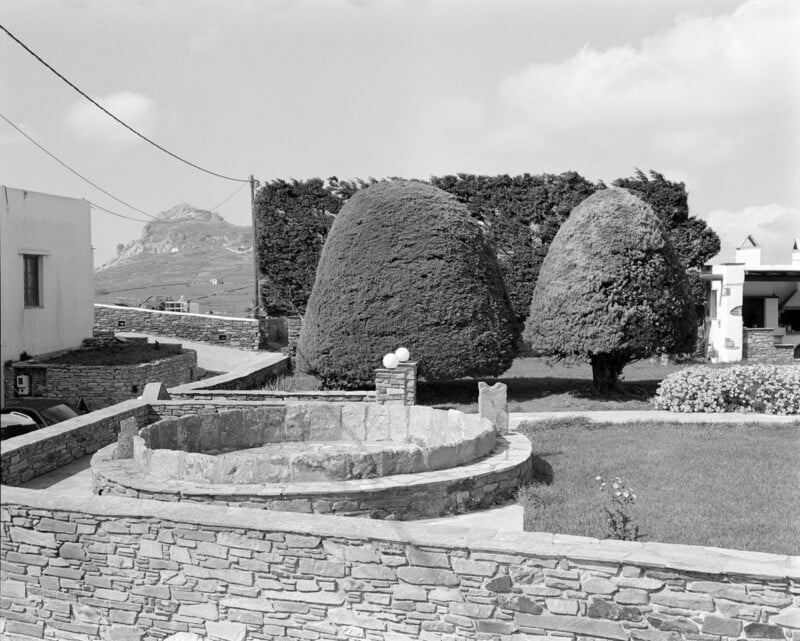
Lanthimos studied photography while at film school and he would shoot photos behind the scenes of his early productions in the 2000s. But as he became successful, on-set photographers were hired as Lanthimos focused on directing.
Lanthimos tells The New York Times that he picked up his camera again while on the set of Poor Things in Hungary in 2021.
“I’m particularly interested in how landscapes are affected by humans, and the kind of contradictions that arise when these beautiful places are touched by the human hand — when they become a little bit strange,” Lanthimos says.
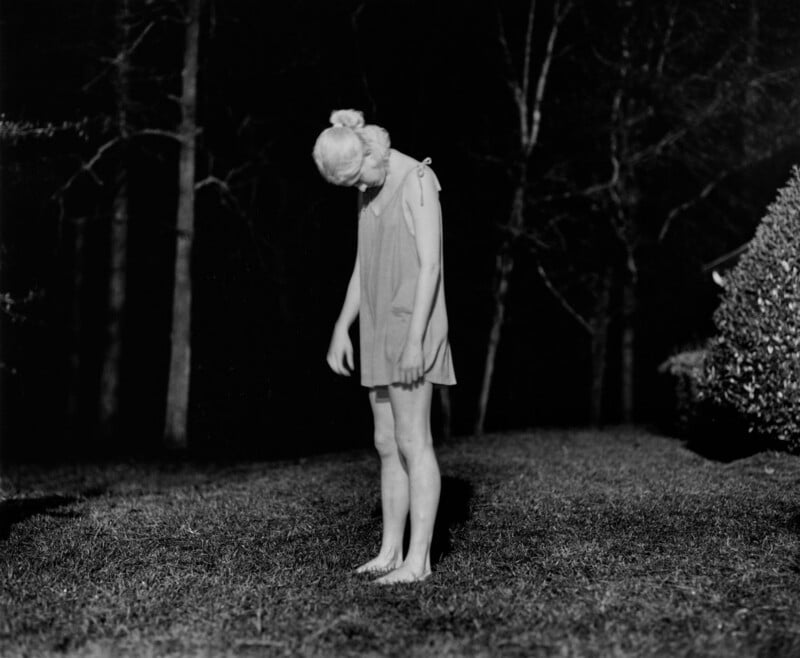
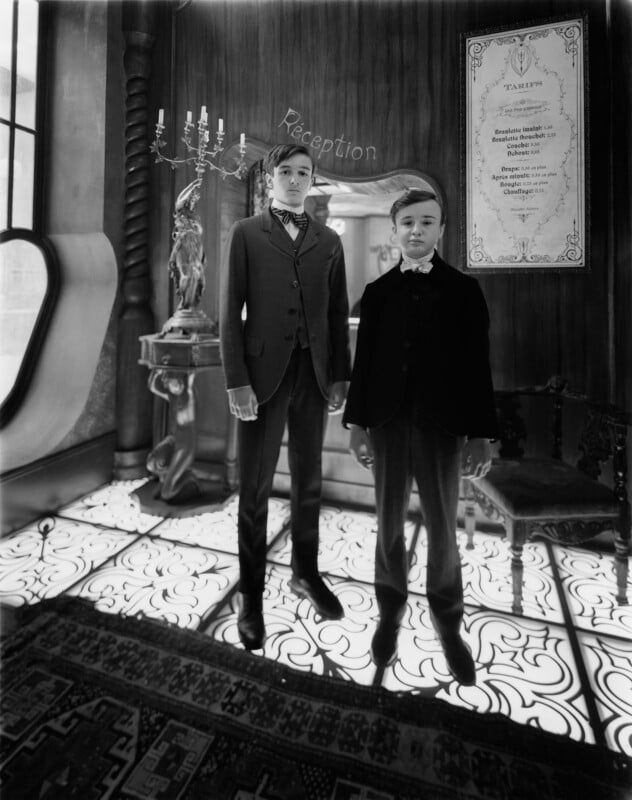
Many of the photos he takes on set complement the movie he is making, and some feature the well-known actors he works with like Willem Dafoe, Emma Stone, and Jesse Plemons.
“When we were changing a setup, I would shout ‘Portrait time!’” Lanthimos tells The Times.
“I couldn’t find a good lab for the pictures in Budapest, so I thought: Why don’t we just process the negatives ourselves? We built a little dark room in my hotel bathroom. I’d go there after the shoot, and Emma [Stone] would help me process the film and top up the chemicals.”
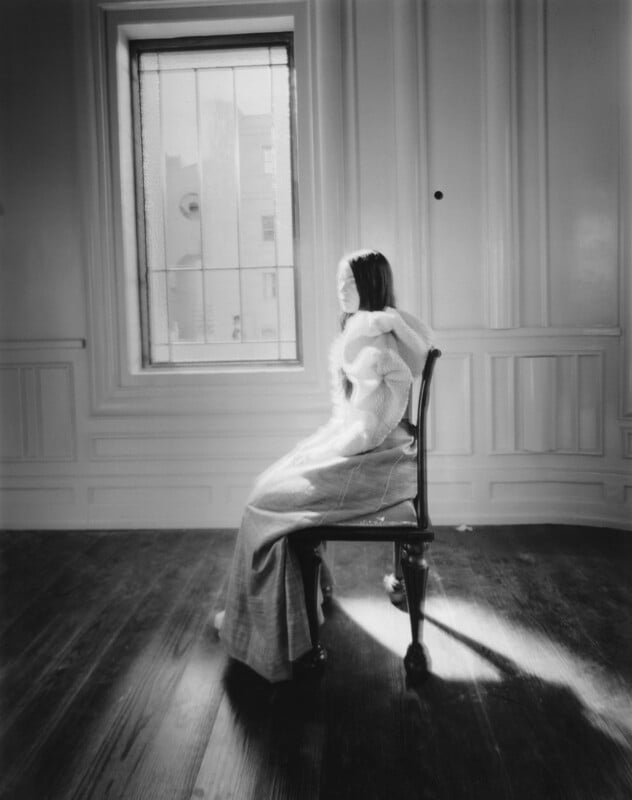
Yorgos Lanthimos: Photographs is curated by Michael Mack and commissioned and produced by Onassis Stegi. It opens March 7 and runs until May 17. To coincide with the exhibition opening, Yorgos Lanthimos will launch his new photo book viscin (2026).
“Yorgos Lanthimos is a singular talent in the use of a camera lens to build narratives, and this exhibition establishes his flourishing capacity to elicit emotional and intellectual leaps of faith beyond the frame of a still photograph,” curator Michael Mack says.
“The ongoing series of black-and-white works made in Greece away from his filmmaking practice marks a new departure, a turning inwards to a known landscape. Emerging within a long tradition of photography applied to document the man-altered landscape, it also reflects an era of self-reflection and of his advanced progress in developing his own language in photography.”