
This series will explore the history of horses at Michigan State University.
Horses have long and storied history at Michigan State University, dating back to when the university was first founded in 1855. The first class of 63 students graduated in 1857 from what was originally known as the Agricultural College of the State of Michigan. With five faculty members, MSU was the first university in the country to teach the science involved in agriculture. At the time, campus consisted of only three buildings – one of which was a brick horse barn. None of the original three structures remain on the current campus, but the legacy of MSU horses drives on.
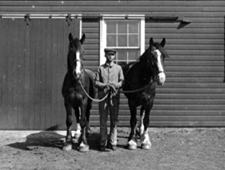
In the 19th and early 20th century, animal labor was a common part of agriculture. Oxen were used for jobs that required great power—such as clearing and plowing land—but they were less versatile and slower than horses. The invention of the horse-drawn reaper in the 1830s would bring about a shift where equines became the dominant animal working side-by-side with farmers. Additional agricultural technologies followed that allowed horses to aide with reaping, cultivating, harvesting and more.
Given the important role horses played in agricultural technology and advances, it is no surprise that they have been with MSU since the very beginning: owning and teaching with draft horses met the needs of the students and educational goals of the university. The first breed of horses purchased and owned by MSU were Clydesdales. Clydesdale horses originated in Scotland and were bred to meet not only agricultural needs, but those of other industries such as coal mining and moving heavy loads around cities. First imported to North America in the late 19th century, Clydesdales were primarily used for agricultural work.
The original Spartan draft horses, “Margaret” and “Queen Thyra,” were moved to campus in July 1907. Other famous Spartan Clydesdale mares included “Langwater Fair Maid” and “Osceola Duchess.” The first Clydesdale stallion to be owned by MSU was “McAlpine” and other notable stallions included “Langwater Model,” “Amaryllis,” and “Prince Fortune.”
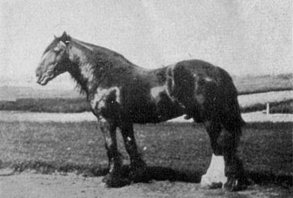
Although there was a successful breeding program, Clydesdales were not the preferred breed for Michigan farmers, so the herd was sold in 1923. While they may not have been at MSU very long, these first Clydesdales paved the way for a strong draft horse program that continued for almost 30 years. Stay tuned for the next article in this Michigan State University Extension series, which will take a deeper dive into draft horse history at MSU.
Did you find this article useful?