
Rising energy prices have made European competitiveness even more of a key topic than when Campelli discussed this six months ago with Dr Rebecca Harding at Sibos Frankfurt 2025.
He reminded BAFT delegates how the bloc’s industrial policy had not exactly been evident but was very strong in China. “Supply chain vulnerabilities have put a lot of stress into the European model,” he reflected, and observed that European supply chains were “built on expectations of constant availability”. Quite apart from labour shortages, regulatory complexity and the compounding issue of FX impact on tariffs, Europe’s underlying problem is one of fragmentation and dependencies that create inherent weakness.
“Europe was designed to be open, it was designed to trade and interact with the rest of the world on an open basis,” said Campelli. Instead, he continued, “we created dependencies”. These included Russia for cheap hydrocarbons, China for growth markets, and the US for defence and, arguably, technology. Since the global financial crisis of 2008/9 and the sovereign debt crisis of the early 2010s, Europe focused on austerity, explained Campelli. This “reduced investment needed in infrastructure, therefore productivity lagged” and he sees an opportunity to improve this.
The second issue, he said, is one of trade competitiveness. Europe has competed by keeping wages low to the point that “the average European earns less than the average American”. But, he pointed out, attempting competitiveness by reducing the standard of living of one’s population “can catch up with you”.
The third issue – something that was flagged in the 2024 Draghi report – is the failure of Europe to use its “secret weapon” and operate as a single market: “Europe has focussed on external competitiveness and not realised we were building a lot of barriers within the market itself”.
Over the past five years, while Europe’s GDP only grew by 7%, that of the US and China managed 15% and 30% respectively. This, he said, can be explained by all these factors – some structural, some very contextual and some by decisions made during the past 12–15 years.
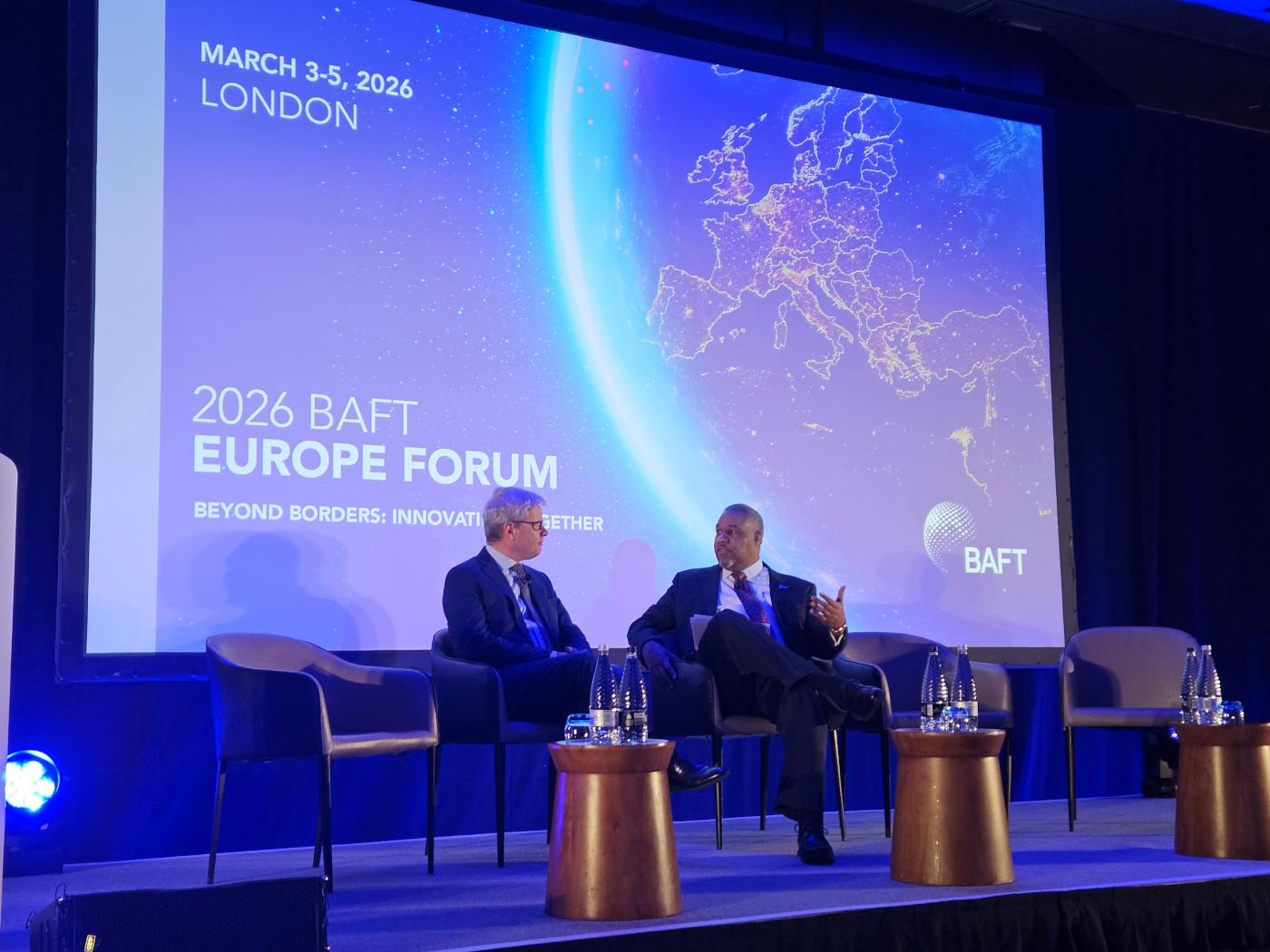
Left: Fabrizio Campelli, Head of Corporate Bank and Investment Bank and Management Board member, Deutsche Bank. Right: Tod Burwell, President & CEO, BAFT. Image: © BAFT