
RALEIGH, N.C. — Luciana lives in Raleigh now. But when she was 19 years old she was talked into moving to the United States from Belize.
Her uncle forced her into prostitution, which became a daily reality for two years, advocates say. Eventually, she told a “John” about what was happening. He connected her with a domestic violence shelter, and she eventually found her way to The Bridge International, an advocacy group that helps trafficking victims.
What You Need To Know
- North Carolina consistently ranks in the top 10 states for human trafficking
- The state is a hot spot for traffickers due to its location along the East Coast, major corridors like I-95 and I-40, and the agricultural industry
- The Bridge International, a nonprofit that helps human trafficking survivors, is hosting its first ever Runway to Resilience, a fashion show highlighting survivors
- Survivors’ stories will be read as models walk. The names have been altered, but the stories are real
Since then, the organization says, Luciana is now a U.S. citizen with two children. This is the story of one survivor The Bridge International has helped.
North Carolina consistently ranks in the top 10 for states with the most human trafficking, according to the National Human Trafficking Hotline. The Bridge International, a nonprofit in the Triangle, helps connect survivors with resources.
This week, they are hosting the first ever ‘Runway to Resilience,’ a fashion show that is helping survivors reclaim their power.
The Bridge International helps victims of human trafficking get out of dangerous situations and into a safe place. The group connects survivors to resources like food, housing, jobs and legal resources. The group says it has served more than 150 clients since 2020.
The Bridge International also provides outreach programs, creates care kits through donations and raised funds, and travels to locations like farms or domestic environments to provide resources and basic necessities.
“If we identify somebody is a survivor of human trafficking, our first step is to get them safe. We get them into, safe temporary housing, whether that’s partnership with a shelter or domestic violence center or, even a couple nights stay at a hotel just to get them safe. And so we’re providing them with the immediate resources food, clothing, shelter,” Jess Porta, the Board Chair of The Bridge International said.
The organization then works on making sure people are connected to other resources, like the Department of Health and Human Services.
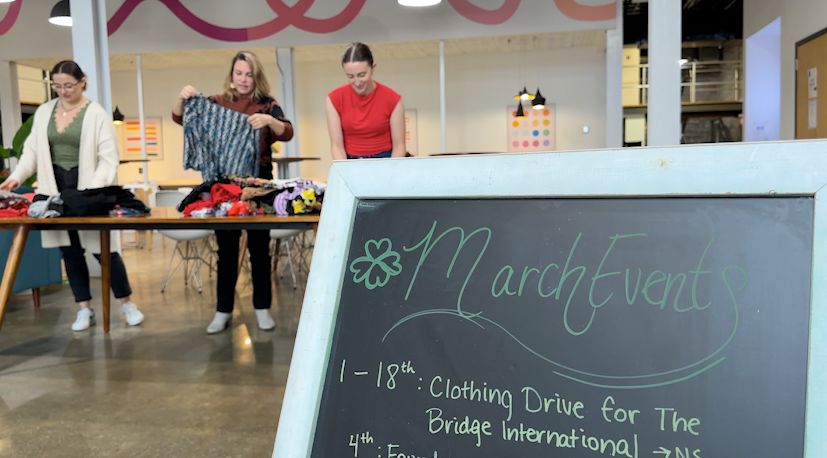
Jess Porta (middle) and others helping fold donated clothes for the clothing swap taking place the ‘Runway to Resilience’. (Spectrum News 1/Sydney McCoy)
“We do outreach with about 3,500 different individuals. That doesn’t mean they’re all trafficked. But, just in the time that I was working directly with human trafficking survivors, I served about 100 cases over the course of two years,” said Jess Porta, board chair for The Bridge International.
The National Human Trafficking Hotline says in 2024 there were more than 600 victims of trafficking across North Carolina. Porta, who has been working with survivors for around a decade, said trafficking is not like what is depicted in the movies and happens more than you think.
“A lot of people see human trafficking happening every day in front of them and don’t even recognize it because it doesn’t look like somebody is being forcibly kidnaped,” Porta said. “Human trafficking can also be through fraud or coercion. So, what we see a lot is maybe it’s a child who’s age out of foster care an, they don’t have a safe place to go. They go with what they believe is a trusted adult, but is not really a trustworthy person and ends up abusing them and trafficking them.”
A man identified by the group as Franco immigrated to the United States on an H1B visa to provide a better life for him and his family. When he arrived at the site, his employer convinced him to hand over his documents like his passport, ID and visa so he could not leave. The employer withheld payments and kept workers in dangerous situations. Through The Bridge International’s outreach program and a referral, he was able to get connected to legal services and basic necessities for him and his family.
Their newest venture is the Runway to Resilience fashion show. The group partnered with Petersons’ Consigning Design and local designers, like Sabrina Lee, Katie Allen, and local consignment shops like Fall Back Vintage. Each model walking will represent a survivor of Human Trafficking and their story. Porta said it is allowing survivors to flip the script and for survivors to take ownership of their own stories.
“From being a victim and to being a survivor and eventually to thriving and being really resilient, part of their own communities and a leader of their own lives and control of their own lives. These are people that haven’t had control of their own lives or even their own bodies for years on end, in some cases,” Porta said. She says both the models and the designers are passionate about human rights and social justice issues.
The names of the stories have been changed but the stories are real, highlighting the survivors’ stories and the different kinds of trafficking that happens every day.
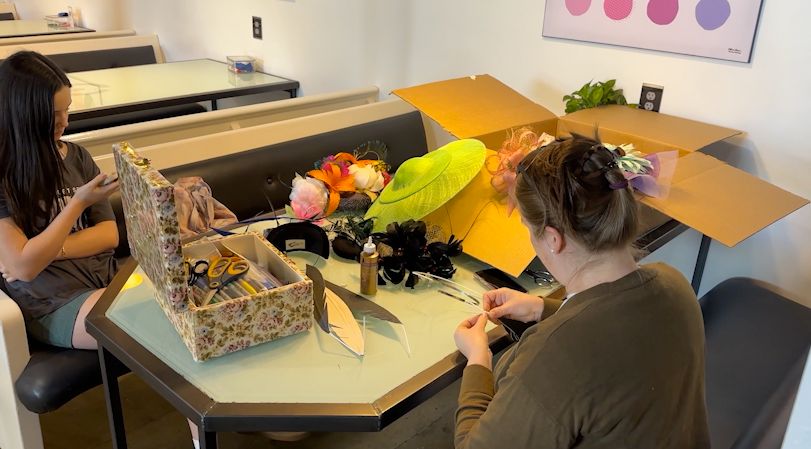
Designers prepping their pieces for the fashion show rehearsal that took place Tuesday night. (Spectrum News 1/ Fred Hall)
One story is that of Maria. She was groomed by an older man when she was 14 years old and living in a different country, according to the organization. Due to struggles in her life, she decided to move to America to marry the man who promised her an education and a job. Once she arrived, he locked her in a basement and forced her to be a prostitute for years. After a brutal escape, she connected with The Bridge International and is working toward opening a restaurant in North Carolina and building her family a home in her home country.
Data from the National Human Trafficking Hotline shows sex and labor were the highest types of trafficking in the state in 2024 and trafficking often occurred at places of domestic work. Porta said North Carolina’s location along the East Coast and major roadways, makes North Carolina a hot spot for traffickers.
“Because of the transit corridor is the major I-40, I-95, and just anywhere where it’s easy to kind of move, cars and items. It’s easy to move people. Unfortunately, North Carolina also has high poverty rates, a high amount of children in foster care systems. It also has agriculture,” Porta said.
Donations for the clothing swap will end Wednesday and the Runway to Resilience fashion show will take place on Thursday at 6 p.m. at Raleigh Founded. Leftover clothing items will be donated directly to survivors and to other organizations like Note in the Pocket. A silent auction and other activities will take place at the show with all proceeds from the event benefiting The Bridge International’s programs.