
Updated April 1, 2026 01:06PM
On Friday, March 27, a 60-year-old Czech climber named Peter Hruban was climbing St. Savvas, a 60-foot 5.12c on the sunbaked sport climbing paradise of Kalymnos, Greece.
At around 3:30 p.m., Hruban reached the chains, clipped the permadraws, and lowered to clean the route. He pulled his draws from the highest bolt on the route, then the second-highest, and his belayer prepared to lower him toward the next bolt. That’s when both anchor bolts broke, sending Hruban plummeting down the steep face. His next point of protection was the third bolt below the anchor, but under the force of the drop, this bolt also sheared off, and Hruban continued falling. He eventually slammed into an intermediate ledge not far above the belay stance, after a fall of roughly 40 feet.
A Lithuanian climber who witnessed the fatal Kalymnos fall, Kęstutis Skrupskelis, told Climbing that initially, Hruban didn’t seem seriously hurt. His only obvious injuries were superficial: bloody and scraped legs, lower back pain, and a sprained or possibly broken ankle. But he remained alert, oriented, and responsive. Hruban’s partners helped lower him off the ledge, and Skrupskelis and other climbers called 112, Greece’s emergency services number, for assistance.
Yet by 9:00 p.m., more than five hours later, rescuers were still struggling to carry him out of the hills. Hruban died before he ever saw a hospital.
A viral condemnation
On March 28, the day after the accident, Skrupskelis, a lifelong climber and the former president of the Lithuanian Mountaineering Association, posted to the Facebook group Kalymnos Climbing, decrying what he felt was a sluggish, poorly trained rescue response. His fiery post quickly racked up thousands of views and several hundred comments.
The issues began from the moment witnesses called 112, Skrupskelis said. The dispatchers spoke no English, making it difficult to communicate their location and the circumstances of the accident. It then took more than two and a half hours for the rescue team to reach the crag, an hour of that spent on the approach hike. “It takes climbers about 25 minutes to reach this climbing sector with all their gear,” Skrupskelis told me. “That rescue team’s level of physical fitness is highly questionable.”
When the rescuers did arrive, Skrupskelis said they were woefully underqualified. “The first rescuers to arrive had no equipment whatsoever,” he said. “They also had no medical knowledge on how to provide assistance or assess the victim’s condition. Perhaps they shouldn’t even be called rescuers, but simply well-meaning people who, while passing by, offered to help as best they could.” In his Facebook post, Skrupskelis was even more scathing. He said the men looked “more like construction workers who had just climbed down from scaffolding, carrying a first-aid kit from their car.”
First, the team argued amongst themselves about how best to move the victim, Skrupskelis claimed. Then a helicopter arrived, only to abort landings at two different drop points. One of those drop points, situated atop the crag, required a complex rope system to reach, and the rescuers lacked the technical equipment to rig these systems, so they relied on gear from Skrupskelis and other climbers.
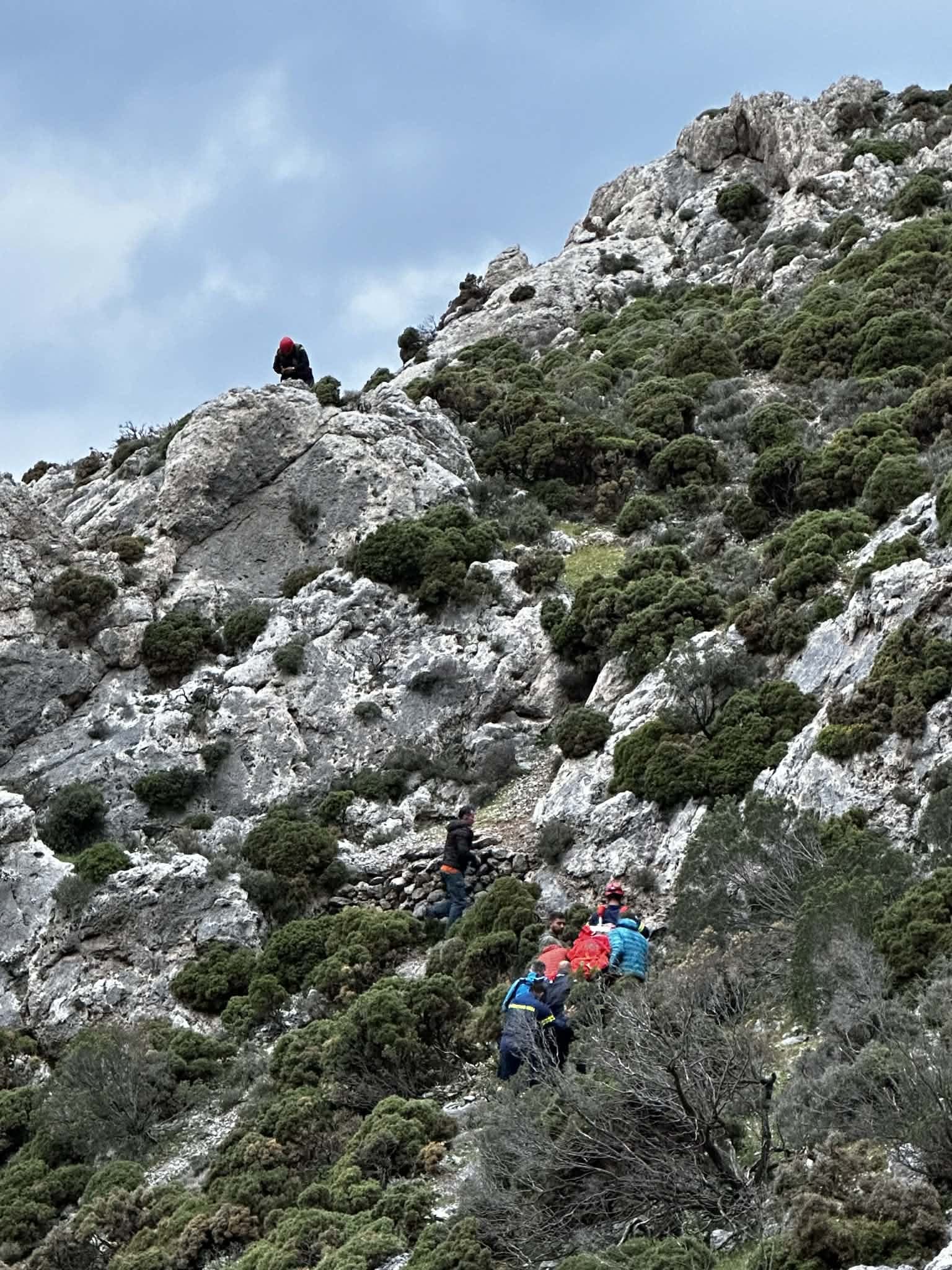
Weather deteriorated into heavy rain and strong winds, so after a third unsuccessful attempt to land, the aircraft retreated. The group then attempted to transport Hruban out on foot. But the crag’s approach trail is lengthy and technical. In the rain, after sunset, the hike is even more difficult. Around this time, Hruban’s systolic blood pressure began dropping, an ominous sign of internal bleeding. It was clear that his injuries weren’t just superficial, and he needed to get to a hospital immediately.
“It seems like madness,” Skrupskelis wrote on Facebook. He said one rescuer fell off a ledge and injured his ankle during the descent, while another cut his hands, which began bleeding heavily. Before the group could make it halfway down the trail, Hruban began lapsing in and out of consciousness. The chaos continued. “Pills and needles spilled out of the medic’s bag,” Skrupskelis recalled. “When the victim started vomiting, he was handed a bag stuffed with open syringes” to vomit into.
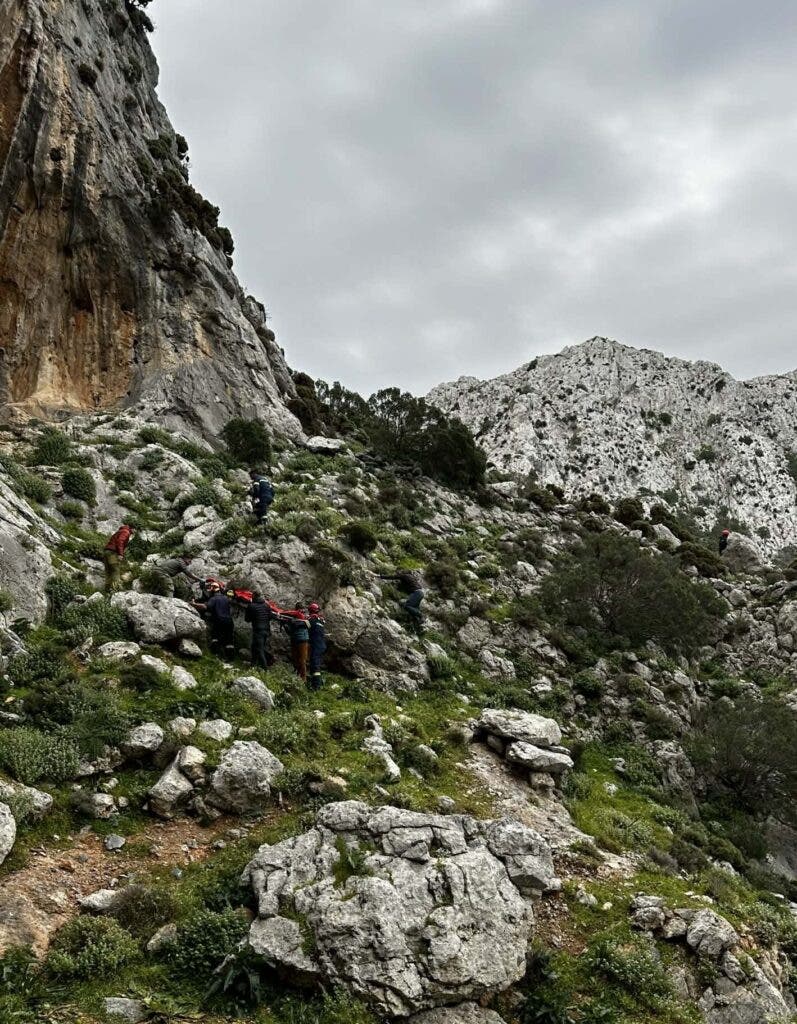
Not long after, Hruban was dead. The group was barely more than halfway down the trail. It took them another two hours to get the 60-year-old’s body down to the road.
How rescuers responded to the Kalymnos fall
Skrupskelis’s biting post prompted a variety of responses online, ranging from commiseration to condemnation. Climbers criticized the rescuers, the Greek government, and Skrupskelis himself for expecting anything different at a remote crag on an island in Greece.
The search and rescue (SAR) group who showed up to help Hruban that fateful day was the Kalymnos Rescue Team (KRT), a nonprofit, all-volunteer outfit. Members of the island’s fire department also responded to the rescue call. Hours after Skrupskelis’s post, Vassiliki Pliatsikouri, a KRT member who went on the call, shared her own response to the incident. Pliatsikouri called the criticism her outfit received wildly unfair.
“This was a tragic and deeply upsetting incident, and first of all, sincere condolences go out to the climber and everyone affected,” Pliatsikouri wrote. “However, it is important to respond fairly to the criticism directed at the volunteer rescue team and volunteer firefighters. These individuals are not a full-time, highly specialized alpine rescue unit like those found in larger or wealthier countries. They are volunteers and local responders who answered an emergency call and worked for hours in extremely difficult, dangerous, and exhausting conditions: steep terrain, poor access, worsening weather, darkness, and limited equipment.”
When I corresponded with Skrupskelis on March 30, he admitted that his initial post was “emotional” and “a bit inappropriate,” but he said he felt it was necessary. He said he shared his account not to condemn the rescuers, but to inform climbers visiting Kalymnos who ought to be aware of the limited infrastructure in place to help them in case of an emergency.
“I understand that the rescuers tried to help out of the goodness of their hearts,” he told me, “but unfortunately, they could only do so within the limits of their abilities, competence, and knowledge, and those were far from sufficient.”
To get the other side of the story, I called up Michalis Gerakios, one of KRT’s leading members. He wasn’t present during Hruban’s accident, but has volunteered with KRT since its founding, in 2013, and serves on its board. He also helped conduct an after-action review of the March 27 operation.
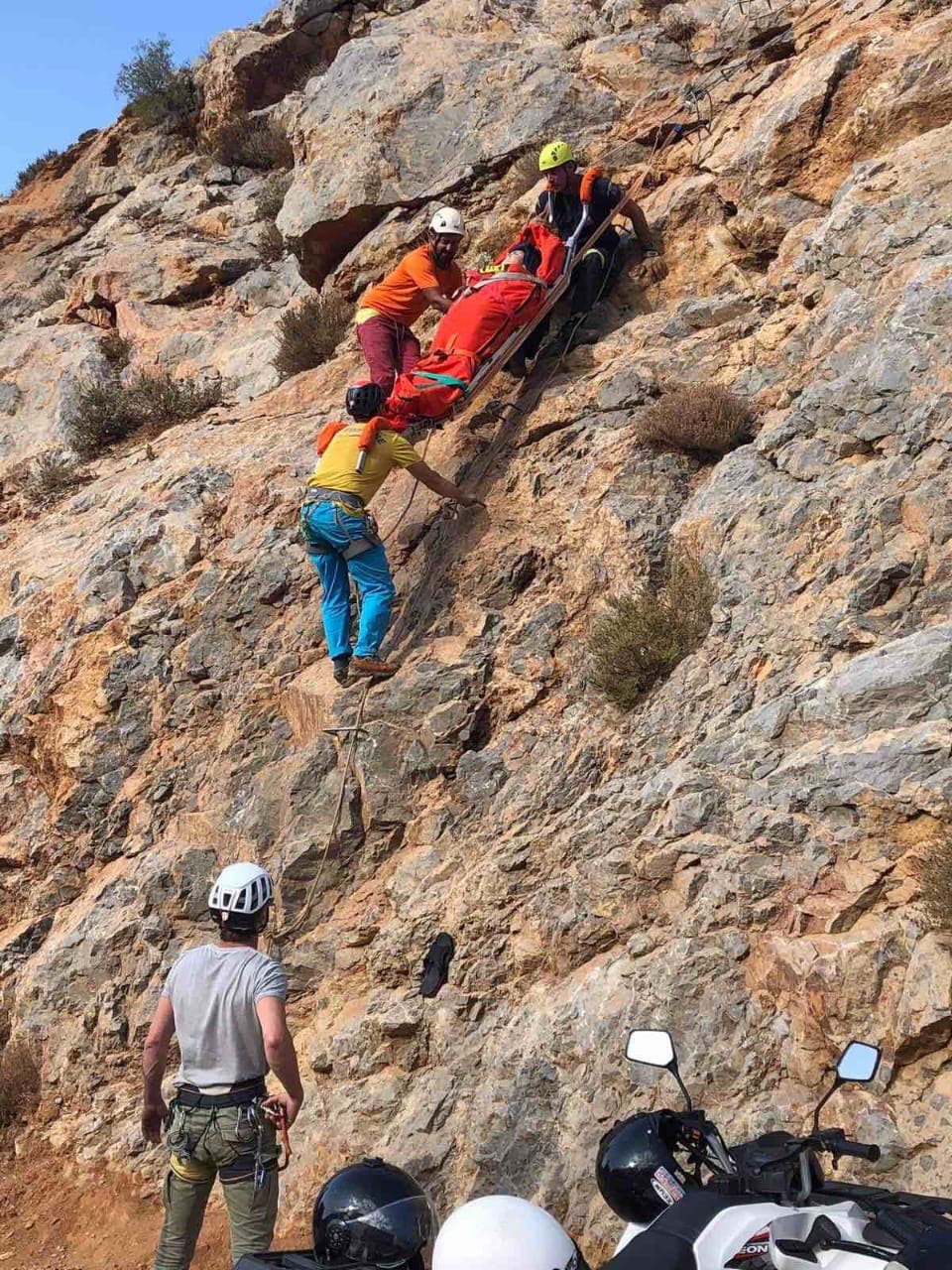
Gerakios said that while Skrupskelis’s post was factually correct, it “contained many exaggerations.” He admitted that the first responders who arrived on-scene were underprepared, but attributed that to crossed wires between the dispatcher and witnesses. “There was a serious miscommunication through the emergency number,” he said. “We thought the call was for a broken leg.”
Gerakios explained that the KRT incudes a core group of around seven, including himself, with a high level of training in first aid and rope access. But around 50 volunteers also stay on-call for KRT to respond to minor incidents. Due to the miscommunication about the nature of the emergency, the volunteers moved slowly. And they weren’t equipped to deal with the situation when they arrived.
Why this miscommunication happened isn’t clear. Skrupskelis—who admittedly indicated that he and other witnesses also didn’t realize the severity of the situation when Hruban first fell—said it was because none of the emergency dispatchers spoke English, making it hard to communicate, but Gerakios denied this. “I’ve spoken to these dispatchers. They all speak perfect English,” he told me.
Gerakios said that sometimes, emergency services in nearby Turkey inadvertently pick up the 112 calls from the northeastern side of the island, where the party called from. This could have resulted in the language barrier, but the jury is still out. “There will be an official inquiry, so they will review recordings of the call,” he said. “We will find out.”
Gerakios and Skrupskelis did seem to agree on one point: Visiting climbers shouldn’t overestimate rescue capabilities in Greece. “The condition of the government has reduced many services here,” he admitted. “We do not have an official helicopter rescue service. When helicopters are used here, it’s mainly for water rescues. We do not have mountain rescue helicopters and pilots.”
It’s a systemic failure, he noted, but not one his volunteer outfit could fix with the right resources. “We have had other accidents in the mountains—avalanches, for example—where people would have been rescued if we had government rescue services. Within the climbing community, we’ve tried to push for this, but the money never comes.”
Gerakios said that the lead KRT rescuer tried to convince Hruban’s partners and the other climbers on scene that a helicopter rescue was unlikely. They told them to begin moving Hruban out on foot immediately instead. He said that Hruban’s group—possibly assuming the helicopter response would be similar to that found in mainland Europe—preferred to wait for the helicopter. If they had begun moving Hruban out on foot immediately, Gerakios said, perhaps the injured man would have survived.
“We understand the emotion, the shock, of the person who wrote that article,” Gerakios added, referring to Skrupskelis’s Facebook post. “But we consider the article very judgmental and not fair to Kalymnos Rescue.”
Despite the backlash online, Gerakios said he believes most members of the Kalymnos climbing community understand his group’s limitations and appreciate their work. “We’ve responded to dozens of accidents since 2013,” he said. “People who climb here know what we do. We get a lot of hugs, we get a lot of donations. This situation made us a bit sad, because we are doing our best. But we don’t hold any anger. There was just wrong communication.”
A ticking time bomb on Kalymnos’s cliffs?
Claude Remy is a veteran Swiss climber who, along with his brother Yves, was one of Greece’s leading sport developers in the early 2000s. He has bolted hundreds of routes in Kalymnos, and more than a thousand around Greece. Remy said Skrupskelis’s post was inappropriate and unnecessary. “Local people do their very best, they are volunteers,” he told me. “It is very clearly written in Greek climbing guidebooks that there is no official rescue service here. You are climbing at your own risk.”
The issue in question, Remy said, is not the quality of Greece’s rescue services, but the quality of fixed hardware at seaside Greek crags like Kalymnos. This is an accident that simply should not have happened. Not only did both anchor bolts on St. Savvas break, but they didn’t even snap under a fall. They fractured merely under a climber’s body weight, while he was lowering, and then a third bolt broke on the way down.
Unfortunately, Remy said, the cause of this accident is also fairly simple. St. Savvas is a very old route in a harsh maritime climate, with exposure to salt, humidity, and temperature fluctuations. It was bolted nearly a quarter of a century ago, in 2002, and hadn’t been retrofitted.
“Back then, many routesetters used what they could get for free, or the cheapest gear available,” Remy told me. He hypothesized that the bolts on St. Savvas could have been Inox 304—a stainless steel material not recommended for marine environments—or an even lower-quality metal. “Corrosion with salty air destroys this equipment,” he said.
“Nearly nobody was aware of all the technical aspects about safety or quality of the gear [back then],” he added. “You did not consider what would happen 20 to 30 years later, or ever imagine that your routes would be a part of a tourist climbing industry.”
Last year a nonprofit, Rebolt Kalymnos, formed to remedy this very issue. Dimitris Gerolympos, the organization’s communications director, told me that somewhere between 500 and 700 routes on the island were established prior to 2005 and haven’t been rebolted or maintained, and are thus at risk of experiencing a failure like what happened on St. Savvas.
Still, Gerolympos said hardware failures of this caliber on the island remain extremely rare. “Over the past two decades, only one or two bolts have ever broken, and never at anchors,” he told me. “A few serious accidents have occurred, but these were due to climbers’ errors. This recent incident represents the first serious accident caused directly by hardware failure.”
In the wake of Hruban’s death, Rebolt Kalymnos posted a public maintenance log onto their website. The organization listed all routes on the island that have been rebolted, repaired, or otherwise confirmed to be in adequate condition since 2015. They urge anyone visiting the island to check it before tying in. Long-term, the group is also developing a database to proactively track aging hardware through user reports. “There’s still a significant task ahead to address these older routes, but the system will help manage future maintenance proactively,” Gerolympos said.
But better record-keeping and a public database is perhaps only a partial solution to a broader issue: unrealistic expectations.
The accessibility, balmy climate, and high quantity of pristine sport routes on an island like Kalymnos can lull climbers into treating the island like a sprawling limestone gymnasium, complete with the expectation of reliable emergency services. Last week’s death is a sobering reminder that climbing is still an adventure sport, fixed hardware isn’t immune to the time and the elements, and rescue is never a guarantee.