Sustainability author and educator Anna Lappe said, “Every time you spend money, you’re casting a vote for the kind of world you want.” Shopping is at the forefront of a capitalist society, especially as we approach an end-times tipping point. Some say that there are enough items in the world already to clothe the next six generations, yet modern consumers buy five times more clothing today than they did in the 1980s.
Visit the Chicago Fair Trade Museum to learn how to improve America’s unsustainable waste stream, and then facilitate your spring cleaning by donating your own surplus clothes to neighbors in need, rather than landfills, via District 19 Mutual Aid. Also see info below about the April 23 clothing swap and how you can donate used clothing.
Clothes are obviously necessary but are often either too expensive to purchase or too cheap to last. So many consumers buy low then donate when done, or bored, in a devastating cycle that destroys workers’ lives as well as every corner of Mother Earth.
Earth.org notes that fast fashion is the second-biggest consumer of water and responsible for about 10% of global carbon emissions, more than all international flights and maritime shipping combined. Unfortunately, the industry’s problems are often overlooked by consumers. Fast fashion relies on overproduction and overconsumption and the average American generates 82 pounds of textile waste every year.
Chicago Fair Trade Museum and Store
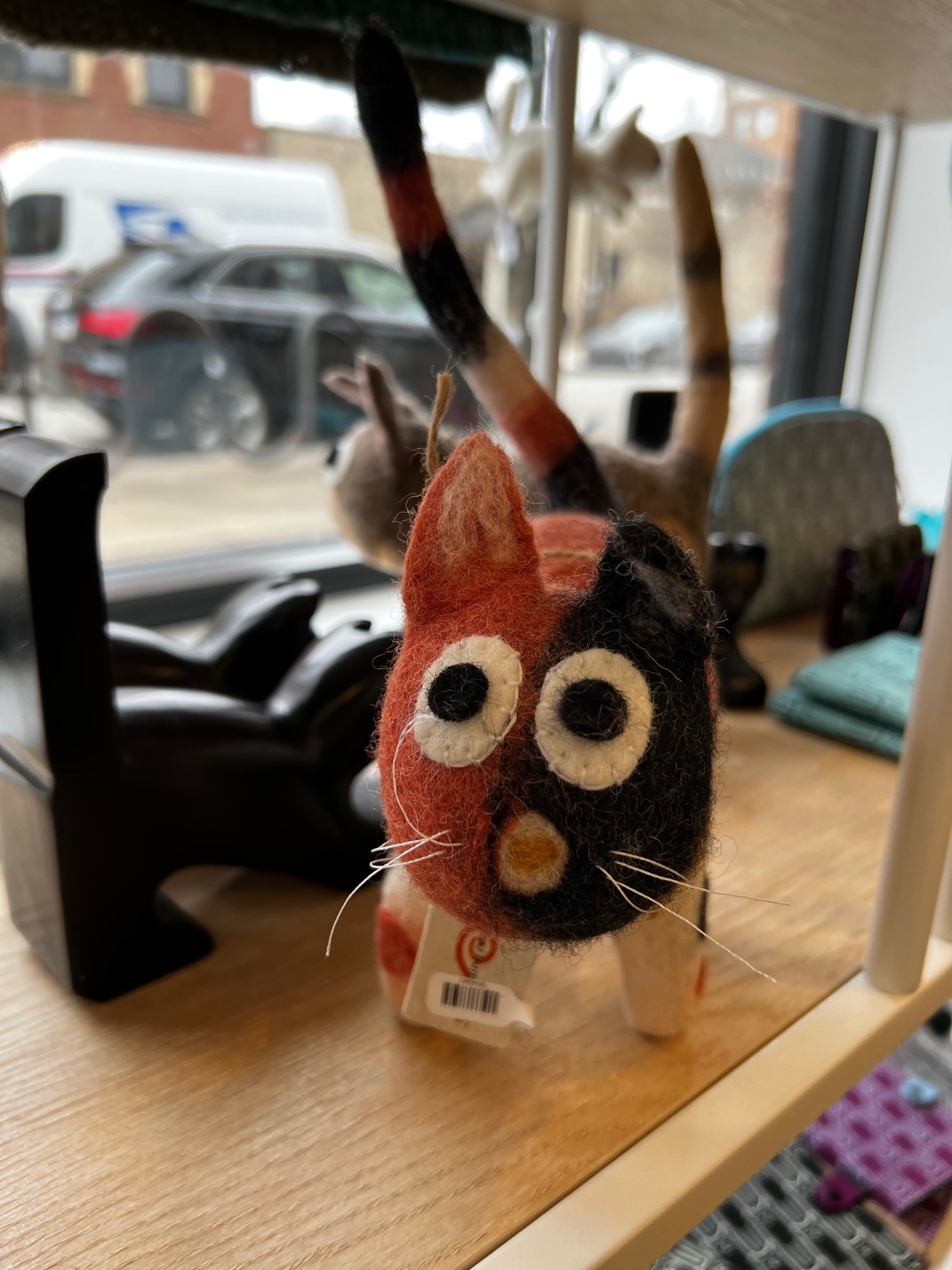
At the Chicago Fair Trade Museum (CFTM) at 4704 N. Broadway (CTA Red Line Wilson stop), you’ll learn about the world’s clothing pipeline in an accessible, vivid exhibition, as well as buy thoughtful clothes and gifts made by and supportive of global artisans, rather than conglomerates, whose stories often accompany the objects and who are paid fair wages.
Chicago is an appropriate location for this initiative, since the Windy City hosts the highest concentration of fair-trade businesses in the U.S. The bright Uptown corner space, open Wednesdays-Saturdays 12noon-5pm, became the world’s first Fair Trade Museum in 2024 after over a decade as a holiday pop-up shop in various locations around town.
Historical Supply Chain Exploitation
For centuries, mainstream international trade has exploited people and the planet for profit. Initially conceived in the late 1700s by groups like abolitionists and Quakers, the fair trade movement strives to pay reasonable wages to economically disadvantaged workers, provide safe working conditions, and protect the environment.
Dr. Martin Luther King Jr. said, “Before you finish eating breakfast in the morning, you’ve depended on more than half the world.” The first CFTM exhibit reminds us that the breakfast table is supplied globally, and frequently harms human workers and ecosystems when harvested. Orange juice can come from the US, but also Mexico and Brazil, which can also supply coffee beans. Top global bean producers also source from Colombia and Vietnam. Brazil and India produce the sugar for your table, along with Thailand, and cocoa comes from Cote d’Ivoire, Ghana and Ecuador. Ubiquitous palm oil also comes from Thailand, as well as Indonesia and Malaysia. The “green gold” that is avocados originates from Mexico, Colombia and the Dominican Republic, and tea is from Kenya, China and India. Maple syrup for pancakes is Canadian or Dutch, while bananas come from India, China and the Philippines.
Bad Bananas
The museum has a section devoted to the brutal politics of the banana industry, recounting how producers have massacred workers and displaced thousands in Central and South America. In 2024, Chiquita became the first US corporation held liable for human rights violations; a clever interactive display using a refrigerator explains that trauma and assigns banana-harvesting roles and earning rates for workers, plantation owners, shippers, grocery chain owners and importers.
The next series of CFTM spinning signage outlines the timeline of international trade from the expansion of Mediterranean trading routes in the 10th-13th centuries, including those of Marco Polo, to the unconscionable triangular transatlantic slave trade, which lasted for three centuries and resulted in the abduction of an estimated 12 million African people.
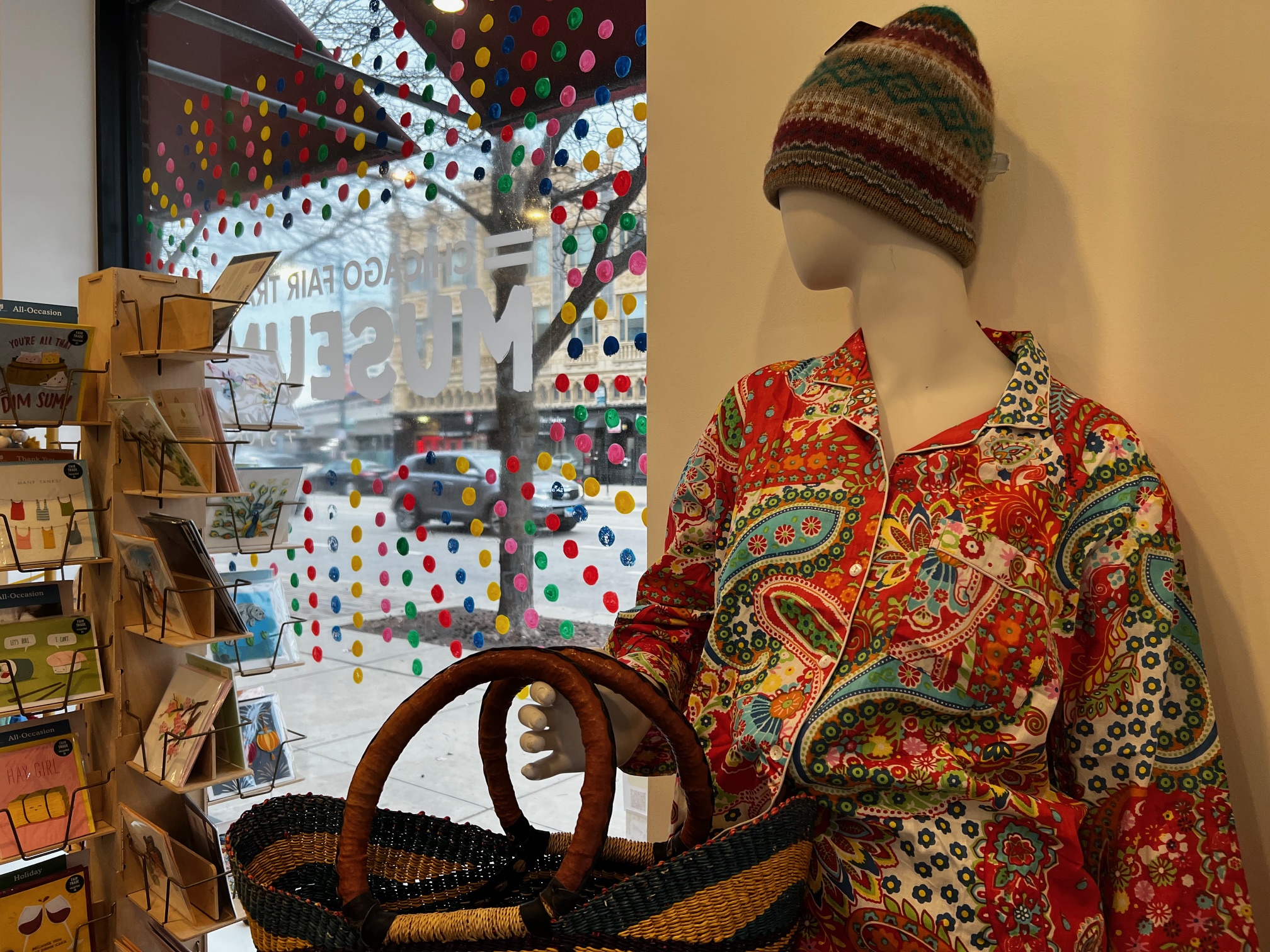
Photo by Karin McKie.
Economic Policy in Practice
Trade economics are also parsed here in these clear, concise hanging placards, from Adam Smith’s laissez-faire, “let it be,” anti-government non-intervention (currently exemplified in the World Trade Organization) to the industrial revolution and Keynesian interventionist thinking post-stock market crash. Keynes inspired Franklin D. Roosevelt’s post-recession economic recovery plans, like the creative Works Progress Administration creations (some of which are featured around Chicago).
Genesis of the Modern Fair-Trade Movement
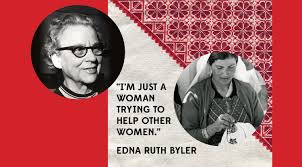
The modern fair-trade movement began in 1946, when Kansas churchgoer Edna Ruth Byler visited Puerto Rico and started selling local craftswomen’s linen wares back on the mainland as a more ethical alternative to mainstream trade. “I’m just a woman trying to help other women,” Byler said. Current fair trade-certified products can be confirmed by labels from Fairtrade America, Fair Trade USA, and Fair for Life.
Clothing Supply Chain Feeds Plastic Pollution
Another sobering section of the CFTM talks about plastics in the clothing supply chain. Over 60% of clothing is made from plastic, with serious repercussions, as the exhibit outlines:
- Fashion causes 20% of industrial wastewater pollution worldwide
- Every year, the industry uses 93 billion cubic meters of water, enough to fill 37 million Olympic swimming pools
- A garbage truck of clothes is burned or landfilled every second, and 85% of all produced textiles are sent to waste dumps
Washing clothes releases 500,000 tons of microfibers into oceans annually, since a single laundry load can release over 700,000 of those fibers. Machines cause friction that breaks down synthetic fibers into microscopic plastic threads. Washing full loads less often, with full loads in fiber-catching bags, and air-drying clothes can help reduce this massive environmental impact.
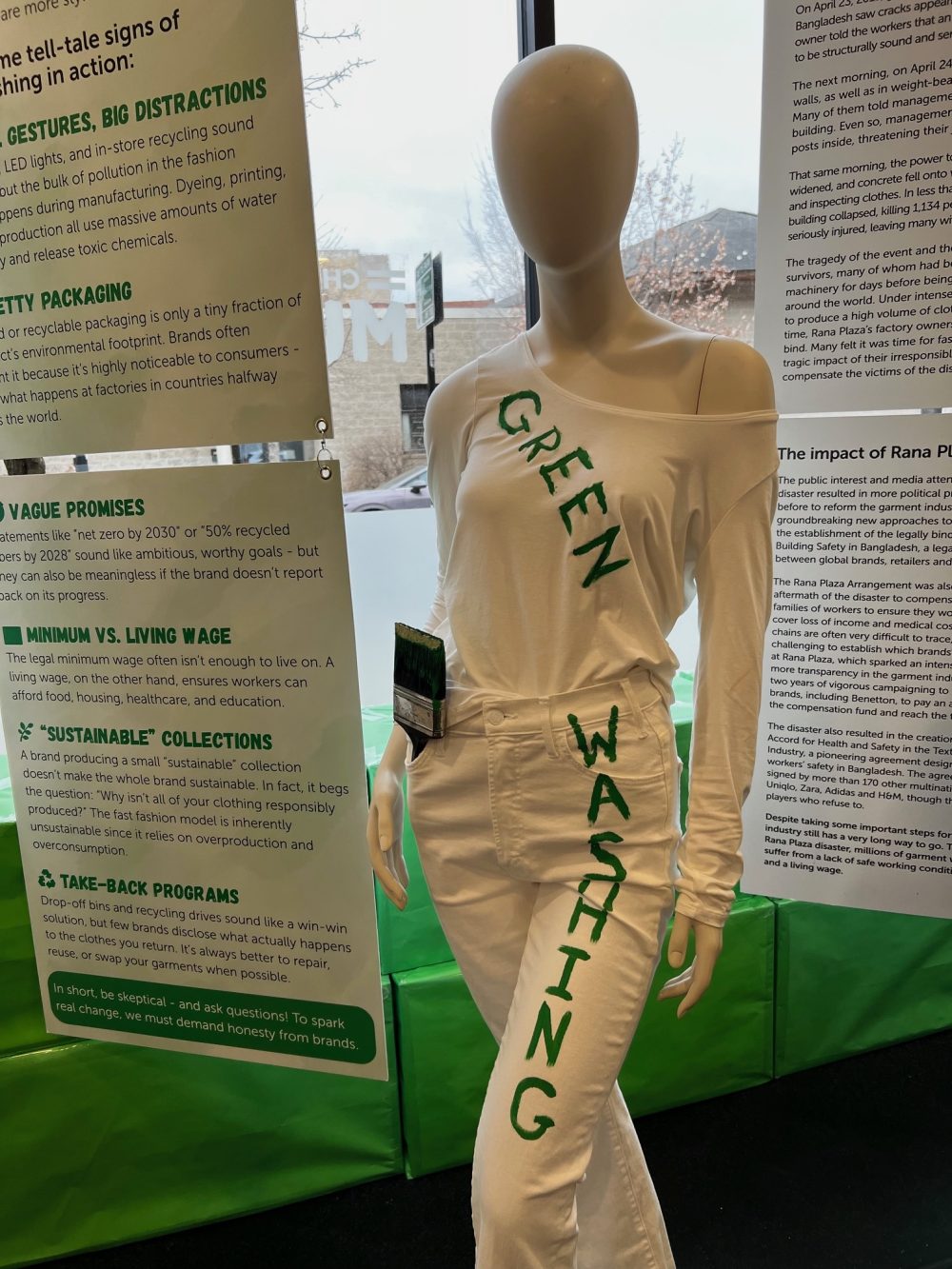
Corporate “Green-Washing”
The corporate tendency to “green-wash,” or to lie to consumers about perceived environmental protections, is explained in this museum as well, parsing sub-living wages, vague business promises and take-back programs. Bangladesh’s Rana Plaza disaster in 2013, history’s worst garment industry catastrophe when over 1100 workers died in a factory collapse, is recounted here too.
Toxic Clothing Dumped Globally
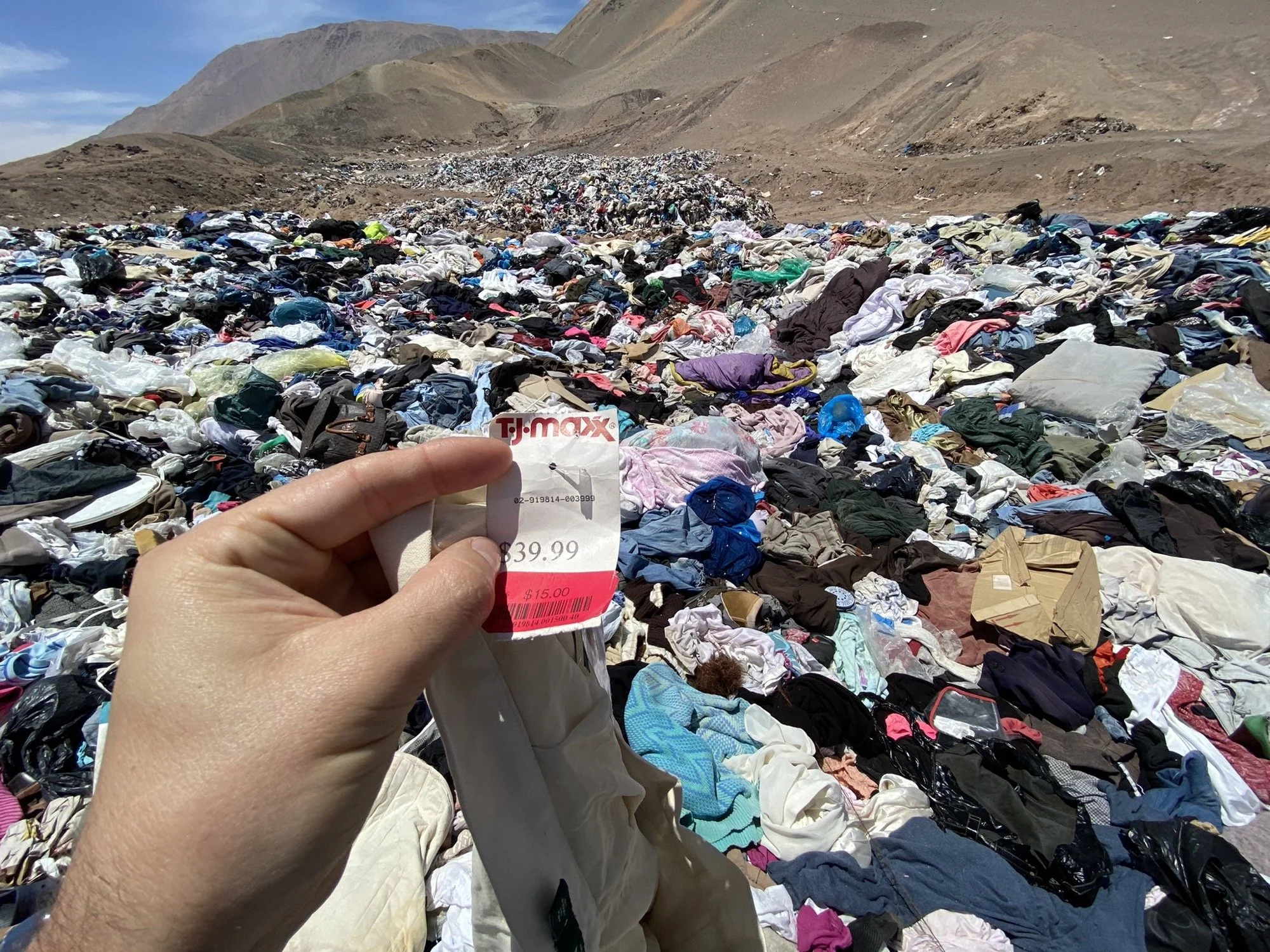
Text and photos show a fast fashion dumping ground in Chile’s Atacama Desert, one of the driest places on Earth. Clothing manufactured by children in Asian sweatshops, mostly sold to Americans and Europeans, ends up there. In 2021, this once pristine region was covered with 39,000 tons of discarded, primarily synthetic and non-biodegradable, garments, which leech toxins into the ground water because it might take over 200 years to decompose, or into the air when clothing piles are burned. The most prevalent discarded brands include Old Navy, H&M, Adidas, Nike, Levi’s, Zara, Hugo Boss, Under Armour, and Tommy Hilfiger.
Chicago Women Leaders and Labor Legacy
The museum also commemorates and celebrates Chicago’s long labor legacy, with placards explaining the Battle of the Viaduct, the Haymarket riot, the Memorial Day massacre, two Pullman strikes, Upton Sinclair’s literary expose of the stockyards The Jungle, and the 2021 El Milagro Tortilla Factory strike.
Women in the Chicago labor movement are also celebrated on the wall, highlighting Mary Harris “Mother” Jones, Jane Addams, Julia Lathrop, Florence Kelly, Lucy Gonzalez Parsons, Agnes Nestor, and Addie Wyatt.
Fair Trade Museum Offers Knitting and Mending Workshops, Plus Biannual Clothing Swaps
“Running a museum is a new and different route to get the public interested in and excited about fair trade,” the website notes. The museum builds on the pop-up shop audience to provide education about the benefits of fair trade and how to get involved in the movement. The store also offers many community-friendly and sustainable events, like Get Knitting! a craftivist knitting circle for all levels, with the next meeting on Saturday, February 28, 2-4pm.
Board member and resident stitcher Kristine Brandel said that the CFTM hosts crochet and weaving events in addition to knitting, so that participants can see how much work these activities take. “We want to honor the work of the craftspeople who make these garments in the first place,” she said. “And also remind folks that these artisans should be paid properly.”
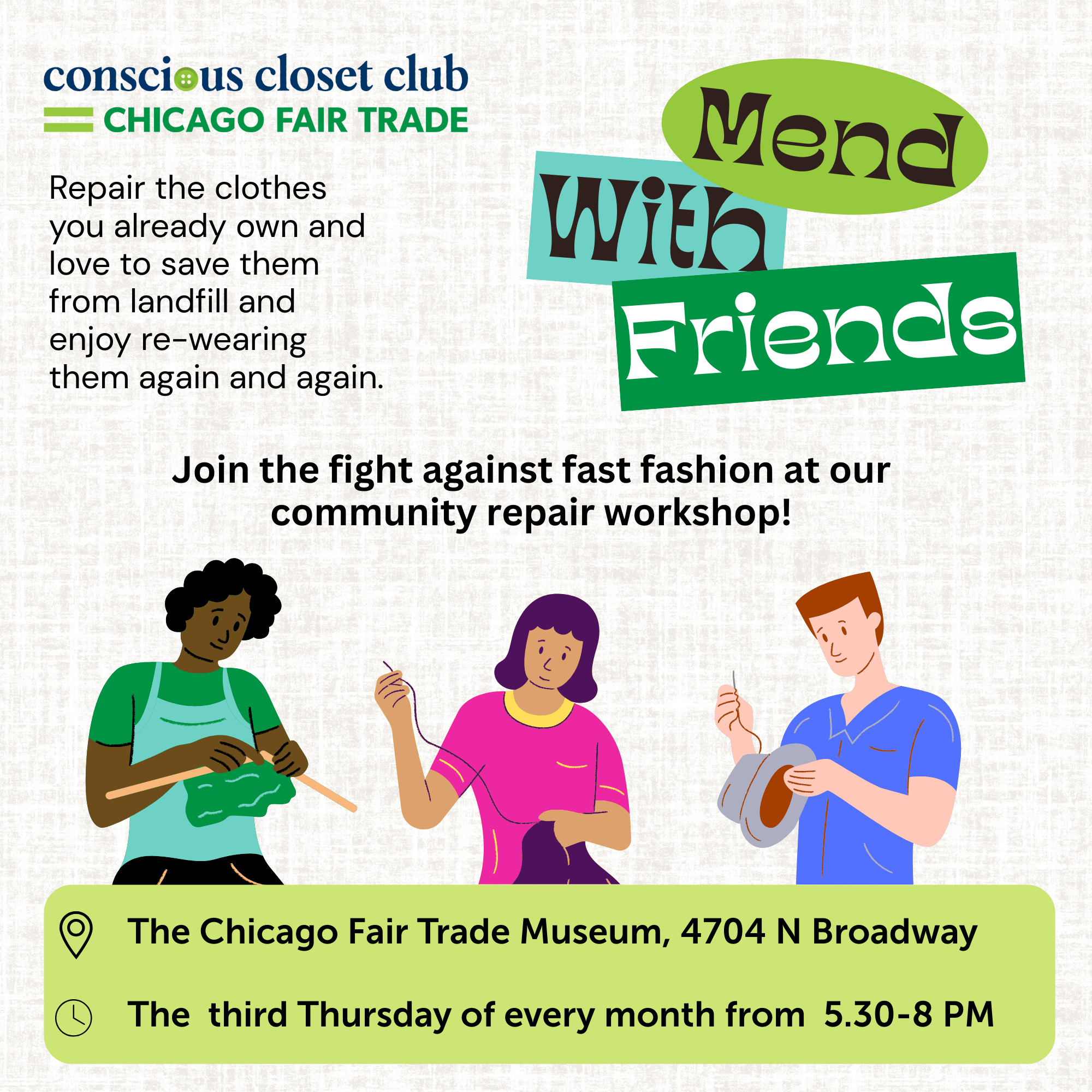
The Mend with Friends meetup happens the third Thursday of every month to repair existing clothes. Brandel also suggests visiting area outlets to get repurposed bulk materials from art supplies to zippers at places like the Creative Chicago Reuse Exchange, and The WasteShed in Humboldt Park and Evanston, which collects reusable art and school materials and offers them to teachers, artists or anyone at low- or no-cost.
In partnership with the Department of Cultural Affairs and Special Events, the CFTM offers twice-yearly clothing swaps at the Chicago Cultural Center. The next free event, called “Under the Dome” (the Preston Bradley Hall Tiffany art glass one, to be exact), will feature live music during the clothing exchange, will be held on Thursday, April 23, 5-9pm. Attendees can leave with up to five items even if they don’t bring any donations. CFTM will accept clean, gently used clothing donations at the Uptown store April 10-12 (Sunday included) for those unable to attend the swap but want to spring-clean their closets.
Chicago Textile Recycling in Seward Park also accepts clothing, shoes and household textiles like curtains, and the Chicago Furniture Bank can pick up furniture and larger household goods to donate to neighbors in need. Sadly, the Rebuilding Exchange locations in Chicago and Evanston, which repurposed building materials, closed last year.
The nonprofit Chicago Fair Trade Museum relies on donations and volunteers, and also offers classes and club tours. The museum and store encourage patrons to consider their parts in global commodity chains with an eye towards reduction. If items must be purchased, then commit to buying second hand. Chicago’s other fair trade store options include Gather: Consciously Curated in Evanston and Ten Thousand Villages in Glen Ellyn (a national chain as well as the final transformation of Byler’s Puerto Rican project), plus a panoply of thrift stores and online options like Poshmark, perfect if you already know your favorite brands and sizes.
Mutual Aid Is Robin Hood in the ‘Hood
Other responsible destinations for surplus clothing in decent shape include Chicago’s many mutual aid organizations, like the all-volunteer District 19 Mutual Aid (D19) in Lakeview, founded in April 2023 to support unhoused and migrant families, or anyone requesting assistance. Robin Hood in the ‘hood, as it were, rounding up overflow items from affluent neighborhoods and redirecting commodities to those in need (apply to volunteer here).
Housed at, but not directly affiliated with, Resurrection Lutheran Church, at 1050 W. School St. at Seminary, D19 receives community and partner organization donations; volunteers first sort, organize and label. They specialize in “loose-sized” items (to ensure that items will fit requesters) for all ages, from babies to seniors, such as sweatpants, sweatshirts, t-shirts and jackets plus some textiles (like blankets, sheets and towels), toiletries (travel- and full-sized), and special items on request, like baby strollers or crutches. St. Gertrude’s Church also runs a helpful Medical Lending Closet.
Spring Clean Your Closets to Help Your Neighbors
Clean, gently used or new donations can be dropped off at the church on Tuesdays and Wednesdays from 5:30-8:30pm, Thursdays 9a-12:30pm, and Saturdays 9am-1pm (ring doorbell on School Street), just in time for spring purging season. Volunteers can also pick up items from your home if requested.
D19 can redistribute maybe 40% of donations received. Specifically sized items like jeans, business clothes or out-of-season pieces, are passed along to other charitable organizations like Out of the Closet in Boystown and Hyde Park, which benefits HIV care (and also offers HIV testing), and the Mt. Sinai Resale Shop at 2902 N. Clark, which supports hospital patient care.
Currently, the most difficult items to keep in stock are male clothing, likely because men tend to wear clothes until they disintegrate (ew), and probably have fewer clothes overall because they aren’t targeted by advertising to buy as much as women for different activities and seasons. Another possibility is female weight fluctuations before and after giving birth, or during other life events.
Donate Items or Cash to the Online Wish List
Volunteers process incoming requests (made here) and pack donation kits, which volunteer drivers deliver all over the city. In addition to redistributing donated clothing and necessities, D19 provides each requester and family members with three pairs of new underwear and socks, usually supplied by generous community members who purchase items from an ongoing wish list. Folks who don’t have items to donate, or prefer to help from afar, can regularly purchase underwear, toiletries, baby and other items from that regularly updated online list. Helpers can also make monetary donations, 100% of which goes to neighbors in need (donate here). As federal government assistance disappears, neighbors are encouraged to step up to clothe our community.
Visit the Chicago Fair Trade Museum to learn how to improve America’s unsustainable waste stream, and then facilitate your spring cleaning by donating your own surplus clothes to neighbors in need, rather than landfills, via District 19 Mutual Aid.