
Final Fantasy is undeniably a legacy franchise at this point, a true staple in the gaming industry and one of the oldest and longest-running RPG series of all time. The legacy it has left behind and the one it continues to forge are enviable and hard to replicate. Even when Final Fantasy has been deemed a failure, it has somehow managed to bounce back, its hardcore, dedicated fans rushing to its defence and supporting any future releases without question. Frankly, it deserves such dogmatic belief and admiration from fans, of which I rather proudly consider myself.
However, it turns out that should you be a fan of one of the greatest JRPG series of all time, well, I’m sorry to break it to you, but you’re old. Apparently, Final Fantasy isn’t resonating with younger players, and that is quickly becoming a serious problem. While the cause has been largely identified, the solution hasn’t been discussed much. Fortunately, I’m here to save the day. Well, not really, but I have thoughts and a lot of strong feelings about both the current direction of Final Fantasy and the road it needs to take, not just to encourage younger gamers to get excited about it, but also to bring the series into a bold new era.
Final Fantasy’s Yoshi-P Thinks Young Gamers Aren’t Interested In The Series

Naoki Yoshida (better known as Yoshi-P), the director of Final Fantasy 14 and 16, recently explained in an interview celebrating the release of the new mobile release, Dissidia Duellum Final Fantasy, that he believes “for younger generations […] the recent entries in the series may have been harder to engage with” as a result of “the release intervals for new titles having gotten longer.” While his comments set the internet ablaze for all of two seconds, I can’t help but agree. This is an industry problem as much as it is a Final Fantasy one, but this series illustrates it best due to its long-running nature and sheer number of releases.
There were 14 years between the releases of the very first Final Fantasy game and Final Fantasy X, which is also the exact number of years between Final Fantasy 13 and 16. Square Enix is taking longer to develop new titles, and that poses a problem if one of them becomes a critical and commercial failure. Final Fantasy 13, for example, was widely derided when it first came out, as were Final Fantasy 14 and 15. That’s three bad games in the space of 7 years. There then wasn’t a mainline Final Fantasy game for seven more years, which meant that people growing up on these games in particular may never have seen a good Final Fantasy title until adulthood. Conversely, if three of the ten FF games released between 1987 and 2001 were bad, then there were seven others to pick up the slack.
Again, this is an industry-wide problem, as the same can be said for any modern series, but it is particularly prevalent in Square Enix’s legendary JRPG series, as some of the worst Final Fantasy games are those released in the past decade or so. Of course, this is all speculative, and one could dismiss Yoshi-P’s feelings as merely the ramblings of an older gamer. However, it turns out there’s data to back up his findings, as Circana revealed that 62% of people who played Final Fantasy 7 Rebirth in the US were over 35 years old, and 77% were over 30. Sure, 30 isn’t old, per se, but it showcases that Square Enix is struggling to make Final Fantasy appealing to the demographic it once presided over with ease. Of course, there is a solution to this problem, but one that will be challenging to execute and likely met with much derision from Final Fantasy’s older fans.
Final Fantasy Needs An Urgent Rebrand
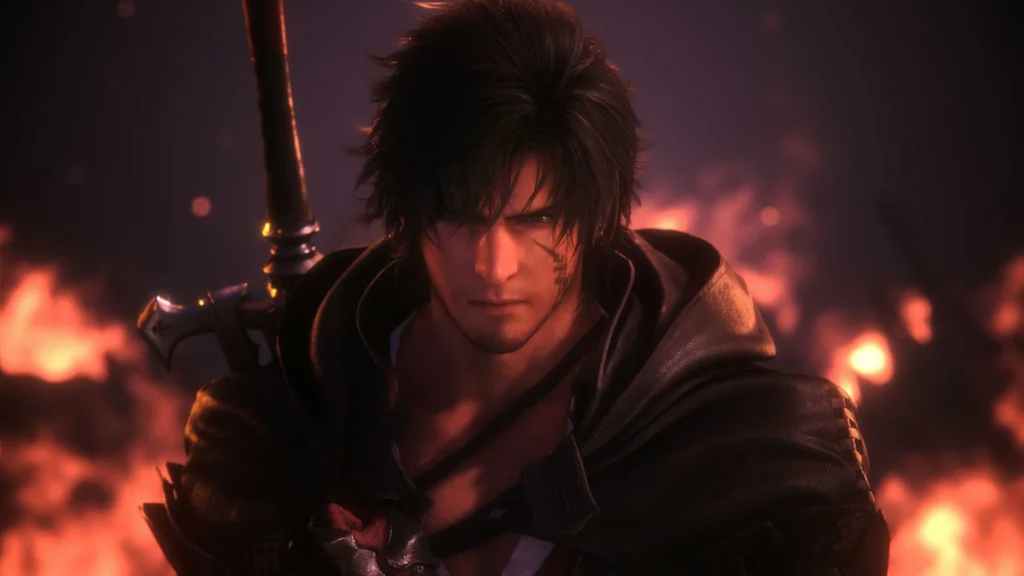
Final Fantasy’s biggest problem is that it is both too rooted in nostalgia and unbelievably allergic to its past. That may seem like a contradiction, but it is true. The Final Fantasy 7 Remake trilogy feels specifically targeted at returning players, despite Rebirth’s controversial changes from the original source material. Sure, you can enjoy FF7 Remake if you haven’t played the original, and indeed, I suspect there are many who have. Yet, I can’t help but feel like the entire project feels aimed at those with prior knowledge who can appreciate the aforementioned changes and get the most out of seeing their favorite characters brought to life using modern-day technology. Those statistics from Circana would certainly support this claim.
However, as much as Square Enix seems intent on chasing nostalgia, even if it hasn’t proven to be terribly financially successful, it is also resistant to embracing the series’ legacy, especially when it comes to turn-based combat. Final Fantasy 16 was a character action game with few Final Fantasy-feeling features. It lacked a traditional party, the setting was unbelievably dour, it focused far too much on warring factions and Game of Thrones-esque politics, and even the references to Final Fantasy iconography didn’t have quite the same impact. I’m not saying that Final Fantasy 16 was bad, but rather that it didn’t feel much like a Final Fantasy game.
The mainline series needs to ditch this style of combat and embrace some of Final Fantasy’s most iconic traits once again. It needs the colorful worlds, memorable party members, and genuine moments of tear-jerking sorrow from the older games like FFVII and Final Fantasy X. Square Enix also needs to stop focusing on remaking older games and instead focus on delivering spin-off games like Final Fantasy Type-0 or even Final Fantasy’s most controversial entry, Dirge of Cerberus. These would help bridge the gap and keep people engaged with the series, much like Yoshi-P has called for. Basically, Final Fantasy needs to become Clair Obscur: Expedition 33.
Final Fantasy’s Past Can Save Its Future
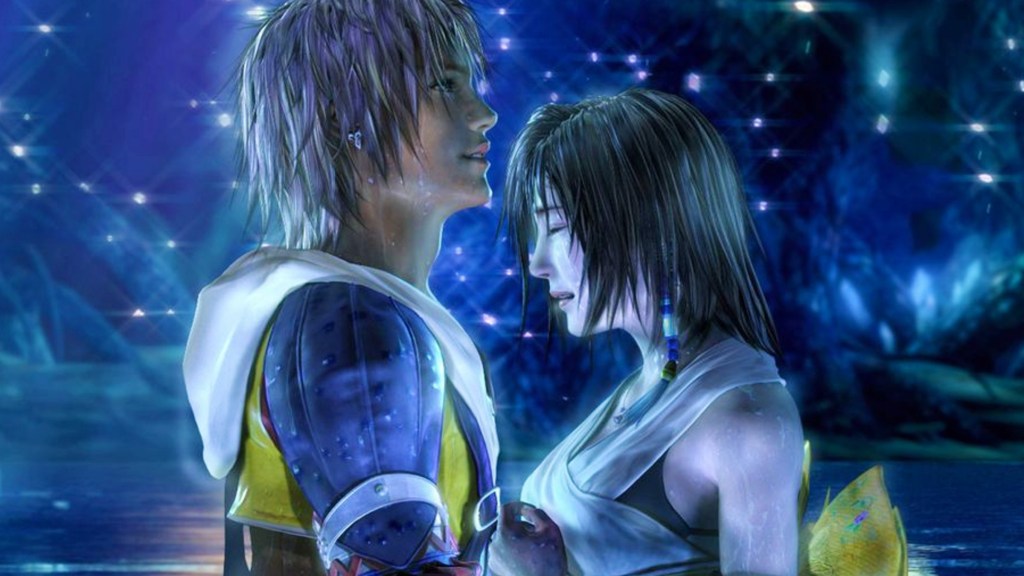
I know, at this point, it is becoming a running joke how much people believe Clair Obscur should influence Final Fantasy, as it has seemingly popularized turn-based combat for a new generation. However, it is largely true. Clair Obscur is ostensibly everything Final Fantasy once was and should be today. It features everything I just listed and more, perfectly balancing the sombre with the lighthearted banter needed to make your cast memorable. It was also made on a substantially smaller budget, yet felt significantly more premium.
Final Fantasy could stand to learn from Sandfall Interactive’s legendarily good JRPG, but also from its own history. There is no reason Final Fantasy should fall to the wayside and become a series only enjoyed by its dwindling dogmatic fanbase from over 30 years ago. It should reclaim its rightful place at the top of the genre, dominating the charts and bringing in swathes of new fans. It can accomplish that by rebranding itself, focusing on the mainline entries, embracing some form of turn-based combat once more, and delivering the things that made the older entries great.
It isn’t often that the solution to fixing a failing franchise is to regress rather than innovate, but I believe that the reason Final Fantasy is struggling in this instance is that it pushed too much for innovation and ultimately lost what made it special in the first place. Square Enix only needs to ask itself why it managed to appeal to younger gamers back in the late 80s to understand how to appeal to today’s youth. Sure, the slang, fashion, and dependency on phones has changed, but they’re still just as willing to delve into deep and mature themes as much as kids were 30 years ago, and just as eager for worlds that feel meaningful, hopeful, and are full of fun, lovable characters that provide a moments respite from the terrible world we continue to share.
Do you think Final Fantasy needs to change to appeal to younger players? Leave a comment below and join the conversation now in the ComicBook Forum!