
While shoveling his driveway during yet another winter storm, a man in Providence, Rhode Island found something rather unexpected—a very cold giant lizard. Fortunately, the animal rehabilitation experts at the New England Wildlife Center found that besides being very dehydrated and having frostbite on its tongue and toes, the female tegu named Frankie was doing okay.
Tegus are large South American reptiles, so how did Frankie end up in the middle of a snowstorm in New England? Tess Gannaway, a veterinarian at the wildlife center who treated Frankie, tells Popular Science that she was probably someone’s pet.
“Given their size they often roam folk’s homes like dogs or cats and there is a chance that in warmer months Frankie escaped and was surviving on her own outside until the weather got too cold for her to manage,” Gannaway explains. There’s also the more unfortunate possibility that the lizard was recently abandoned.
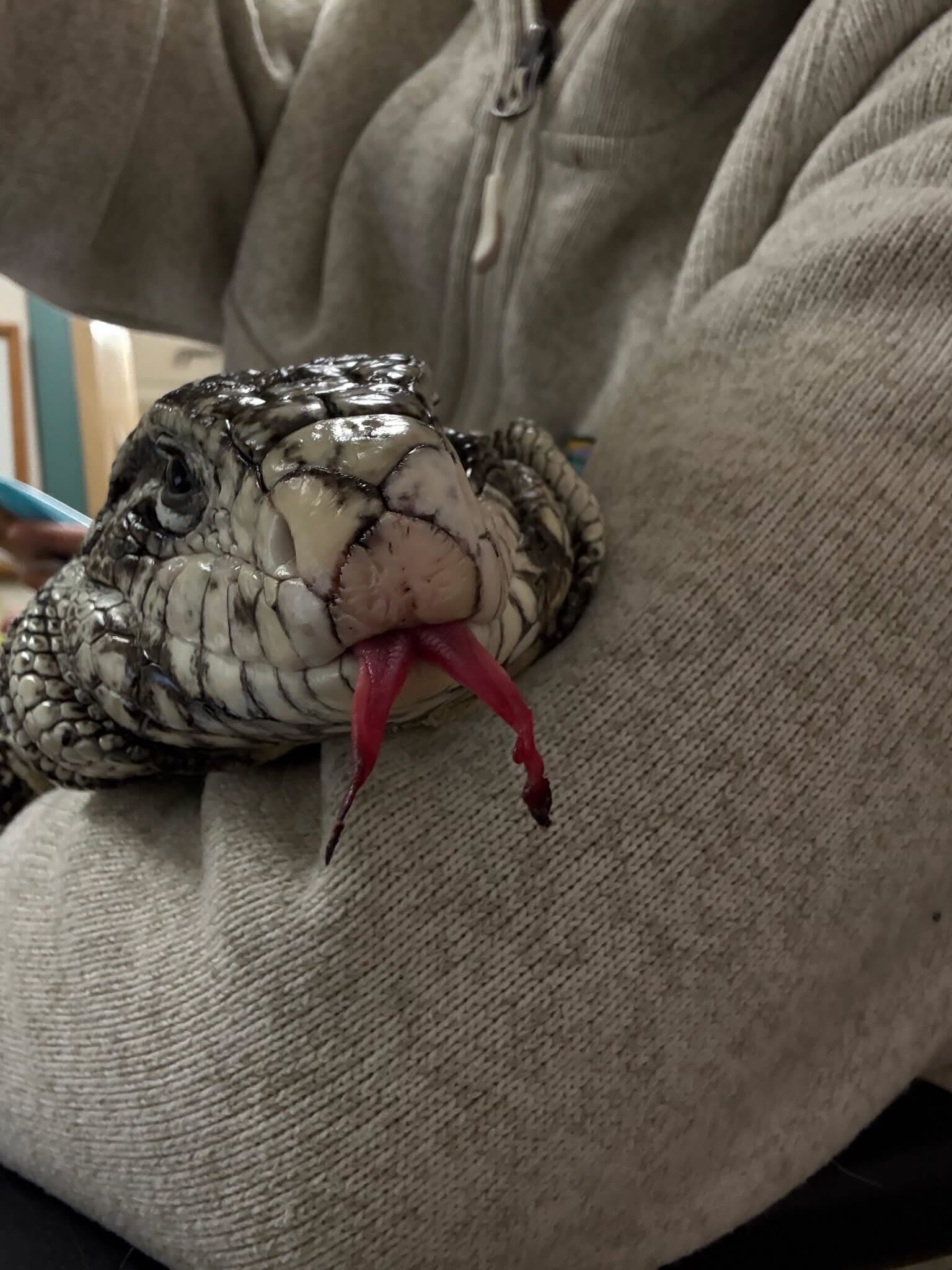
Either way, Frankie was likely unable to pull her tongue back into her mouth at the start of the storm, which caused the frostbite on both her tongue and her toes. The tongue frostbite is particularly notable because known cases of animals with mucus membrane related frostbite are exceedingly unusual. Because of the frostbite, Frankie no longer has the iconic reptilian V-shape in her tongue.
In fact, veterinary medicine as a whole didn’t have any published accounts of such an affliction. As such, Gannaway and her veterinary student turned to human medical literature to decide on Frankie’s best treatment option, and ultimately identified what they were looking for.
This “is really cool and an example of something in veterinary medicine and other fields we call one health, so the intersection between human and animal health,” Gannaway explained in a New England Wildlife Center video.
In the human report, a portion of a patient’s tongue had unintentionally frozen because of a medical intervention in the mouth. Doctors then removed the dead external tissue a number of times, healing the injury within three weeks.
Similarly, the team at the New England Wildlife Center aims to remove part of Frankie’s dead tongue tissue every two or three weeks. Hopefully, the tongue will heal on its own, but the good news is that tongues are rapid healers.
Gannaway says that the team is “cautiously optimistic” about Frankie’s future.
“She did great during her first debridement [the tissue removal] and has moved on from liquid to solid food. New England Wildlife Centers’ Veterinarians will keep checking her tongue every 2 weeks to see if she needs further sedation to remove more superficial tissue,” she adds.“Until then she is on pain medications and an antibiotic. Tegus can live normal lives with only part of their tongue so as long as we can get her tongue to stabilize she should be ready to live a warmer although slightly less adventurous life.”

2025 PopSci Best of What’s New