
This year’s Awesome Games Done Quick, a week-long speedrunning marathon that took place in January in front of a raucous live audience, played host to all sorts of unexpected sights: an entire live audience doing synchronized stretches during a sweaty run of Hatsune Miku Fitness Boxing; a whopping 70 speedrunners participating in a wacky, wonky Super Mario 64 relay; and runners in full trucker regalia hooting and hollering their way through this country’s last great pastime, American Truck Simulator.
But a quieter moment, in my mind, stole the show. Two runners, Blackheartwings and ProfessorBurtch, were sprinting, leaping, and at one point slithering, in the form of uncooked hot dogs, through Split Fiction, the 2025 sci-fantasy co-op spectacle from noted Oscars hater Josef Fares. Mostly, the duo bantered and discussed strats and skips, as is typical of a GDQ speedrun. Midway through, however, Burtch and the run’s commentators gave the proverbial floor over to Blackheartwings. “[Blackheartwings] has some opinions about this level,” said Burtch as the two platformed through a handdrawn world. “Boy howdy do I,” replied Blackheartwings.
Blackheartwings went on to explain that they had a slight bone to pick with a game they otherwise love: One of the main characters, Mio, is a person of color, and she’s consistently anthropomorphicized, or turned into animals—a horse in that specific instance. Whereas the other main character, Zoe, who is white, gets to remain human. This is a common trope, one that, intentionally or not, serves to other people of color.
“We should be a little bit more mindful and careful about the way that our protagonists are portrayed within media,” said Blackheartwings as around 100 attendees in AGDQ’s Pittsburgh hotel watched in-person and over 40,000 watched online. “As a person of color myself, I saw a lot of myself in Mio when playing this game, and I think that we should be able to see ourselves in the games and the media that we interact with. So if you’re making a game, maybe be mindful about the way that your characters interact with the narrative, and maybe stop turning your people of color into animals in your narratives. That would be swell.”
One of the commentators, OhHeyItsKara, provided additional perspective: “There’s a lot that can be said about ‘Oh, it wasn’t intentional, it wasn’t on purpose,’ but I always think about how it’s not enough to not mean to; you have to mean not to. Doing things accidentally still means you’re doing them.”
If you possess even a cursory awareness of video games and the kinds of people who most vocally purport to play them for hundreds of hours, you’d expect a moment like this to be met with awkward silence, or even boos. Instead, the AGDQ audience cheered affirmatively and without hesitation.
“It’s scary talking about these sorts of things, and there was definitely some discussion in the GDQ Discord that was disappointing,” Blackheartwings told Aftermath the day after their run. “But seeing that a lot of it was people thanking me for bringing up this issue reassured me that I was doing the right thing. I had people stop me in elevators and in the stream room being like ‘I’m so glad you mentioned that it; it was something I hadn’t considered before.'”
“I know that I have a really great community behind me—a lot of my friends and a lot of the people on the backend,” they added. “I trust the moderation team at GDQ so much. I know that they’re on it.”
GDQ has spent years intentionally curating a crowd that both does and does not fit the standard gamer mold. On one hand, speedrunners play games more than just about anyone. Whittling down run times from dozens of hours to just two, one, or none requires incredible dedication. Top speedrunners spend months or years labbing games to discover and memorize optimal routes and skippable sections. I guarantee: You do not love your favorite game as much as its best speedrunner. You probably don’t hate it as much, either.
“You can’t be ambivalent towards a game that you speedrun, because if you are, you’re just going to stop playing it. It’s way too hard to play a game for thousands of hours that you don’t have that kind of connection to,” SatanHerself, who hosts a regular show on GDQ’s Twitch channel called Creature Corner, told Aftermath. “I know that myself and many other people have gotten really mad at their speed games. They have needed to take these extended breaks from runs to emotionally recollect themselves and get back to it. I think that is a muscle that is built up over many, many years.”
What would’ve happened if, during and after Gamergate’s spasmodic rise to prominence, video game companies and organizations rebuked everything it stood for?
GDQ’s community, however, does not often succumb to the toxic, exclusionary tendencies that typically define significant pockets of the online commentariat surrounding video games. In some ways, GDQ’s existence answers a series of questions that have long made the rounds in socially conscious gaming circles: What would’ve happened if, during and after Gamergate’s spasmodic rise to prominence, video game companies and organizations rebuked everything it stood for? What if, instead of tacitly accepting or embracing various strands of sexism, racism, and homophobia, they put actual effort into welcoming those from a variety of backgrounds? What if they did this not just performatively—as many companies have—but as a form of daily practice? What would that look like, and what kind of maintenance would the resulting structure require?
GDQ, which began in founder Mike Uyama’s mother’s basement in 2010 but has grown to employ over 100 people, has built out satellite orgs focused on different underrepresented groups, each of which host their own charity marathons and maintain a degree of autonomy, but which also get called up and shouted out during the two big annual shows: Awesome Games Done Quick and Summer Games Done Quick. The two most visible are Frame Fatales and Black In A Flash, but GDQ has also spotlighted LGBTQ people, Latin Americans, neurodivergent people, those with disabilities, and other groups via Hotfix—a series of streaming shows that run weekly between major GDQ events—as well as special dedicated showcases.
Even before all of that, though, a telling tradition developed during charity marathons: Donors, whose messages get read during speedruns, began to regularly sign off with “trans rights.” These days, without fail, the in-person audience always shouts “trans rights” back, whether it’s the bleary-eyed crack of dawn or the delirious end of a long day. GDQ and its roster of runners do their best to honor that spirit. But it wasn’t always this way, and even during the organization’s more inclusive modern era, new problems have emerged from the husks of old.
The Process Of Progress
While GDQ’s tentpole events, which regularly pull in millions of viewers and dollars, take up prime real estate on the annual calendar, GDQ is not the entirety of speedrunning—or anything close to it. Each game is its own scene, with some bigger games cracking open like a Russian doll to reveal multiple scenes dedicated to different styles of runs with all manner of stipulations, whether that involves percentage completion, tools that help runners pull off the impossible, mods that randomize elements of a game, or specific finish lines that players make up (for example, romancing all available options in Fallout: New Vegas).
Every scene has its own backstory, some less wholesome than others. The community surrounding Super Mario World’s dazzlingly (and arbitrarily) difficult Kaizo mod, for example, endured a full-blown schism in 2020. Shovda, whose AGDQ run of an SMW hack called JokerShellOK was so skillful that I’m still in disbelief two months later, explained:
“We had a split about six years ago where somebody revealed themselves to be a transphobe who was a huge streamer in the space, and all of the other cis het white guys—BarbarousKing, GrandPooBear, LaserBelch—came out and said ‘We’re not going to allow you to be in our space like that. We are distancing ourselves [from the transphobic streamer],'” she told Aftermath.
BD, a longtime member of the Kaizo community who recently took on a role within GDQ as event lead for Frame Fatales, also experienced the split firsthand. The situation, they said, got ugly.
“When confronted about [transphobia], [the streamer] leaned into it in a very hurtful, abrasive, and frankly provocative way and forced a lot of people to reckon with something very loudly,” they told Aftermath. “The process of that was not very fun, to say the least.”
Members of the community took sides, and some lashed out at trans speedrunners like Shovda.
“I was targeted heavily to the point where people were emailing me images of trans women who would hang themselves,” said Shovda, “sending me emails about how my body was gonna decompose, and how they would see my bones and know it’s a man’s skeleton. So I left the Twitch sphere for about six months and came back, and now I have to be very conscious of the spaces I inhabit and let other people deal with things, because I’ve done my fair share.”
If nothing else, according to BD, it was a learning experience, though the lesson came at a high price.
“One of the things that we learned about that—and one of the things I think about when I’m here as a gender nonconforming person myself—is no tolerance means no tolerance,” they said. “No tolerance for bigotry means that if we see it, we’re stomping it. I have seen what happens when you let it fester because ‘Oh, the person’s too big of a personality’ or the person has too much influence or too many friends or is too good at the game. We can’t be having that. If you truly want to be inclusive, then that has to take priority over [everything else]. And you have to be willing to not just say that and not just write it and slap it on a Discord, Google Sheet, or website; you have to be willing to go in and do the stomping.”
As a newly minted GDQ employee, BD feels the weight of the responsibility they now carry.
“To GDQ’s credit, they have [demonstrated no tolerance for intolerance],” they said. “And it’s to their credit that we are able to thrive as much as we have, and I’m grateful for that. But it’s also a constant reminder and a constant charge that I have and the rest of our leads have. We are here to fight the fight and build places and maintain spaces. That’s the goal. Kaizo taught me that the goal is possible, but it takes a lot of work and a lot of constant vigilance.”
There are many stories like this within GDQ-adjacent speedrunning circles. Most notoriously, harassers from sites like Kiwi Farms and a noxious subreddit called r/speedruncelebrities swarmed Legend Of Zelda speedrunner Narcissa Wright after she came out as trans in 2015. Her struggles with health, harassment, and an attempted return to the top of the speedrunning world are now the subject of a documentary that made its online debut last year (and, after what its director deemed politically minded interference, aired on PBS months later).
There’s only so much an organization like GDQ can do to stem the tide of harassment directed at an individual outside its channels and events, but it has, at various points, been forced to clean up its act. As AGDQ and SGDQ began to achieve greater popularity, the organization’s controversies grew alongside it.
“I definitely remember more bigotry [when I was first getting started in speedrunning],” Helix, a Monkey Ball speedrunner who now hosts a GDQ Hotfix show focused on community created content called “Parallel Universe,” told Aftermath. “Maybe not in-your-face bigotry, but more casual [bigotry], like people still using slurs or gay as an insult—things of that nature.”
GDQ, as well as those who ran it, were forced to learn and grow.
“I’ll admit, when I first founded GDQ, I didn’t really have any knowledge of LGBTQ+ and queer spaces and proper representation, although that wasn’t really the conversation back in the late 2000s,” GDQ founder Mike Uyama told Aftermath. “I remember it wasn’t really until 2012 or 2013 that I even learned properly what a transgender person was—that [I knew to] properly name them as a transgender person and not the old problematic language that we used to use. … I definitely made a few mistakes over the years. That’s part of [becoming more aware], but also really just listening to people and making sure their voices are heard.”
Following early years in which the organization seemingly let a handful of racist and transphobic remarks from runners and commentators slide—and during which its Twitch chat was effectively unrestricted, allowing viewers to spam all manner of transphobic and otherwise exclusionary memes—2016, 2017, and 2018 saw GDQ make a more concerted effort to weed out pernicious elements. But this moment still came late enough in the game that runners who, for example, brought a MAGA hat to AGDQ or behaved in flagrantly sexist fashion, among other standouts from years-long histories of edgelord behavior, were able to attend events and gain footholds in the scene.
Affected parties reacted with confusion, outrage, and harassment when GDC began to move more stridently in the direction of a no-tolerance-for-intolerance policy. Subsequent years have seen GDQ hammer down jagged, rusty nails faster, but not always elegantly. At AGDQ 2020, for instance, a runner with “I hate feminazism” in his Twitter profile was allowed to attend and complete a run, but was banned immediately after, seemingly due to community outcry.
“I definitely remember more bigotry [when I was first getting started in speedrunning].”
GDQ is not done doing the work on this front, and it probably never will be. This week, a former member of the GDQ community, Emmie Elliott, came forward alleging that they’d suffered harm at the hands of a prominent GDQ host, MrGameAndShout, a few years ago. This, Elliott said on Bluesky, took place “mainly” outside of GDQ walls, and GDQ wasn’t aware of the situation when it occurred. “GDQ in the grand scheme of my situation was not very involved at all,” they wrote. But the experience did traumatize them and put them in a position where they’re hesitant about returning to GDQ, and they contended that GDQ has failed to adequately respond to other, similar reports over the years.
“GDQ didn’t protect Shout knowing what he did. They’re protecting him [by] not making a statement and firing him quietly,” Elliott wrote. “GDQ did not know about my situation with him. They still need to be better about all the other reports that were and are within their walls, however.”
Aftermath reached out to Elliott and MrGameAndShout for more details, but neither replied as of this publishing. GDQ provided Aftermath with a statement, which did not go into specifics or confirm whether MrGameAndShout has lost his role: “Games Done Quick takes reports of harassment very seriously, and it has no place in our community. Situations like this are reviewed carefully in line with our policies. While we don’t comment on specific personnel or disciplinary matters, we remain committed to maintaining a safe and respectful environment for staff, runners, and our audience.”
In many progressive spaces, it is relatively easy to weed out those who openly spew hatred or racism; it can be harder to recognize when somebody you considered a friend and an ally might be abusing or harassing others, or making them feel unsafe. Blackheartwings pointed to a now-defunct speedrunning event that used to take place in the US as an example of how those sorts of wounds, left open for long enough, can fester into a more pervasive rot—the kind that pushes everyone else out.
“That was not the safest place to exist in,” they said. “There were a lot of safety issues. There were lots of harassment issues with runners and volunteers, which is difficult, because with these events, you’re dealing with a lot of your friends, and you want to assume the best of your friends. Unfortunately, sometimes your friends really suck.”
Still, consensus among many in the speedrunning community is that GDQ has not, in recent times, allowed tumors to metastasize to the point that they become the community.
“I think part of it is just that we got lucky with certain people in leadership spaces,” said Helix. “To be blunt, we have not had the Nazi bar problem. Because people understand that you need to kick them out right away.”
“It has to be an active process,” Jaxler, a runner who specializes in games off the beaten path, told Aftermath. “You can’t just passively say ‘Oh, we’re an accepting community, come join us.’ If you look at the way GDQ has been moving and operating in the past couple years—with regard to cultivating spaces like Frame Fatales, Black In A Flash, the LATAM meetups, and more recently, GDQueer—[they’re] purposefully and directly stating their values. A lot of bad actors will just see themselves out the door. It takes that constant effort and also having the backbone to reinforce it when push comes to shove, because much as I love to sing the praises of the speedrun community, all communities have these things called human beings, and they’re not perfect.”
“With these events, you’re dealing with a lot of your friends, and you want to assume the best of your friends. Unfortunately, sometimes your friends really suck.”
GDQ director of operations Matt Merkle acknowledges that there have been bumps in the road on the organization’s path to this point, but those running the organization won’t be forgetting the lessons they learned the hard way any time soon.
“We decided quite a few years ago that we were going to have a zero-tolerance policy for various types of harassment and everything else, and it’s on our website,” he told Aftermath. “We’ve demonstrated throughout—and especially the first couple years of that program being implemented—that we were serious. We had to ban a few people. … When we first implemented the rules, it was a shock to some people, but the majority of people in the community understood. I think most people welcome those rules. I mean, nobody wants to be stressed out or feel insulted or unwelcome when they come to an event. They want to have fun with their friends.”
Coming from a community that nearly unraveled at the seams, BD intends to preserve GDQ’s core principles.
“The experience that I had working up and being seen as a leader in the Kaizo scene helped me be ready for a position like this, but it also kind of steeled me as to why it’s important to do it right,” they said. “Because I had been a part of something that had gone wrong, and we’re still recovering from it five years later.”
Sunshine Statement
In 2022, GDQ was planning to host AGDQ 2023 in Florida, as it had previously—way back in 2020, prior to the pandemic, which forced AGDQ into an online-only format for two years. But speedrunning aficionados, GDQ announced in September 2022, would have to wait another year for the triumphant in-person return.
“Given the state’s continued disregard for COVID-19’s dangers (including anti-mandate vaccination policies) and an increased aggression towards LGBTQ+ individuals, including the law colloquially known as ‘Don’t Say Gay,’ we do not believe it is a safe place for our community at this time,” the organization wrote in a statement at the time. AGDQ went online-only for another year.
This, GDQ Black In A Flash and events coordinator Vanessa “PleasantlyTwstd” B told Aftermath, hit the organization’s bank account hard.
“The whole thing with Florida, it really was a make-or-break deal, and we wound up breaking our contract [with a local hotel] to get out and move the event elsewhere,” she said. “A lot of people were really scared about that, and I think that has some residual effects on things that are happening 1774467556 too, because that was a big, scary move, and it was also a big, costly move.”
Uyama also characterized the decision as one that sent shockwaves through the organization.
“This was right around when we were starting to consider in-person events again, and it definitely set back any ambitious expansion because the budget was tight for the next couple of years,” he said, “in terms of putting on more events or potentially more ambitious ideas and the like.”
“We were not going to risk attendee lives over money.”
But as far as Uyama is concerned, GDQ was staring down the barrel of a lose-lose proposition.
“I also remember that even from a more practical standpoint, because of Florida and all the legislation, there’s a chance we would’ve had such low attendance, understandably, that we might not have been able to make attrition or would have lost even more money [if we’d hosted an event anyway],” he said. “We were definitely debating and agonizing about it, but once we made the decision, we were definitely firm in the decision.”
Merkle doesn’t regret the way things played out.
“The politics really defined the issue,” he said. “We knew it was the right thing to do for the community, and we were willing to pay that price. We were not going to risk attendee lives over money, so that’s what we did, and we continue to not return because of [Florida’s] politics on LGBTQ [people].”
“It would’ve been kind of a slap in the face to say we’re inclusive,” added Uyama, “and then Florida was introducing all this legislation that was making them extremely not inclusive, to put it lightly, or just to put it bluntly, very shitty towards any sort of queer or trans person.”
In this case, GDQ’s actions spoke even louder than its words.
“Genuinely, as somebody who’s somewhat familiar with what it’s like to break a hotel contract, it’s a wonder that GDQ is still standing,” said Blackheartwings. “I’m so glad that it is. I would not be the person that I am today if it wasn’t for GDQ, but the fact that they were willing to do that and willing to put the people who are helping make this event happen over the financial gain of everything? Yeah, that speaks volumes.”
Elite Spud, a speedrunner who specializes in Luigi’s Mansion, believes that GDQ is better for having receded into a precautionary stance during and after lockdown. This forced it to surmount all manner of technical hurdles, which improved regular programming like Hotfix and online events hosted by groups like Frame Fatales. But ultimately, GDQ secured its identity when it uprooted its operation from Florida.
“I think the smoothness of now is owed to the hard times they had during the first initial years [during covid], and those GDQs were rough,” Elite Spud told Aftermath. “Improvements technically are a direct result of that, but the big prominence of queer representation and trans rights—shouting that at the top of their lungs—is also a direct result, because that move was a line in the sand. People that disagreed with that move probably also disagree with a lot of things that are going on now.”
Groups like Black In A Flash and Frame Fatales exemplify what’s going on at GDQ HQ right now. For as much as GDQ and associated runners enjoy gleefully banging the drum of diversity, speedrunning—like many other spaces in gaming—is still pretty overwhelmingly white and male. GDQ’s affinity groups seek to cultivate new talent, to demonstrate that anyone can be a speedrunner and give them a stage on which to do so.
“[Black In A Flash] is technically part of the GDQ mothership, but at the same time, we’re allowed our own agency, and we kind of do our own thing,” PleasantlyTwstd said. “So I run Back To Black and our two Hotfix events very differently than the way the rest of GDQ runs. It’s a combination of, it’s smaller scale, it’s less stuff, but also it allows us to be ourselves.”
Among other things, this means the freedom to moderate chat according to both GDQ’s guidelines and Black In A Flash’s own: “[Someone might claim] ‘Oh well, per GDQ, what I did was fine,’” said PleasantlyTwstd. “And it’s like, per GDQ, yes, but for Black In A Flash, what you’re doing or saying is problematic or offensive, and you cannot do these things. For Back To Black, we even have our own staff … because there’s a lot of stuff that people will try to sneak in that is specific to our communities, that other people may not catch.”
More than anything, PleasantlyTwstd wants Black In A Flash to remain true to the speedrunners it represents.
“I want Black In A Flash to be black,” she said. “I don’t want it to be black but consumable or black but friendly. No, this is the black speedrunning group. There’s black jokes, there’s black memes. … It’s us being us, and I love that the surrounding GDQ community has embraced that. I hear lots of enjoyment, lots of compliments, because we get out there, and we’re gonna have fun.”
“I want Black In A Flash to be black. I don’t want it to be black but consumable or black but friendly. No, this is the black speedrunning group.”
BD, Frame Fatales’ event lead, also sees affinity groups’ autonomy as one of their greatest strengths.
“We have our own set of event goals, because GDQ allows and has allowed Frame Fatales to set its own goals,” they said. “One of the key goals that we have for our events is to build up, enrich, and uplift our whole community. If our events raise a bunch of money for charity but do so at the expense of the community and the expense of the people that participate in it, we didn’t accomplish what we set out to do. We exist to bring more women into spaces like this, to bring more femmes into spaces like this, and not just bring them in, but empower them and equip them with skills and experiences to contribute at places like this. If we’re not doing that, we’re just kind of existing, right?”
In BD’s eyes, this means that welcoming spaces should not merely pop up during events and then melt like ice floes, but that they should persist throughout the year in the form of a Discord, regular community events and games of the month, crafting channels, and things of that nature, as well as longer-term opportunities to prepare for and help run events.
“It gives [community members] a chance to work on our two tentpole events each year and do things like host a marathon,” said BD. “There aren’t many places like that where you can roll up and be like ‘Hey, I want to learn how to host.’ There’s only one way to do that, and it’s to host things. One thing that’s really important to us is that everyone who works on the backend of an event is a Fatale. So we have women and femmes who are doing broadcast tech for the first time, who are learning how to operate the audio board and the stream tech setup. And it’s equipping them with skills that, if they want, they can go start doing that for mainline GDQ or that they can use on their own [in their daily lives].”
Even beyond that, BD believes that the affinity groups make GDQ as a whole better by allowing members’ individual tastes and interests to flourish.
“I’ve been lucky enough to be couching for several events [at AGDQ], and there’s pressure to do things that are going to bring in specific amounts [of money for charity],” they said. “The scale is so vast. It’s intimidating. [Frame Fatales] events are purposefully designed. Black In A Flash is the same way, [as are] the Latin American and Asian affinity groups that have events as well. They’re very much designed to be ‘Let’s build spaces for our community to do cool things. Let’s have a tabletop RPG for one of our runs instead of a video game. Let’s do Houseflipper. Let’s do Blood On The Clocktower. Let’s give people things they wouldn’t necessarily expect.'”
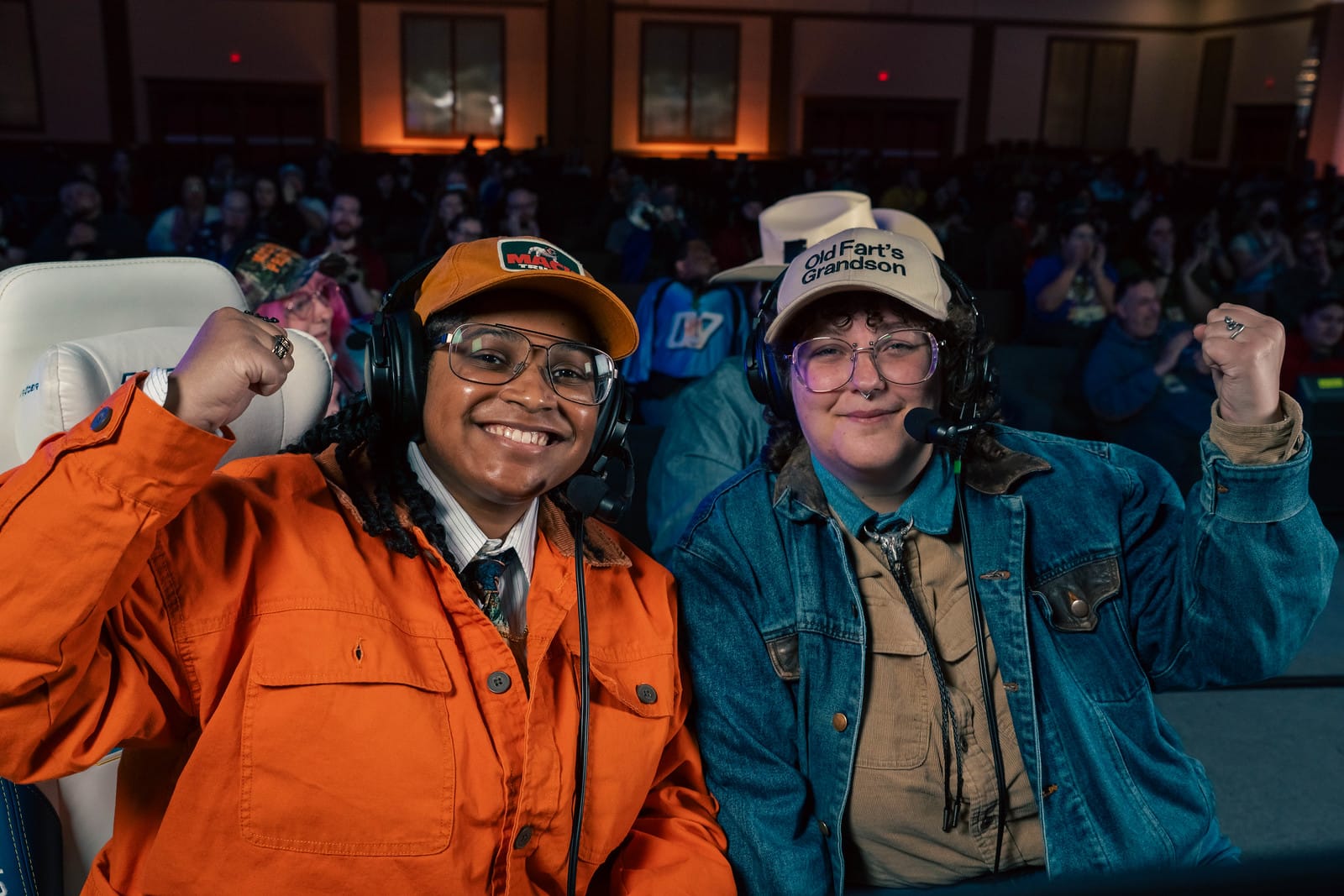
The aforementioned in-character American Truck Simulator race, for example, made its first appearance at a Fatales event last year before graduating to the big stage at AGDQ 2026. Because despite all the talk of moderation and community curation—not to mention the months or years of prep that go into runs—GDQ events are largely dumb fun. Runners and commentators banter endlessly, chat memes are born and die about as quickly as you’d expect from a speedrunning marathon, and the audience loves a gimmick. It’s like being at a gargantuan sleepover, whether you’re attending in person or watching from home. That energy seeps into runs. More than that; it powers them.
“[I think about] runs like the American Truck Simulator run, like the Mario 70-star relay, like Richard Burns Rally—these things that you might not have seen at a GDQ back in 2017 or 2018 when the focus was really on the absolute fastest people in the world,” said SatanHerself. “Nowadays I feel like a lot of that is still very much present at GDQ, and that’s very exciting and fun to see, but what defines modern GDQ is not so much the perfection of the runs but more so the creativity and novelty of the community that is behind speedrunning and being able to show the breadth and depth. … [Hotfix, Frame Fatales, and Black In A Flash have] really driven the change in how mainline [GDQ] operates now. I think that is a wonderful change.”
“For me, diversity is representative of people, but it’s also representative of content. If you are running the exact same stuff everyone else does, but you’re just using your audience, it’s not going to feel authentic,” said BD. “One of the goals I have is helping the [Frame Fatales] space, but also seeing the ways in which we can help Black In A Flash, how Black In A Flash can help us, and how we can extend that to Latino speedrunning and to Asian speedrunning—how we can all work together. Pool our resources and pool our energy to help uplift each other and keep this good work going, because GDQ really is definitive proof that a whole bunch of different people coming together can do some really good things.”
“I wouldn’t be here if it wasn’t for Frame Fatales.”
Runners who’ve come up in groups like Frame Fatales and Black In A Flash swear by them.
“I wouldn’t be here if it wasn’t for Frame Fatales,” said Blackheartwings. “They had a really big impact on my interactions with the space, knowing that there was a place where I could exist and not have to worry about being heckled or nagged or bullied was foundational to me.”
“I submitted to Frost Fatales 2023, and I had just recently come out as trans, so that was also an affirming thing for me to [join] a femme-led, women-led speedrunning event. And they accepted me, and I was bad! That was my impetus to get better,” said Elite Spud. “From the start, it was very obvious that it wasn’t just binary gender conforming. It was encompassing in a way that was very fresh to somebody who had newly come out, and working with people in the event itself for my run, all the volunteers, the people that make it happen—seeing so many other diverse genders represented in that community and then running other events that aren’t even centered around being part of a gender minority, there’s still so many people who make things tick who are gender diverse. It just makes you feel welcome seeing that these people have so many events in the speedrunning community at all.”
Time Marches On
This is not to say that all involved are 100 percent satisfied with GDQ’s handling of the affinity groups. There’s definitely room for improvement.
“I think GDQ can still improve on its POC representation in a lot of ways,” said PleasantlyTwstd. “It’s wonderful that we have Black In A Flash. It’s wonderful that we have representation with [the other groups]. I think it’s a good starting point, but it needs to be more than just making sure we have groups. We also need support, and I would love to see some more POC hires. I would love to see more opportunities and avenues for us to expand the same way some of our other groups, like Frame Fatales, have been able to expand. The biggest challenge that Black In A Flash is dealing with is that we are low headcount, and I need more people. I do a lot of stuff solo, and I work directly with people on our teams that want us to be successful, but I need that success to translate into ‘Hey, PT will be more successful if they have more help.'”
GDQ runners and employees also think the organization could be doing a better job in terms of spotlighting people of color during the year’s most pivotal moments.
“There is, very notably, a lack of people of color on the big stage,” said Blackheartwings. “I’m biracial, Hispanic and Asian, and a lot of the overlap occurs just within the Fatales community, in that a Fatale happens to be a person of color in order to be on the big stage. There’s not a lot of representation of folks of color. I think that fostering the space for people of color to feel safe being on the big stage [matters], but so does making a point of highlighting us as speedrunners outside of our diversity spaces. Not as a token thing, but as a ‘What can we do to encourage more people of color to show up and run and feel safe [type of thing]?'”
$50,000 RAISED FOR @raceforward.org!!!!!!!!!!!!!!!!!!!!!!!!!!!!!!!!!!!!!!!!!!!!!!!!!!!!!!!!!!!!!!!!!!!!!!!!!!!!!!!!!!!!!!!!!!!!!!!!!!!!!!!!!!!!!!!!!!!!!!!!!!!!!!!!!!!!!!!!!!!!!!!
BLACK JOY, HECK YEAH!!!!!!!!!!!!!!!!!!!!!!
PRAISE JERKY!!!!!!!!!!!!!!!!!!!!!!
BALD!!!!!!!!!!!!!!!!!!!!!!!!
#BTB26
— Games Done Quick (@gamesdonequick.com) 2026-02-09T05:35:19.875Z
“I love our events,” said PleasantlyTwstd. “I love that we raised so much money for [Palestine Children’s Relief Fund] and Doctors Without Borders. I do not love that [AGDQ 2026] was a 144-hour-long event, and there were three black people [on stage]. That hurts my heart a special kind of way, especially when you’re considering [how close AGDQ is to Back To Black on the calendar]. The pool is there. You have to be willing to engage it. And if that means you have to reevaluate how you do some of your things, then reevaluate, right? … People don’t like changing things. People are just like ‘If it’s not broke, don’t fix it.’ But it’s like, I’m explaining to you how it’s broke.”
SatanHerself agrees that the issue is structural, with roots that run deep.
“[GDQ] used to be mostly guys, and they used to run it out of their basement. They used to each do, like, three runs on the schedule. These were people who were really, really close with each other, and they were the heart and soul of it,” she said. “There was that sort of original magic, but it was also a very closed kind of thing. It was a culture that selected for the types of runs they wanted to see and the types of people they wanted to see. … I noticed that most of our interviews [at AGDQ 2026] were with white guys and still talking about the big games on the schedule: your Call of Duties, your Ocarina of Times, Majora’s Masks, and things like that. It isn’t to say that those aren’t wonderful people and great games to talk about. But we still have a ways to go before we’re fully into this space where it feels like everyone is included.”
Uyama, who was there for those first events, agrees with that assessment.
“It was much smaller back then. There were only 20 people at the [first] event, if I remember correctly. Almost everyone had a run there. It was largely white and male,” he said. “Speedrunning [as a whole] was so much smaller back then. Your community was big if you had, like, more than one person running. … I think one thing that helped [growth] was the rise of Twitch. Twitch didn’t exist for our first event, which is something to note. It was JustinTV back then, which was notable for having bootleg streams of The Simpsons and sports broadcasts. But yeah, I feel like GDQ kind of naturally grew with Twitch as it was growing as a site.”
“There is, very notably, a lack of people of color on the big stage.”
With growth came opportunities to make up for the blind spots of Uyama and others who were running the show.
“I’ll admit that’s not my strength: fostering and catering to a community,” he said. “I’m glad that we’ve had so many smart and dedicated staffers over the years. … I think GDQ has made good strides in being more inclusive and representative, whereas in the olden days it would be almost exclusively all guys, mostly white, maybe some Asian. I feel like nowadays we have more women, queer people, transgender people, and minorities.”
GDQ is far from alone in its struggles with representation. Speedrunning is a tapestry of communities, or maybe a series of constellations, each with their own unique histories and dramas. Some have been around long enough for generational divides to begin to form. The question then becomes: Will a community evolve and persist or fade into dusty obscurity?
Elite Spud believes the Luigi’s Mansion speedrunning community is at this exact sort of crossroads.
“There is kind of an old guard that has yet to pass the torch, but it’s starting to happen anyway,” they said. “There’s folks who’ve been around for, like, 15 years now. They’ve been invested for so long, and they still play, but do they still want to be leaders of the community? At some point, it needs to pass on, and I’m curious if the community will schism because of that. Because a lot of people are there because of the old guard, and when they stop being interested, will it succeed? Will the community be as diverse as I hope it will be, or will it turn into a game that’s more forgotten?”
Irrelevance is a possible outcome. It’s happened to other speedrunning communities, and it will doubtless happen again.
“Communities focus so much on the [specific] speed game,” Elite Spud said. “They don’t focus on the community itself, and it starts to have this kind of boys’ club mentality or it starts to rot in a way that draws away from the point of having a community in the first place. It gets insular. It gets unwelcoming. There’s a lot of private conversations. There’s not a lot of public celebration.”
Blackheartwings has seen what happens when a speedrunning community loses its way.
“[The Stardew Valley speedrunning community] was in disrepair,” they said of the moment when they first got their start in speedrunning, back in 2021. “The mods weren’t super active. So I became a moderator for the leaderboards. They had opened up applications, and I established rules in the Discord—because that wasn’t a thing before—and encouraged people to start documenting all of their routes and all of their notes. I think those two things specifically were helpful, and also being visible as a femme within the Stardew Valley space was huge, because it was a boys’ club before. … And that was not the kind of place I wanted Stardew to be, especially because it has no gender locks for marriage candidates, and you can do what you want forever, so to speak; I felt like it was a good place for queer people to feel welcome and comfortable.”
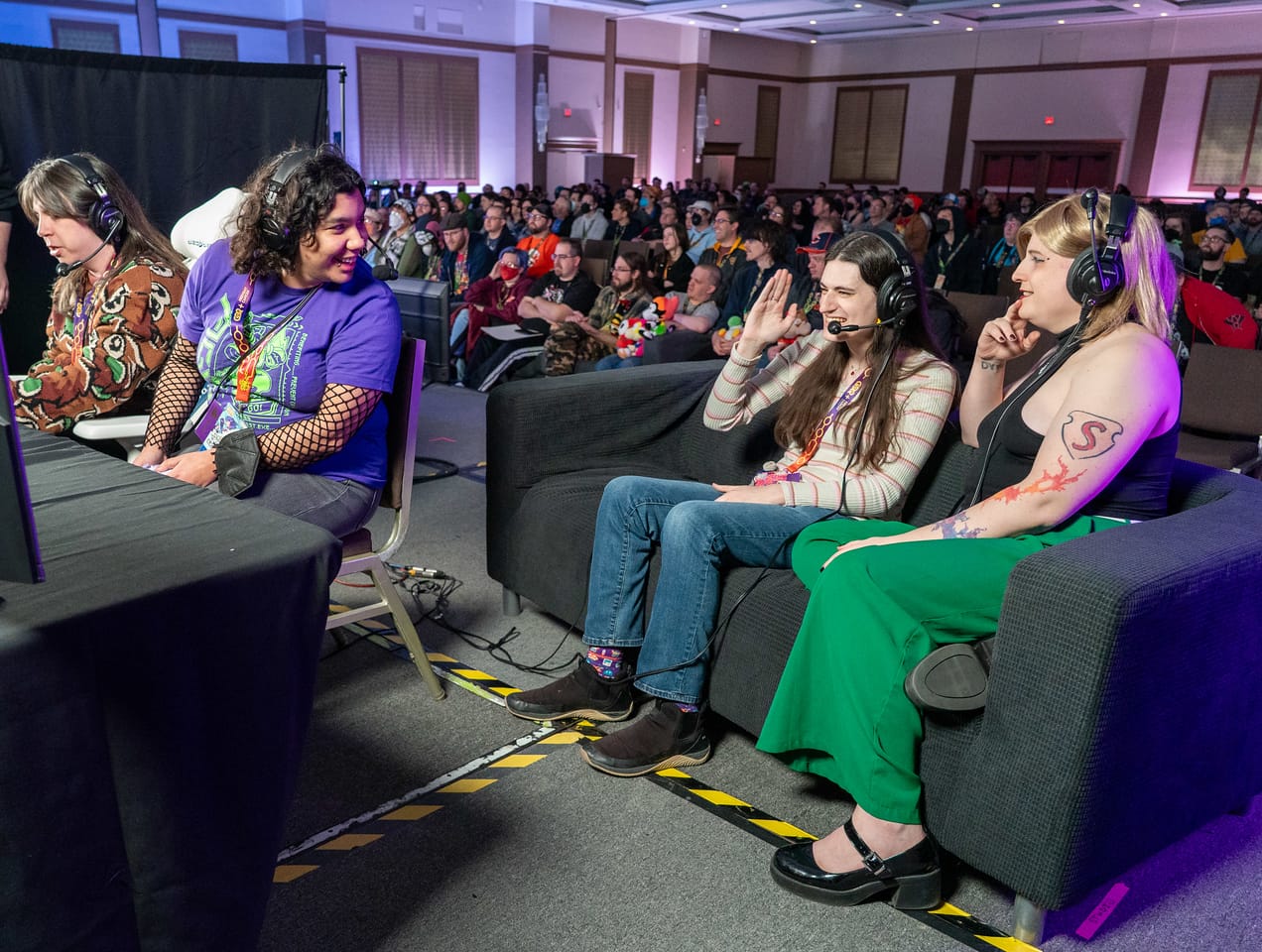
Blackheartwings also found their way into Frame Fatales—as a community member, rather than an employee—with their influence both filtering up into the organization and fellow Fatales’ approaches informing their own. This is a dynamic with which many in the highly fragmented speedrunning community are intimately familiar: Moderation decisions made in individual channels ultimately impact GDQ as a whole—and vice versa—even if it takes time for reverberations to fully be felt.
“I think being in a space like GDQ that so easily allows you to speak about things is important,” Jaidlyn, a host and musician on GDQ’s interview and interstitial team, told Aftermath. “Trans rights are human rights. Black lives do matter. Stop Asian hate. To be able to speak on a platform that you know supports you [makes a difference]. I feel very free to support everyone in that capacity. And since joining GDQ, I have incorporated it more into my own platform too.”
“Every single community is such a microcosm,” said SatanHerself. “They all have their own dynamics, their own people, and I think that’s one thing that makes speedrunning really interesting and very different compared to lots of other types of similar activities like sports is that you get these really specific micro-cultures. … I think it really starts with promoting acceptance and diversity in those spaces.”
Elite Spud believes they can make a difference, both by running Luigi’s Mansion games under the bright lights of AGDQ and SGDQ and by elevating others behind the scenes. Leadership, they told me, is not their goal, but they described a role that is perhaps more crucial to a functional, long-lasting community: mentorship.
“I don’t want to be the leader. I just want to be somebody who kind of ushers people in,” they said. “I want to see other new runners one day say ‘I got into this game—I got into speedrunning period—because you helped me.’ I have so many people to thank for that, because they inspired me. … I don’t know how it feels to be on the other side of ‘Hey, this person was under my wing at one point and now they’re up there, and it makes you want to cry out of happiness.’ I want to feel that.”
“I just knew that wasn’t going to be me. My time at GDQ had an expiration date.”
Uyama announced that he was departing GDQ in early 2023—a decision born of overwork and burnout—though he delayed his exit until later in the year to give Merkle time to recover from a medical emergency. Ultimately, he’s glad he made way for a new generation.
“If I wasn’t helming GDQ in the early years, it probably wouldn’t exist as it is today,” he said. “But at the same time, I’m glad that I moved on and others have taken over, because it was at a point where … I knew that I wasn’t really gonna have new ideas or try to really approach it with a new direction, from a new perspective, or anything like that. [I had already been at it], in a professional capacity, 9-10 years by then, and if you include the olden days of classic Games Done Quick, it was 13 or 14 years. That’s a long time to be doing one thing, and it means you’re either very, very dedicated and focused on the craft, or you eventually get tired of it. I just knew that wasn’t going to be me. My time at GDQ had an expiration date.”
“Having seen the events [GDQ] has done and the direction they’ve had, and they’re still successful, and that it’s very welcoming and inclusive, [I’m happy about how things ended up],” he added. “Because even before I knew more about proper representation, I always wanted to be a more welcoming gaming space, even if I didn’t know the terminology.”
Full Speed Ahead
GDQ has grown to represent something larger than itself: a hopeful beacon in a time of division and strife. So far, despite government-backed anti-trans sentiment and a post-election vibe shift that saw more cynical companies and organizations jump at the opportunity to drop their performative allyship act, GDQ has stuck to its guns.
“I think with the general ecosystem and current scope we’re in, it can be really easy to pull things back. The fact that GDQ has maintained its stance and not walked anything back is super important,” said Blackheartwings. “They do a good job in not discouraging us [from saying] trans rights are human rights; it’s not a political point, and that’s something they make very clear. I think staying firm on those stances has been huge for making sure that this stays an inclusive and safe place for people to explore their gender and have a better understanding of themselves.”
One GDQ employee, Helix, began planning her own, separate anti-ICE speedrunning fundraiser during this year’s AGDQ.
“I was at AGDQ, but I live in the Twin Cities,” said Helix, who also helps organize smaller local speedrunning charity marathons as part of Midwest Speedfest, “and Renee Good was murdered while I was in Pittsburgh. I woke up to the news, and I don’t think I can properly describe how I felt in that moment and for the rest of that week. I was like ‘OK, I have to figure out how to do what I can, both now and when I get home.’ I am really good at fundraising, but I had never fully led one on such a scale and in such a short amount of time. But I just put out a Bluesky post during the second half of [AGDQ]. … I had people coming up to me mid-GDQ to tell me ‘If this happens, I want to be involved.'”
After Helix got home, she kicked her effort, called ICE Breaker, into high gear. Within just a few days, 125 people volunteered to help run the event, and over 400 runners threw their controllers, keyboards, and plastic guitars into the ring.
“Paring that down to three days worth of content was so, so difficult,” said Helix. “We could have done a second event and probably a whole third event. It very quickly became something bigger than me, because everyone recognized what was happening.”
Lead organizer @helix.midwestspeedfest.com Finale speech
Song: Put Traffic Cones Over Tear Gas Canisters by @dollchasermn.bsky.socialyoutu.be/lDEAMhyT89c?…
— ReallyReallyLongathon (@rrlat.bsky.social) 2026-02-03T03:16:31.863Z
It was an overwhelming success.
“We came into this expecting maybe $10,000 raised over the course of the event,” said Helix. “We ended with over $56,000 raised. That total is higher than some actual GDQ events.”
More importantly, ICE Breaker managed to dredge up joy from truly dire circumstances.
“ICE Breaker is my favorite thing that I’ve ever done,” said Helix. “There is something about how quickly the event came together, the overwhelming amount of support, and how fun it was. We had long-time GDQ hosts [involved]. These are hosts that I have never heard swear before because we’re not supposed to swear on air at GDQ, and they were unequivocally saying with their whole chest ‘Fuck ICE’ every other sentence. It was awesome.”
The word “community” has barely managed to survive an era of alienation—dilution to the point of incoherence at the hands of companies, platforms, and influencers who claim that consumption is the only way to find your tribe—but this is its true meaning: People coming together to support each other in times of hardship and still managing to have a great time doing it. People giving freely in accordance with their means. People finding purpose in each other.
“When I wrapped up ICE Breaker, I drew a parallel between the community in Minneapolis and the speedrun community,” said Helix. “I went to the vigil [for Alex Perreti, who was murdered by ICE], and the amount of community support that was really everywhere, but especially in that area, [was incredible]. There were many local businesses being turned into basically warming houses. There was a library, a church, some local businesses, and even a couple private residents that became warming houses. There were people on various street corners with tables handing out hand warmers, warm coffee, snacks, and things of that nature.”
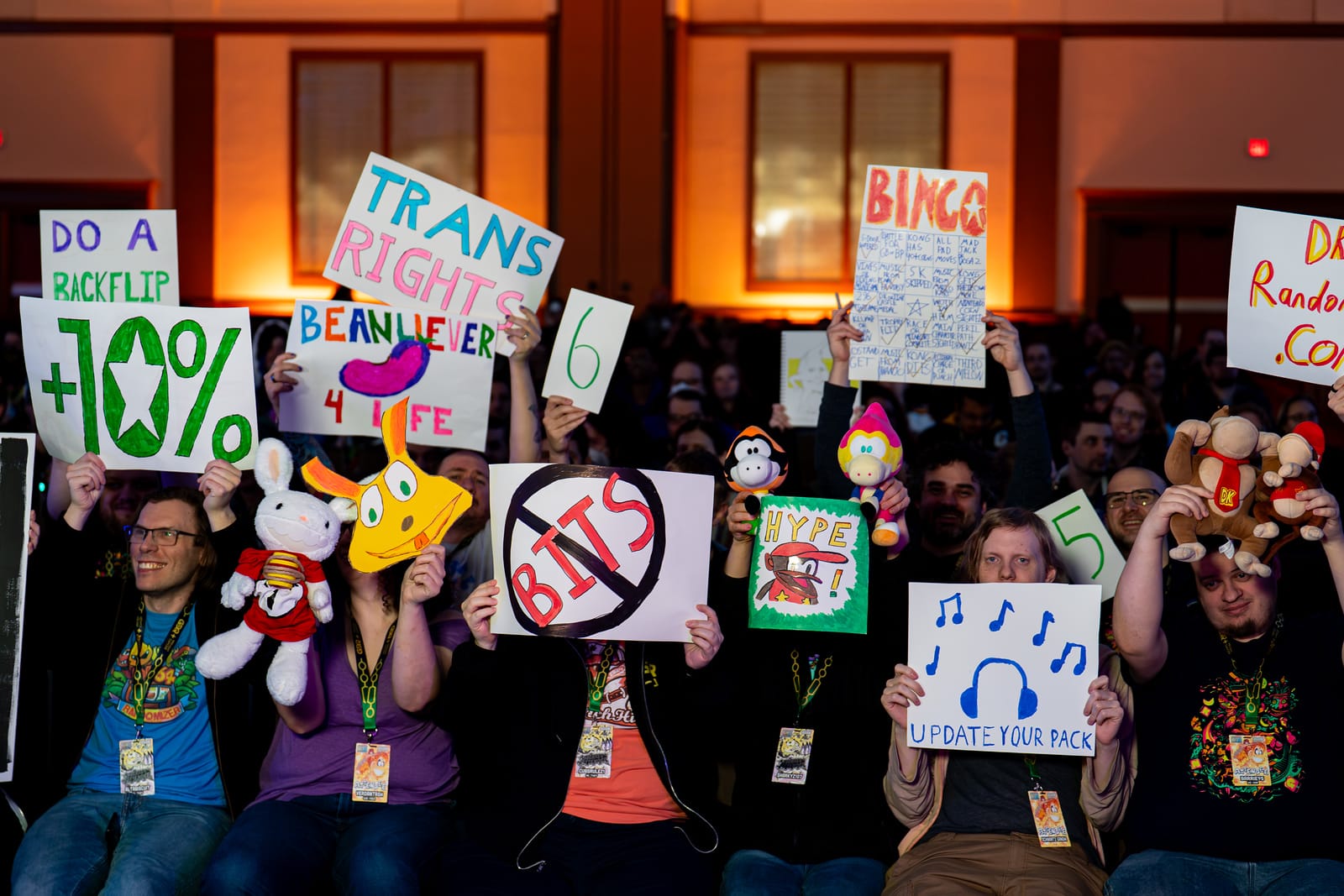
Building community is now more vital than ever, a fact that is far from lost on those who work for GDQ—especially Helix.
“I might never do something as cool or as impactful as ICE Breaker again in my entire life, and I think I would be OK with that,” she said.
But the show(s) must go on, and in July, SGDQ is headed to Minneapolis. This is coincidental; the hotel was booked in advance of ICE’s occupation. Still, Helix believes there’s an opportunity for GDQ to do some good.
“[The battle against ICE] is not over. Hopefully it will be over at some point. But we, in a way, outlasted the occupation,” she said. “I’m very grateful that [SGDQ] is in Minneapolis, because this will bring people to the city, and I hope people go to local businesses, because their economies really need a boost. They lost out on so much business because people weren’t leaving their homes and their workers were being kidnapped.”
As far as safety concerns go, GDQ business director Ashley Farkas provided Aftermath with the following statement: “The safety of our attendees, volunteers, staff, and partners is a top priority at SGDQ 2026. We have been working closely with the venue, our internal safety team and external partners to review and strengthen our safety plans. We will also be providing additional resources and training to GDQ staff leading up to and at the event. Our community does a wonderful job alerting us when situations arise, and we plan to provide guidance for volunteers and attendees if an incident were to occur. As we always do, we ask everyone to stay aware of their surroundings during the event and report any concerns to GDQ staff or hotel security.”
“At the end of the day, what we do is important; it is all of us working towards a better world.”
It’s a difficult situation, especially for those in GDQ’s international community who—as a result of the country’s cop slide into fascism—don’t feel safe traveling to the US.
“It is bittersweet to be a volunteer for GDQ and to be involved in all these events nowadays,” Serendiplays, a Brazilian speedrunner who often does volunteer work during GDQ events, told Aftermath. “For the Fatales, we had our winter event [recently], and despite that being mostly an online marathon, there is still a studio you can go to and volunteer for some positions at. You still get that FOMO of not being able to go and see all the friends that you’ve had so much fun with online—doing things on site and having that moment of human connection that is so needed right now.”
“It is very discouraging,” Serendiplays added, “but at the same time, I try to use it as fuel for me to continue working hard and volunteering and being part of this community, because at the end of the day, what we do is important; it is all of us working towards a better world. And in that better world, I would be able to just fly to the United States and hang out with my friends twice a year.”
Those who do plan to attend also view SGDQ as an opportunity: If the goal really is to build a kinder, more inclusive culture, then you’ve got to put your best foot forward.
“[ICE’s occupation of Minnesota] was hard to think about, hard to look at during [AGDQ] knowing that’s where we’re going to be, but I want [to do] everything in our power to still go and to have the best time that we can, because that’s what we need to do,” said SatanHerself. “We need to not only fight for a better future, but also to envision what that future looks like. And the future looks like GDQ.”
This week on Aftermath, we’re celebrating Woke 2. What does that mean? Pieces that dig into the origins of woke—not the empty, sanitized version peddled by companies, but actual culture created by people—as well as communities that are already charting a course to a bolder, better future where we can all just be chill to one another.