

While most retailers were bracing for impact in fiscal 2025, one company quietly pulled off something remarkable.
Gap Inc. just closed the year with results that should make its competitors nervous: net sales grew 2% to reach $15.4 billion, operating margin hit 7.3%, and the company generated $1.3 billion in operating cash flow. Then they announced a new $1 billion share repurchase authorization.
The real headline? This marks the eighth consecutive quarter of positive comparable sales growth. Eight quarters. In this market.
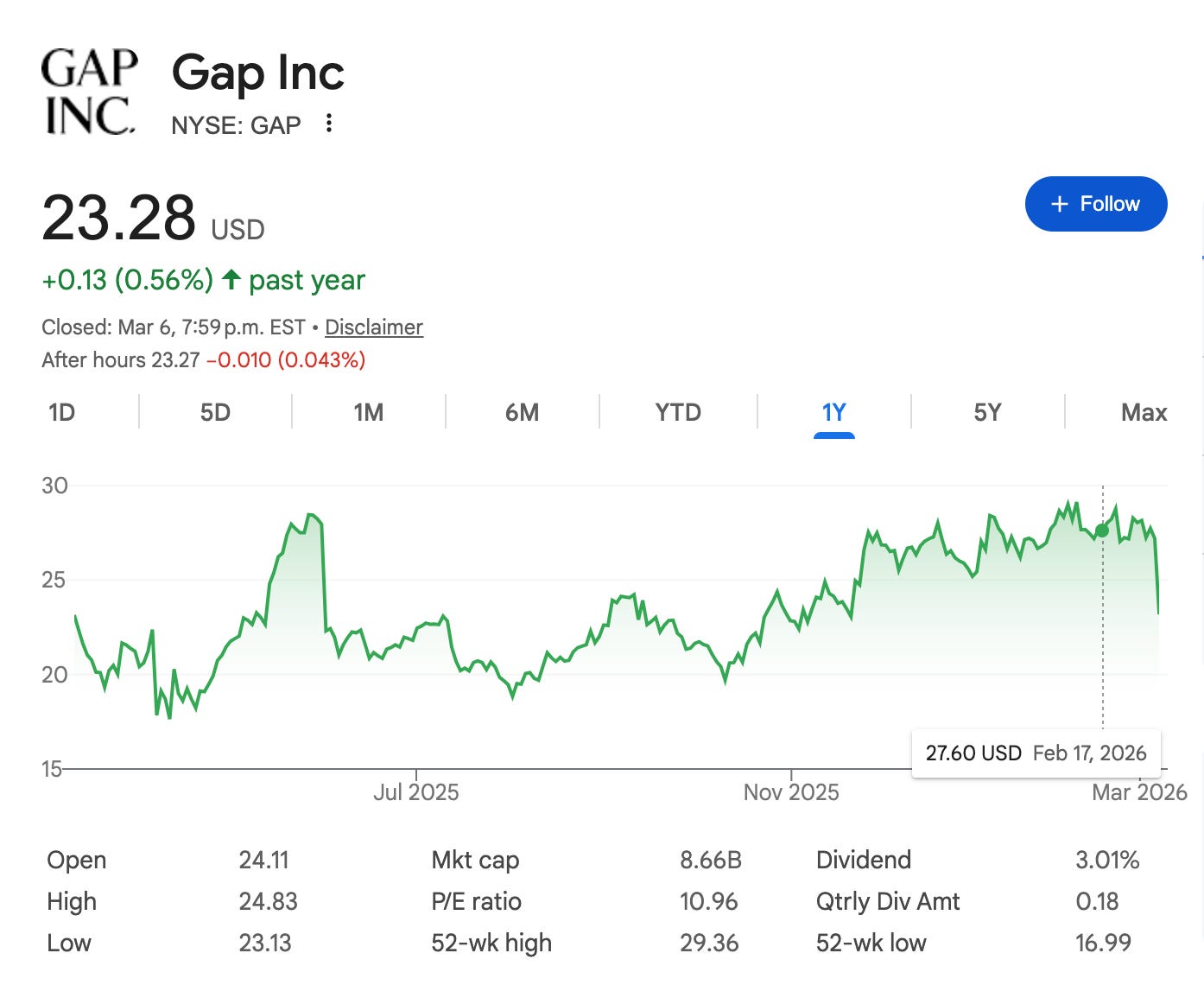
These results are proof of what happens when a legacy apparel company stops chasing every trend and starts executing the basics relentlessly.
CEO Richard Dickson isn’t mincing words. He points to “financial and operational rigor combined with the strength of our platform” as the force behind one of the company’s highest gross margins in 25 years.
But how did a company that spent years floundering pull this off? The answer matters for anyone watching the retail sector.
Let’s rewind. Gap Inc. wasn’t always the comeback story of 2025.
For years, the company’s portfolio (Old Navy, Gap, Banana Republic, and Athleta) got squeezed from every direction. Fast fashion competitors moved faster. Consumer behavior shifted. Store traffic dropped. Online competition exploded.
Worst of all? The brands started blending together. They lost what made them distinct.
Then something shifted in the leadership suite.
Instead of trying some flashy reinvention, management did something unexpected. They created a new “retail strategy” and actually followed it. Not sexy. Not revolutionary. Just systematic improvements in operations, brand identity, and inventory management.
The strategy was deceptively simple: grow the core apparel business while planting seeds for future growth.
Simple doesn’t mean easy. This required the discipline to say no to quick fixes and yes to grinding out incremental wins in merchandising, marketing, and supply chain operations.