
Key points
- Genome sequencing of several wheat stem rust strains shows some outbreaks arose independently, overturning assumptions and changing how scientists track disease threats.
- A new gene atlas reveals why resistance failed in the field and which defences are likely to last.
- Genome-led surveillance of crops promises earlier warnings, smarter breeding decisions and better preparedness against future wheat rust threats worldwide for farmers.
In 2013, farmers in the highlands of Ethiopia began to notice something unsettling: a familiar variety of wheat was failing in an unfamiliar way.
Stems weakened, plants collapsed, and fields that had once held firm against disease were suddenly vulnerable. Three years later, the same unease surfaced thousands of kilometres away, when wheat crops in Sicily – including prized durum varieties destined for pasta – succumbed to a fast-moving stem rust outbreak that baffled local farmers.
At first glance, these epidemics seemed like echoes of a known threat. Since the late 1990s, a highly virulent strain of wheat stem rust known as Ug99 has loomed large over global food security, its spread closely tracked by scientists and surveillance networks. But when researchers looked more closely at what unfolded in Ethiopia and Italy, the picture began to shift.
Findings, just published in Nature Communications , provide the clearest genetic explanation yet for how major stem rust outbreaks emerge.
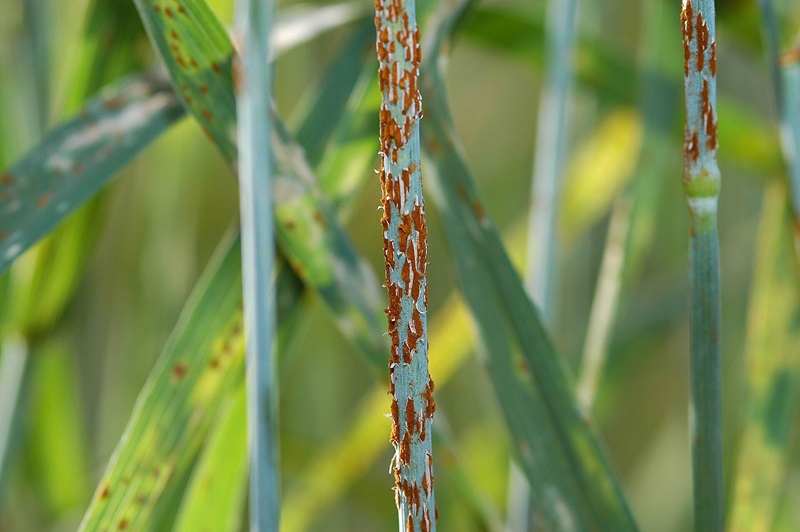
Using advances in long-read DNA sequencing and chromosome-level genome assembly, the research team reconstructed complete, phased genomes for the two stem rust strains behind these outbreaks. What they found was striking. Neither strain was, in fact, a descendant of Ug99. Nor were they closely related to each other. Instead, each had emerged independently, shaped by its own evolutionary path.
“We elucidated the origin of Ug99 back in 2019,” said Dr Melania Figueroa, Principal Research Scientist at CSIRO.
“The origin of these new strains is driven by different genetic changes in the pathogen.”
Understanding where these outbreaks came from – and why resistance broke down – has been one of the biggest unanswered questions in crop disease research.
Now, CSIRO researchers together with international collaborators have uncovered a crucial part of the answer by reading the pathogen’s genome in unprecedented detail.
“This disease can decimate wheat fields,” Dr Figueroa said. “When outbreaks occur, it’s not enough to know that resistance has failed – we need to understand how and why it happened, at the molecular level.”
A molecular alarm system
Wheat stem rust is caused by a fungus that infects plants by secreting proteins during infection. Dr Peter Dodds, Chief Research Scientist at CSIRO and co-lead of the project, explained that in resistant wheat varieties, specific resistance genes act as molecular sentinels, detecting those proteins and triggering a defence response before the disease can take hold, saving the plant.
“Plants don’t have immune systems like humans, but the principle is very similar,” Dr Dodds said. “Just as vaccines help our bodies recognise disease, resistance genes allow plants to recognise a pathogen early and respond.”
The challenge is that pathogens evolve. Small genetic changes can alter the fungal proteins enough to escape recognition. When that happens, resistance that once worked in farmers’ fields can suddenly fail.
“That’s when you see outbreaks or epidemics,” he said. “The pathogen has effectively learned how to slip past the plant’s defences.”
Cracking a complex genome
Tracing those changes has long been difficult. The wheat stem rust fungus carries two separate genomes within each cell, making it challenging to link genetic variation to real-world disease outcomes.
Recent advances in genomics have changed that. By resolving and assembling each genome separately – down to individual chromosomes – the researchers were able to pinpoint variation in a small but critical set of avirulence genes. These genes determine whether a wheat plant recognises the pathogen and triggers a defence response, or remains vulnerable to infection.
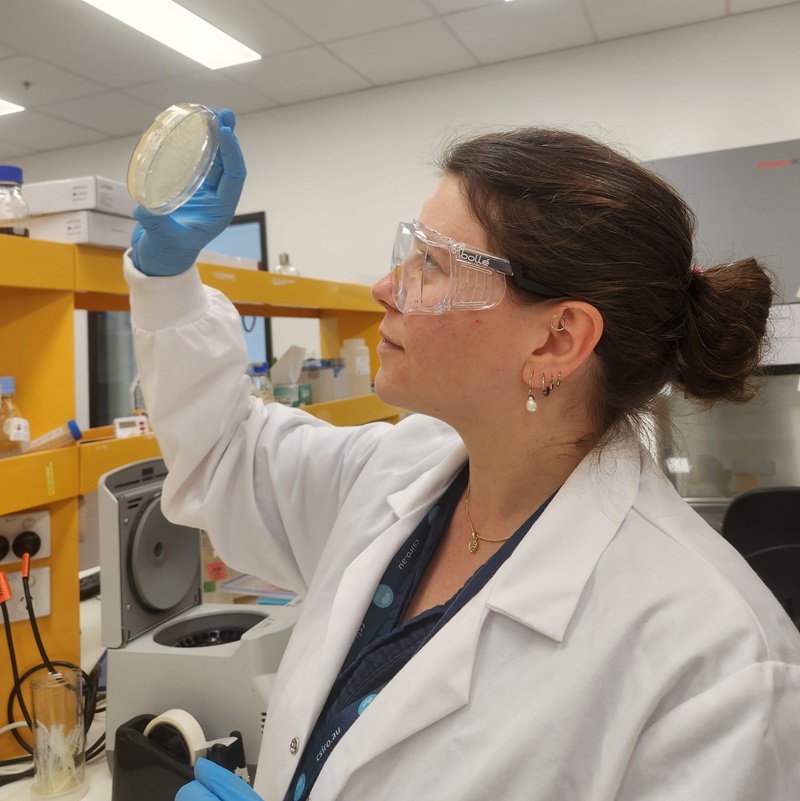
The team then tested how dozens of avirulence gene variants behaved in the lab, creating what is now the most comprehensive atlas of these genes for any rust species.
“For the first time, we have a clear set of genes to watch if we want to understand how stem rust causes epidemics,” Dr Dodds said. “That gives us a powerful new way to connect genetics to what’s happening in the field.”
The past and future of stem rust epidemics
One of the clearest insights explains the 2016 outbreak in Italy. The strain responsible carried a complete deletion of a single avirulence gene, allowing it to infect durum wheat varieties that relied on a specific resistance gene.
“That one genetic change effectively switched off the plant’s alarm system,” Dr Figueroa said. “Once you see it in the genome, the outbreak suddenly makes sense.”
Just as importantly, the atlas highlights resistance genes that may prove more durable. One resistance target was recognised by every strain analysed, meaning the pathogen would need two independent genetic changes to overcome it – a much higher evolutionary hurdle.
“That kind of information helps us make smarter choices about which resistance genes to deploy,” she said. “It’s about staying ahead of the pathogen, not constantly catching up.”
How genomics can make wheat defences last
Beyond breeding, the work has major implications for disease surveillance. Traditional monitoring relies on observing how fungal samples behave on a limited set of wheat lines. While effective, that approach can miss deeper genetic changes, particularly when different genomes combine within a single strain.
Sequence-based surveillance offers a way forward.
“If we know which genes matter most, we can monitor how they’re changing over time,” Dr Dodds said. “That allows us to anticipate risk, rather than responding only once an epidemic is underway.”
In Australia, genetic resistance to cereal rusts – including stem rust – is estimated to save the national economy about $1.09 billion a year, highlighting the scale of potential losses should new, more virulent strains take hold. Because recent epidemic-forming strains are not descendants of Ug99 and have emerged independently, their impact could be greater or faster than expected for Ug99 – a strain Australia has prepared against for years.
Because the stem rust strains studied are not present in Australia, the work relied on long-standing international partnerships and specialised biosecurity facilities overseas.
The research brought together CSIRO scientists with collaborators in the United States and the United Kingdom, supported by a mix of public and philanthropic funding from Australia, the US and the UK, including Australia’s Grains Research and Development Corporation (GRDC). This collaborative approach also supported the training of early-career researchers in Australia, USA and UK.
Solving one of crop science’s hardest puzzles
For Dr Figueroa, the study represents the culmination of years of work to decode some of the most complex genomes in plant pathology.
“Solving rust genomes has been a long journey,” she said. “It was like unlocking a book where the answers and secrets were written – but we couldn’t read the language.”
“Now we can,” she said. “And we’re finally seeing the benefits of all the effort, from the people who built the tools to the teams who contributed along the way.”
Extending genomic surveillance beyond wheat rust
The approach demonstrated in this research can now be applied to other high-risk crop pathogens. Dr Figueroa and her team are working to leverage these advances to strengthen Australia’s preparedness for future disease threats.
“This work shows we’re ready,” Dr Figueroa said. “We can deploy this technology, make informed decisions, and help protect agriculture.”
In an era of increasing disease pressure and global movement, that readiness may be just as important as resistance itself.