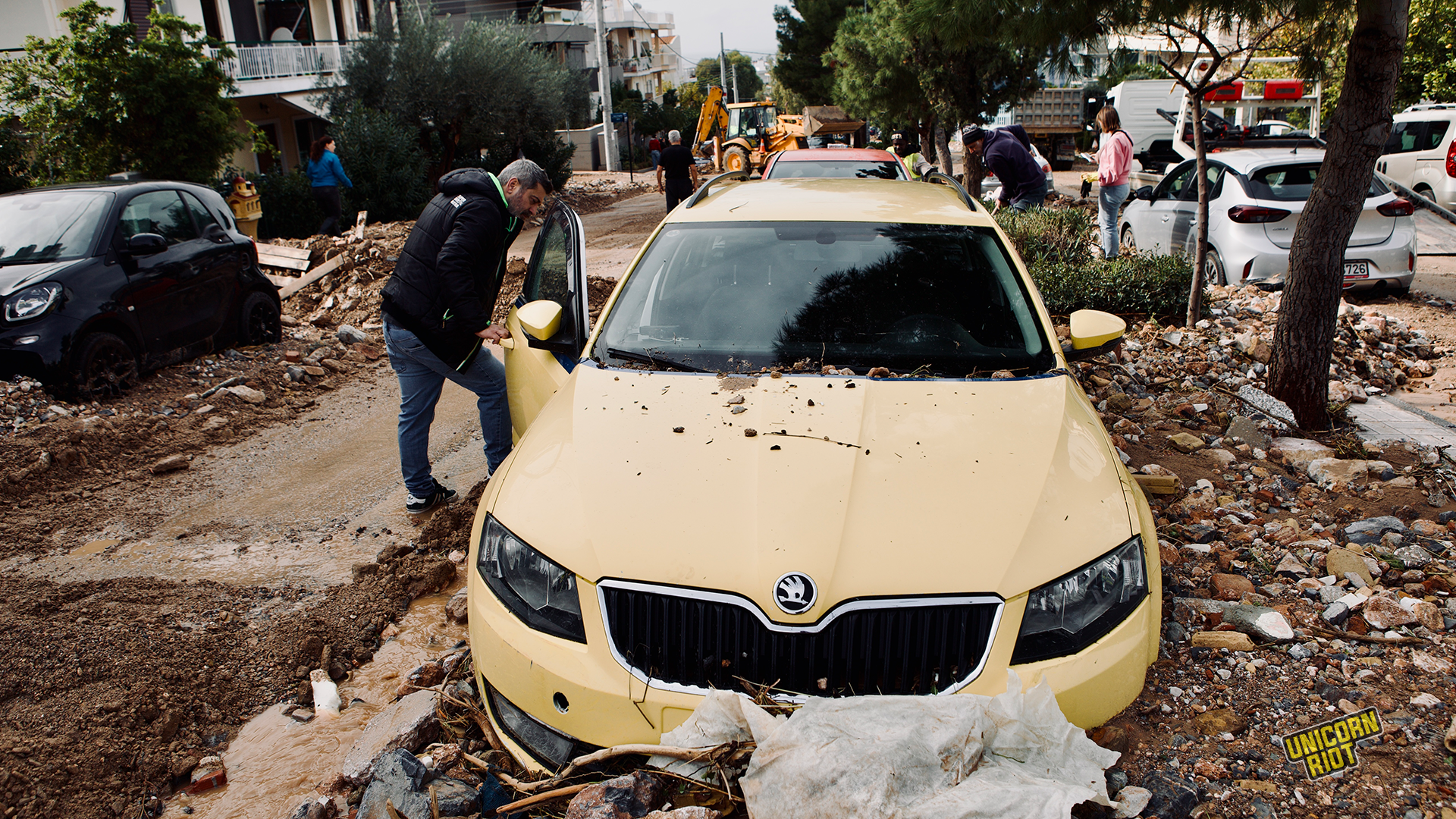
Glyfada, Greece — On January 21, streets in Athens turned into rivers at night. In the southern suburbs – like Glyfada – streets turned deadly. Roads were destroyed by floodwaters, while cars were pushed down the streets from the wave. During the flooding, a 56-year-old woman lost her life caught in the current during the storm. She was found trapped beneath a vehicle. Firefighters rushed to the scene to rescue her, but she was pronounced dead during her move to the hospital in the ambulance.
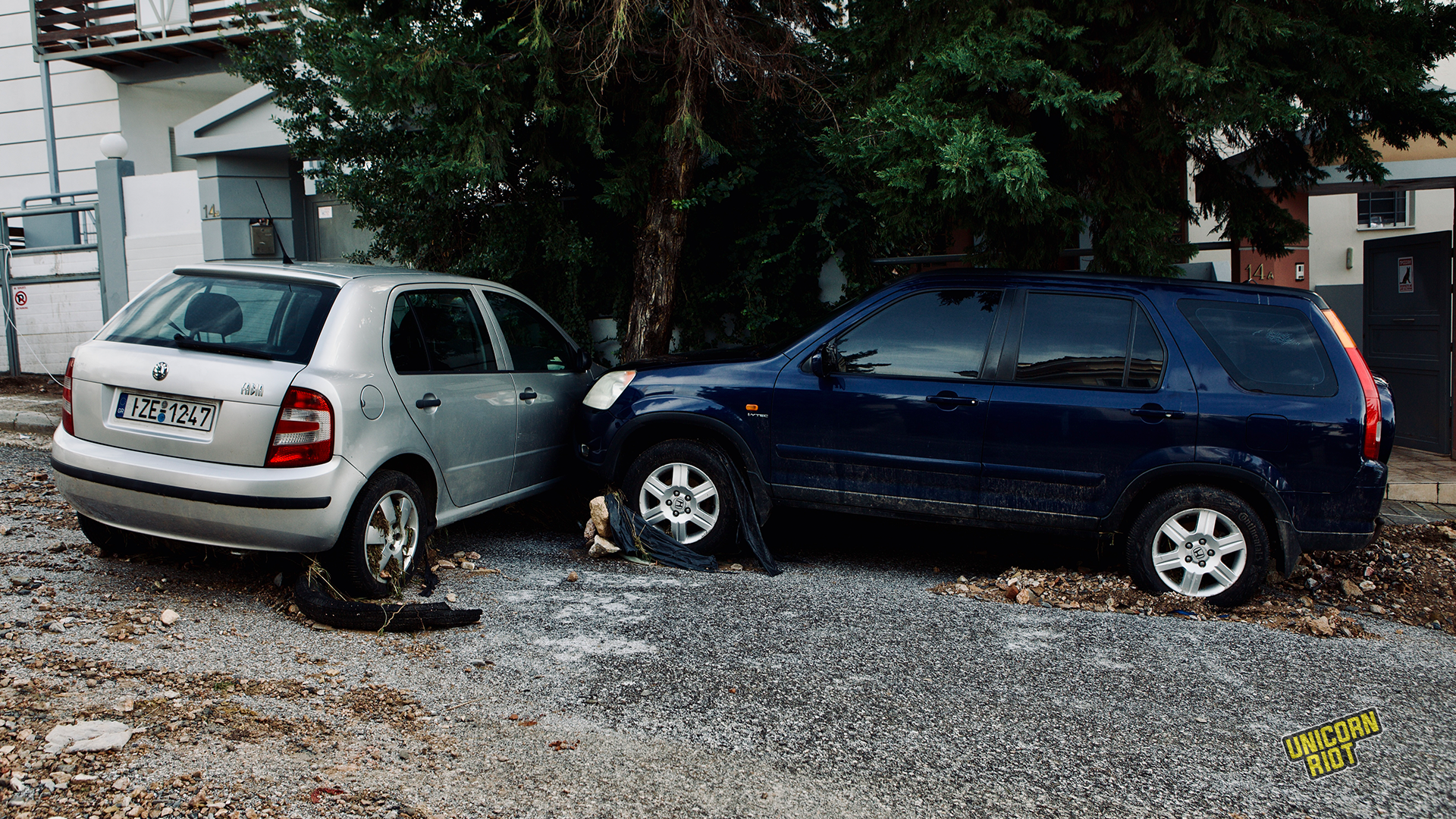
In the following days, the Mayor of Glyfada publicly targeted Greece’s main electricity distributor – Hellenic Electricity Distribution Network Operator (HEDNO). They called for legal actions due to the assumption of the company’s infrastructure negligence.
The municipality of Glyfada pointed out that HEDNO’s cable works had been the cause of worsening the flooding situation. They argue that it had created debris that would unleash more than 1,200 cubic meters of water and dirt downstream. They also pointed out how HEDNO failed to provide any safety documents for the public. HEDNO responded that they were not responsible, and they have suggested inviting judicial review.
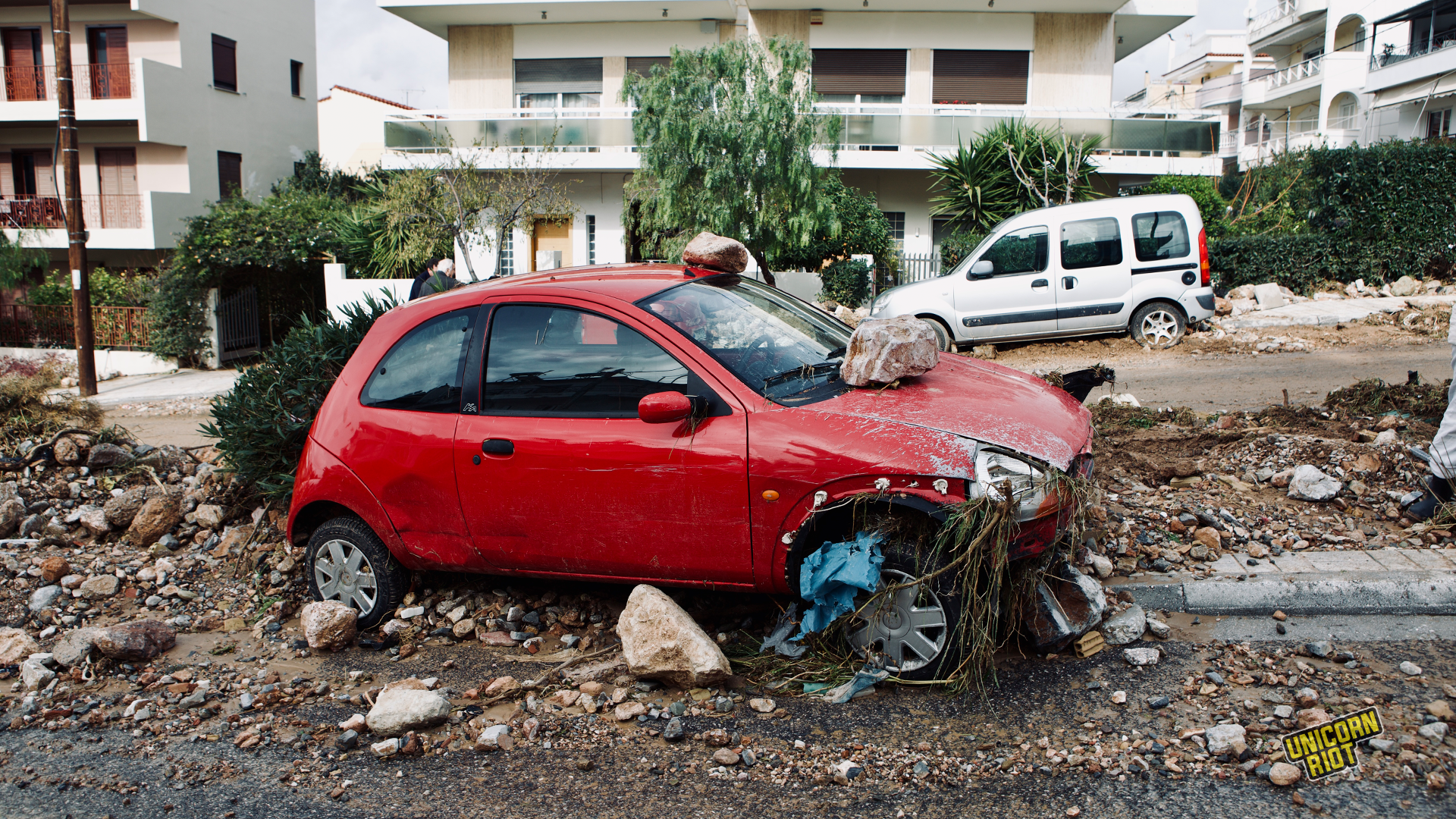
Residents in Glyfada were left to clear streets, move debris, and check on their neighbors. Journalists attempting to document the area, including the hills near Mount Hymettus, said workers warned them not to film the electrical infrastructure. Although there was no heavy police presence, the situation highlighted tensions over public access to information and transparency in the disaster response.
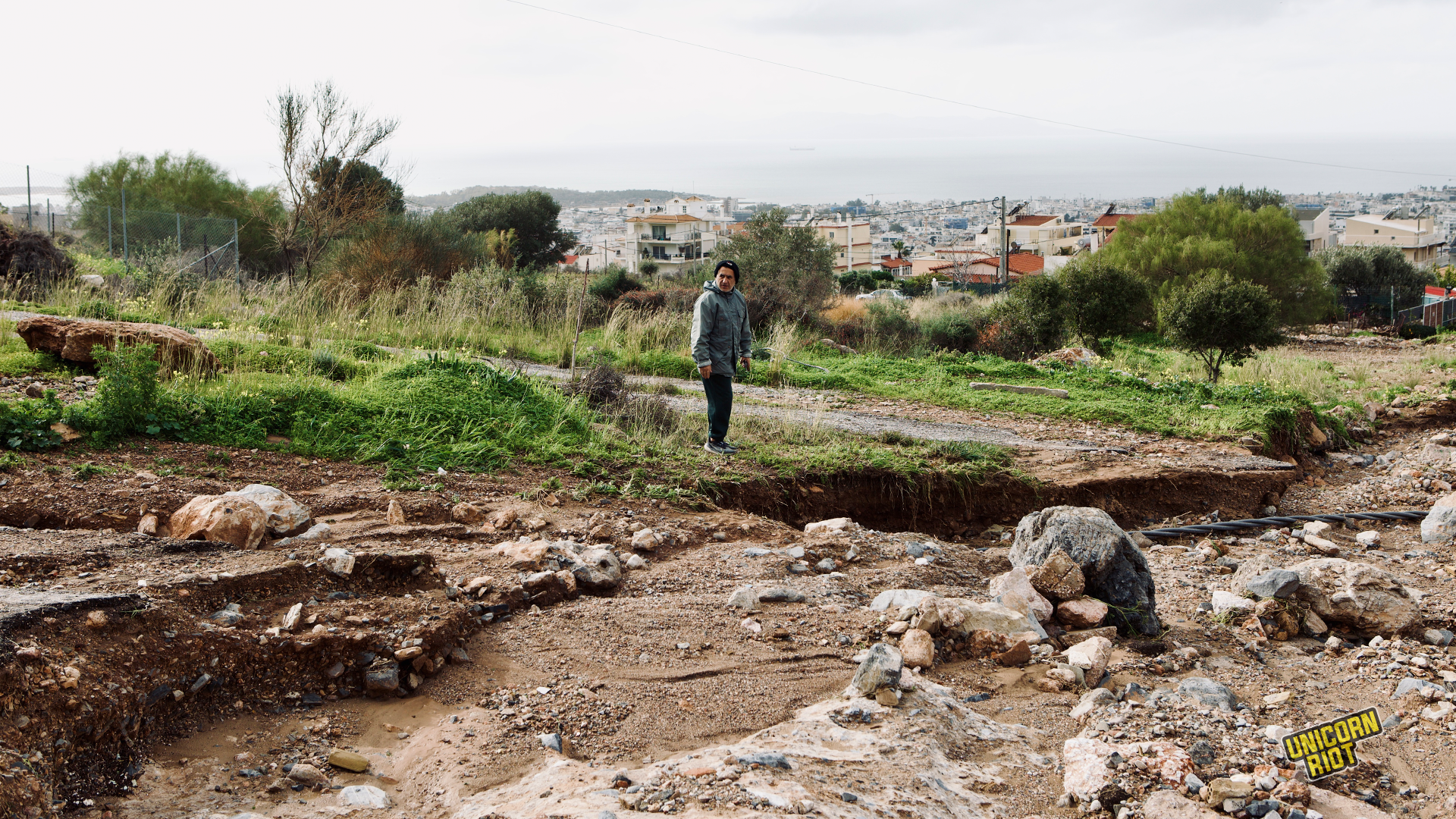
While some framed the flooding as a simple urban planning failure, the crisis also carries a political aspect. The storm last month was not an isolated case, as Glyfada has experienced similar crises in the past. It is a repeated pattern not only there but across Athens, including central districts, due to troubles with the drainage system handling heavy rainfall. Greece has become known for its high vulnerability to climate change impacts. The country faces increasing issues such as strong heatwaves, wildfires, droughts, and episodes of extreme rainfall that strain infrastructure.
Critics argue that long-term infrastructure resilience has lagged behind large-scale development priorities. This tension is visible in the nearby Ellinikon Project, a multibillion-euro redevelopment of the former Athens international airport. Led by LAMDA Development and strongly supported by the government of New Democracy, the project spans more than six million square meters along the Athenian Riviera.
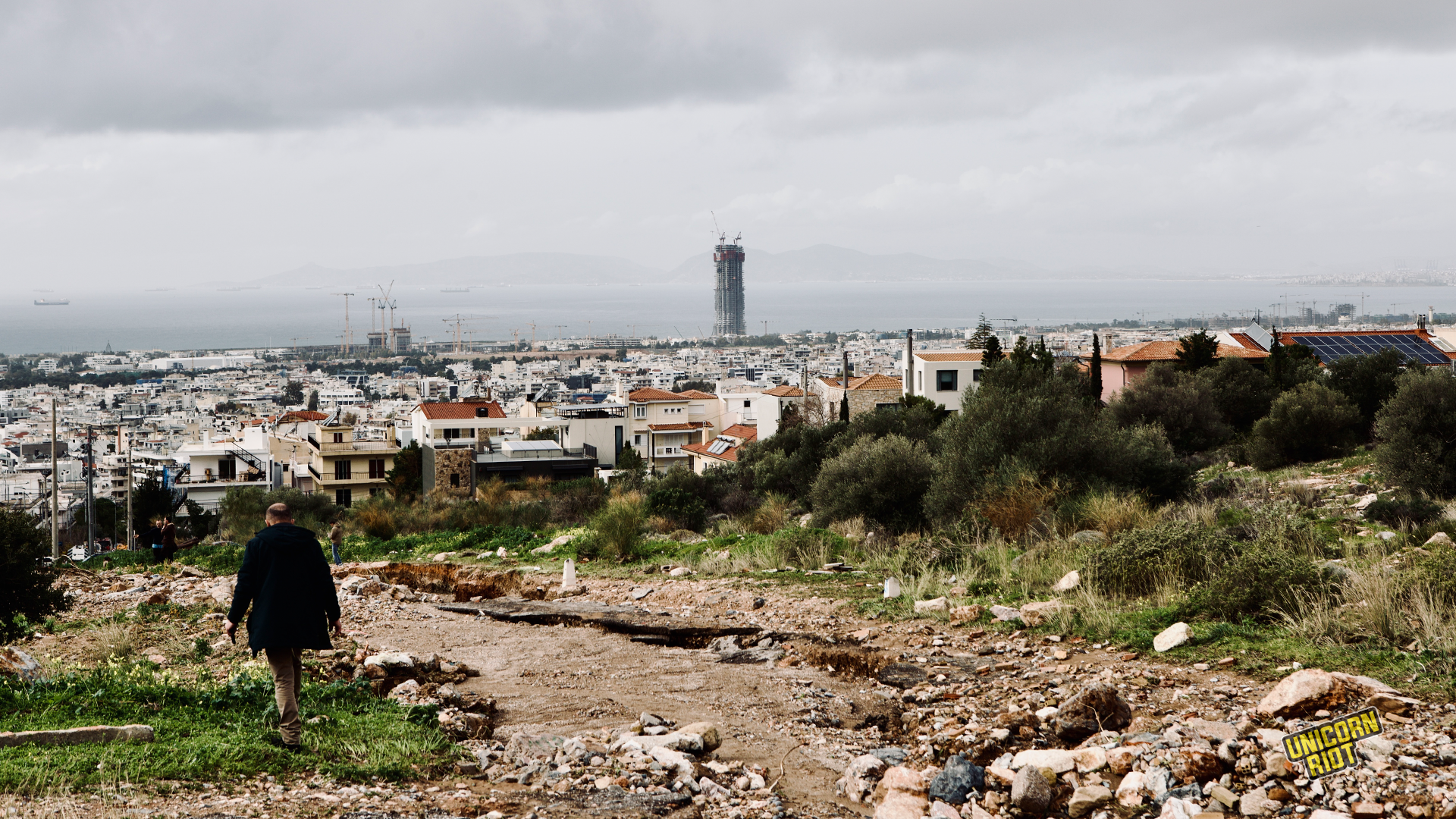
Ellinikon has been promised as a transformative urban landscape to the public, including high-rise towers like the Riviera Tower, luxury residences, hotels, marinas, malls and “smart city” infrastructure. The project is branded as a top-tier symbol for economic renewal for Greece. It has also attracted significant amounts of foreign investment. It is presented to the public as a welcome for ordinary citizens to enjoy. Still, the property prices reportedly range between €7,000 and €11,000 per square meter, placing the housing beyond the reach of average Greek households.
In the past, labor conditions at the Ellinikon construction site have brought scrutiny. The incident occurred following a scaffolding collapse that injured workers, prompting construction unions to stage protests over workplace safety. Union representatives have repeatedly warned about the rising cases of workplace accidents nationwide and called for stronger oversight.
In recent years, LAMDA Development has clashed with neighboring municipalities, including Glyfada. Officials raised concerns over building heights, waste management, and the sheer scale of the project. They say revisions to the original design have added pressure on local roads, drainage networks, and already stretched public services.
For critics, Ellinikon illustrates a broader imbalance in development priorities. While land is privatized and promoted as sustainable and innovative, little emphasis has been placed on social housing. The flooding in Glyfada has intensified debate over how resilience investments are distributed and whether surrounding public infrastructure is being upgraded at the same pace as luxury development.
The €915 million purchase price reflects the agreed value paid to the Greek state for the shares controlling the Ellinikon site, with additional tax revenues projected over the coming decades. They argue the development will significantly contribute to GDP and employment. Opponents counter that headline investment figures do not automatically translate into strengthened local infrastructure or climate preparedness.
These debates take place against the backdrop of Greece’s post-austerity economy. The debt crisis and years of tight budgets have reshaped how public funds are spent and left municipalities stretched thin. Banks continue to rely on deferred tax assets from the bailout years, a practice critics say keeps money out of public coffers. At the same time, public infrastructure investment has lagged, leaving local communities under mounting pressure.
Austerity significantly changed how local government operates. It shifted many municipalities from robust service providers to managers of constrained budgets reliant on private partnerships and EU funding. Even relatively well-resourced suburbs like Glyfada face challenges in maintaining drainage networks and upgrading flood defences amid increasing climate volatility.
In this context, climate-related disasters cannot be understood as purely natural events. They interact with policy decisions, fiscal limits, and development models that shape who bears risk and how quickly recovery occurs. The January flooding exposed vulnerabilities that extend beyond one storm or one neighborhood.
Municipal spending choices have also come under scrutiny. Critics mention that more visible urban projects, like coastal redevelopment and other infrastructure improvements, have progressed rapidly than flood prevention measures. This in turn leaves municipalities vulnerable to recurring floods. Whether that prioritization is justified is now part of a wider public debate.
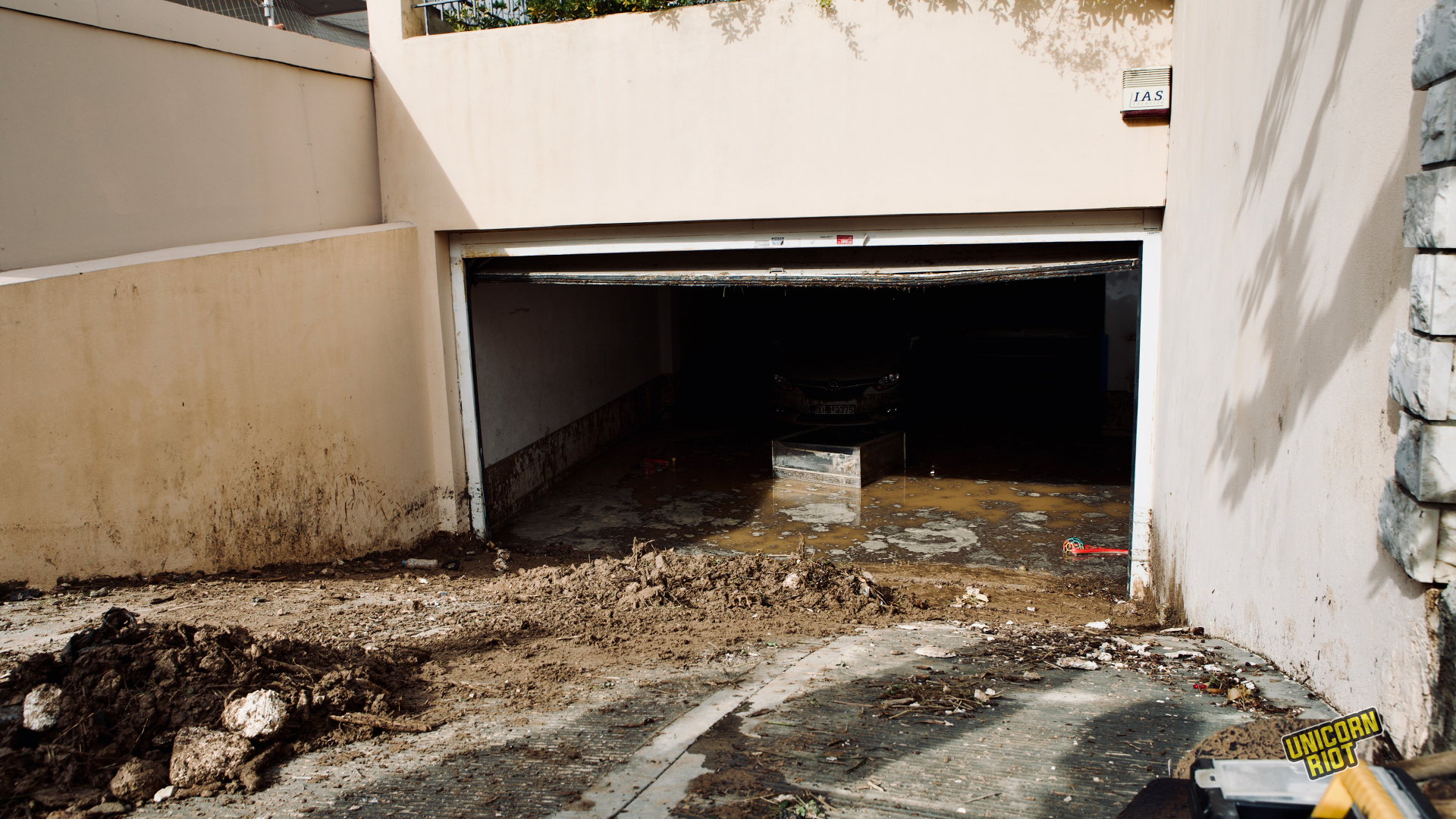
Despite Glyfada’s reputation as an affluent suburb, ordinary residents and municipal workers mobilized in the aftermath, clearing mud-filled streets, helping move damaged vehicles, and assisting neighbors whose garages and ground-floor homes were inundated. Firefighters and city crews worked alongside locals in cleanup efforts. Amid devastation, a collective response emerged — a unity that revealed both the fragility of infrastructure and the social solidarity that surfaces when it fails.

For more from Greece, see our archives.
All photos contributed by Elvis Takahashi Mantello.
Follow us on X (aka Twitter), Facebook, YouTube, Vimeo, Instagram, Mastodon, Threads, BlueSky and Patreon.
Please consider a tax-deductible donation to help sustain our horizontally-organized, non-profit media organization: