
iPhone users face this choice every time they need directions: Stick with the pre-installed Apple Maps, or switch to Google Maps. A decade ago, the answer felt obvious, but today, it’s not as clear. In 2025, both apps deliver nearly identical navigation accuracy, often suggesting the same routes with similar estimated arrival times. The gap between these navigation giants has narrowed so much that choosing between them comes down to ecosystem preferences and specific priorities, rather than raw performance differences.
The biggest dividing line is ecosystem reach. Google Maps serves over two billion monthly users and runs across Android, iOS, and web browsers, making it a near-universal navigation tool. Apple Maps, on the other hand, is available only on Apple devices, tightly woven into iOS, watchOS, and CarPlay. While route guidance itself is largely the same, the real differences show up in privacy philosophy, interface design, and extra features beyond turn-by-turn directions. Understanding those strengths makes it much easier to pick the right app, or decide whether to switch to other digital map alternatives.
Use Apple Maps for more privacy
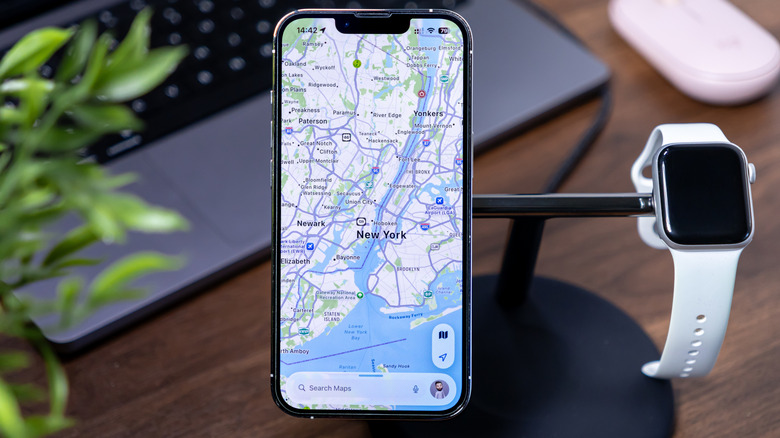
If privacy is your primary concern, Apple Maps is the clear winner. Unlike Google, which builds its business model on advertising, Apple does not require you to sign in to use Maps, meaning your navigation data is not tied to your Apple Account. Apple uses a process called “fuzzing” to protect your location. After 24 hours, the precise location of your search is converted to a less exact general area.
Apple also ensures that information about your preferred routes and destinations is not tied to your account, so it cannot build a comprehensive profile of your movements. This stands in stark contrast to Google Maps, which collects extensive travel data to optimize its advertising services. Beyond privacy, Apple Maps tends to offer a better user experience for drivers.
The interface is cleaner and simpler, and places all critical controls on the bottom third of the screen to keep the map visible and clutter-free. Navigation instructions are also delivered simply, telling you to “turn left at the traffic light” rather than “turn left in half a mile.” Apple’s way is more natural and easier to process while driving. For those deep in the Apple ecosystem, the integration is convenient. Apple Maps works seamlessly with Siri and the Apple Watch, and it includes clever touches like being able to automatically track your parked car using CarPlay.
Google Maps is more popular
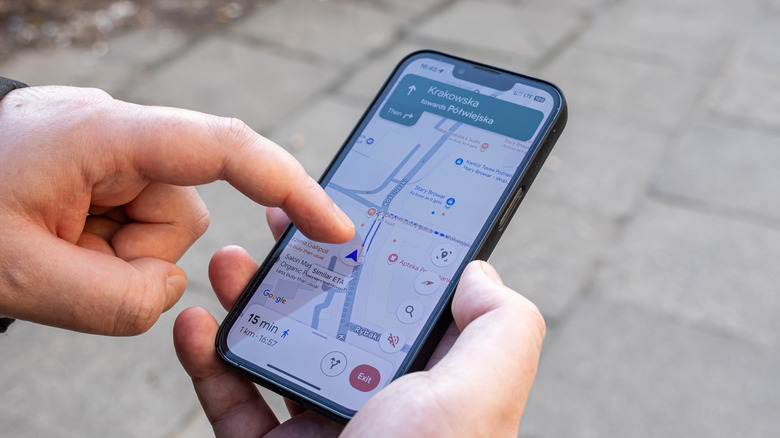
Google Maps’ biggest advantage is reach. It runs on Android, iOS, and web browsers, making it the default navigation option for users across platforms. With Android accounting for roughly 72% of the global smartphone market, Google Maps benefits from a massive user base, feeding it real-time traffic data at a global scale.
Google Maps is essentially a search engine for the physical world: It has detailed reviews, photos, Q&A sections, and real-time gas prices integrated directly into the map. Its user interface prioritizes discovery, showing nearby places, popular destinations, and personalized suggestions when you open the app. Google Maps is especially useful when you need recommendations or are unsure of where you’re headed.
The biggest differentiator now is AI. Google is transforming the app from a simple navigation tool into a conversational local guide. Thanks to a recent Gemini update to Google Maps, you can now ask the app questions like “What’s a budget-friendly cafe?” and get an answer instantly, instead of having to read dozens of reviews to make your decision.