
My Neighborhood News Group (MNNG) is publishing a series of stories on how local governments are funded and the financial challenges facing both elected officials and residents. You can read Part 1: Introduction here. Part 2: Where’s the money here. Part 3: Property taxes here. Part 4: Fees and taxes here. Part 5: Federal and state grants here. Part 6: The difference between wants and needs here. Part 7: The color of money here. Part 8: ‘Cities should function more like a business’ here. Part 9: What local governments are up against in 2026 here. Part 10: Follow the money here.
Taxes from the general fund are spent on “core services.” People can disagree about what services should be defined as core services, as we discussed in Part 6 here.
Local governments have a process for making these decisions: best practices, rules and regulations and community listening. (Councilmembers listen to constituents and make these budget decisions every year.)
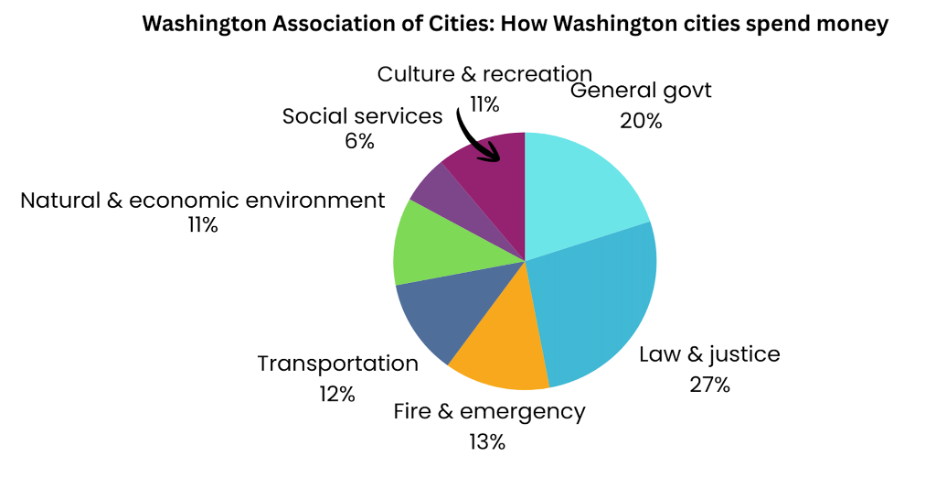
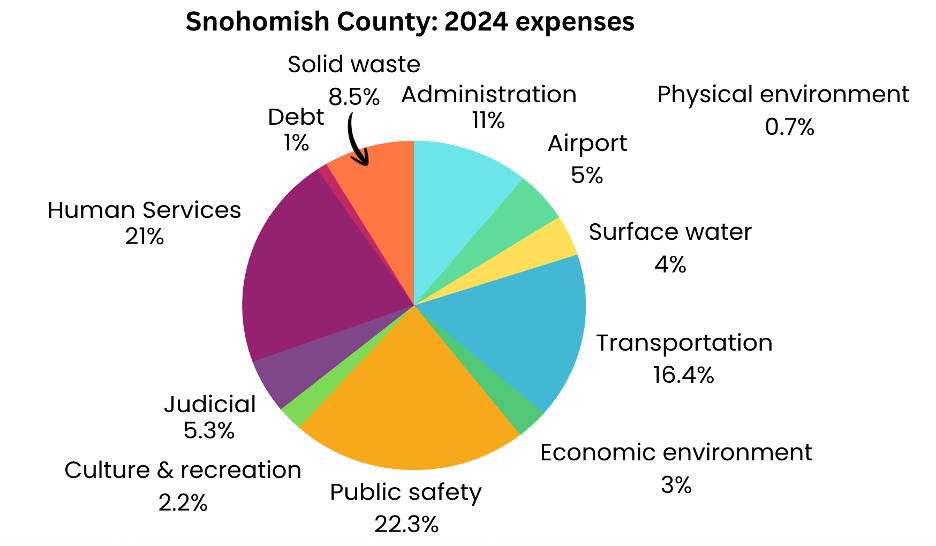
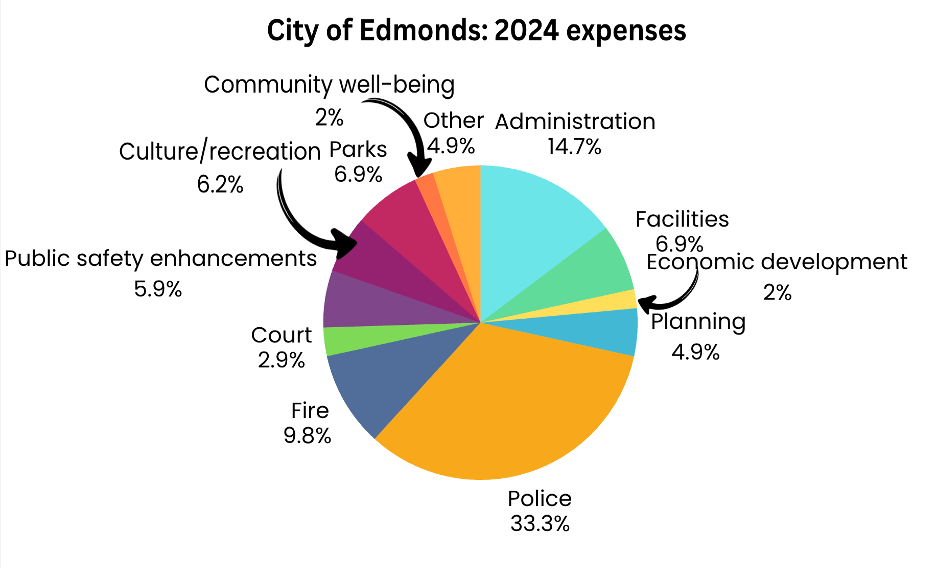
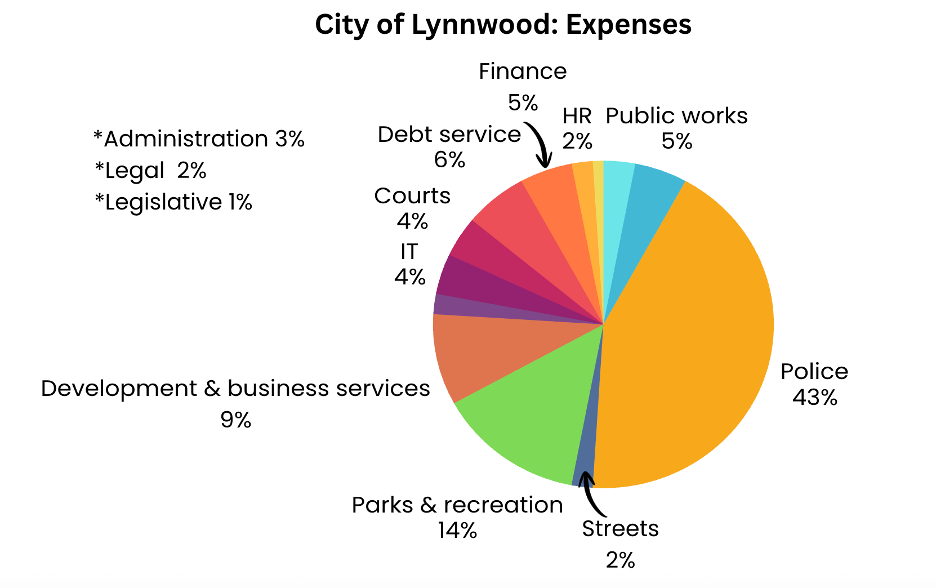
This is how the local government spends your money – the property tax dollars, the sales tax dollars, the utility tax dollars, the fees, the fines, the shared revenues, the licenses, the permit fees and more.
Statewide
————
Snohomish County
———–
Edmonds
———-
Lynnwood
———–
Mountlake Terrace Terrace
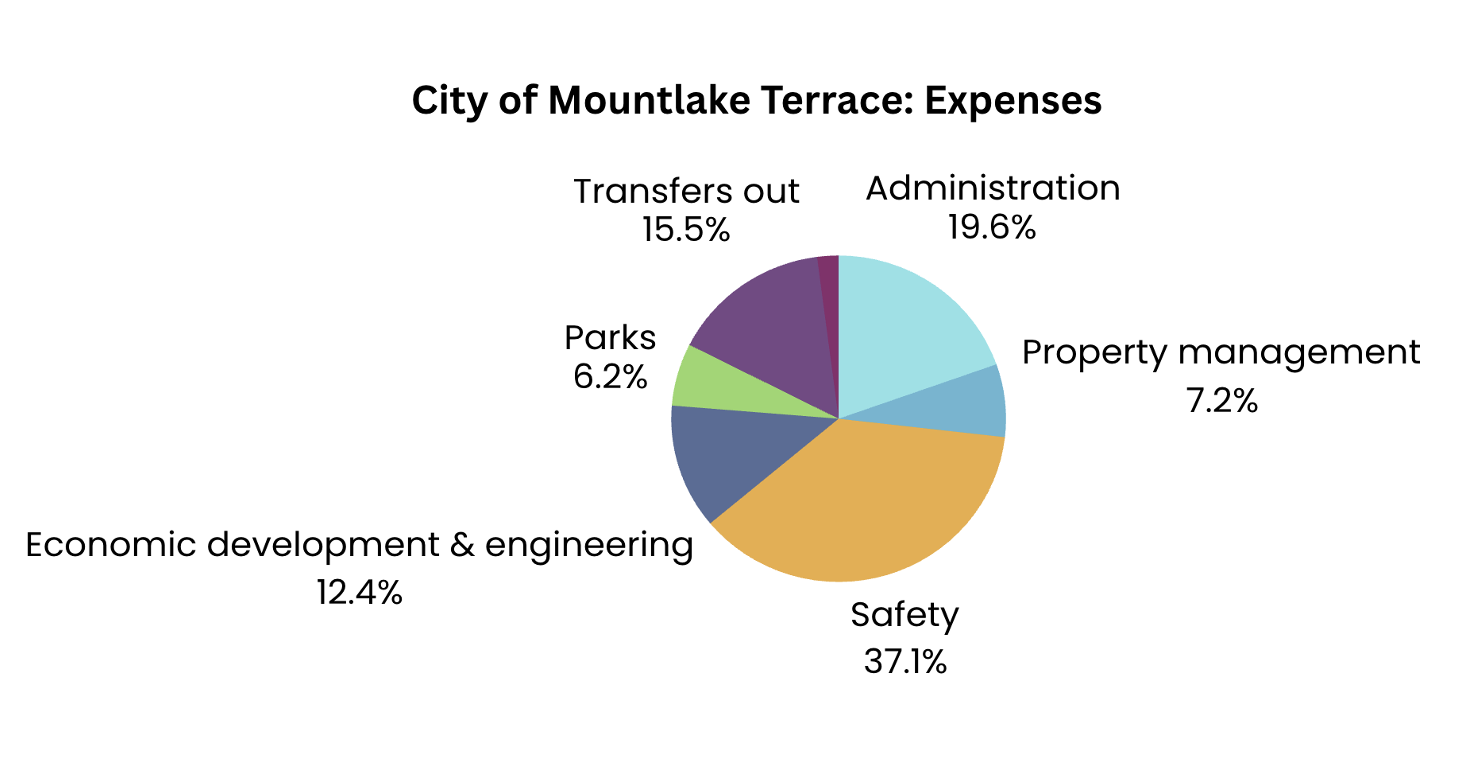 The two biggest pie slices in nearly every local Washington state government are public safety and administration. Public safety are the officers and people who support law/safety/justice.
Administration includes government workers and costs associated with those workers like health benefits. Parks are what makes a city livable and enjoyable. Economic development brings business to the city.
Government is about delivering services to all residents. When cuts happen, the council, with information from the local governments, has to decide which services and which people should be eliminated.
In the end though, tough decisions have to be made.
“But I don’t want a human services person or a new police car”
Our thousands of residents disagree on priorities and spending. “Why do we need new police cars?” “I don’t want a human services person. There are non-profits for that.” These are fair statements.
Cuts align with values. Which is more important, a detective or human services? A permit tech or a public defender? (Oops, we can’t eliminate the public defender because that is a state mandate.) Does a city go without a software upgrade? What if there’s a cyberattack? Do we close all park bathrooms and keep an extra officer? What if people defecate next to the bathroom and leave toilet paper there like they did during COVID? That’s gross and a public health hazard.
Recommendations for services come from government experts who look to best practices. The government and their governing bodies get feedback from residents. They look to organizations like the nonprofit Association of Washington Cities for guidance.
Residents feed that list of priorities every time they contact their representative. Those values feed into a budget, which the governing body reviews and changes.
If you don’t like what your representative does, talk to them or vote them out. That is the democratic system in action. But it requires residents to show up and plug in. That can be hard, really hard when you are a busy person with little spare time on your hands.
Back to our personal economy. You get a paycheck. At face value, it seems like a lot. But by the time you deduct Social Cecurity, health insurance (if you get it) and long-term care, it’s about 60% of your gross. Then factor in rent and food. How much do you really have left? Not much. Now the hard part, what can you go without.

Local government feels your pain.
Even with all these funding sources, it’s not enough. And when cities go to voters over and over and over and over again, voting fatigue sets in. Plus, in this economic environment, we, personally, feel squeezed. It’s not easy.
That’s where we are now.
Next: That’s a lot of information, but it doesn’t seem to solve the problem. Now what?