
My Neighborhood News Group (MNNG) is publishing a series of stories on how local governments are funded and the financial challenges facing both elected officials and residents. You can read Part 1: Introduction here. Part 2: Where’s the money here. Part 3: Property taxes here. Part 4: fees and taxes here.
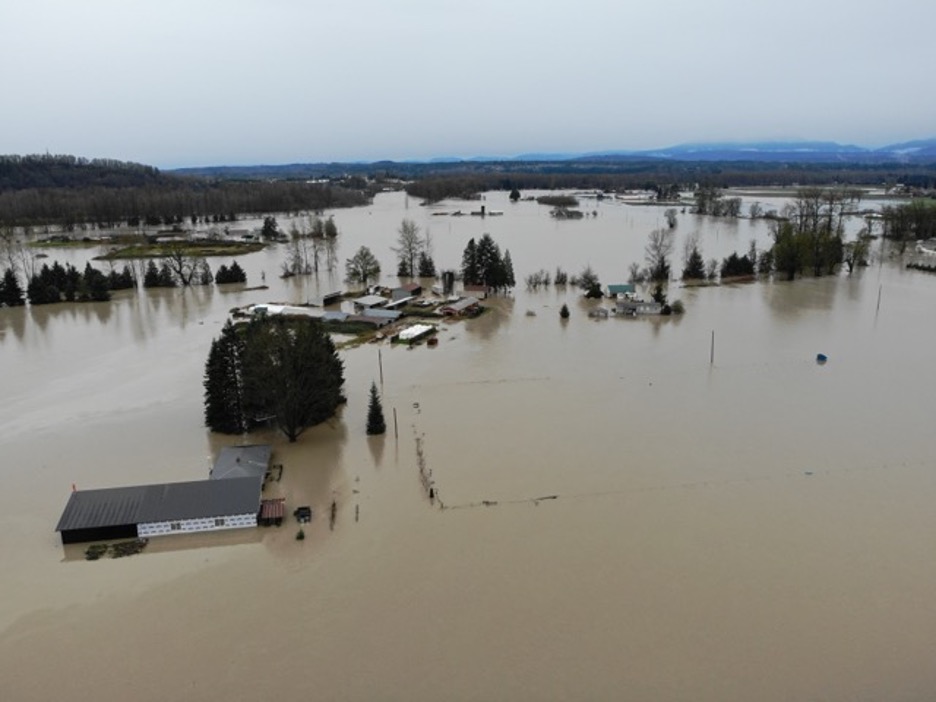
For decades, local governments and nonprofits have relied on federal and state grants to fund or partially fund capital projects (major stand-alone projects), pilot programs or unexpected shocks to the financial system like our recent flooding.
For example, the Federal Emergency Management Administration (FEMA) covers funding for unpredictable disasters. The Washington State Departments of Transportation and Commerce deliver big block grants aligned to a theme or need. Local governments spend time applying for these grants and consistently win them, although “most grants require a local match of 20%,” Snohomish County spokesperson Kari Bray said.
“The County receives funding from 11 different programs in the Federal Highway Administration and U.S. Department of Transportation,” Bray said.
One recent example of a federally funded project is Jordan Creek Bridge 214 about seven miles southeast of Arlington. “This project was 100% federally funded at the cost of $5.1 million and opened in September,” Bray said.

A City of Lynnwood spokesperson said that Lynnwood “has also been incredibly resourceful in obtaining federal and state grants to help fund our major infrastructure projects.”
Many of these grants fund infrastructure and make up for the funding that Washington cities lost under I-695, the $30 car tab measure discussed in part 2.
In 2025, the Trump Administration canceled many grant opportunities and pulled back currently funded ones. This created an unexpected gap for projects in the pipeline.
The few grants that remain are now highly competitive and President Trump has stated that he is “not interested in helping ‘blue’ states” or blue-state priorities, even if funds were previously committed. Washington state is considered a blue state.
For Snohomish County, this money funded emergencies.
“These are public safety positions,” Bray said.
Among them are Emergency Management Performance Grants, the State Homeland Security Grant Program, and the Urban Area Security Initiative, Bray said.
“Collectively, these grants fund 5.13 full-time equivalent (FTE) staff at DEM (Department of Emergency Management), or approximately one-third of our core emergency management staff.”
“Employees supported by those federal grants are activated for the flood response,” Bray said in a mid-December email.
”Our Emergency Operations Center (EOC) was activated on Dec. 9 and has remained active since,” Bray said, “including evening and weekend hours, with all DEM staff engaged in some capacity. Work performed by those core DEM employees includes things like partner coordination, emergency messaging, and ongoing planning and support for the emergency activation.”
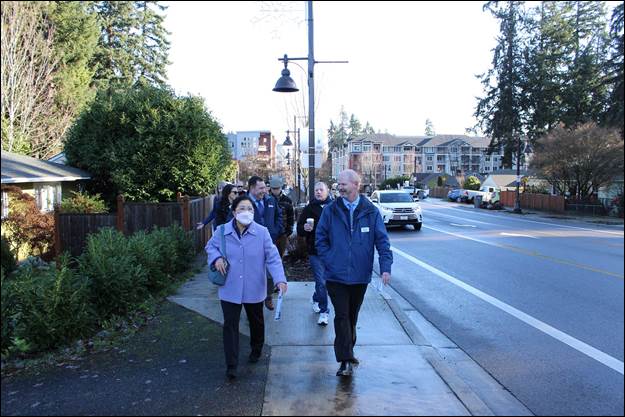
Mountlake Terrace was hoping for a federal grant to jumpstart the revitalization of its downtown, known as Town Center.
“We had a very good grant proposal called the RAISE grant through USDOT (U.S. Department of Transportation),” said City Manager Jeff Niten. “The $24 million grant request would have covered upgrades to the City’s utilities to support new buildings envisioned for the Town Center. .. We scored very high,” Niten said. “But we were not awarded that grant.”
No one was awarded the grant. It was canceled for every local government.
The USDOT RAISE (Rebuilding American Infrastructure with Sustainability and Equity) grant webpage was last updated Jan. 10, 2025 prior to the Trump Administration taking office. The department has a new grant program called BUILD (Better Utilizing Investments to Leverage Development) and it has different criteria.
The loss of anticipated grants has a domino effect. It’s a loss of partnerships and project delays, which means rising costs and losing out on hoped-for sales tax revenue.
It’s not just federal grant money right now, it’s the whole federal vibe.
“Consumer confidence is down and we are seeing those impacts in our sales tax revenues and our permitting fee revenues,” said a City of Lynnwood spokesperson.
Operating grants – grants that pay for people and daily activity – are another resource but, again, those are rare and highly competitive.
Meanwhile, the state has its own financial problems.
Local governments, like cities and towns, are playing defense right now, according to the Association for Washington Cities (AWC).
“We are trying to protect existing [state shared] revenues like liquor and cannabis, that were created with the intention of being shared to provide services,” AWC spokesperson Brian Parry said regarding cities’ efforts to get more money from the state. The AWC is currently preparing for the next legislative session.
“The challenge is so acute with the limitation of property taxes and inflation,” Parry said.
On Nov. 4, 2025, State Sen. June Robinson, D-Everett, chair of the Senate Ways and Means Committee, wrote to colleagues: “I will not be accepting any member requests for the operating budget in the upcoming session,” which starts in January 2026.
“We don’t have money to pay for what is needed, let alone new spending that members might request,” she said in an article published by the Washington State Standard.
When the federal government doesn’t provide local grants, local governments look to the state. When the state is in trouble, it is no help to local governments.
Local governments can feel like they are at the bottom of the financial food chain. But local governments must still provide services because that is their core function. How they fund those local services is the issue. This is where most local governments are right now in Washington state.
Going back to our personal economy analogy. Let’s say you inherited $10,000 and chose to use that as part of a down payment on a house. You did all the paperwork, took out other contingent loans to help with the down payment and signed all the paperwork. You achieved that perfect balance so you will finally get into your first home!
Then, at the last minute, it turns out that money does not come through as promised and you are stuck with a contract you have to honor but not enough money to honor that contract.
You can cancel the contract and pay fees for the cancellation. Or you could find someone else to loan you $10,000. But that’s a loan and not a gift so you will have to pay that back… with interest. Or you could just say now is not the right time, knowing that it will be more expensive in the future.
Those are the choices for local governments when they lose grant money.
Next: Unfunded state mandates and the impact on local governments.