

Greece’s Prime Minister Kyriakos Mitsotakis enters his seventh year in power, facing a fragmented and largely ineffective opposition.
Despite a drop in polling that reflects growing public fatigue, Mitsotakis continues to govern with a significant lead, not because of a surge in popularity, but because the traditional pillars of opposition have disintegrated. With his main rivals either in freefall or struggling to find their voice, the “political monologue” in Athens has become the new status quo.
The question is no longer whether the government is making mistakes—voters cite the cost of living and corruption scandals as major grievances—but rather: Who else?
The collapse of the Left in Greece
To understand the current vacuum, one must look at the wreckage of the Greek Left. SYRIZA, the radical movement that once shook the foundations of the Eurozone, has entered a terminal phase of fragmentation.
Following the 2023 resignation of Alexis Tsipras, the party spiraled into a civil war that culminated in the ousting of his successor, Stefanos Kasselakis, and the formation of several splinter groups. By December 2025, SYRIZA has plummeted to single digits in the polls, a ghost of the party that once commanded 35% of the electorate.
Meanwhile, PASOK, the traditional socialist powerhouse, has inherited the title of “Official Opposition” by default rather than by conquest. While its leader, Nikos Androulakis, was re-elected in late 2024, PASOK remains trapped in a “glass ceiling” of roughly 13–15%. It struggles to shed the “memorandum-era” baggage that haunts older voters, while failing to ignite the passion of a younger generation that views social democracy as a relic of the past.
A return to Ithaca?
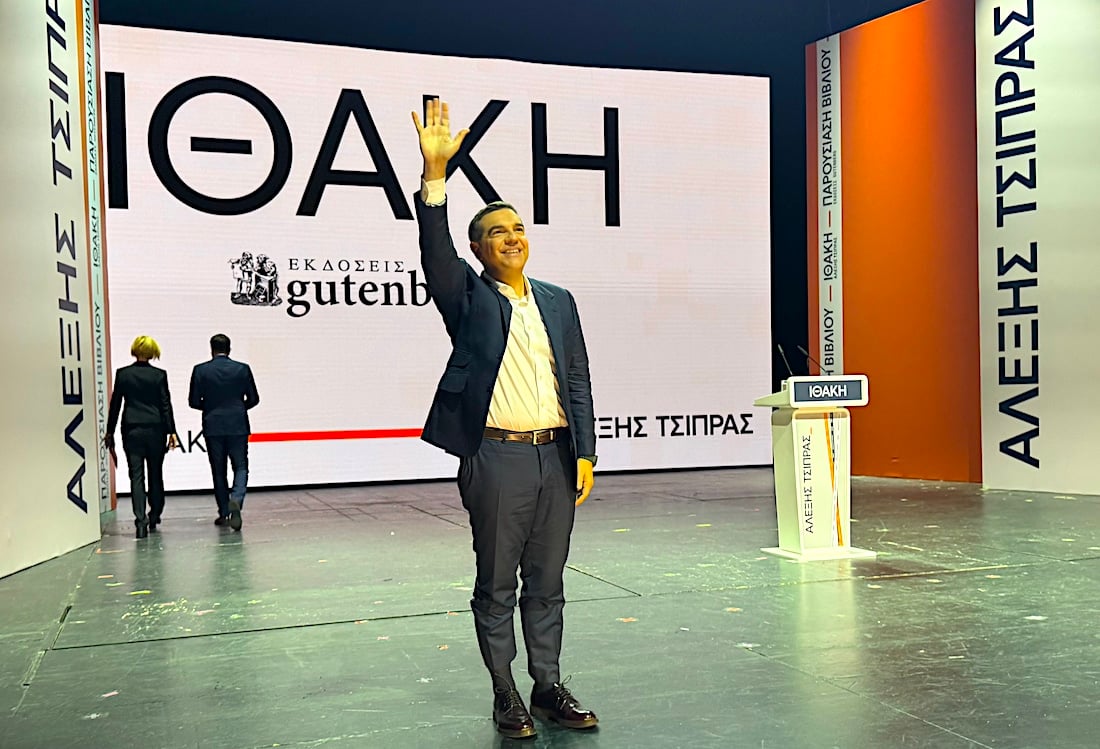
Into this void has stepped a familiar face. In early December 2025, Alexis Tsipras broke his strategic silence with the release of his memoir, Ithaca. At the launch, Tsipras called for a “political Big Bang”—a radical realignment of the Center-Left that bypasses the “toxic” remains of SYRIZA and the stagnation of PASOK.
Rumors of a new party have sent shockwaves through the political establishment. Tsipras’s gamble is based on the “Orphaned Left”—millions of voters who are disillusioned with the current government but find no home in the existing opposition. However, his return is a double-edged sword. While he remains the most charismatic figure on the Left, his legacy of the 2015 “Kolotoumba” (U-turn) and the trauma of the third bailout remain powerful weapons for his rivals.
The moral challenge: Maria Karystianou

Perhaps the most potent threat to the status quo doesn’t come from a career politician, but from a mother seeking justice. Maria Karystianou, who lost her daughter in the 2023 Tempi train disaster, has emerged as the moral conscience of a nation. As the head of the Victims’ Association, she has spent 2025 battling what she calls a “systemic cover-up” by the state.
Public sentiment reached a boiling point following a controversial tax audit of the Victims’ Association in late 2025—a move widely condemned as an attempt to silence her. Recent polling data suggests that a staggering 31.8% of voters would support a political movement led by Karystianou. Her platform of “Catharsis”—a complete cleansing of the Greek state and its entrenched interests—appeals to a deep-seated anger that transcends the traditional Left-Right divide.
Mitsotakis’s hegemony: “Centrist fortress”
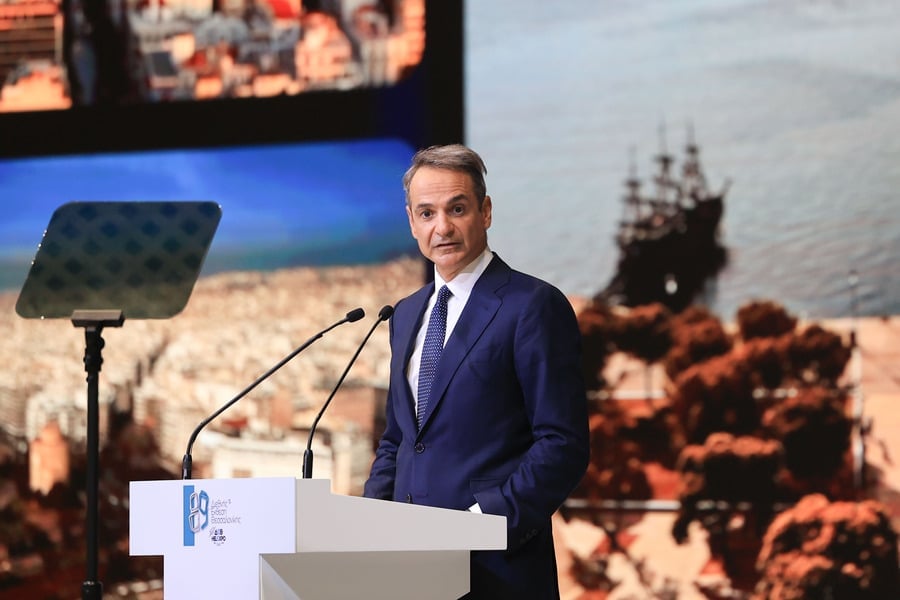
For Prime Minister Kyriakos Mitsotakis, this fragmentation is a strategic gift, but his dominance is also a result of a deliberate ideological heist. He has effectively “cleared out” the political center by adopting policies that were once the domain of his rivals.
Social Liberalism: In early 2024, Mitsotakis defied the powerful Greek Orthodox Church and a significant portion of his own conservative base to legalize same-sex marriage and adoption. This move effectively decapitated the Center-Left’s social agenda, leaving them with little room to out-liberalize him.
Technocratic Governance: By appointing figures like Kyriakos Pierrakakis—the architect of Greece’s digital state—to key ministries, Mitsotakis has branded himself as a “modernizer.” The digitization of the Greek bureaucracy has provided tangible “quality of life” improvements that have won over centrist voters who value efficiency over ideology.
Economic Triangulation: His government has combined “ruthless fiscal stability” (achieving primary surpluses) with selective “pro-labor” policies, such as multiple increases to the minimum wage. By “borrowing” from the Left’s playbook while maintaining the trust of the markets, he has made it difficult for PASOK to present a distinct economic alternative.
The government’s “safety in fear”
Despite this dominance, the “Mitsotakis Hegemony” is showing cracks. Scandals—from the EYP wiretapping affair to the Tempi tragedy—have dented ND’s polling, which now hovers around 25–30%.
2026 is a milestone year as the EU’s Recovery and Resilience Facility (RRF) begins to wind down. Analysts are concerned about a “cliff effect,” questioning whether the economy can sustain its momentum without this massive influx of external capital.
Yet, the lack of a unified challenger allows the government to govern as a “majority by default.” The narrative is simple: “Who else?” In a country still scarred by the 2010s crisis, many voters prioritize the predictability of Mitsotakis over the uncertainty of a fragmented Left.
As Greece enters 2026, the political vacuum is beginning to pull in new forces. The “Ithaca” of Tsipras and the “Catharsis” of Karystianou represent two very different paths out of the desert.
Until these forces consolidate, the Greek Parliament will remain a theater with only one lead actor and an “empty” front row. The question for 2026 is no longer whether the government can be challenged, but whether the Greek people can find an alternative voice.