

Greece and Ukraine have entered into a significant energy deal aimed at strengthening Ukraine’s natural gas supply amid ongoing conflict and preparing for what is anticipated to be a difficult winter.
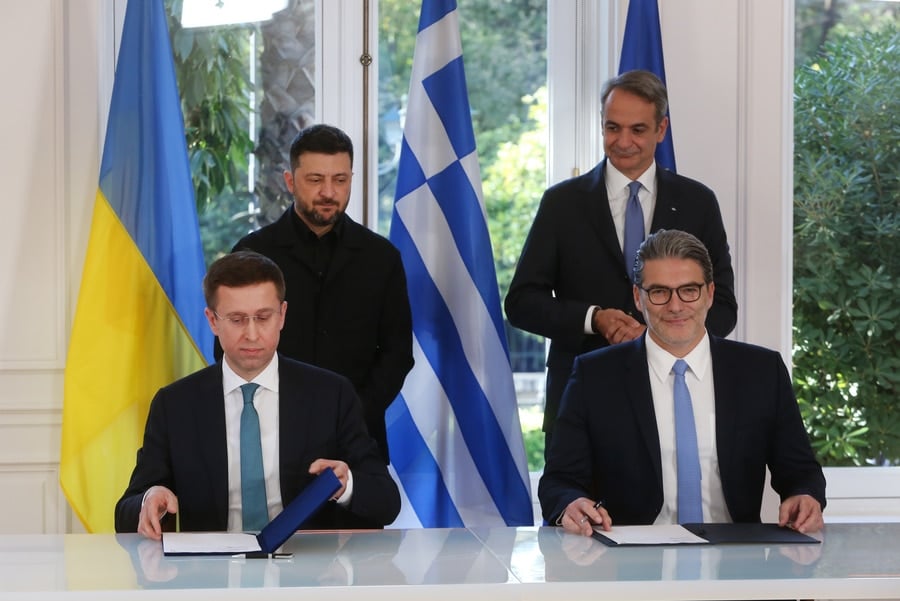
The deal, signed on November 16, 2025, marks a major milestone in regional energy cooperation and comes during the Ukrainian President Volodymyr Zelensky’s visit to Athens, for the second time since the start of the war in Ukraine.
Greece-Ukraine Deal to Secure Energy Supply for Winter 2025-2026
The agreement centers on a Declaration of Intent between Greece’s Public Gas Corporation (DEPA) and Ukraine’s Naftogaz. Under the terms of the agreement, Greece will supply natural gas to Ukraine from December 2025 through March 2026. These supplies will be critical for maintaining energy stability in Ukraine as the country faces infrastructure attacks and energy shortages resulting from the ongoing conflict.
Prime Minister Kyriakos Mitsotakis emphasized the importance of the partnership during a meeting with President Zelensky, stating Greece’s readiness to support Ukraine “with every possible means.” He highlighted that the gas supply deal is facilitated through the activation of the Vertical Corridor, ensuring energy reaches Ukraine in time for winter.
LNG Infrastructure and Route 1: Cornerstone of the Greece-Ukraine Deal
The gas deliveries will rely on an established route involving Liquefied Natural Gas (LNG) imported from the United States. The LNG will be transported via “Route 1,” a corridor jointly managed by the gas transmission system operators (TSOs) of Greece (DESFA), Bulgaria (Bulgartransgaz), Romania (Transgaz), Moldova (VestMoldTransgaz), and Ukraine (GTSOU). This coordinated effort underscores the growing role of Southeastern Europe as a strategic energy hub during times of geopolitical instability.
The energy security framework is designed to ensure reliable gas flows through the Vertical Corridor, reinforcing the region’s ability to withstand supply disruptions. Both DEPA Commercial and Naftogaz view the agreement as central to enhancing energy solidarity and leveraging Greece’s infrastructure to serve broader European energy security interests.
High-Level support and regional significance
Ukrainian President Volodymyr Zelensky expressed gratitude to the Greek government for its support, noting that the upcoming winter will pose severe challenges. He also acknowledged the significance of Greece’s role in ensuring uninterrupted energy supplies during a period marked by daily attacks on civilian infrastructure in Ukraine.
US Ambassador to Greece, Kimberly Guilfoyle, was also present at the signing, signaling strong international support for the energy partnership. The presence of foreign diplomatic leadership highlights the strategic importance of the agreement, not only for Greece and Ukraine but also for broader transatlantic cooperation.

Greece’s role as an emerging energy hub
The gas deal also contributes to reinforcing the European Union’s energy resilience through diversified supply routes and strengthened infrastructure.
As Greece’s energy capabilities continue to expand, its position within regional networks like the Vertical Corridor becomes increasingly crucial, not just for Ukraine, but for the stability of southeastern Europe and EU energy security as a whole.
This landmark deal between Greece and Ukraine exemplifies effective regional collaboration in the face of geopolitical pressure and underscores the long-term value of infrastructure partnerships in securing Europe’s energy future.