

Severe flooding along the Evros River has placed the Evros region of Greece into a state of emergency, as rising waters continue to threaten homes, farmland, and critical infrastructure.
During a visit to the affected border region, Prime Minister Kyriakos Mitsotakis announced a €30 million ($35 million) package to restore damaged infrastructure and accelerate recovery efforts.
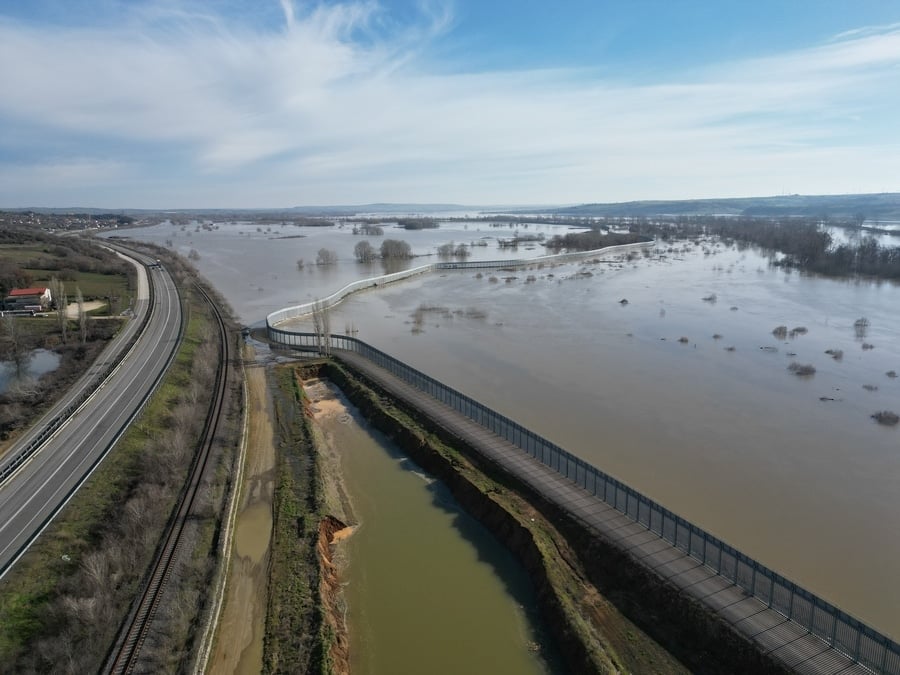
Large sections of the Evros regional unit remain underwater after days of extreme weather and upstream water releases. Authorities estimate that floodwaters now cover nearly 40,000 acres, while broader assessments show they have impacted more than 150,000 acres of cultivable land overall. In some areas, waters have risen to depths of up to 1.5 meters.
Greece’s Evros floods put villages on high alert
Communities including Soufli, Lavara, and Mandra remain on high alert after floodwaters breached embankments and advanced toward residential areas.
In the village of Pythio, water has already entered courtyards, while residents in several settlements worked overnight to reinforce makeshift barriers with sandbags.
Emergency services continue to monitor embankments and low-lying zones that face a heightened risk of further overflow.
Cross border water pressure intensifies
Hydrological pressure remains intense. Officials report inflows of approximately 1,500 to 1,600 cubic meters per second, largely originating in Bulgaria. A dam failure near the Bulgarian city of Haskovo sent additional volumes downstream, while heavy flows from the Arda tributary, linked to the Ivaylovgrad reservoir, further increased the river’s discharge.
The Tundzha Riveρ has added further volume, while the Erythropotamos and Ergene rivers continue to feed the system at lower levels. Bulgarian authorities have warned their Greek counterparts that large water volumes will continue flowing for at least 36 hours. Authorities are also recording significant cross-border inflows from Turkey, heightening concerns that conditions could worsen.
Agriculture devastated after repeated floods
Agricultural losses continue to mount. In the Neapoli plain within the municipality of Voio, floodwaters covered around 3,000 acres with water and mud. The flooding destroyed legumes, cereals, alfalfa, and other crops, and prolonged saturation caused seeds to rot in the soil after five consecutive months of heavy rainfall.
Since October, the region has endured at least three major flood events. In some areas, farmers report severe damage across 2,000 to 3,000 acres of wheat, barley, oats, lentils, and other crops. Producers warn that even if they manage to replant, yields will likely decline sharply.
Greece’s government response to Evros floods
“The first priority is recovery,”Greek Prime Ministera Kyriakos Mitsotakis said, adding that safeguarding summer irrigation remains equally critical. Athens secured a four-year agreement with Bulgaria that guarantees fixed water quantities for agricultural use, aiming to stabilize supply once the immediate crisis eases.
Local producers and residents still face uncertainty. As floodwaters recede slowly, concerns about long-term agricultural viability and infrastructure resilience continue to dominate the region.