
The eastern Mediterranean is more popular than ever, and for many travelers the real summer dilemma is no longer Italy or Spain, but Greece or Croatia. Both countries offer island-hopping adventures, clear blue seas and atmospheric old towns, yet the experience on the ground can feel very different. Deciding between them comes down to what kind of summer you want, how much you are ready to spend and how you feel about crowds, heat and logistics.
Overall Vibe: Classic Aegean Romance vs Adriatic Chill
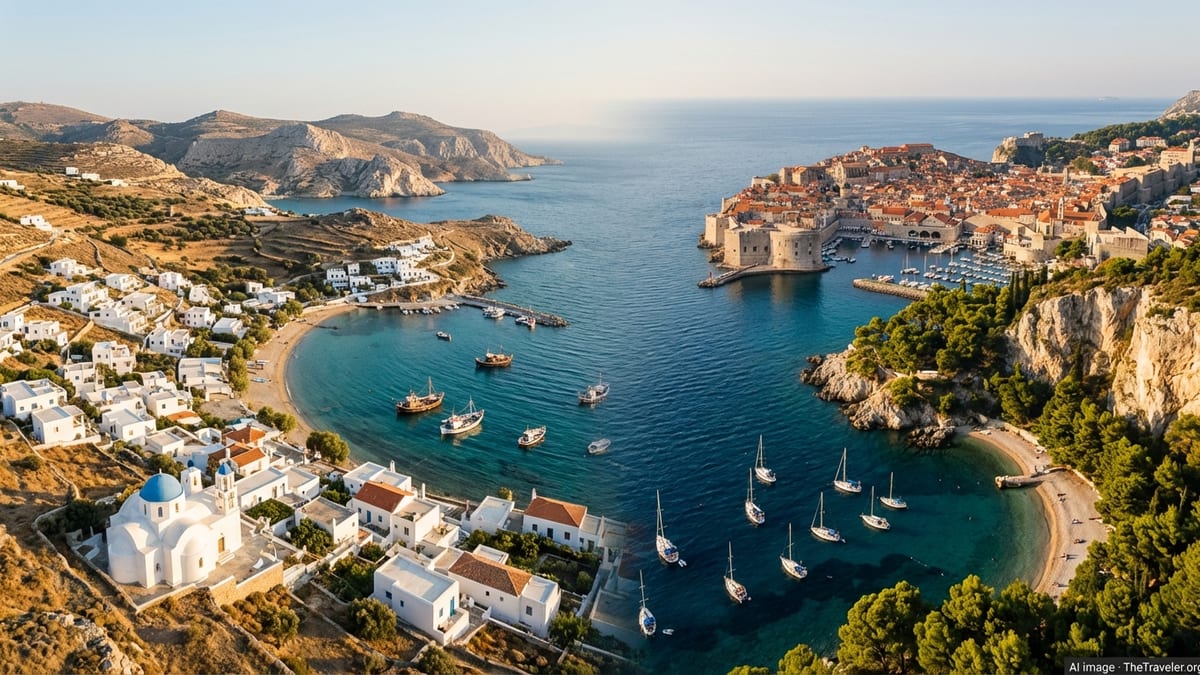
Greece and Croatia share the same sun-soaked sea and a broadly similar climate, but the feel of a trip to each can be surprisingly distinct. Greece leans into its image as a place of whitewashed villages, mythology and long, lazy evenings in waterfront tavernas. Croatia tends to feel slightly more low-key and outdoorsy, with a strong focus on national parks, sailing and stone-built coastal towns that once formed the edge of the Venetian world.
Greece has been a global tourism heavyweight for decades, welcoming more than 30 million international visitors in recent seasons and setting fresh records as air arrivals climbed again in 2024. Much of that traffic heads to familiar island names like Santorini, Mykonos, Rhodes and Crete. Croatia is smaller but increasingly competitive, and it has been setting its own tourism records with more than 21 million arrivals and over 100 million overnight stays in 2024. The result is that peak-season hotspots in both countries feel busy, but the intensity of those crowds and how they shape your trip will differ.
If you are drawn to long historical arcs, ancient sites and iconic island views you have already seen on postcards, Greece usually wins. If you imagine yourself mixing medieval walled towns, waterfall hikes and afternoons on the deck of a sailboat, Croatia often feels like the more cohesive summer playground. In reality, both can deliver a blend of culture and coast. The question is which signature atmosphere appeals to you more.
Beaches and Sea: Turquoise Bays in Two Flavors
On pure water quality, it is hard to declare a clear winner between Greece and Croatia. Both countries are renowned for strikingly clear seas, with shades of blue and turquoise that can look unreal in midday light. The differences lie more in the coastline itself. Greek beaches are generally more varied, with a mix of broad sandy strands, sheltered coves and volcanic shores. Croatian beaches are predominantly pebbly or rocky, framed by pine forests and cliffs, and often require sea shoes for comfort.
In Greece, the classic summer vision involves soft sand and shallow water. Islands such as Naxos, Paros, Zakynthos and parts of Crete have wide, family-friendly beaches where you can walk out for some distance. Popular islands like Mykonos and Ios have high-energy beach clubs, while places such as Milos or Kefalonia offer quieter coves that feel more remote even in July. The downside is that the most photographed Greek beaches now attract heavy day-trip traffic, which can mean dense lines of umbrellas and excursion boats cycling through all day.
Croatia’s Adriatic coast is more about polished pebbles, rocks and concrete swimming platforms leading into deep water. While that may sound less appealing at first, it has advantages: the sea tends to be exceptionally clear, and you rarely bring half the beach back in your bag. The Dalmatian islands and the Istrian peninsula have countless coves where pine trees reach right down to the shoreline. Families and non-swimmers will find fewer broad sandy crescents, but floating platforms, ladders and sheltered bays keep the water accessible. Some destinations import sand to create artificial beaches, especially near major resorts.
If a traditional sandy beach holiday is essential, Greece is the safer bet. If you are happy laying a towel on smooth stone, diving off rocks and spending as much time on boats as on the shore, Croatia delivers an equally compelling but slightly different version of the Mediterranean seaside.
Islands, Itineraries and Getting Around
Both countries lend themselves beautifully to multi-stop trips, especially in summer when ferry timetables are most frequent. Greece has a vast and varied island network divided into groups like the Cyclades, Ionian, Dodecanese and Sporades. This scale is one of its strengths, but also a logistical challenge. Croatia’s islands run in long chains parallel to the mainland coast, making it easier to move linearly up or down the Adriatic while hopping between them.
In Greece, island-hopping often starts with a flight into Athens or Thessaloniki, followed by ferries or domestic flights onward. The Cyclades remain the most popular cluster for first-time visitors, pairing headliners like Santorini and Mykonos with more relaxed neighbors such as Paros, Naxos or Syros. Further afield, islands like Rhodes, Kos and Lesvos offer a mix of beaches and cultural sites, while smaller spots such as Sifnos or Amorgos cater to hikers and slower travel. Schedules are more extensive in summer, yet services can book out early on the busiest routes, so advance planning is important.
Croatia’s transport web is more compact. Many visitors fly directly into coastal cities such as Split, Dubrovnik, Zadar or Pula, then use ferries and catamarans to reach islands like Hvar, Brač, Korčula or Vis. Because the islands sit relatively close to shore, crossing times are often shorter than in Greece, which makes it feasible to stay in one mainland base and take multiple day trips. Coastal buses and highways also make it straightforward to combine regions, for example Istria, the Kvarner Gulf and Dalmatia, in a single itinerary without domestic flights.
If your dream is an extended island-hopping adventure over two or three weeks, Greece provides more variety and a greater sense of voyaging between very different island cultures and landscapes. If you have only a week and want to experience at least two or three islands without too many early-morning ferries, Croatia’s compact layout and frequent coastal links can make the logistics smoother.
Culture, History and City Break Potential
When it comes to ancient history and archaeological sites, Greece is in a category of its own. From the Acropolis and the ancient Agora in Athens to the sanctuaries of Delphi and Olympia, the country is strewn with places where classical texts and myths feel immediate. Many islands also have substantial sites and museums, whether that means Bronze Age settlements, Byzantine churches or Ottoman heritage. For travelers fascinated by antiquity or philosophy, building a summer itinerary around early-morning site visits and afternoon swims is a natural fit.
Croatia’s historical appeal is different but no less compelling. Here the dominant influences are Roman, Venetian, Austro-Hungarian and Slavic. Split grew out of the vast Roman palace of Emperor Diocletian, while Dubrovnik showcases the wealth and maritime power of a city-state that rivaled Venice. Istrian towns such as Rovinj and Poreč bear clear Italian influence, while inland Zagreb offers a Central European feel, with Habsburg-era architecture, café culture and museums. History in Croatia tends to feel layered within intact medieval or early modern towns rather than as isolated ruins.
Both countries work well as hybrid city and beach destinations. Athens has evolved into a lively city-break option, with a creative food scene, revitalized neighborhoods and easy access to nearby islands. Zagreb, Split and Dubrovnik perform similar roles in Croatia, with Split in particular balancing city life, ancient monuments and beach access. For travelers combining multiple countries, Greece pairs naturally with Turkey or Italy, while Croatia connects easily overland with Slovenia, Bosnia and Herzegovina or Hungary.
If your priorities include world-famous archaeological sites, classical temples and museum collections, Greece is difficult to beat. If you lean toward walled towns, Renaissance squares and exploring how different empires shaped the same coastline, Croatia may feel richer and more surprising.
Costs, Crowds and Seasonality
As visitor numbers have climbed in both Greece and Croatia, prices and crowd levels in the most famous locations have followed. Neither destination is as inexpensive as it once was. That said, careful choice of region and timing still makes a significant difference to your budget and overall experience, and the two countries diverge in subtle ways.
In recent years Greece has seen strong growth in arrivals, with international air traffic and total visitor numbers setting new records. In practice, this means that in peak months like July and August, places such as Santorini, Mykonos and parts of Crete can feel saturated. Hotel prices climb sharply, restaurant reservations are important and popular viewpoints or sunset spots draw dense crowds. However, the country’s size and the distribution of its islands give you more opportunities to escape the busiest corridors by heading to lesser-known islands or mainland regions.
Croatia’s tourism numbers have also been hitting record highs, with more than 21 million arrivals and over 100 million overnight stays in 2024. The impact of this growth is particularly noticeable in Dubrovnik, Split and Hvar, where cruise traffic and short-break stays can make the historic centers feel very busy at midday. Because the coast is narrower and the main attractions more concentrated, the sensation of crowding can sometimes feel sharper, especially on days when large cruise ships are in port. Moving to smaller islands or inland national parks is the main release valve.
In both countries, late May, June and September are often the sweet spot: sea temperatures are generally comfortable, daylight is long and infrastructure is fully up and running, but prices and crowd levels are usually below August’s peak. Early October can also work well, especially in southern Greece and southern Dalmatia, though shoulder-season weather is less predictable. For travelers sensitive to high temperatures, it is worth noting that Greece has more frequent periods of extreme heat and occasional site closures in mid-afternoon during heatwaves, while Croatia’s coastal climate, though still hot, is marginally milder on average.
Climate Change, Heat and Wildfire Risks
Summer travel across the Mediterranean is increasingly shaped by climate change, and both Greece and Croatia are feeling the effects. Recent years have brought more intense and earlier heatwaves to the region, sometimes forcing authorities to close outdoor attractions during the hottest hours of the day. In Athens, for example, the Acropolis has at times shut for several hours in the afternoon when temperatures exceeded safe thresholds for visitors and staff. Travelers planning city sightseeing in July or August need to be prepared for early starts, long breaks in the shade and higher-than-expected nighttime temperatures.
Greece has also contended with recurring wildfire seasons, particularly on large islands and in forested mainland regions. In some cases, fires have led to temporary evacuations of hotels or coastal villages, especially during periods of strong winds. These events are still exceptional relative to the overall number of visitors, but they highlight the importance of travel insurance, flexible plans and up-to-date information from local authorities. Authorities have been investing in response capacity and early-warning systems, yet the underlying pattern of hotter, drier summers remains.
Croatia is not immune to wildfire risk, particularly along its coastal hinterland and on some islands, but it has so far experienced fewer high-profile evacuations than Greece. Heatwaves do occur, and temperatures in inland areas can rise significantly, yet the maritime influence along much of the Adriatic keeps many coastal nights a little cooler. Rainfall patterns are shifting, and summer thunderstorms can temporarily disrupt plans, especially in inland national parks, but they also provide some relief from prolonged heat.
For travelers, the practical takeaway is similar in both countries: if you are visiting in high summer, plan outdoor activities for mornings and evenings, build shade and rest into your schedule and stay aware of local advisories, particularly in rural or forested regions. If you have flexibility, consider late May, June or September, when conditions are generally more comfortable and the risk of extreme heat is lower.
Food, Nightlife and Travel Style
Greece and Croatia both reward travelers who enjoy eating well, lingering over long dinners and staying out late. Greek cuisine leans heavily on fresh vegetables, olive oil, grilled fish, lamb, cheeses and classic mezze such as tzatziki, fava and dolmades. Tavernas often serve simple recipes that are deeply rooted in local tradition, with regional specialties varying significantly from island to island and between the islands and the mainland. Summer dining is largely al fresco, and many waterfront towns feel built around these evening rituals.
Croatian food reflects a blend of Mediterranean and Central European influences. On the coast, seafood, risottos, grilled fish and dishes similar to Italian cucina povera dominate, with olive oil and wine playing key roles. Inland, menus feature more stews, cured meats and hearty comfort food. Istria is especially known for truffles, olive oil and wine, while Dalmatia is associated with slow-cooked dishes like peka, where meat or seafood is baked under a metal bell covered with hot coals. For many travelers, eating in Croatia feels like moving between Italy and the Balkans, often with excellent value for local wines.
Nightlife in both countries ranges from quiet seafront bars to full-scale clubs. Greece has a more high-profile party reputation on islands such as Mykonos, Ios and Zakynthos, along with vibrant nightlife districts in Athens and Thessaloniki. Croatia, meanwhile, has become known for festival-oriented travel, with summertime music events on islands and along the coast, plus lively bars in Split, Hvar Town and Dubrovnik. Outside those hotspots, evenings in both countries are more relaxed, often focused on strolling, café culture and live music rather than late-night clubs.
In terms of overall travel style, Greece can feel more sprawling and diverse, with big differences between island chains, mountain villages and major cities. Croatia’s summer experience is more concentrated along a single coast and its offshore islands, making it easier to understand in one trip. Both reward repeat visits, and in both cases you can choose anything from a budget-friendly family stay to a luxury villa or yacht charter, depending on your tastes and resources.
Which Travelers Will Prefer Greece vs Croatia?
Ultimately, choosing between Greece and Croatia for summer travel comes down to matching your priorities with what each destination does best. If you are traveling as a couple and dreaming of classic honeymoon imagery, cliffside villages and sunsets over caldera views, Greece is likely to feel more romantic. Islands such as Santorini, Milos or some of the smaller Cyclades lean naturally into that mood. Croatia certainly offers romance in places like Dubrovnik or Rovinj, but the overall tone is more about laid-back coastal living, sailing and outdoor activity.
Families with young children often appreciate Greece’s sandy, shallow beaches, forgiving for new swimmers and easy for sandcastle-building. Many Greek islands also have a broad range of accommodation types and price points, from simple apartments to all-inclusive resorts. Croatia can work equally well for families comfortable around deeper water, especially if they enjoy boat trips, snorkeling and national park visits. Towns such as Zadar, Šibenik or Makarska make convenient bases for mixing beaches with inland excursions.
For active travelers, Croatia’s combination of coastal hiking, sailing, sea kayaking and national parks like Plitvice Lakes and Krka is a strong draw. Cyclists and climbers also find plenty of routes and crags, especially in Istria and the Dalmatian hinterland. Greece offers fine hiking, especially in mountainous regions and on islands like Crete or Andros, but its iconic summer imagery is more about beaches and island villages than waterfalls or forest trails.
If you have a deep interest in archaeology and ancient history, Greece stands out as the obvious choice. If your curiosity leans toward the interplay of Roman, Venetian and Slavic cultures, or you want to link your coastal trip with inland Central Europe, Croatia may fit better. Many travelers eventually visit both, but understanding your current priorities can help you decide which to start with.
The Takeaway
Greece and Croatia are two of the most rewarding summer destinations in Europe, and in practice it is difficult to make a truly wrong choice. Both offer warm seas, dramatic coastlines, atmospheric old towns and food traditions that encourage long, slow meals. Yet they do deliver different flavors of the Mediterranean, shaped by history, geography and the rapid rise of tourism over the past decade.
Greece feels bigger and more varied, with iconic islands, sandy beaches and world-renowned archaeological sites. It suits travelers who want to immerse themselves in classical history, island-hop over longer distances and chase the archetypal Aegean scenery seen in films and travel posters. The trade-off is that its most famous destinations can feel intensely crowded and, at times, uncomfortably hot in high summer, making careful planning and flexible timing important.
Croatia offers a more linear journey along the Adriatic, where medieval towns, pebbly coves and national parks form a cohesive whole. It appeals particularly to sailors, festival-goers and active travelers who value clear water, boat trips and easy access to inland landscapes. While its star destinations can be as busy as any in Europe during July and August, the more compact geography and growing spread of tourism beyond the core hotspots give you options to step back from the crowds.
When deciding between them, consider not just price and famous names, but how you prefer to spend a perfect summer day. Picture the beaches under your feet, the kind of towns you like to wander at night, how you cope with heat and how much logistical complexity you welcome. Answering those questions honestly will usually point you clearly toward either Greece’s island-studded Aegean or Croatia’s pine-framed Adriatic, and set you up for a memorable season by the sea.
FAQ
Q1. Is Greece or Croatia cheaper for a summer holiday?
Overall costs can be similar, but Greece’s most famous islands and top resorts often price higher in peak season. Croatia’s hotspots are also expensive in July and August, yet some secondary towns and islands can offer slightly better value, especially for midrange hotels and meals.
Q2. Which has better beaches, Greece or Croatia?
Greece usually wins for classic sandy beaches with shallow water, ideal for children and those who dislike pebbles. Croatia excels in clear, deep water and rocky coves framed by pine forests. Your preference for sand versus pebbles is the key factor.
Q3. Where are the crowds worse in summer, Greece or Croatia?
Both get very busy, but the pressure is felt differently. Greek hotspots like Santorini and Mykonos can feel extremely crowded, yet the country’s size offers many quieter alternatives. In Croatia, peak congestion concentrates in Dubrovnik, Split and a few islands; stepping slightly off the main trail quickly reduces crowds.
Q4. Which destination is better for island-hopping?
Greece has the edge in variety, with multiple island groups and big contrasts between them. It is ideal for longer trips. Croatia’s island chains are more compact and easier to link with mainland cities, which is convenient if you have only a week and want a simple route.
Q5. How does the summer heat compare between Greece and Croatia?
Both can be hot in July and August, but Greece more often experiences extreme heatwaves and occasional afternoon closures at major sites. Croatia’s coastal areas are usually slightly milder, though inland regions can be very warm.
Q6. Are wildfires a concern in Greece and Croatia?
Wildfires have become a recurring summer risk, particularly in Greece, where evacuations occasionally affect parts of large islands or rural areas. Croatia also faces wildfire risk along parts of its coast, but large-scale disruptions have been less frequent. In both countries, monitor local advice and follow instructions from authorities.
Q7. Which is better for families with young children?
Families who prioritize sandy, shallow beaches and simple seaside routines often find Greece easier. Many Greek islands offer a wide range of family-friendly accommodations and calm bays. Croatia can work equally well for families who are comfortable around deeper water and enjoy boat trips, snorkeling and national parks.
Q8. Which destination is more suitable for nightlife and parties?
Greece has a long-established party scene on islands such as Mykonos, Ios and Zakynthos, plus lively nightlife in Athens. Croatia’s reputation centers on coastal bars and summer music festivals, particularly around Split, Zadar and certain islands. Both are good for nightlife, but Greece’s club culture is more widespread.
Q9. Is it easy to combine either country with nearby destinations?
Yes. Greece links well by air and sea with Turkey, Italy and several other Mediterranean countries. Croatia connects easily by road or short flights with Slovenia, Bosnia and Herzegovina, Montenegro and other Central European destinations, making it ideal for multi-country itineraries.
Q10. If I can visit only one this summer, which should I choose?
If you dream of whitewashed villages, sandy beaches and ancient temples, start with Greece. If your ideal trip features walled coastal towns, boat trips, waterfalls and pebbly coves, choose Croatia. In both cases, traveling slightly outside the peak of summer will improve your experience.