

Greece ranked 67th out of the 143 countries included in the 2025 IQAir World Air Quality Report, where 1 indicates the most polluted country and 143 the least polluted. The country recorded a PM2.5 concentration of 14.9 micrograms per cubic meter, which is three times the World Health Organization recommended annual guideline value. Pakistan ranked as the most polluted country, with a PM2.5 concentration of 67.3 micrograms per cubic meter.
The IQAir report draws on data from 9,446 cities spanning 143 countries, regions, and territories. More than 40,000 regulatory monitoring stations and low-cost sensors contributed to the findings. Government agencies, universities, non-profit organizations, private companies, and citizen scientists worldwide all participated as data contributors.
Out of the 43 European countries included in the analysis Greece ranked as the 9th most polluted country, indicating higher pollution levels than most Western European nations but lower levels than those in the Balkans and parts of Eastern Europe. Bosnia and Herzegovina recorded the highest pollution levels at 23.4 μg/m³, followed by North Macedonia at 21.2 μg/m³ and Serbia at 19.8 μg/m³.
Greece’s global pollution rankings signal one of Europe’s sharpest rises
Greece also recorded one of the sharpest national increases on the continent. Its annual average climbed from 11.5 μg/m³ to 14.9 μg/m³, a rise of more than 30%. The IQAir report identified Greece and Switzerland as the two countries with the largest relative pollution increases across Europe in 2025.
Lamia, in Central Greece, ranked as the country’s most polluted city with 20.9 micrograms. Agios Nikolaos, located on the island of Crete, recorded the cleanest air in the country at 5.8 micrograms.
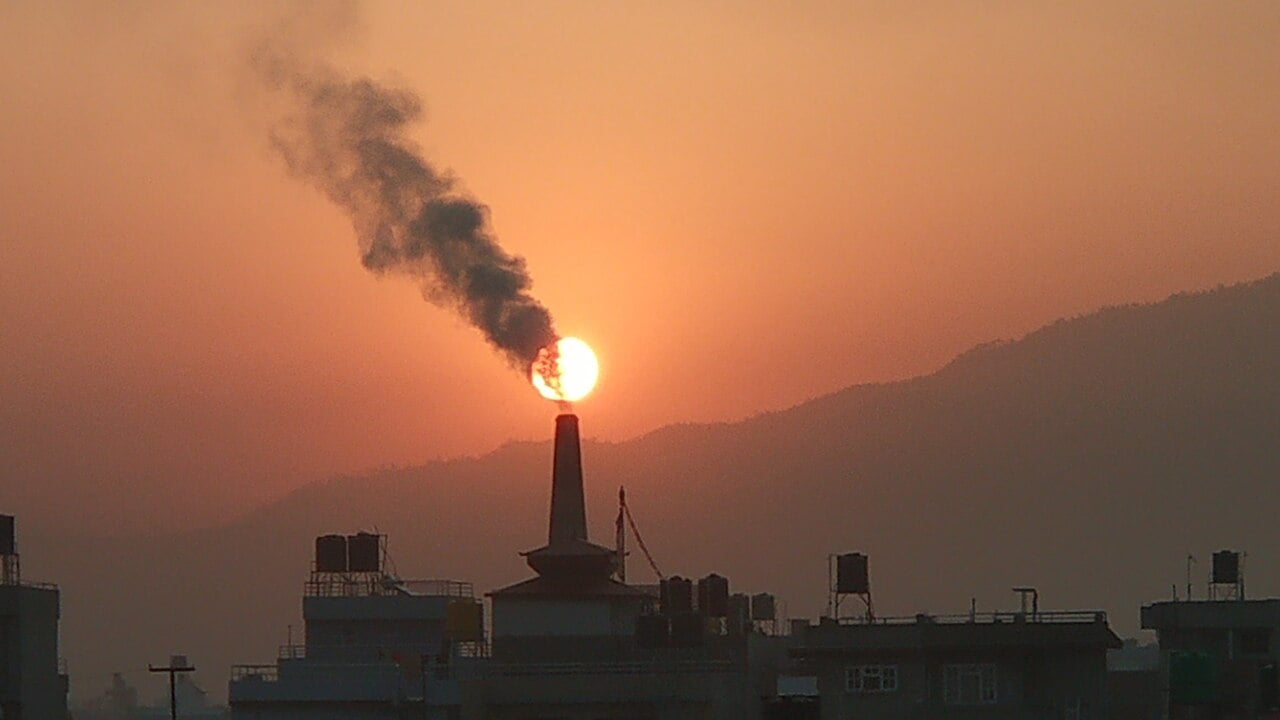
Multiple sources drive poor air quality across Greece. Vehicle emissions remain a primary contributor. Coal-fired power plants, industrial zones, and manufacturing facilities add substantially to the pollution burden.
Wood burning for heating, a practice that expanded during the country’s debt crisis, continues as a significant winter source. Forest fires have also triggered notable pollution spikes historically.
Seasonal patterns and health risks for residents
Pollution follows a clear seasonal pattern. Winter months bring the highest PM2.5 concentrations as heating demand rises and cold air traps pollutants near the surface. Air quality improves considerably from spring through early autumn.
Greece’s broader position in global pollution rankings carries direct health implications for residents. Researchers associate long-term exposure to fine particulate matter with respiratory diseases, including asthma, bronchitis, emphysema, and lung cancer.
Children, the elderly, pregnant women, and those with pre-existing conditions face the greatest risk from sustained exposure.
Most polluted countries in the world in 2025
1. Pakistan (67.3 μg/m³)
2. Bangladesh (66.1 μg/m³)
3. Tajikistan (57.3 μg/m³)
4. Chad (53.6 μg/m³)
5. Democratic Republic of the Congo (50.2 μg/m³)
6. India (48.9 μg/m³)
7. Kuwait (45.7 μg/m³)
8. Uganda (43.0 μg/m³)
9. Egypt (40.6 μg/m³)
10. Uzbekistan (38.1 μg/m³)