

Greece’s cost of living has long attracted attention as one of Europe’s more affordable options, drawing retirees, remote workers, and digital nomads in search of a better quality of life. In 2026, however, that perception is shifting. While the country still offers strong value compared to much of Western Europe and North America, rising housing prices and changing economic conditions are redefining what it means to live comfortably.
Today, Greece falls somewhere between a bargain destination and a premium lifestyle choice, depending largely on the neighborhood and city you call home.
Cost of living in Greece: Housing drives change
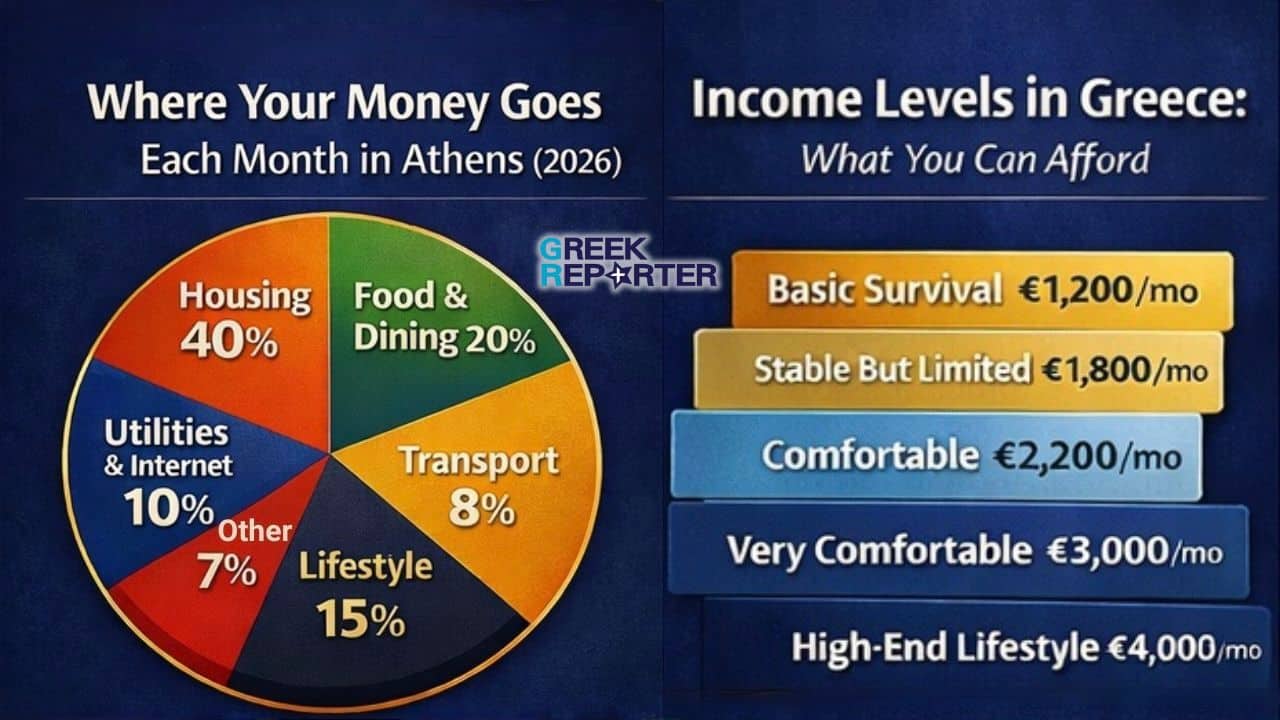
In major urban centers like Athens and Thessaloniki, the cost of living has risen noticeably in recent years. A combination of foreign investment, the growth of short-term rentals, and steady tourism demand has pushed rents upward, making housing the single most significant factor in any budget.

A one-bedroom apartment in a desirable area of central Athens now ranges from around €800 ($925) to €1,400 ($1,615) per month, while Thessaloniki remains somewhat more affordable, typically between €600 ($690) and €1,000 ($1,150). On globally sought-after islands such as Santorini and Mykonos, prices climb even higher, particularly during peak tourist seasons, when demand surges. These housing costs alone often determine whether residents feel financially comfortable or stretched.
Everyday expenses remain manageable in Greece
Beyond rent, everyday expenses in Greece remain relatively manageable. Utilities, including electricity, water, and heating, generally fall between €120 and €200 ($138 to $230) per month, while internet services add another €25 to €40 ($29 to $46). Food costs vary depending on lifestyle, but a single person can expect to spend between €250 and €400 ($290 to $460) on groceries.
Dining out, an essential part of Greek culture, remains accessible compared to other European countries, although regular restaurant visits can obviously gradually increase monthly spending.
Transportation and healthcare considerations
Transportation and healthcare costs also play a role in shaping the overall financial picture. Public transportation in cities is affordable, and while owning a car adds expense, it is not always necessary. Healthcare, particularly through the public system, remains accessible, although many expats opt for private insurance for added convenience and faster service. This typically adds a modest monthly cost but contributes significantly to peace of mind.
What “comfortable living in Greece” really means
Combined, this breakdown of expenses provides a clearer picture of what “comfortable living” looks like in Greece today. It isn’t about luxury—it’s about stability and flexibility: the ability to enjoy daily life, participate in social and cultural activities, and handle unexpected costs without constant financial pressure.
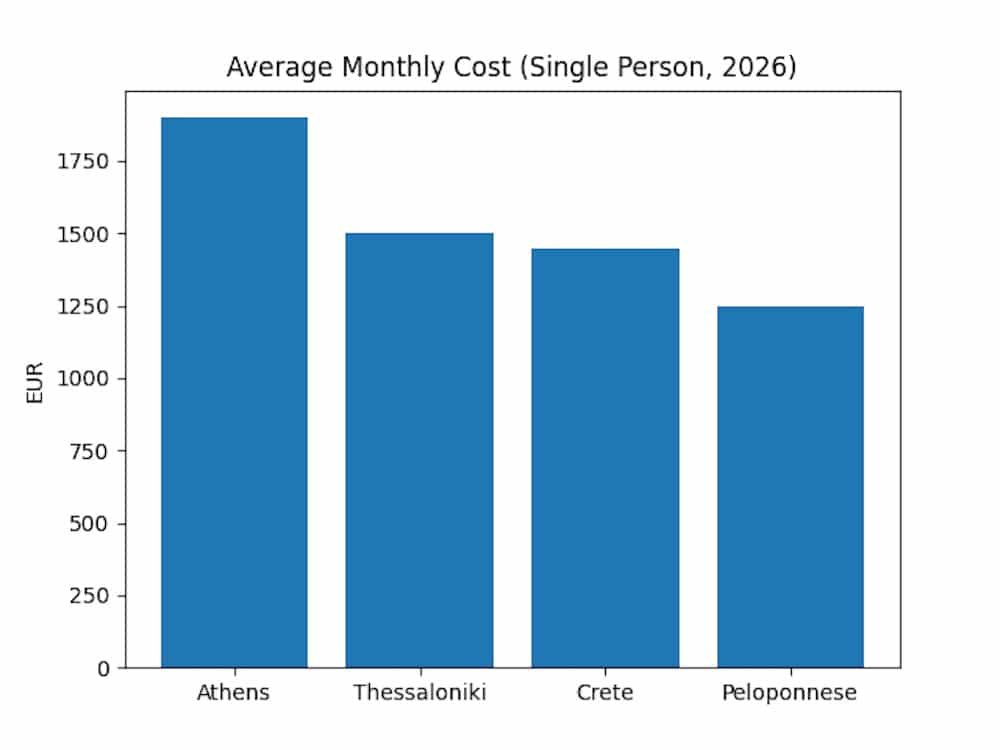
For a single person living in Athens, this typically translates to a monthly budget of roughly €1,500 to €2,300 ($1,730 to $2,650). In smaller cities or regions such as Crete or the Peloponnese, that range can drop to around €1,200 to €1,800 ($1,385 to $2,080) while still allowing for a high quality of life.
Income needed for a comfortable life in Greece
Income expectations follow a similar pattern. A single person aiming to live comfortably should expect to earn at least €1,800 to €2,500 ($2,080 to $2,890) per month after taxes, allowing room not only for expenses but also for savings and leisure.
Couples benefit from shared costs, typically requiring a combined monthly income between €2,800 and €4,000 ($3,235 to $4,620) to maintain a comfortable standard of living. Families, particularly those factoring in private education or childcare, will need significantly more, often in the range of €3,500 to €5,500 ($4,045 to $6,350) or higher.
The advantage of foreign income amid Greece’s rising cost of living
One of the most significant advantages in Greece today belongs to those earning income from abroad. Remote workers and digital nomads, particularly those paid in stronger currencies, often find that their purchasing power stretches considerably further.

An income that might feel average in the United States or the United Kingdom can translate into a notably higher standard of living in Greece, especially outside major urban centers.
Hidden costs to keep in mind
Still, there are important nuances to consider. Costs can fluctuate seasonally, particularly in tourist-heavy areas where prices for housing and services rise during the summer months. Energy prices have also shown volatility, occasionally pushing utility bills higher than expected.
Additionally, administrative and legal expenses, especially for newcomers navigating residency or property purchases, can add to the overall financial picture.
Final verdict: Is Greece still affordable even under its current cost of living?
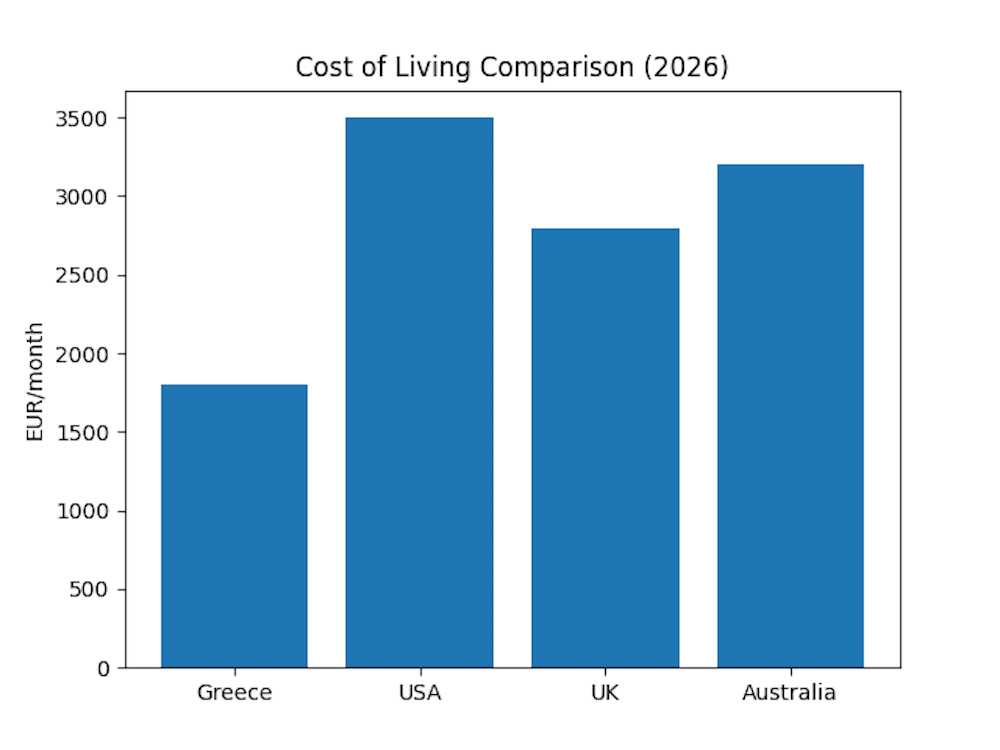
Despite these challenges, Greece continues to offer a compelling balance between cost and quality of life. The country’s unique blend of climate, culture, and community is hard to find elsewhere.
While it is no longer the ultra-low-cost destination it once was, it still provides a lifestyle that many find both enriching and attainable. Ultimately, living comfortably in Greece in 2026 requires realistic expectations and thoughtful planning. For most individuals, a monthly income of at least €1,800 to €2,500 ($2,080 to $2,900) provides a solid foundation for a stable and enjoyable life. Beyond that threshold, the experience improves significantly, opening the door to a lifestyle that blends financial security with the everyday pleasures that have long defined life in Greece.