

The mudbrick villages of Korestia form a setting unlike any other in Greece—both architecturally and historically unique.
While it’s not uncommon for travelers in mountainous Greece to stumble upon half-abandoned settlements crumbling from decades of neglect, the villages of Korestia stand apart. What makes them exceptional is the consistency of their architecture, the use of traditional mudbrick construction, and the remarkable preservation of many buildings despite the passage of time.
The villages—Upper and Lower Kranionas, Gavros, Chalara, and Mavrokampos—unfold along the provincial road connecting Kastoria to Prespes, in northern Greece. Walking through their muddy paths and silent alleys, one senses that their abandonment was not the result of the urban migration that reshaped Greece after the 1960s. The story here is more complex, more painful—deeply rooted in the scars of civil war.
Korestia, and particularly Kranionas, became a frontline during Greece’s brutal civil conflict. The surrounding hills of Mali Madi witnessed some of the bloodiest battles, and the aftermath left entire communities fractured.
Mudbrick villages in northern Greece stand empty
Many of those who remained eventually fled, seeking refuge and new beginnings in Canada, Australia, and across Europe. As a permanent resident Michalis Sakellariou recalled speaking to the Athens Macedonian News Agency (AMNA), the post-war years saw a wave of quiet departures, not prompted by dreams of prosperity, but by the weight of trauma and loss.
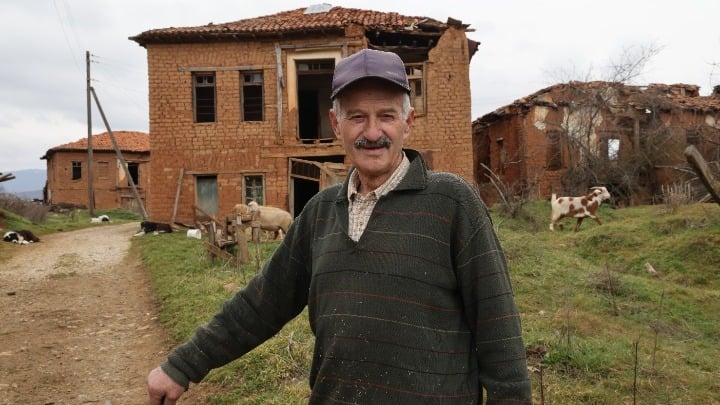
During the years of the military junta, the few remaining families were relocated to a newly built settlement nearby. Yet some, like Mr. Michalis himself, chose to return to Kranionas, continuing to maintain their livestock and a living link to the land and its memories.
The architecture of these villages is both functional and beautiful. Most of the mudbrick homes were constructed toward the end of the 19th century, using a traditional mix of red earth and straw—readily available and sustainably sourced. The two-story houses, with their open interiors and earthy facades, were built to serve the needs of farming and herding families. Many still stand, weathered but proud, echoing the rhythm of a bygone rural life.
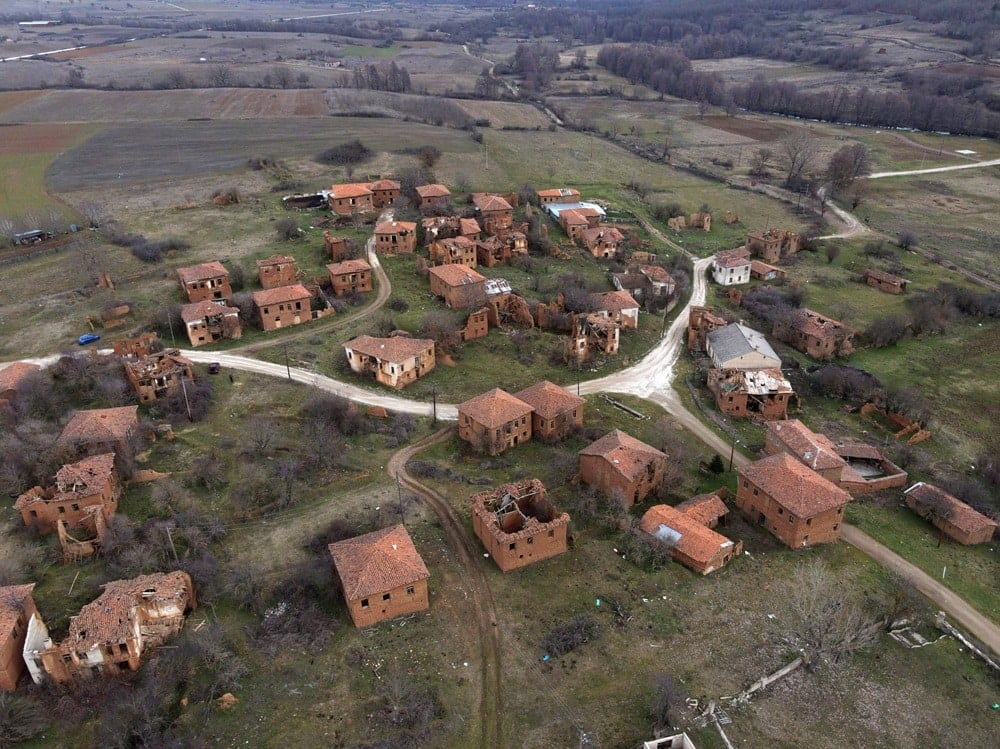
Haunting beauty
This haunting beauty hasn’t gone unnoticed. Acclaimed director Pantelis Voulgaris used Kranionas and nearby Mikrokampos as filming locations for his films The Brides and Deep Soul, drawn by their evocative atmosphere. Similarly, the legendary Thodoros Angelopoulos filmed scenes of The Suspended Step of the Stork in the area, while parts of the James Bond film For Your Eyes Only were also shot in Korestia—adding a touch of global cinema history to the region’s legacy.
In recent years, efforts by the Municipality of Kastoria have breathed new life into the villages. Each summer, Kranionas Square becomes a stage for music, art, and community gatherings under the moonlight—a gentle reclaiming of a space once marked by silence and sorrow.
The mudbrick villages of Korestia are more than relics; they are living monuments to endurance, memory, and the quiet power of place.