
- “People are being sent to jail on the basis of junk.” – Dr. Janice Ophoven
- “The foundations of our case were built upon bad science.” – Brian Wharton
Across the United States, a growing number of medical experts and law enforcement officials who once helped convict parents and caregivers in so-called shaken baby syndrome cases are now publicly questioning the science that underpinned those prosecutions — and in some cases are working to undo convictions they helped secure — according to a recent investigation by NBC News.
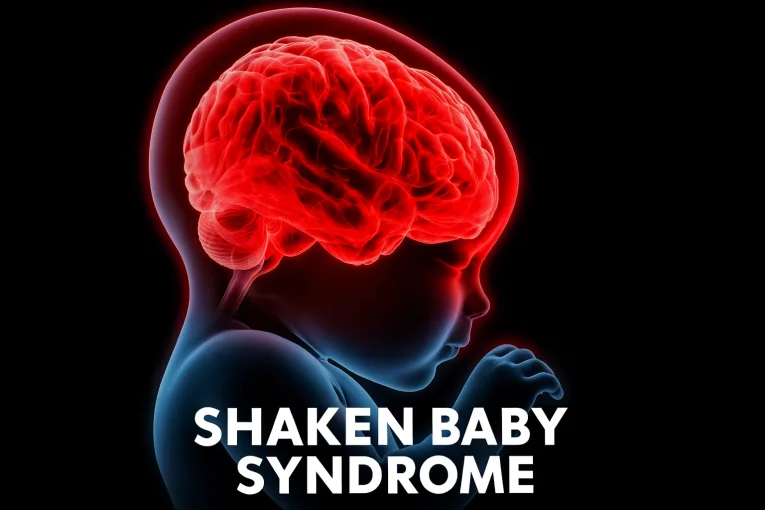
NBC News reports that thousands of caregivers have been prosecuted since the 1980s based on a medical theory that a constellation of symptoms — brain swelling, bleeding in the brain and retinal hemorrhaging — almost always indicates violent shaking or abusive head trauma.
Many pediatric associations still maintain that these findings are strong proof of abuse.
But a growing group of forensic pathologists, pediatric specialists and former investigators now say the diagnosis has too often been treated as a certainty, even when other possible explanations were never fully explored.
One of the most striking examples, according to NBC News, is the case of Robert Roberson, a Texas father sentenced to death for the 2002 death of his 2-year-old daughter, Nikki.
Roberson brought his child to a hospital emergency room limp and wrapped in a blanket, telling medical staff she had fallen from bed.
Doctors, seeing her severe head injuries, suspected abuse and contacted law enforcement.
Investigators quickly embraced a shaken baby or beating theory, and Roberson was charged with capital murder the day the child was taken off life support.
NBC News reports that Brian Wharton, then the lead detective on the case and now a United Methodist pastor, relied heavily on medical specialists who testified that Nikki must have been beaten, violently shaken or both.
Wharton took the stand for the prosecution, and Roberson was ultimately convicted and sent to Texas’ death row, poised to become the first person in the country executed based primarily on a shaken baby diagnosis.
Fifteen years later, new medical evidence persuaded Wharton that the foundation of the case had been flawed.
NBC News explains that after reviewing updated scientific research and additional information about Nikki’s chronic health problems, Wharton concluded that “the foundations of our case were built upon bad science” and has since become one of Roberson’s most vocal advocates, attending legislative hearings and writing clemency letters arguing Roberson is innocent.
NBC News notes that alternative explanations for Nikki’s injuries — including serious underlying illness, medication side effects and the possibility of short falls — were not fully weighed at the time of trial.
Roberson, who has since been diagnosed with autism, continues to maintain his innocence.
In October, Texas’ highest criminal court halted his execution to allow further review of the evidence in light of evolving science and Wharton’s recantation, according to NBC News.
The investigation situates Roberson’s case within a broader scientific and legal shift.
For decades, many experts testified that the three classic symptoms — brain swelling, subdural bleeding and retinal bleeding — essentially proved a child had been violently shaken.
More recent research and expert reviews, however, suggest these injuries can also result from accidental falls, clotting disorders, infections and other medical conditions, especially when there is no external evidence of abuse.
While no one disputes that some infants are brutally shaken by caregivers, critics say relying almost solely on this triad can lead to wrongful accusations and convictions.
NBC News highlights a recent ruling from the New Jersey Supreme Court as a major victory for skeptics of shaken baby science.
The court affirmed a lower court decision likening the diagnosis to unreliable junk science in certain contexts and barred expert testimony on it from two upcoming trials, finding that the evidence did not meet the state’s standards for scientific reliability.
The 6-1 decision, closely watched nationwide, could influence how courts treat expert testimony in abusive head trauma cases.
That evolving understanding has prompted some medical professionals to publicly reconsider their prior testimony.
NBC News identifies about two dozen experts and officials who have reversed course, including Dr. Janice Ophoven, a pediatric forensic pathologist in Minnesota.
She told NBC News that she once accepted shaken baby theory as settled science but now believes it lacks sufficient lab-based evidence to be treated as conclusive.
“People are being sent to jail on the basis of junk,” she said, comparing overconfident shaken baby diagnoses to declaring a homicide solely because a bullet hole is present without examining the full context.
NBC News also details the case of Russell Maze, a Tennessee father serving a life sentence for the 2000 death of his 19-month-old son, Alex.
The outlet reports that Maze recently lost an appeal to overturn his conviction, even though the Nashville district attorney’s office that prosecuted him, the original police detective and the medical examiner who performed the autopsy have all since said they believe Maze did not shake his son to death.
Former medical examiner Dr. Bruce Levy recanted his earlier conclusions in a sworn affidavit, telling NBC News he believes Maze “has paid a horrible price for mistakes that I and others have made.”
Despite such reversals, NBC News notes that exonerations in shaken baby cases remain rare.
The National Registry of Exonerations has documented 41 exonerations since 1992 in cases involving shaken baby syndrome or abusive head trauma.
In eight of those cases, experts who originally testified for the prosecution later publicly disavowed their shaken baby testimony, and those recantations were described as “very important” to courts’ decisions to vacate convictions.
NBC News points out that its prior investigative work has already led to policy changes.
In Texas, lawmakers passed a law in 2021 allowing parents accused of child abuse to seek second medical opinions after reporting showed children had been removed from their homes based on questionable interpretations by child abuse pediatricians.
Three years after that law took effect, and alongside other reforms, removals by Texas Child Protective Services dropped by more than 40 percent, according to the outlet.
The article also revisits the story of Zavion Johnson, a California father convicted in 2002 of killing his 4-month-old daughter, Nadia.
Johnson maintained that she slipped from his arms in the shower and struck her head on the tub.
At trial, prosecutors relied on three medical experts who testified that her injuries could only be explained by shaking and intentional impact.
NBC News reports that years later, two of those experts — forensic pathologist Dr. Gregory Reiber and neuropathologist Dr. Claudia Greco — reexamined the case and concluded that accidental injury could not be ruled out.
Both recanted their original opinions in affidavits, stating their earlier conclusions were driven by the prevailing consensus at the time, not comprehensive science.
A judge vacated Johnson’s conviction, and prosecutors ultimately declined to retry him after he served 16 years in prison.
NBC News notes that Johnson has since spoken to law enforcement and legal professionals about the risks of relying on outdated forensic theories.
He told the outlet he forgave the experts whose testimony sent him to prison, saying his faith allowed him to release the anger he carried for years.
The investigation also examines how the New Jersey Supreme Court’s ruling may affect individuals like Michelle Heale, a New Jersey babysitter convicted in 2015 of aggravated manslaughter and child endangerment in the death of 14-month-old Mason Hess.
Heale has maintained that the child choked on applesauce and collapsed accidentally, but prosecutors relied heavily on shaken baby testimony to secure a conviction.
Her lawyers now argue that the court’s finding that shaken baby science is unreliable should open the door to challenging her verdict, NBC News reports, although prosecutors claim the ruling has no legal implications for her case.
For people like Roberson, still on death row in Texas, the stakes of this scientific and legal shift could not be higher.
NBC News reports that Ken Paxton continues to insist that Roberson murdered his daughter by beating her and has vowed to pursue his execution.
Roberson, meanwhile, told the outlet from death row that he remains hopeful but frustrated that, despite new evidence and expert recantations, he is still fighting to prove his innocence.
“I really shouldn’t be here, you know?” he said.
NBC News concludes that as more experts and former officials confront the limitations of earlier shaken baby science, the criminal legal system is being forced to grapple with old convictions built on theories now in serious dispute.
For families still separated by prison walls and for the professionals who once testified with certainty, reevaluating those cases is proving to be slow, painful and profoundly consequential.
Follow the Vanguard on Social Media – X, Instagram and Facebook. Subscribe the Vanguard News letters. To make a tax-deductible donation, please visit davisvanguard.org/donate or give directly through ActBlue. Your support will ensure that the vital work of the Vanguard continues.
Categories:
Breaking News Everyday Injustice
Tags:
abusive head trauma Brian Wharton Criminal Justice Reform Death Penalty Forensic Science NBC News Robert Roberson Shaken Baby Syndrome Wrongful Convictions