
Emirates is joining a crowded field of carriers ramping up flights to Greece, aligning with Ryanair, Qatar Airways, FlyDubai, British Airways and Lufthansa in redirecting capacity toward the Aegean as parts of the Gulf tourism market soften and European demand for Mediterranean escapes continues to climb. The shift is reshaping access to marquee islands such as Mykonos and Santorini and accelerating an already-intense hospitality investment cycle.
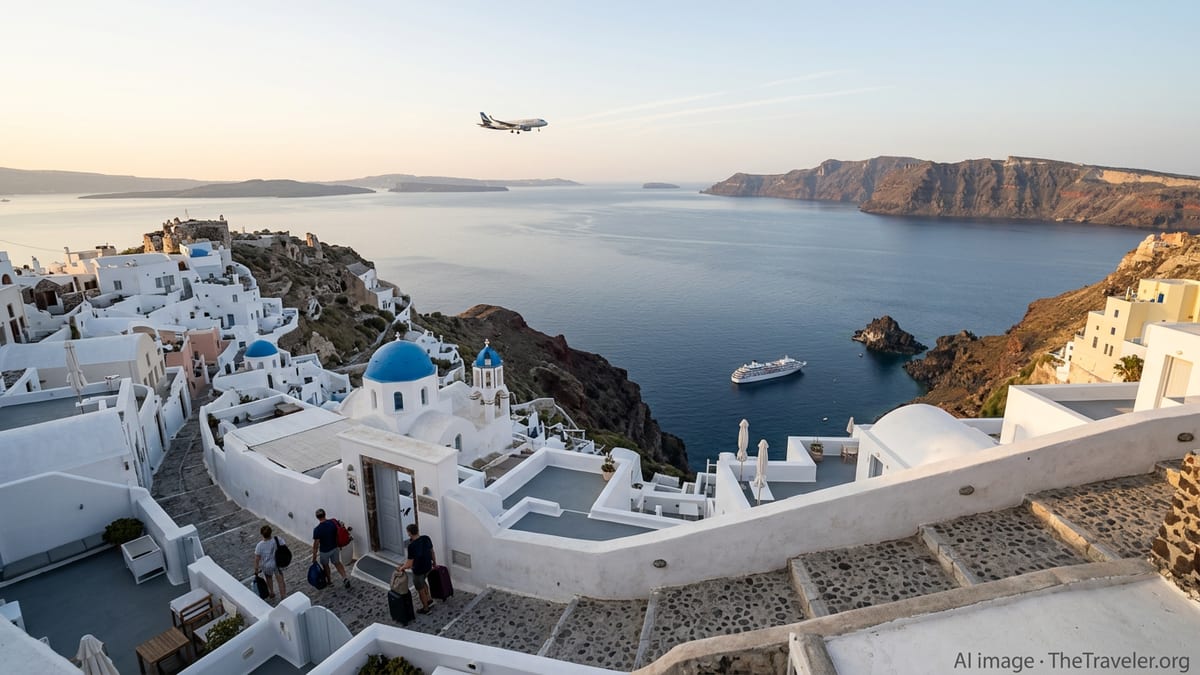
Gulf Slowdown Prompts Strategic Shift to the Aegean
While hubs like Dubai and Doha remain among the world’s busiest, airline planners are quietly recalibrating capacity in response to softer premium demand from key Gulf feeder markets and intensifying regional competition. Rather than adding yet more overlapping routes within the Gulf, carriers including Emirates, Qatar Airways and FlyDubai are increasingly deploying aircraft into high-yield leisure corridors, with Greece emerging as one of the biggest winners.
Industry forecasts and network-planning documents point to a broader pivot toward Mediterranean destinations that can sustain strong summer and shoulder-season demand from Europe, North America and the Middle East. Greece, which has posted record traffic at many of its regional airports and is aggressively courting year-round tourism, offers carriers a way to diversify away from a maturing Gulf outbound market while still leveraging their long-haul networks via Athens and key islands.
This realignment dovetails with incentives from Greek authorities and airport operators, who are using fee discounts and marketing support to attract more international services in spring and autumn. For Gulf and European airlines facing margin pressure on some legacy routes, additional frequencies into Greece represent a relatively low-risk play on enduring appetite for island escapes.
Emirates already has a visible presence at Athens International Airport, where it holds a notable share of international traffic and taps into both local demand and connecting flows onward to North America and Asia. According to recent airport data, the carrier has steadily increased its market share in Athens, reflecting robust year-round demand and growing feed from regional Greek destinations operated by local partners.
Qatar Airways, which established a three-point Greek network with Athens, Mykonos and Santorini before the pandemic era, is using its Doha hub to funnel high-spending travelers from the Gulf, India and Asia into the Cyclades during peak season. Mykonos remains a key boutique leisure stop in the airline’s European schedule, while Santorini continues to feature heavily in its tour packages and cruise extensions marketed across the Gulf and Asia.
FlyDubai, operating as a nimble complement to Emirates, has focused on point-to-point leisure traffic from the United Arab Emirates into secondary Mediterranean destinations. Its growing network of seasonal flights into holiday hotspots is expected to include more Greek capacity as travelers in the Gulf seek cooler climates and new experiences beyond traditional regional beach resorts.
European Giants Add Lift as Greece Extends Its Season
European carriers are amplifying the trend. British Airways and Lufthansa have both expanded seasonal services to Greek islands and regional airports in recent years, with a particular focus on high-profile destinations such as Mykonos and Santorini as well as gateways that feed cruise and tour operations. Their summer schedules increasingly resemble a mesh of sun routes linking major European capitals directly with the Aegean.
Low-cost powerhouse Ryanair, while trimming capacity in some European markets in response to higher taxes and airport charges, continues to treat Greece as a strategic pillar of its leisure network. Even as it reshuffles aircraft and negotiates on fees, the airline maintains a dense web of routes from secondary European cities into Greek islands, underlining the strength of demand for short-haul beach breaks.
Greek airport operator Fraport Greece has reported record performance at its portfolio of 14 regional airports, which include Mykonos and Santorini, and is rolling out multimillion-euro upgrade programs to handle higher volumes. Investment in runways, aprons and terminal enhancements is intended to support a longer tourism season, with more flights now scheduled in the shoulder months of April, May, October and even November.
What the Capacity Surge Means for Mykonos and Santorini
Nowhere is the impact of this capacity shift more visible than on Mykonos and Santorini, where increased frequencies from Gulf and European hubs are compressing travel times and smoothing connections from long-haul markets. Travelers from cities such as Dubai, Doha, London, Frankfurt and Rome are increasingly able to land directly on the islands or connect via Athens with minimal layover, turning what was once a multi-stop journey into a streamlined door-to-door trip.
The result has been a broadening of the islands’ visitor mix. Mykonos, long associated with European nightlife, is welcoming more affluent travelers from the Gulf and Asia booking villa stays and yacht charters through airline holiday arms and luxury tour operators. Santorini, with its caldera views and cruise appeal, is attracting couples and multi-generational families who now see the island as a feasible one-week holiday from the Middle East or North America thanks to improved connectivity.
However, the influx also raises questions about sustainability. Local authorities on both islands are under pressure to manage airport congestion, protect fragile infrastructure and maintain a balance between tourism-driven revenue and residents’ quality of life. Longer seasons and higher aircraft rotations can strain utilities, transport networks and housing markets even as they generate much-needed employment.
Hospitality Boom Accelerates, With New Winners and New Risks
The surge in flights is turbocharging an already brisk hospitality investment cycle across the Cyclades. Developers are racing to open new five-star resorts, branded residences and high-end boutique hotels that cater to year-round travelers, while traditional family-run properties are upgrading to capture higher nightly rates from guests arriving on Gulf and European carriers.
Global hotel groups are signing more management contracts on Mykonos and Santorini, betting that sustained airline capacity and airport upgrades will support occupancy beyond the traditional July and August peak. Upscale beach clubs, restaurants and experiential operators are also proliferating, creating a premium ecosystem that aligns with the demographics arriving on Emirates, Qatar Airways, British Airways and Lufthansa.
At the same time, the hospitality boom exposes investors and local businesses to cyclical risks. Any sharp downturn in Gulf or European demand, renewed geopolitical tensions, or regulatory moves to cap visitor numbers could leave overbuilt capacity and pressure profitability. For now, though, the alignment of airline strategy, airport incentives and traveler appetite is keeping planes full and cranes busy along the cliffs of Santorini and the shores of Mykonos.