
Two sixth-graders from Hanalei School on Kauaʻi’s North Shore will compete at the 69th Hawaiʻi State Science and Engineering Fair, which will be held in April at the Neal Blaisdell Exhibition Hall in Honolulu.
Makayla Oliver and Ella Bresnahan earned the recognition after their projects earned top honors at the Regional Science Fair on Feb. 7 at the Kaua’i War Memorial in Līhuʻe.
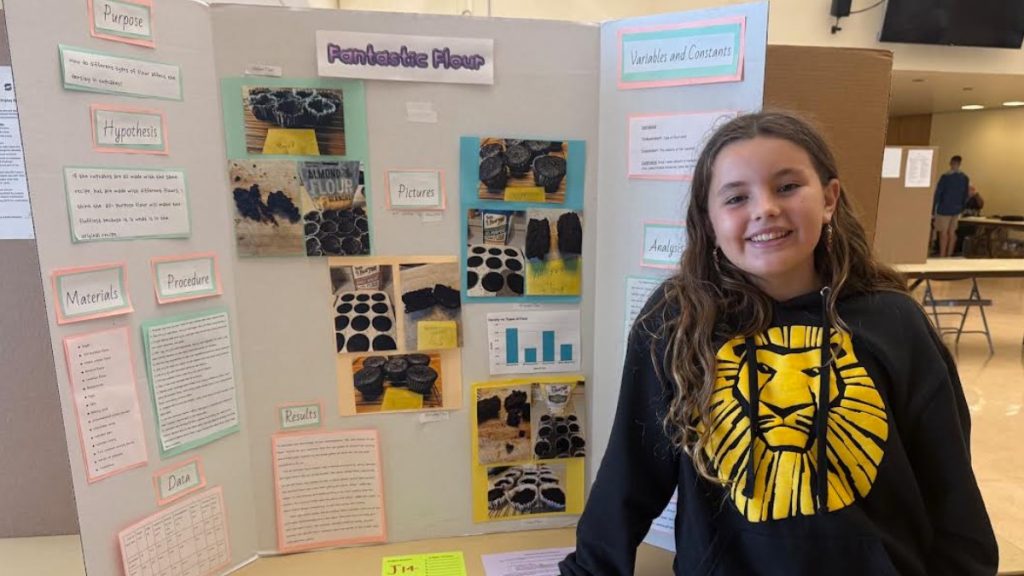
Oliverʻs project, “Fantastic Flour,” explores how different types of flour affect cupcake density. It also examined the carbohydrates present in each flour type and the chemical reactions that occur during baking.
She applied the formula π = circumference ÷ diameter to determine the volume of her cupcakes, then used that volume to calculate their density. With this, she showed that the amount of carbohydrates influences the cupcakes’ density.
Her work earned both the Junior Physical Science Award and the United States Air Force Award at the regional competition.
Oliver loves to cook and is an aspiring baker, who hopes to one day open a bakery.
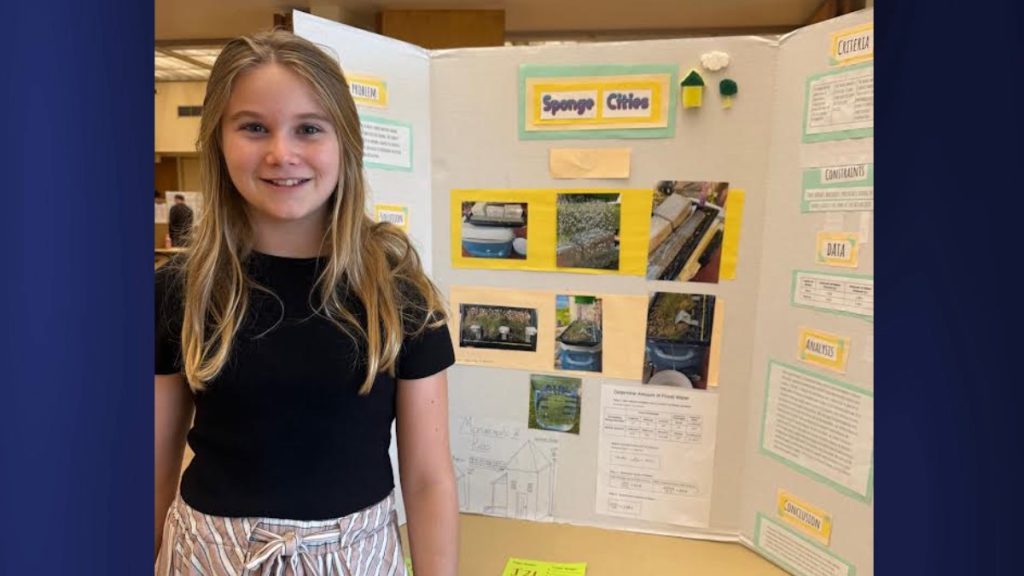
Bresnahan received an invitation to compete at the state fair for “Sponge Cities,” a project inspired by a concept she read about in a news article that said rural cities act like sponges to help suck up water during flood events.
That is not the case with urban and suburban cities that have too much cement and concrete and can have more direct impacts on flooding because there isn’t enough plant life and natural ground to absorb the water.
Bresnahan used this information to create two model cities — Līhuʻe and Wainiha. She then used ratios to scale down the amount of floodwater recorded from the 2018 flood to calculate how much water she would pour over each model city.
She collected and measured the runoff and demonstrated that the rural city absorbed more water than the urban/suburban city.
Her project was awarded two awards at the regional fair: the Junior Behavioral Science Award and the U.S. Metric Association Award.
Students from eight Kauaʻi schools in grades 6–12, including sixth-graders from Hanalei School, presented their posters and research to judges at the regional fair.
A Silent Auction also was held to support the students who will be competing in the statewide fair, which brings together top student researchers from across the islands to showcase projects in science, technology, engineering and mathematics.
Several community members volunteered as judges. They included park rangers Tom Randolph and Kyra Costar, hydrologist Ayahna Monoghan, science educator Vicki Randolph, and software engineer Errol Adams.
Many students were recognized by the nonprofit Kaua’i Student Research for their outstanding work in the sciences and engineering.
Paulette Adams, the science academic coach at Hanalei School, said she’s excited to have two students advance to the state competition, noting that the fair hasn’t been held since 2020.
“We had three projects going to the state fair in 2020,” she said, “and the students did not get to go because of COVID.”
The student projects included makeup, boats and fishing.
“They tried to design their own makeup because they said the problem is that you don’t know the ingredients in the makeup and you don’t know where it comes from,” Adams said.
“So fast forward to this year, every single sixth grader came up with a question that they want to answer using scientific methods, or they come up with a problem that they have in their life, and they design something to solve their problem,” she explained.
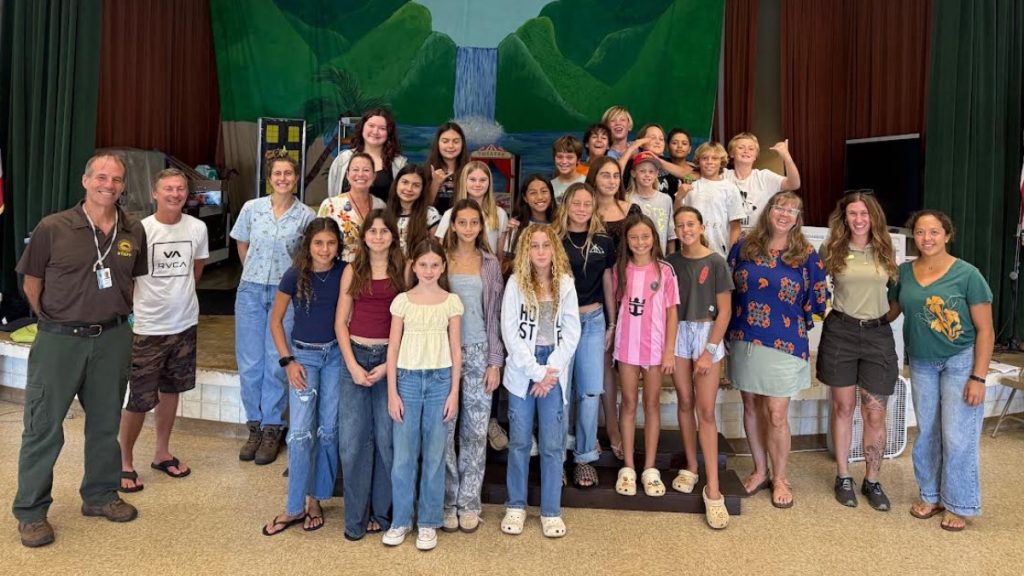
“Now we’re organizing and getting our participants ready. We’re collecting signed permission slips for off-island travel, and it’s all very exciting,” Adams said.
Adams, Hanalei School staff, and school supporters expressed excitement for the young scientists.
Adams hopes many of them will go on to become future scientists and engineers.
“Every single person in this world naturally turns to science when they face problems in their lives and want to find ways to fix them,” she said. “The key question is why. When we take a few extra steps to use science and math to explore that question, we become scientists ourselves. This way of thinking can benefit our entire society if more of us choose to adopt it.”
Click here to learn more about Kaua‘i Student Research or to make a donation.