
There’s hardly a pattern more instantly legible than the Louis Vuitton monogram. A constellation of symbols that reads, at a glance, as luxury itself, it has become fashion’s most fluent global language: understood without translation, from Paris to the most remote corners of the world. It is shorthand for craft, aspiration and permanence – a logo so omnipresent it has transcended branding to become cultural code. This year, that code turns 130. What began as a protective mark for a Parisian trunk-maker has grown into the visual signature of the world’s largest luxury house, a motif that has outpaced trends, survived imitation and remained perpetually relevant precisely because it is so deeply woven into our collective imagination.
©Getty
The Monogram is built from four recurring elements: the interlaced LV initials, floral medallions and sharp-edged stars. It was devised in 1896 by Georges Vuitton, who sought to honour his father while safeguarding the House’s creations at a time when copying was already rife. Drawing from the decorative languages of the late 19th century – Neo-Gothic flourishes and the European fascination with Japanese art – the pattern was conceived as authorship made visible. Its earliest forms appeared on linen, first woven, then painted by hand, before stencil techniques refined its precision. Over decades, technical innovation transformed it into the coated canvas now synonymous with Louis Vuitton: resilient, lightweight and instantly recognisable in its warm, earthy palette, a surface engineered as much for endurance as for beauty.
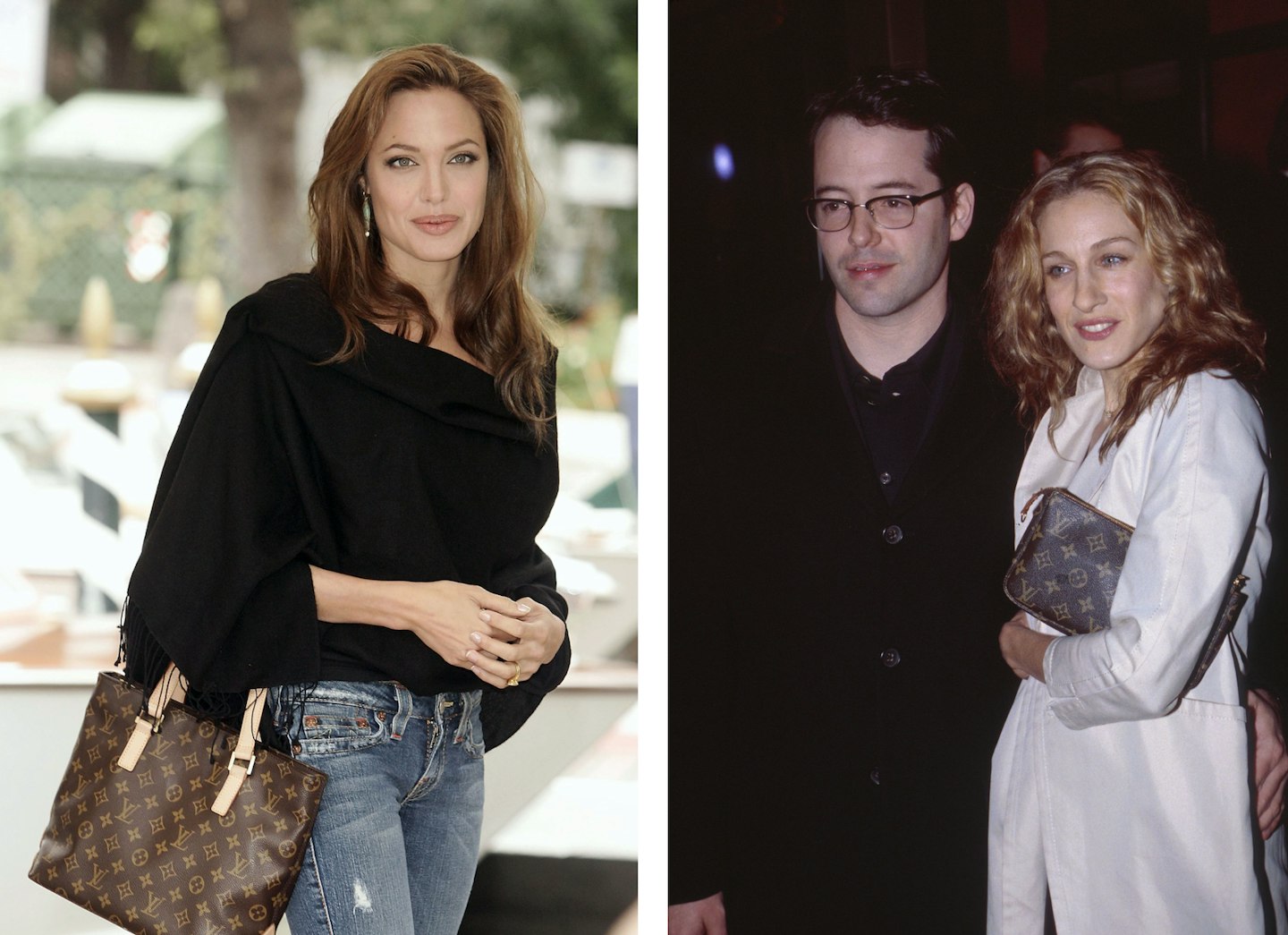
Angelina Jolie; Sarah Jessica Parker ©Getty
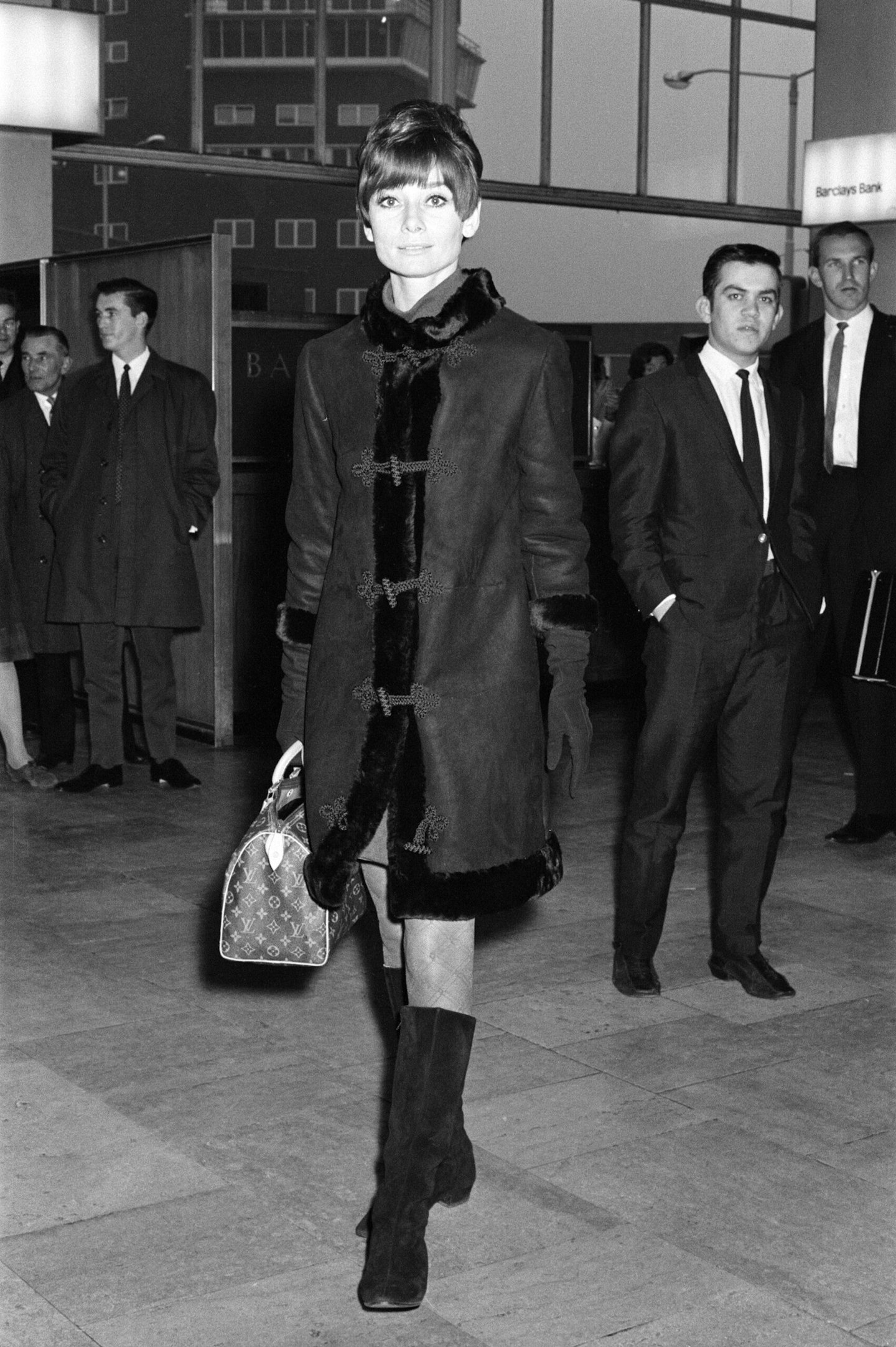
And because Louis Vuitton was born from travel, the Monogram has always been in motion. Long before logo obsession took hold, Vuitton trunks and bags quietly accompanied the world’s most glamorous lives, entrusted with couture wardrobes and personal histories alike. Audrey Hepburn carried it with effortless grace; Catherine Deneuve with cool detachment; Jacqueline Kennedy Onassis with diplomatic polish. Lauren Bacall, Nan Kempner, Kate Moss, Angelina Jolie and Lily Allen followed, across generations that differed in taste but shared an instinct for longevity. The Speedy, in particular, endures as a cultural constant – a bag that held meaning in the 1960s and arguably carries even greater weight in 2026, having evolved into a global emblem of access, style and aspiration.
©Getty
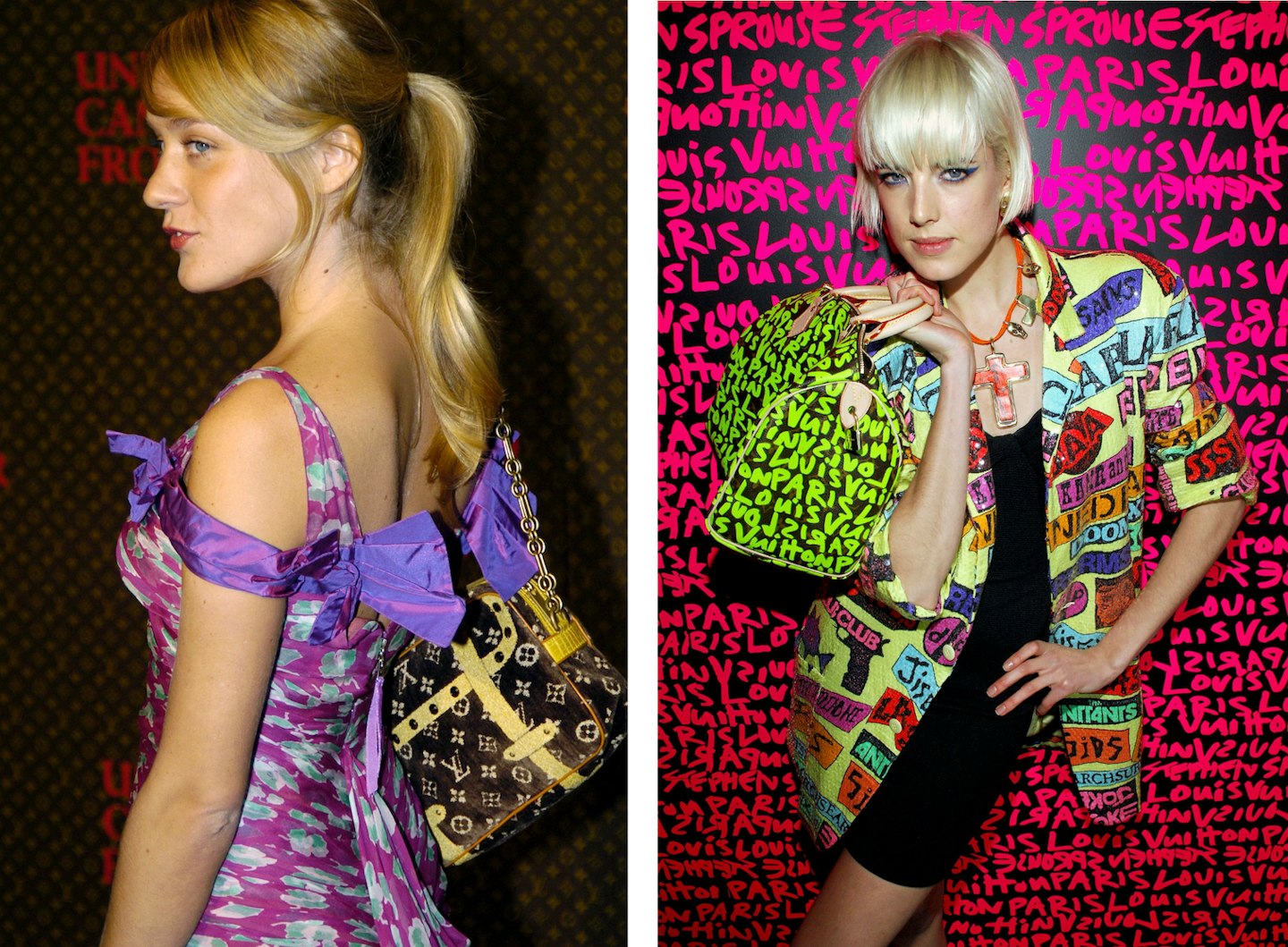
Inevitably, the Monogram slipped from heritage into pop culture, becoming a canvas for reinvention. Through new colourways, finishes and creative interventions, it absorbed the energy of the moment without losing its core identity. Under the visions of Marc Jacobs, Nicolas Ghesquière, Virgil Abloh and now Pharrell Williams, the pattern has been enlarged, darkened, glossed and re-coded for successive eras. Artists such as Takashi Murakami, Yayoi Kusama and Richard Prince layered whimsy, repetition and provocation onto something already deeply familiar, while images like Paris Hilton’s metallic Monogram bag in the early 2000s proved that celebrity visibility could be as culturally catalytic as old-Hollywood glamour. The Monogram’s power lies in this elasticity – its ability to be both reverent and rebellious, archival and immediate.
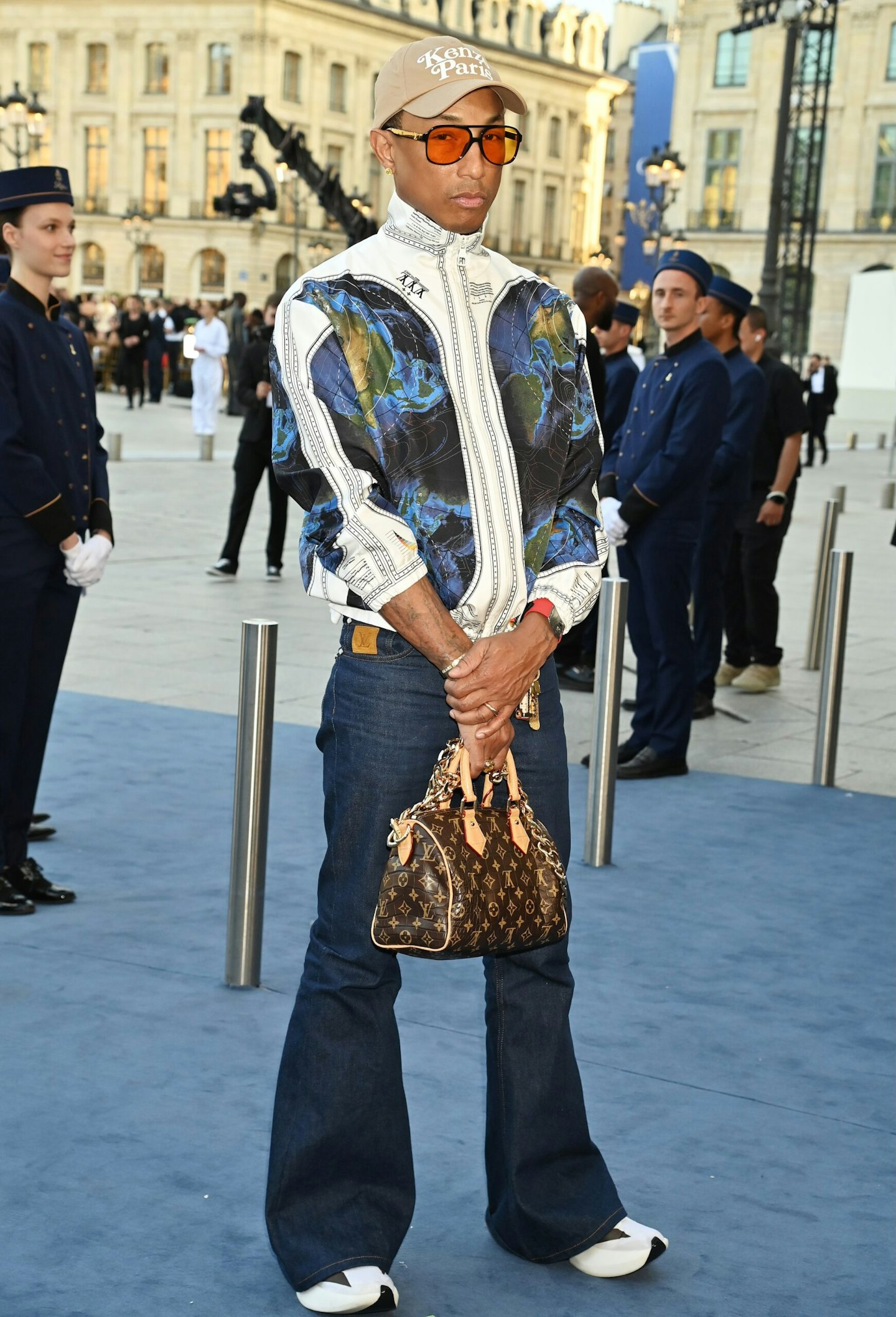
Pharrell Williams ©Getty
To mark 130 years of the Monogram, Louis Vuitton looks both backward and forward. From January 2026, the House opens a year-long celebration by spotlighting its most iconic Monogram designs: the Speedy and Keepall from 1930, the Noé from 1932, the Alma from 1992 and the Neverfull from 2007, each finished with a commemorative label created exclusively for the milestone – a collector’s moment in Vuitton history. Alongside this, the Monogram Origine collection revisits the original 1896 pattern through a newly developed canvas, produced using traditional stencil methods on a linen-and-cotton base and washed in soft pastel tones inspired by archival records.
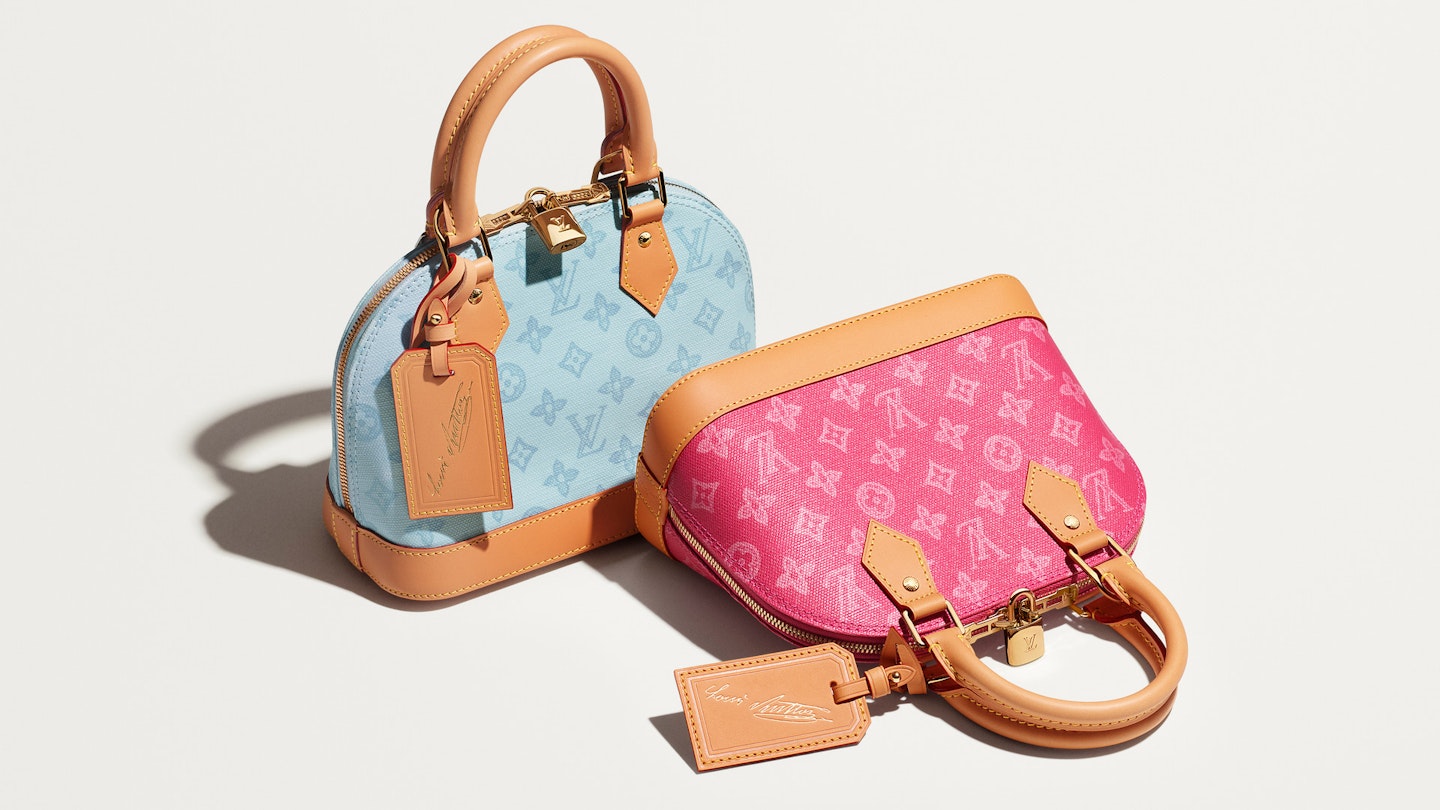
The Monogram Origine Collection (2026) ©Louis Vuitton
It is not nostalgia, but continuity. A reminder that at 130, the Louis Vuitton Monogram remains fashion’s most recognisable symbol, still evolving, still travelling, and still telling new stories with every iteration.
Henrik Lischke is the senior fashion news & features editor at Grazia. Prior to that, he worked at British Vogue, and was junior fashion editor at The Sunday Times Style.