
The passing of celebrated Malian flautist, composer and arranger Boncana Maïga at the age of 77 truly marks the end of an era in the music of west Africa.
He was a charismatic performer and bandleader, with innate musical talent and an acute ear. His story is unique and could only have happened in its time and because of his personality and musical training – in Cuba.
As a musician, producer and scholar specialising in both Malian and Cuban music, I’ve followed the career of Boncana Maïga for many years, have worked with many Cuban dance bands, and have produced many albums by Malian musicians.
Maïga was never especially interested in the traditional instruments of his native country. Instead, his real passion was composing and arranging for dance bands. This skill was to have a major impact on the popular music of Mali in the post-independence era.
African salsa
Maïga will probably be best remembered as music producer of the many Africando albums (1992-2013) that fused Latin dance music with west African voices. Afro-Cuban music had long been popular and he added to this with a unique style of “African salsa”, slick music enjoyed on dance floors around the world.
Arguably, though, the group that he formed in Cuba in the 1960s, Las Maravillas de Mali (The Marvels of Mali), with fellow Malian musicians, is his most important and enduring legacy, though least documented.
The 1965 album recorded in Cuba, entitled Las Maravillas de Mali, is a gem of its time, a showcase for Maïga’s early compositions and musicality. The band features male voices, flutes, violins, piano and percussion, with songs in Spanish, French and Malian languages.
All the main Cuban dance forms are there: bolero, danzón, son montuno, chachacha, guaracha. The band members were perfectly fluent in their interpretations of the charanga (flutes and violins) style, even though they’d been in Cuba for less than a year. Clearly, Maïga’s talents as leader of the band and flautist were exceptional.
Who was Boncana Maïga?
Mali is well known for its virtuoso traditional musicians (Ali Farka Touré, Toumani Diabaté, Oumou Sangaré and many others). Maïga, by contrast, came to music from a very different perspective.
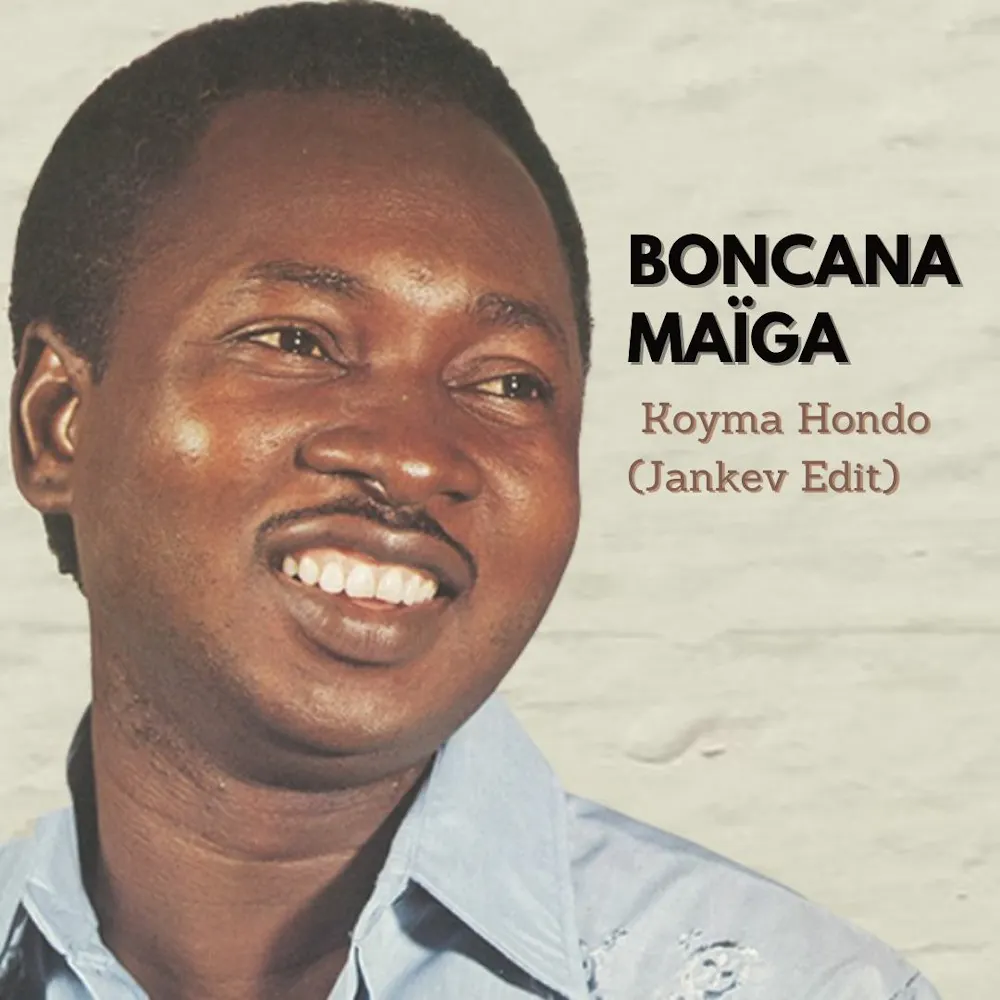
Hot Casa Records
He was a Sonrai, born and raised in Gao in the north-east of Mali (now a no-go area because of jihadi insurrection). According to most sources he was born in 1949, but perhaps he was born in 1947 or even earlier. It was common practice at the time in Mali to issue birth certificates that changed the actual year of birth, to make the person younger or older. A photo of Maïga playing flute in Cuba in 1965 suggests he may have been at least 18 at the time, not 16 as he would have been if he had been born in 1949.
Growing up in an isolated city, Maïga, who had no musical background, taught himself to play saxophone, a modern instrument which was hardly heard of at the time in the region.

Decca Records France
In 1959, a year before Mali’s independence, he formed a band called Négro Band de Gao, which came to the attention of Mali’s first president, Modibo Keita, a visionary leader with a socialist agenda.
Keita recognised the potential of Mali’s musical talent to cultivate an international profile for the newly formed country. Cuba boasted excellent music training, and Keita had fostered good relations with Fidel Castro.
So Keita selected ten talented young Malian musicians to study music in Cuba, at the Conservatoire Alejandro García Caturla in Havana, giving them scholarships. One of them was Boncana Maïga.
Off they went, venturing into a completely different world. They arrived in 1964, and stayed for eight or nine years. This venture was to have a lasting impact on the development of west African popular music, and on the development of Maïga’s career.
Cuba
Flautist Dramane Coulibaly was one of the Malian musicians who learned to read and write music in Cuba and, like Maïga, to play the flute.
I met and worked with Coulibaly in Mali and we had many conversations about Cuba, talking in Spanish, which he still spoke fluently. He told me Havana was a steep learning curve and the training was intense.
Three of the Malian students dropped out and soon returned home, but the remaining seven (including Coulibaly) stayed on and formed a band, Las Maravillas de Mali, with Maïga as the arranger and bandleader. Some of the band put down roots in Havana, married Cuban women and had children there.
Back in Mali
In the early 1970s, under new president Moussa Traoré – who had seized power in a 1968 coup – the group was recalled to Mali.
Coulibaly said it was traumatic. In 2001 I recorded some of our conversations as part of my ongoing research. He told me:
We had become used to the relaxed behaviour in Cuba, the warm friendships, the many opportunities to perform, the free education, the free health system. I left the island reluctantly, thinking I would soon return. That didn’t happen. I never saw my Cuban wife again and I had to struggle to make ends meet in Bamako.
In Bamako, Maïga began to be a famous bandleader. Some of the Maravillas de Mali reformed as Le National Badema (The National Family), emblematic of the new regime.
With characteristic flair, Maïga brought the gifted young griot singer Kassemady Diabaté from his village to join the group. He understood the need to place traditional singers at the front of his bands, to give the music local flavour.
Read more:
Amadou Bagayoko: the blind Malian musician whose joyful songs changed west African music
However, Maïga was not to stay long in Mali; there weren’t enough opportunities for his kind of orchestral work. He was only interested in modern orchestras and dance bands, and traditional musicians couldn’t read music, nor did they have the training to perform Afro-Cuban styles.
In Côte d’Ivoire
Maïga, always in demand as a bandleader, moved to Côte d’Ivoire, where he created RTI (Radiodiffusion Télévision Ivoirienne), an orchestra of modern instruments where all the musicians could read music.
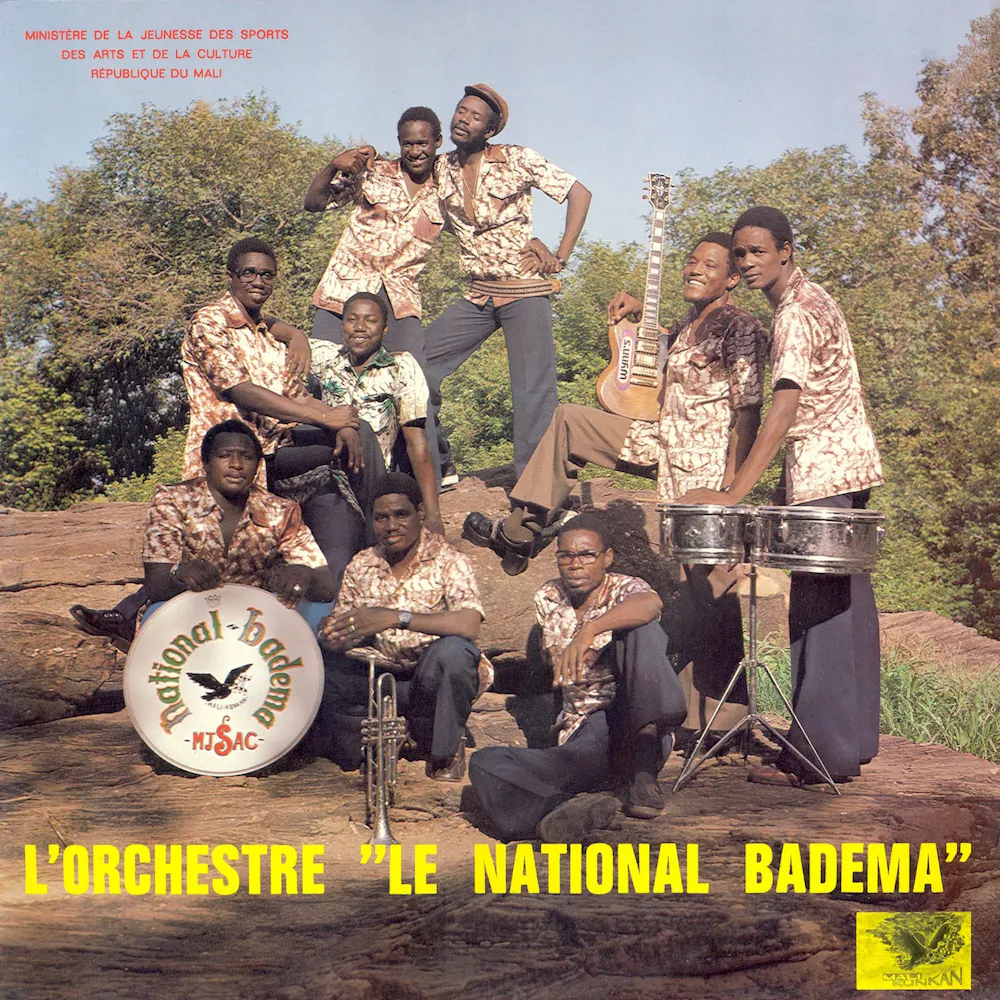
Ministère De La Jeunesse Des Sports Des Arts Et De La Culture
Abidjan in the early 1980s had recording studios and was an important hub of the west African music industry. Famous musicians like South Africa’s Miriam Makeba and Cameroon’s Manu Dibango passed through, performing with the RTI. Here Maïga also recorded – and, supposedly, produced – some of Mali’s top traditional singers, such as Nahawa Doumbia and Kandia Kouyaté. (Kandia told me in a 1998 interview in Paris that Maïga was purely there in an executive, not creative, role.)
Africando
Maïga would then settle in Europe, where he produced albums with Syllart, a Paris-based label that had launched the career of Mali’s Salif Keita, among others. Together with Senegalese label founder Ibrahima Sylla, he created Africando. It was a stellar “salsa” dance band from the Latin music scene in New York, together with guest singers from several west African countries.

Stern’s Africa
Africando enjoyed considerable financial and critical success. The musicians toured and performed widely and released many albums. Despite sublime vocal performances, the band arrangements were sometimes criticised for being formulaic.
Boncana Maïga was the last surviving member of Las Maravillas de Mali, and with his passing, the short-lived but well-trained band enters the sky forever.
He certainly added to the awareness of connection between Africa and Latin America, Mali and Cuba, which goes back to the era of the transatlantic slave trade. Malian musicians continue to have a strong sense of connection with Cuban music as part of that legacy and Maïga played it out in popular culture.