

A new study is shedding light on how humans and animals moved across the landscapes of ancient Greece, showing that rugged terrain could shape travel, escape, and trade in ways archaeology cannot easily capture from ruins alone.
Researchers say movement was not simply about getting from one place to another. It depended on the land itself, the people involved, and the animals used along the way.
Lead author Chairi Kiourt of Athena Research Centre in Xanthi, Greece, and colleagues developed a computer model to test those patterns. The system rebuilds uneven terrain in three dimensions using real elevation data. It then simulates how different human groups and transport animals move across that ground.
New model tracks ancient humans and animals’ movements
The approach aims to solve a basic problem in archaeology. Evidence such as roads, paths, pottery and settlement remains can suggest where people traveled. But those remains do not show movement as it happened. They cannot fully explain how people responded to steep slopes, changing visibility or the pressure of pursuit.
The researchers applied the model to two settings in Greece. One focused on the Roman-period fort of Kimmeria near modern Xanthi. The other examined routes leading to the sanctuary of Kalapodi in central Greece.
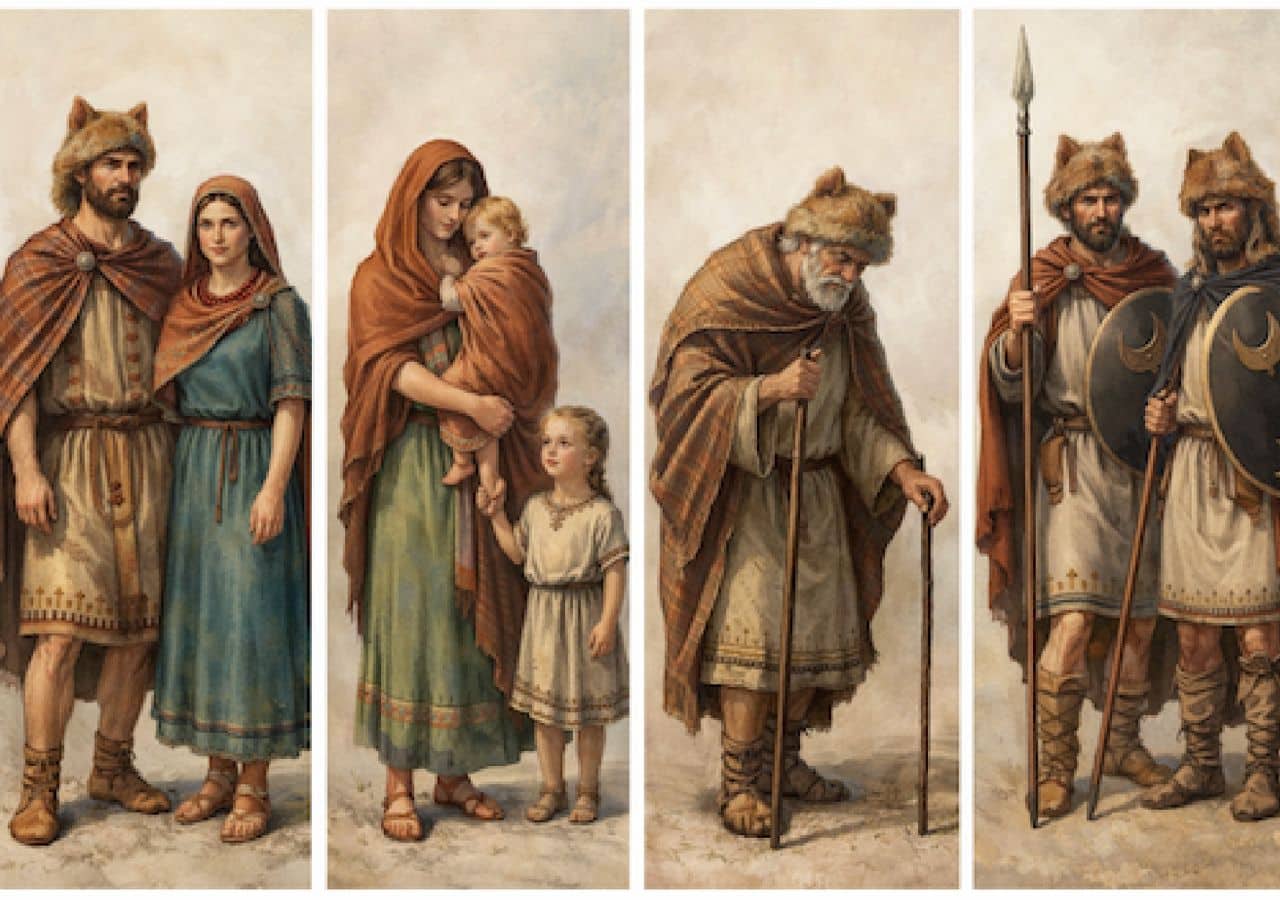
At Kimmeria, the study explained whether the hilltop fort could have worked as a refuge in a moment of danger. The simulation placed civilians and hostile pursuers on the same terrain at the same time. It also separated people into groups, including fit adults, elderly individuals, families with children and hostile forces.
Mountain slopes shaped escape at Kimmeria
The results showed that the shape of the land could strongly affect the outcome. People fleeing uphill did not always take the most direct route. Instead, movement often shifted with the terrain. In several runs, slopes and landforms blocked visibility and helped civilians break away from those chasing them.
That suggests Kimmeria’s value may have come not only from the fort itself, but from the surrounding landscape. The terrain could slow pursuers, break lines of sight and improve the chances of escape. The findings also showed that success varied by group, meaning age and physical ability mattered.
At Kalapodi, the focus turned to transport. Researchers compared ox-driven carts with pack animals such as mules. The carts could carry heavier loads, but they moved more slowly and handled steep terrain less well. Mules carried less, but they could take more direct routes and move more effectively across rough ground.
Pack animals proved faster than carts
The study found that in rugged inland areas, smaller loads carried by pack animals may have been more practical than heavier cargo moved by cart. That could help explain how goods reached inland sites where strong road networks were limited.
Researchers say the model is not a final reconstruction of the past. Instead, it offers a way to test realistic possibilities. The findings point to a simple idea: in the ancient world, movement was shaped not just by distance, but by terrain, visibility, physical ability and the kind of transport available.