
Updated April 8, 2026 03:06AM
What the difference between Tadej Pogačar the four-time Tour de France champion and Tadej Pogačar the three-time Tour of Flanders winner?
Two kilos, or around 4.5lb, of cobble-busting brawn.
Unlike almost other rider in the peloton, Pogačar welcomes weight gain in the winter.
He heads into off-season a lithe climber who makes winning Il Lombardia a formality and returns a few months later wearing a coating of cobble-conquering muscle.
The changes are subtle, but crucial.
The thighs are brawnier, and the shoulders are beefier. Even the cheeks of cycling’s baby-faced assassin are fuller after a metamorphosis that reverses traditional beliefs about “race weight.”
It’s a heretical makeover that’s made Pogačar a modern GOAT with the most complete palmarès in the active peloton.
Just 2kg the key to year-round versatility
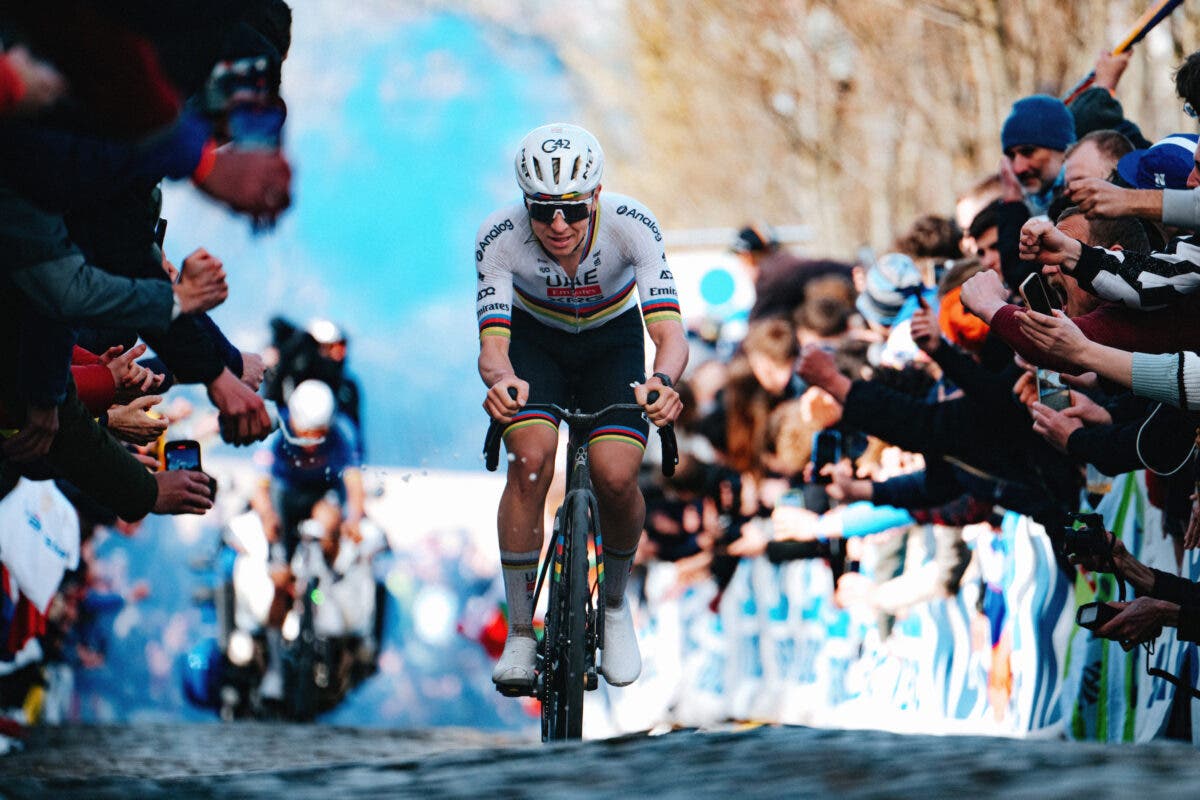
Speaking to L’Equipe last week ahead of De Ronde, Pogačar explained his winter gains.
“It’s not ideal to be the lightest for the classics,” Pogačar told L’Equipe. “That’s the key to being strong. I’m a kilo-and-a-half or two kilos heavier. But it’s mostly muscle thanks to a lot of exercises with the physiotherapist.”
Pogačar wielded that muscle to devastating effect last weekend at the Tour of Flanders.
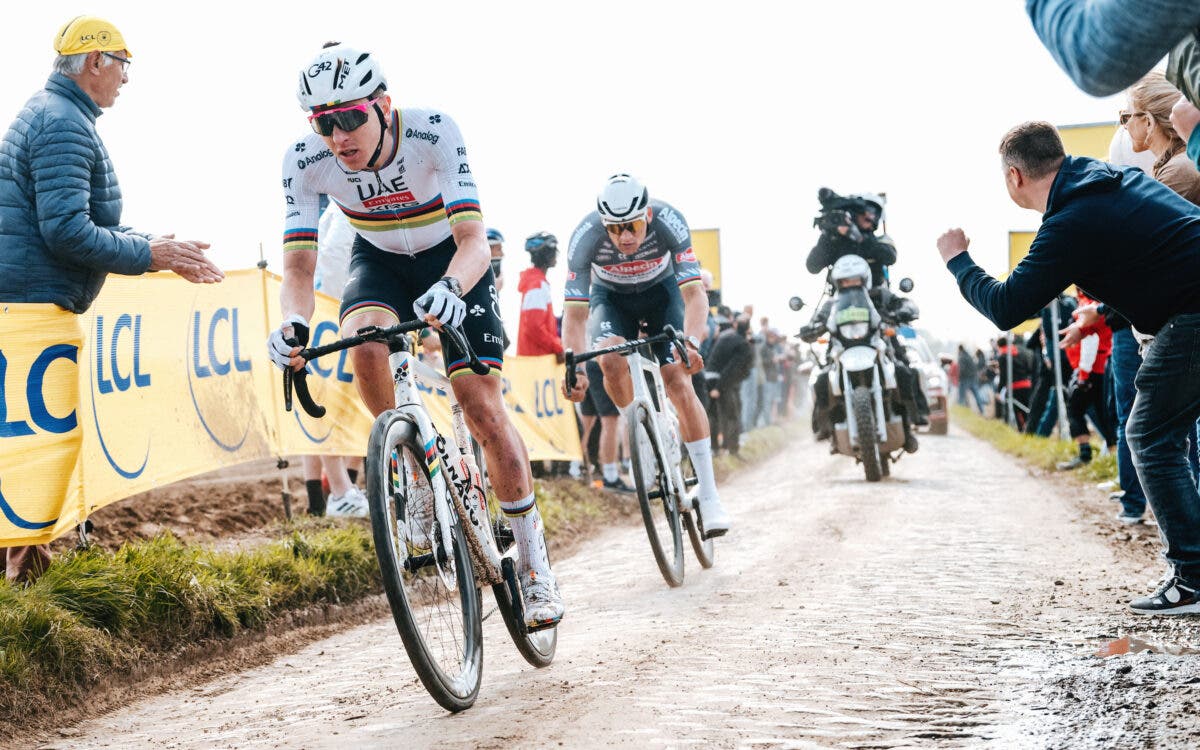
A rock-solid core kept him planted in the saddle when he pumped watts into the vertical cobbles of the Paterberg. Mathieu van der Poel and Remco Evenepoel were like inflatable noodles as they flapped and rocked on his wheel.
The hench haunches Pogačar sculpted through a winter of weight training blasted them both out of his draft on the clattering stones of the Kwaremont.
Pogačar makes small tweaks to his musculature in the winter to deliver outsize wins in the spring.
The 27-year-old is now on a record-equaling three wins in De Ronde, and the favorite (no, really) for Paris-Roubaix this weekend.
Pogačar’s strength training secrets
Pogačar’s seasonal shape-shifting is rooted in a training philosophy he embraced at the start of 2024.
A switch in coach from long-time mentor Iñigo San Millán to visionary physiologist Javier Sola was a catalyst for Pogačar’s merciless rise.
Strength training, torque intervals, heat sessions, and a new approach to zone 2 made Pogačar unbeatable from February through the “Race of the Falling Leaves.” The charred remains of climbing records ranging from the 40-minute Hautacam to the 9-minute Cipressa were left in his wake.
The strength component was perhaps the most crucial to how Pogačar has amassed his unthinkably wide palmarès.
A commitment to the weight room made Pogačar robust for the harsh cobbles and foul weather of the northern classics. There’s a reason why skinny boys like Valentin Paret-Peintre and Matthew Riccitello don’t line up in the Flemish spring.
“The biggest change for Tadej this year was his schedule,” UAE training co-ordinator Jeroen Swart said late last year.
“We focused first on gaining muscle mass because one-day races require more explosiveness,” Swart said. “He didn’t lose weight, and did more strength work. And he started his mountain sessions later in the season.”
Seated attacks are the winning weapon of spring
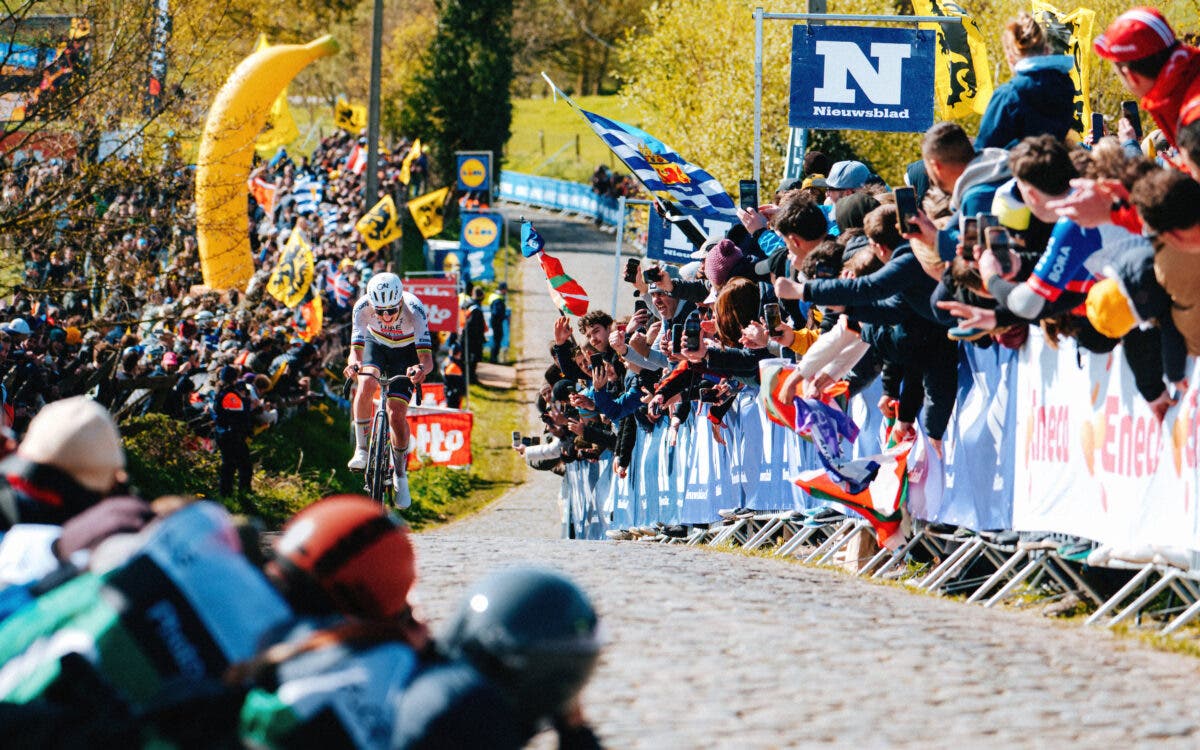
Winning attacks on greasy cobblestones are made in the saddle. They call on massive pelvic stability and titanic torque through the psoas and hips.
That’s why Sola, Swart, and Pogačar hooked up with Alexandre Bacilli, the PT of the Monaco elite.
The assignment? Core strength and explosive force.
The result? A few extra kilos but an oversized impact on race-breaking power.
“He has improved significantly compared to last year,” Pogačar’s nutritionist Gorka Prieto last week told L’Equipe. “Weight naturally increases with strength training, but we don’t set a specific number; we focus on the power-to-weight ratio.”
Those gains also translate to the HC climbs of the Tour de France.
Pogačar’s high-cadence seated attacks were built in a gym in Monaco, translated through a set of micro-cranks, and unleashed all over the general classification of Le Tour.
Pogačar’s strength regimen is a closely guarded secret. Fragmented behind-the-scenes reels and pithy insights about core workouts are about as much intel as we get.
But the impact is clear, both on the results sheet and the photo galleries.
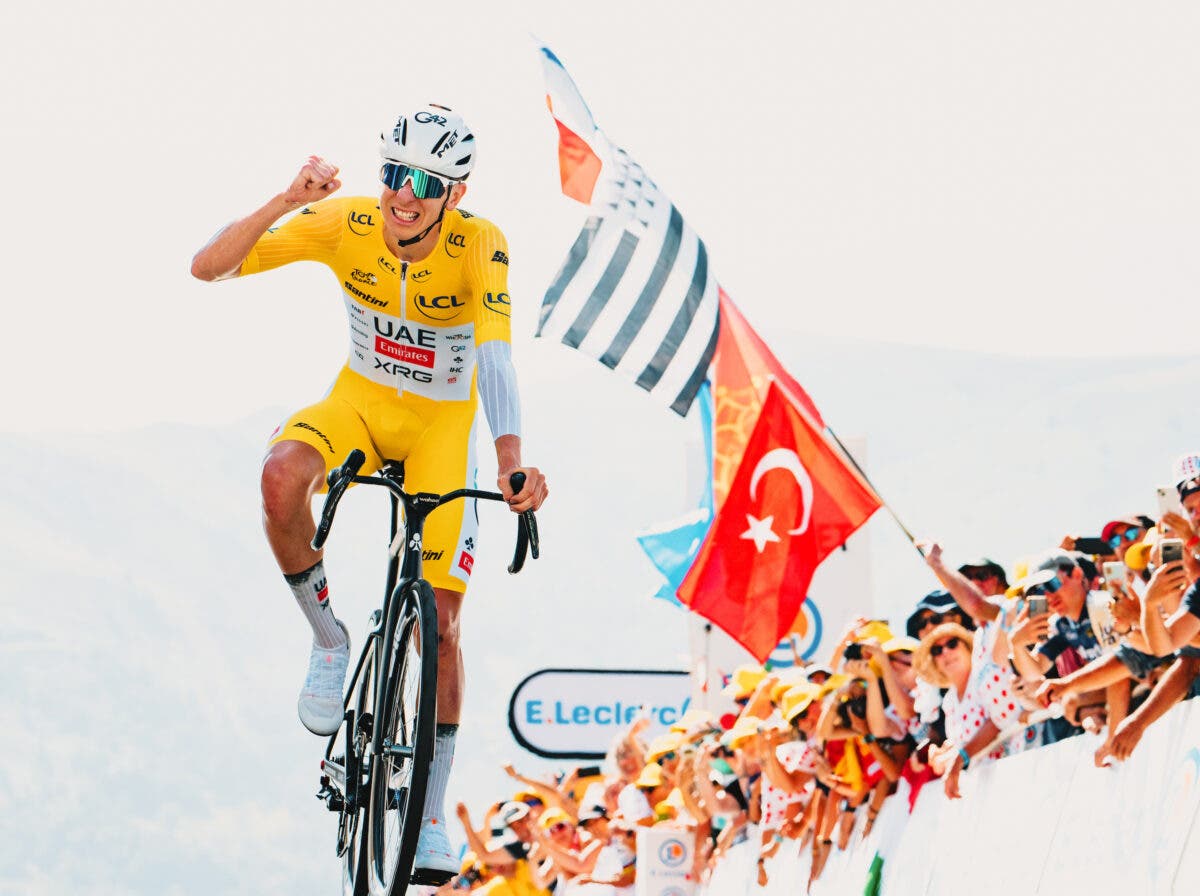
The Pogačar who outmuscled MVDP at the Tour of Flanders last week was bigger from shoulder to ankle than the Pogačar who vanquished Jonas Vingegaard for a fourth victory at the Tour de France.
“We can’t really focus on one specific part of the body,” Prieto said. “He needs to be lean, with a low body fat percentage, but still strong enough to stay healthy and recover after training.”
Pogačar’s devotion to low-cadence torque intervals ensures every ounce of muscle he does gain is trained to translate through the pedals.
Pogačar balances cobblestone clout with climbing potential
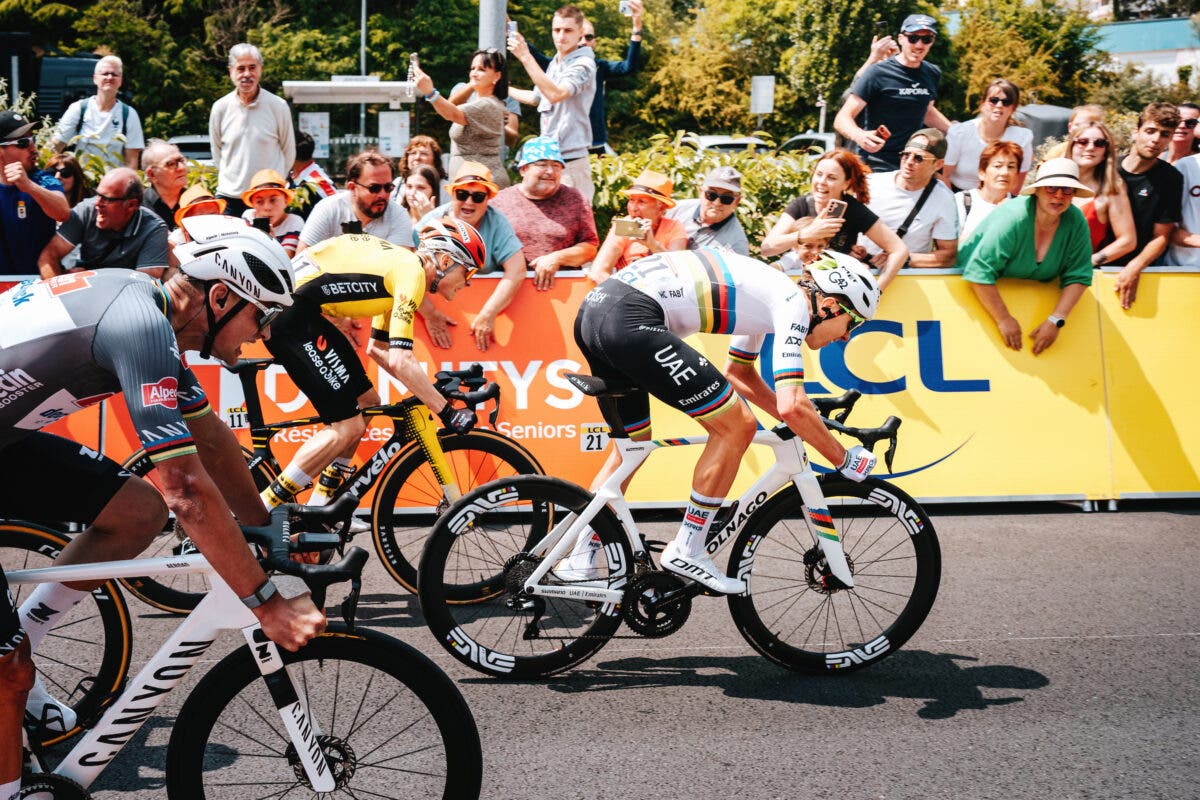
Pogačar’s metamorphosis between climbing ace and classics annihilator proves that not all weight is bad.
It’s a philosophy that’s becoming widely accepted by a peloton that takes creatine, does deadlifts, and pounds protein.
But for Pogačar, it’s not straightforward. He cannot let the scales tip too far north.
Three months after being strong for De Ronde, he’s got to be svelte for Le Tour.
And besides, even the brawniest cobble bashers suffer if they get too stacked.
“If you look at my best results in the classics, more or less two kilos has made the difference,” Belgium’s beloved beefcake Wout van Aert recently told Het Laatste Nieuws.
“These races are 250 kilometers now. Carrying two kilos less all day can give you that one percent in the final,” Van Aert said.
Riders of all sizes must watch both weight and watts in this explosive and unpredictable new era of racing.
And for Pogačar, the margins are even finer. The coat of extra muscle he gains in winter needs to be cut by mid-summer.
But fortunately for him, it seems that even in the off-season, the GOAT isn’t prone to bloat.
“He doesn’t gain much weight in the winter – between one and one-and-a-half kilos, never six,” team UAE nutritionist Prieto told L’Equipe. “Out of season, it’s a bit of fat. But in season, no: he trains hard and does strength training.”
The days of riders going full Ullrich in an off-season of excess are long gone in today’s hyper-professional peloton.
Altitude, apps, and a different training structure for the Tour de France
Like nearly all teams in the WorldTour, UAE Team Emirates uses a nutrition app so riders can hit their “racing weight” with precision focus.
Algorithms and AI models spit out macronutrient targets based on training load to ensure any weight gain is intentional and productive, and those who are cutting back hold power and stay healthy.
“Here, we have a plan, and he sticks to it. He follows the daily menu like all the other riders,” Prieto said. “The rest of the time, he knows what he has to do, and he’s allowed some indulgences.
“If he burns 6,000 calories, he can certainly have a croissant during the week,” Prieto joked, perhaps thinking back to all those reels featuring pastries, patisserie, and pockets stuffed with fresh pain.
Pogačar told L’Equipe ahead of Tour of Flanders he weighed in at 66kg that morning.
He’s unlikely to see the scales tip that far again until the offseason.
After Roubaix this weekend, he will methodically strip weight to become mountain-fit for the Tour de France.
Even at 6,000 calories a day, the metabolic toll of extended trips to altitude and a higher-volume training program will carve away the first layers without much effort.
Food scales, nutrition apps, and dietary discipline carve the final few grams to produce Pogačar’s leanest, meanest summer frame. His calves, quads, and cheekbones will become more chiseled as staffers watch on, preventing a tip to any dangerous extreme.
The watts per kilo equation has two sides
Pogačar’s ability to subtly transform his physique is an intriguing case study into the less sexy side of cycling performance.
But the watts-per-kilo equation has two sides, and in some cases, it can be a good thing to increase both the numerator and the denominator.