
It began, for me, in 2019, when I laid eyes on Antoni Porowski in a technicolor silk pajama-style suit by luxury New York label Sies Marjan.
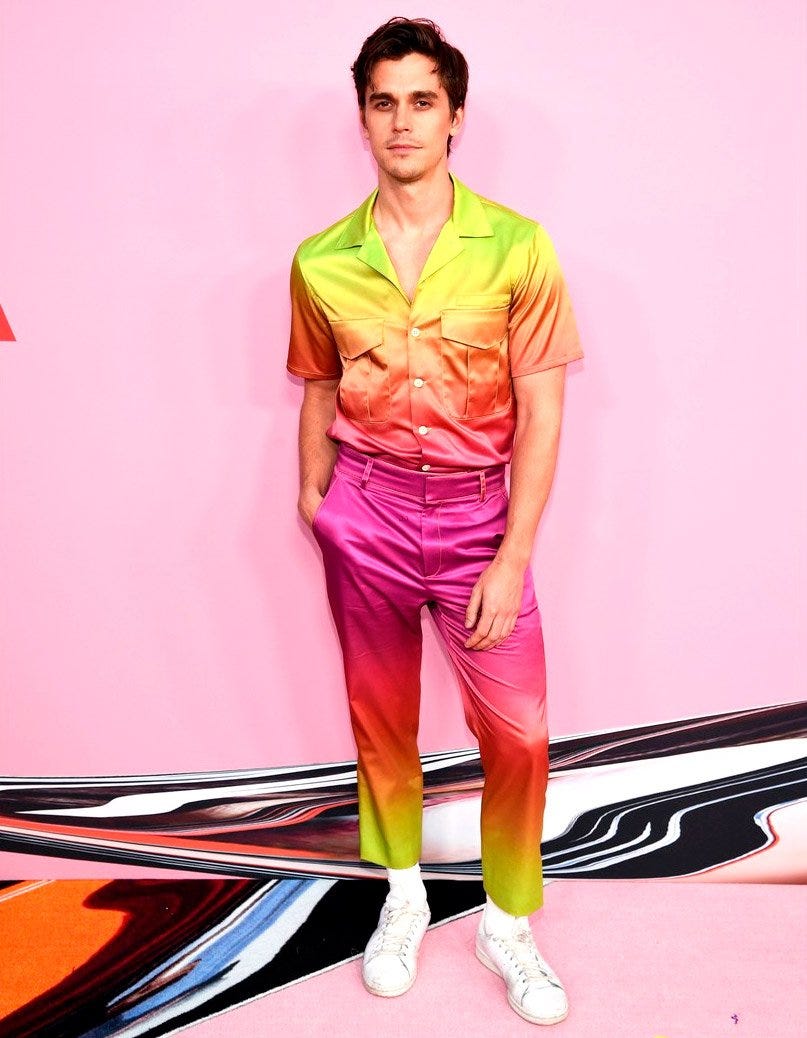
Porowski was attending the CFDA Fashion Awards as a guest of Dutch designer Sander Lak wearing the brand that was named in tribute of Lak’s parents.
I was immediately struck by the vibrancy — this look demanded your attention — and the dégradé-print being able to so seamlessly transition from yellow-green to orange-gold to pink. “CFDAs are super fashion-y and can feel a little cold, but Sander gave off a lightness and joy,” Porowski tells me. “I’m not typically one for super bright colors, but something about wearing his clothes just immediately makes you feel a little bit happier.”
I quickly, like many, became near-fanatical about the brand and committed to collecting as many pieces as I could (including, of course, the Dean I’d seen on Porowski). When The Observer asked what my most sentimental wardrobe pieces were, I quickly responded “all of my Sies Marjan pieces.” And I meant it. Collecting it was and remains a passion of mine.
Why sentimental? Because a year later, in 2020, the brand announced its closure after a four-year tenure. “As a young independent company, we were significantly impacted by Covid-19,” the email statement read. “With a heavy heart, we have made the very difficult decision to close our business.” Two years earlier, Lak was winning the CFDA Award for Emerging Talent, and now, without the shared resources of ownership by a Kering or an LVMH, the brand’s independence, the very thing that gave it its edge, would mean there was no raft to help bring them ashore.
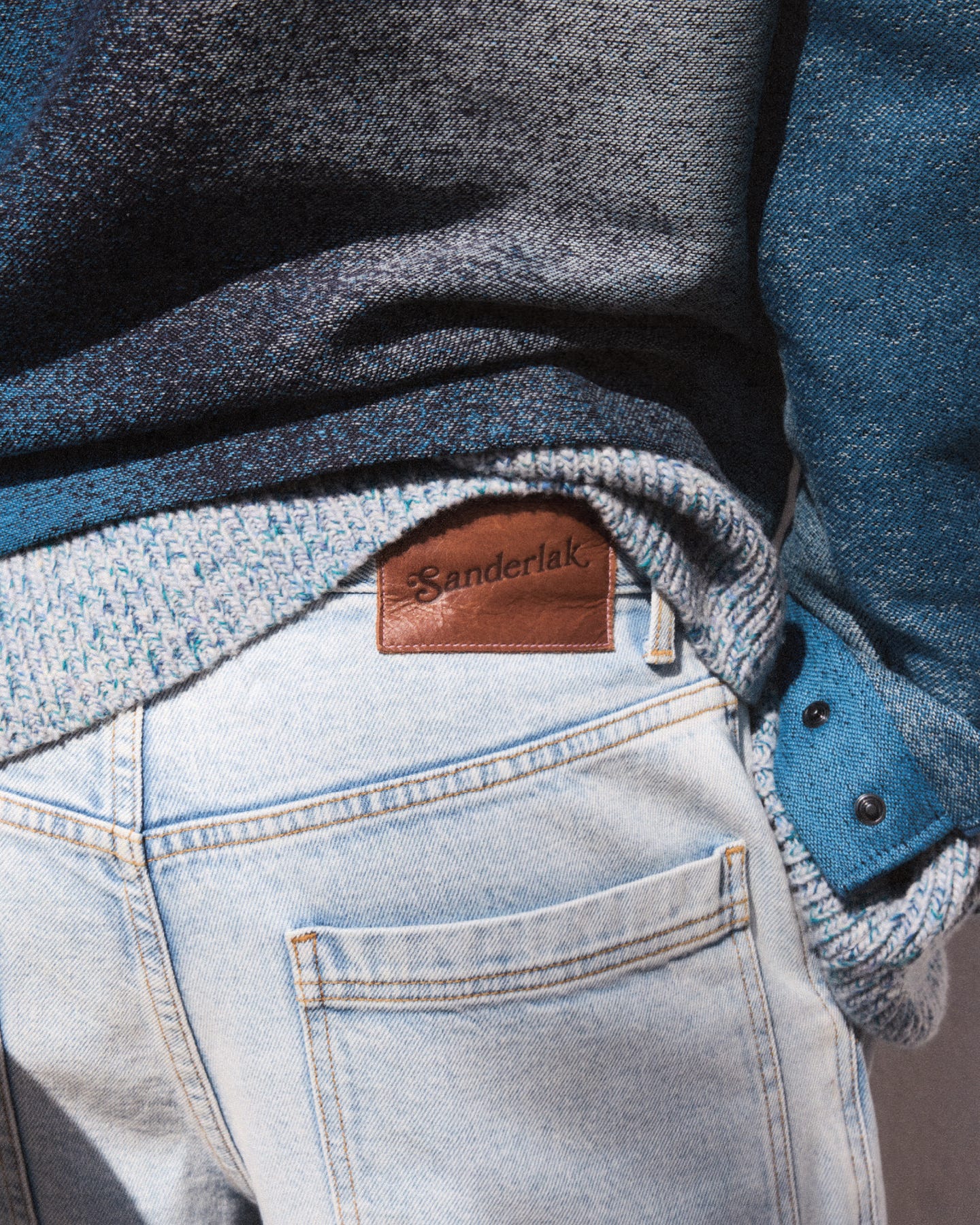
Lak and I became pals on Instagram, we kept in touch, and I, like many, was waiting for his next move. Watching designers like Peter Do at Helmut Lang, Maximilian Davis at Ferragamo and Harris Reed at Nina Ricci made me think that Lak’s move to a fashion house was imminent. Then, five years later, this past summer, a Vogue headline appeared: “Sander Lak Is Back!” The article announced that Lak was reemerging with an eponymous collection, Sanderlak, “grounded in menswear but designed for all.”
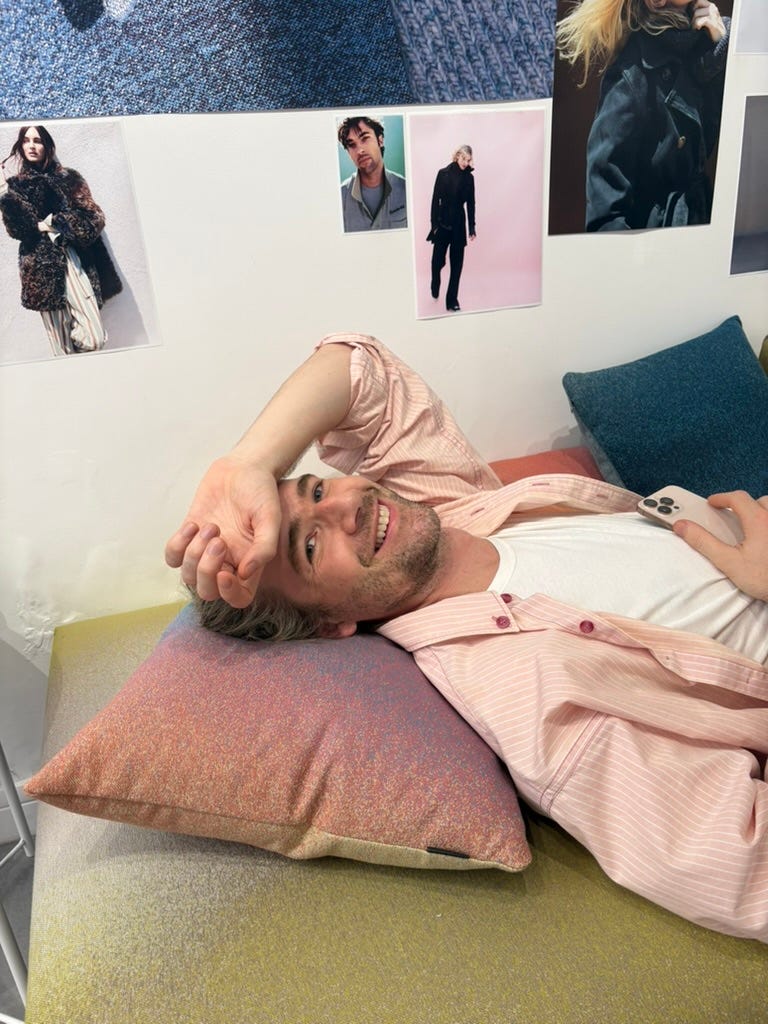
Like many, I was elated to have him back, and also curious to know where he’d been. I knew why and how Sies Marjan had shuttered and the struggles of independent designers amidst a landscape in which the conglomerates reign. But I wanted to know what it felt like then and the bricks he laid down in the years since to get him here today. And so, over meatballs at Freemans (including a special appearance by Jessie Buckley), we chatted about what was, what is and what can be.
I want to start with my entry into your world, which was the rainbow dégradé outfit worn by Antoni Porowski at the CFDA. That was the first exposure I had to Sies Marjan and the world of Sander, and I immediately fell in love. Can you talk about that outfit? I feel like it’s very emblematic of a lot of the work that you were doing at that brand at that time.
Yes. I think what my work has always been about is color and a relationship with color and what color means and what it doesn’t mean and what it could mean. I love going really deep and really sort of intellectual about how a cheap color can make an expensive fabric look cheap and how you can twist all of those rules. But then there’s also something really nice about having color A and color B and having them make love in the middle. And I think that’s really kind of what created that dégradé set at the time. Obviously, I did not invent dégradé coloring, but the way that we did it back then, especially for menswear, was very effective.
To say the least.
People really were almost shook by it.
I’m “people.”
It’s just so much color and then on the material that also has a shine. It’s just a lot of a lot of a lot, and I think that really worked. And the colors that I was working with were very sophisticated, so I wasn’t choosing cheap colors. It’s a little bit like a brain fuck because you’re just like, “Wait, this thing is shiny and candy and happy,” so then it should be kind of cheap, but actually it’s really beautifully crafted and it’s beautifully made and printed in Italy, blah, blah, blah. I love that kind of unexpected punch in the face, and then a stroke over your head, of course.
Can you help define what it is to be a sophisticated color?
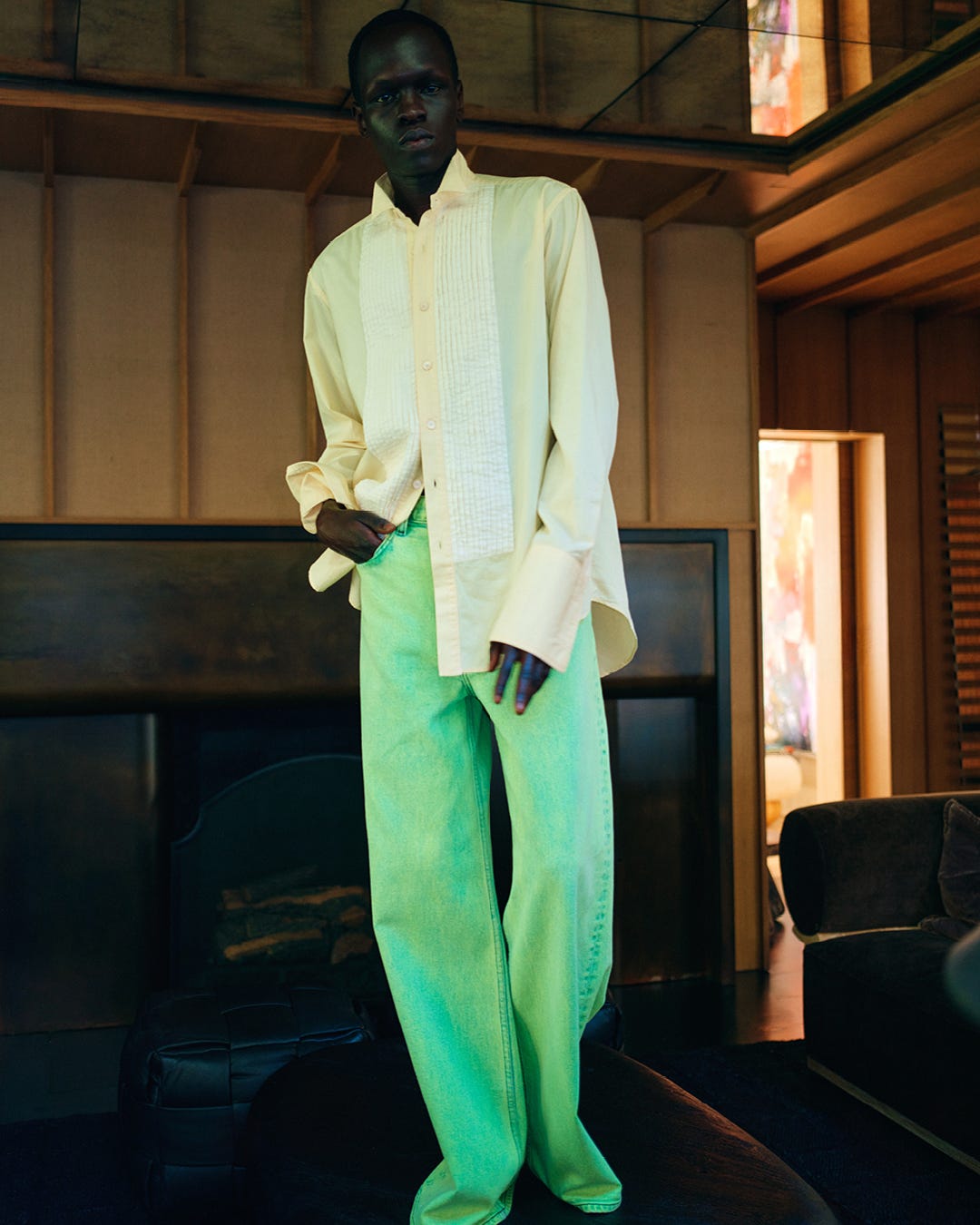
If you were to Google the name of a color, it’s the one at the bottom of the list that comes up. It’s never the first one. If you ask for red, that red that comes up is not the sophisticated color most of the time. It’s always the red that’s way further down the line. So it’s the red that has been morphed or has been tweaked or has been influenced by another color, whether that’s like the slightest bit of yellow, the slightest bit of blue. There’s something in that color that then makes the red more interesting. I think “interesting” is kind of maybe another way of saying it.
So is there a correlation then between a color being ubiquitous and a lack of sophistication?
Yes, because I think sophistication does have to do with a version of elitism. There is a version of “not everyone will get this.” But the sophistication happens underneath. So I think you’re right.
I feel like there’s been a cultural push away from words like “elitism” or “gatekeeping,” and I’ve always been somewhat of a proponent of the importance of these — not as terms, but as ideas. For example, it sounds like your work needs elitism to exist in order to create everything in between it and populism. What’s your relationship with a term like elitism?
Well, I think I need elitism, but I also need trash, you know? I need both. I need a scale that I can work with. I need a canvas that is wide enough that I can start placing my proposition on it. So I think the idea of there not being elitism or there not being gatekeepers is too restrictive, where normally people think it’s the other way around. But I find it really restrictive when it isn’t there because I think elitism is also something you can really fight against. I remember we did this one thing at Sies Marjan a long time ago where I picked the colors of fast food chains. I was looking at the colors of Dunkin’ Donuts, of McDonald’s, the red and the yellow and the purple and the orange. And we were really making the most beautiful 100% cashmere, 100% silk, draped situations from that, and we elevated it to such an extent. But there was still a residue that remained where we would even have people in the showroom come in and they would all of a sudden be like, “Oh, you know what? I just want something sugary. I want a donut or something.” Without me saying where it’s from; it’s just being surrounded by the colors that hit a certain nerve. So I think that idea of that kind of playing with those codes — you need the codes to be there. You need the gatekeeper for me to be able to then go against the gatekeeper. And you need the elitism for me to then hide behind it if I want to, or push it away if I need to rebel. I want everything so I can make a choice about what I do with it. Does that make sense?
It makes total sense. I noticed that during this conversation, you have a pencil in your hand. What is it about the pencil?
Well, I used to smoke. Literally, my favorite thing in the world was smoking. And I still to this day think it is the most amazing thing one can do with one’s life. Sadly, my body does not agree with that, so I decided to stop smoking when I moved to America 10 years ago. But there’s something about this thing in between my fingers that I still have. So maybe it’s the remains of my smoking days.
We were talking about color, but one other thing that I think distinguishes your work — both with Sies Marjan and then with your label now — is that you take details that are kind of standardized within the world of fashion, and you sort of manipulate them. And I’ll give you two examples: one would be that wide bell sleeve on the sweater that you’re wearing now, and then there’s also a pink sweatshirt from your first collection for Sander where the length in the back is longer than the length in the front. It’s interesting thinking about how much I associate you with color, but I also then associate you with making these off-kilter decisions. How does that figure into your process?
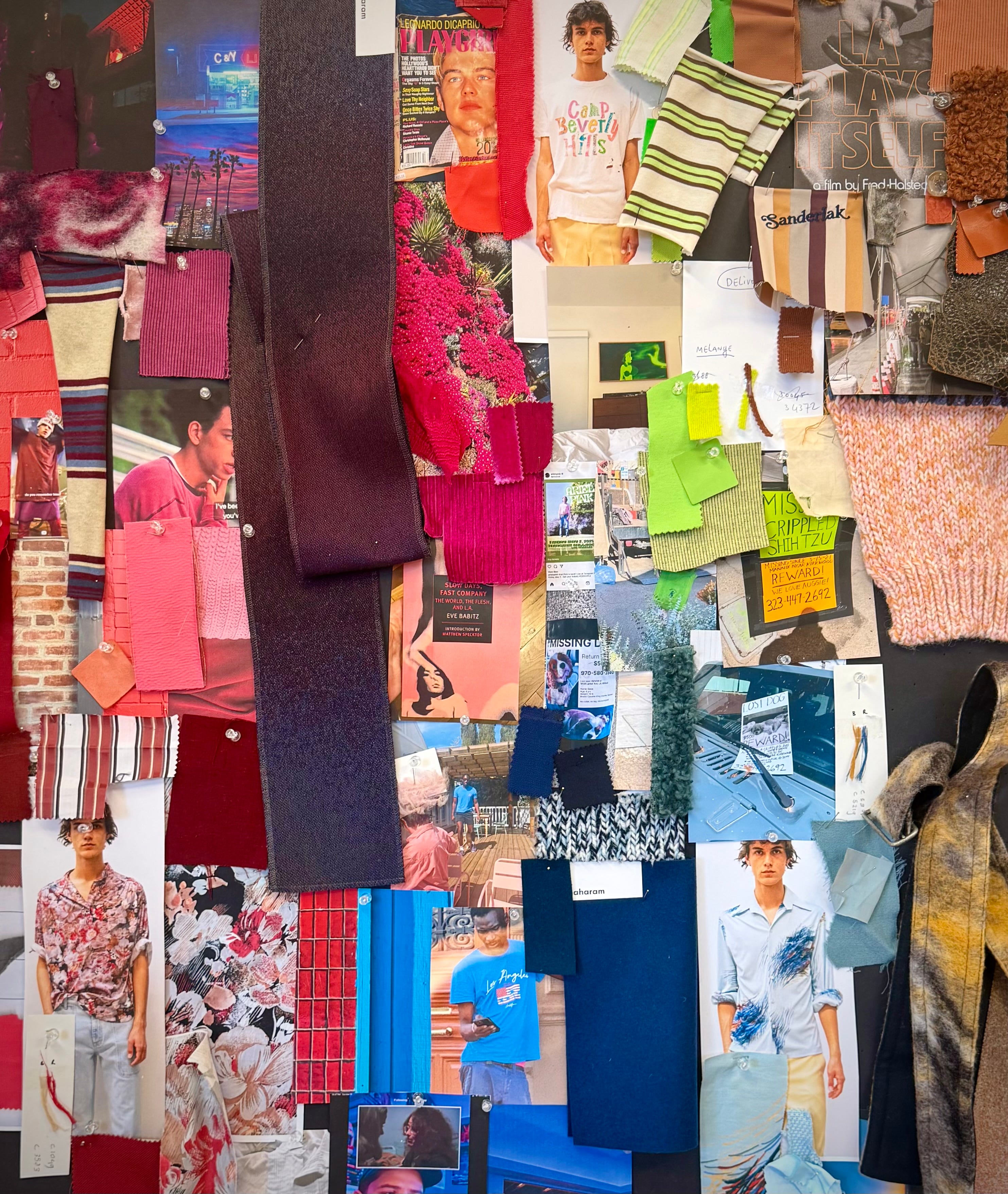
I don’t like reinventing the wheel. I live the way I live and I have a way of being which is so fundamental to me where I don’t do well with rules, but I’m not an aggressive person. I’m not like anti-rules; I just like to push it a little bit. I like to morph it so that I fit in it the right way. And I think creatively, that really translated itself into that idea of like, I don’t want to propose a sweatshirt nobody has ever seen. Like, I don’t care. If somebody does, I roll my eyes because I’m just like, “Why ruin something that is already pretty good?” But I also don’t want to just do a sweatshirt because it’s just a sweatshirt. So, it’s like, what can I do to kind of move the needle ever so slightly that it just becomes different? And color is a really great vehicle for doing that because, since it’s just a surface, I can use a certain garment and leave it as it is, but making it in a bright neon yellow, all of a sudden, feels like a reinvention of that shape, but it isn’t. It’s just a color, you know? And material can do that too. I don’t like to change color and material and change the design. I think that that’s too much. I like it to always be sort of a balance of one of those three things needs to be the star. But it cannot be three stars. That just becomes like Destiny’s Child and it just gets messy. [Laughs]
One big frustration I have with a lot of the clothing I buy today is that there’s an increased focus on aesthetic, sacrificing the quality of the make. Do you feel that there’s a qualitative difference between the way clothing was produced say 20, 30 years ago to how it is made today?
It’s not just clothes; it’s everything. You used to buy a vacuum cleaner and the vacuum cleaner would last 10 years. Now you’re lucky if it does one year. It’s a general thing that is happening with the way things are made. There is some of that in fashion for sure as well, but not in that same way. I think there are people that make clothes in a really good way that doesn’t necessarily cost a lot where it’s not a high-end couture atelier, but these people are hard to find and people don’t really go into the manufacturing that much. The industry is also requiring us to make so much and sell so much. If you were to play the game, you’re in a showroom 75% of your year selling new stuff. How can you do that and keep quality high? It’s almost impossible. What we are trying to do at Sanderlak is work with as little different factories as possible and really focus on where we think the quality is right.
I consider people like you and Christopher John Rogers (another of my favs) to be indie designers in that, in my estimation, you seem to be having to work a little bit harder than others in order to churn out the kind of work that you want to do at scale without selling out, in a sense. Do you think that’s a fair characterization?
I remember there was a scene in the revival of Gossip Girl where somebody was wearing a Sies Marjan outfit and one of the actors was like, “Oh my god, is that Sies Marjan?” And then he’s like, “Oh, I think that’s really a brand for everyone who loves Gaspar Noé movies.” It was sort of this reference to an indie director and it was meant to be really nasty because of that. But I understand what you’re saying. It’s hard to say because I also feel like, when you’re in it, you only see what you see. So my responsibility or my purview is not necessarily the full industry. I have a lot of varied experiences that have shown me how different success is and what that means and what failure means in different contexts and after a while, I really just realized that I can only do what works for me. And that’s also one of the reasons why I’ve said no to many things. People expected me to go to a big house and for me, I knew that I wanted to do this in this way because it is what makes the most sense to me. And I guess maybe that’s what an indie director would say as well. And they would also say, “Yeah, of course, maybe if Marvel comes to me, I might think about it, but in the end I want to do what I want to do.” And that’s kind of how I see it too. That doesn’t mean that I would never do a Marvel movie. I compromise left and right. I really go by gut instinct. Even when things went bad, my instinct still saved me from things that could have been even worse.
You brought me over to my next question in saying, “when things got bad.” You had this brand, Sies Marjan, that people were deeply obsessed with. You developed quite a rabid cult following. It was very much an “if you know, you know” brand in the best way possible. But what happened? You see something that you think is so successful and you feel like it’s on the ascent, and then the next day it’s gone.
I came from Antwerp, moved to New York, created this thing and gave it my parents’ names, very consciously not giving it my name because it was never my property. We built this brand at a really, really fast pace and how quickly that went is very American. That does not happen anywhere else. That’s the American dream. But the American dream also has that other side where when things go south, they can go south real fast. And I think what happened had nothing to do with Sies Marjan, the brand; it was external. It was completely the pandemic. It wasn’t clear what was going to happen with the industry. All the orders were disappearing and the investors made a decision to stop some of their investments, including us. So, it wasn’t personal. It was just a thing that happened. But as quickly as they put it in, they took it out.
I imagine your feelings now are different than they were then.
Enough time has passed for me to really look at it with clear eyes. But it was a whirlwind of a situation, from beginning to end. We’re talking about four years. Four years! This brand existed for four years. What we created in those four years is unheard of. I was speaking to somebody at the RealReal the other day and they were saying it’s still in the top five brands they’re selling. As soon as something comes in, it sells. It’s still popular. But we just did that for four years. And there’s something that I find really quite magical about the fact that it was there and then all of a sudden it wasn’t. Like what you were saying; if you know, you know, and that can only exist in that kind of time frame. Otherwise, you go into that next stage, but we were never able to do that. That’s also why what I’m doing now is different because I didn’t want to put the pressure on myself to do the same thing I did before because the context was completely different as well. But there’s something really beautiful about that, too.
You had this really successful brand in your parents’ name, and you launched this new brand and it’s in your name. Talk to me about how identity is connected to this new chapter.
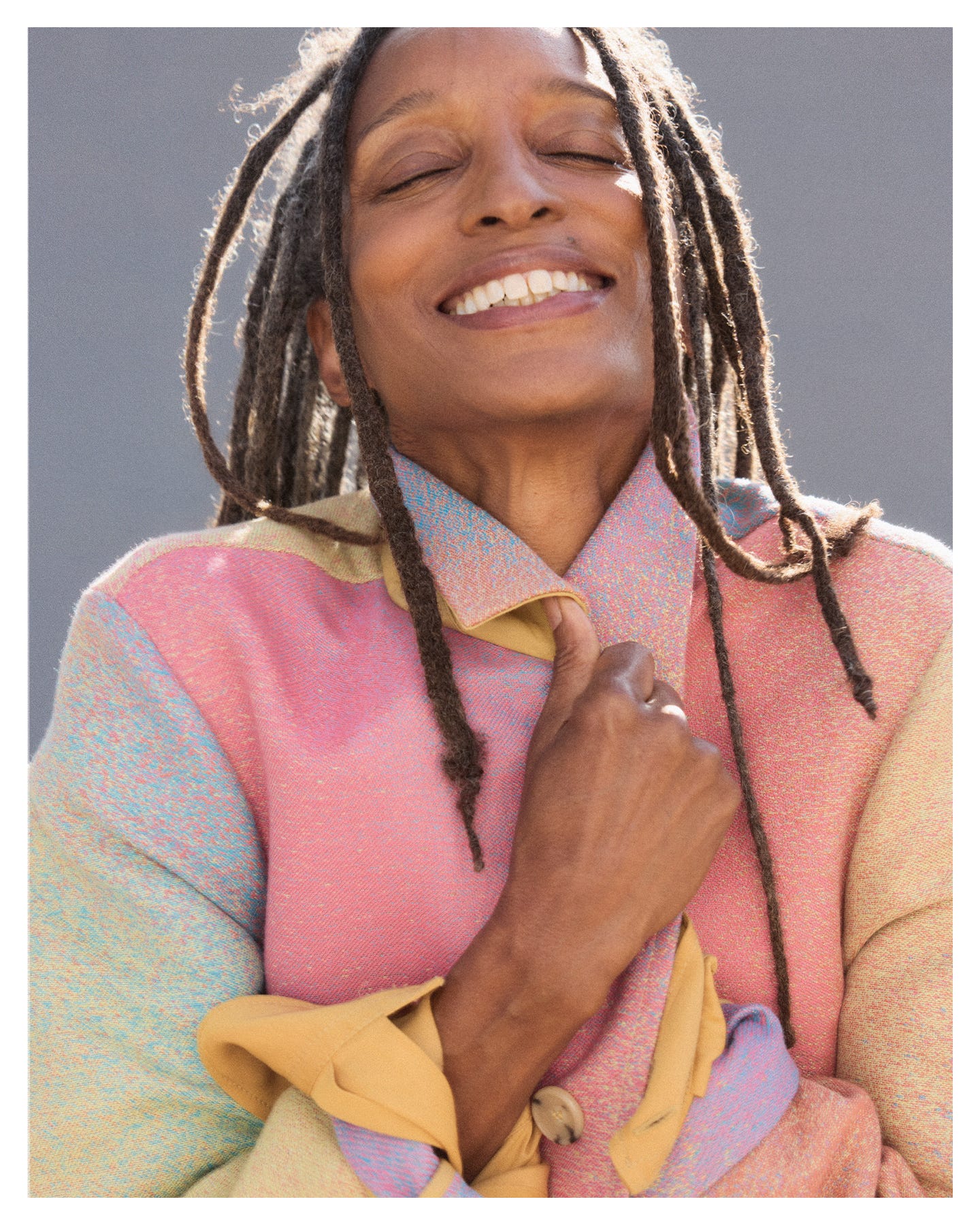
My work is always connected to this idea of identity in the strangest ways. One of the reasons why I called it Sies Marjan was because it was the first time that I was in the front of the boat. I’ve always been in the back behind somebody else. I really felt like I needed to save myself. Calling it Sies Marjan made it really comfortable for me because I don’t care about fame, I don’t care about recognition. It’s not my language. But I always had a gut instinct that I had to keep my name because I was going to have to use my name for something. I didn’t expect Sies Marjan to end, and initially afterwards, I did not want to go back into fashion at all. I was completely done. I felt like I worked for amazing people, I had a version of my own brand, I worked on a screenplay, I worked on a graphic novel, I worked on furniture fabrics, I did completely different things. It was only when I released the book with Rizzoli that I was like, “Maybe I should see what it feels like again.” And the only thing that made sense for me was to use my name. I did make Sanderlak one word because I needed one difference between me as a person and me as a brand. That’s for me.
What were some of the challenges that you faced launching a brand in 2025?
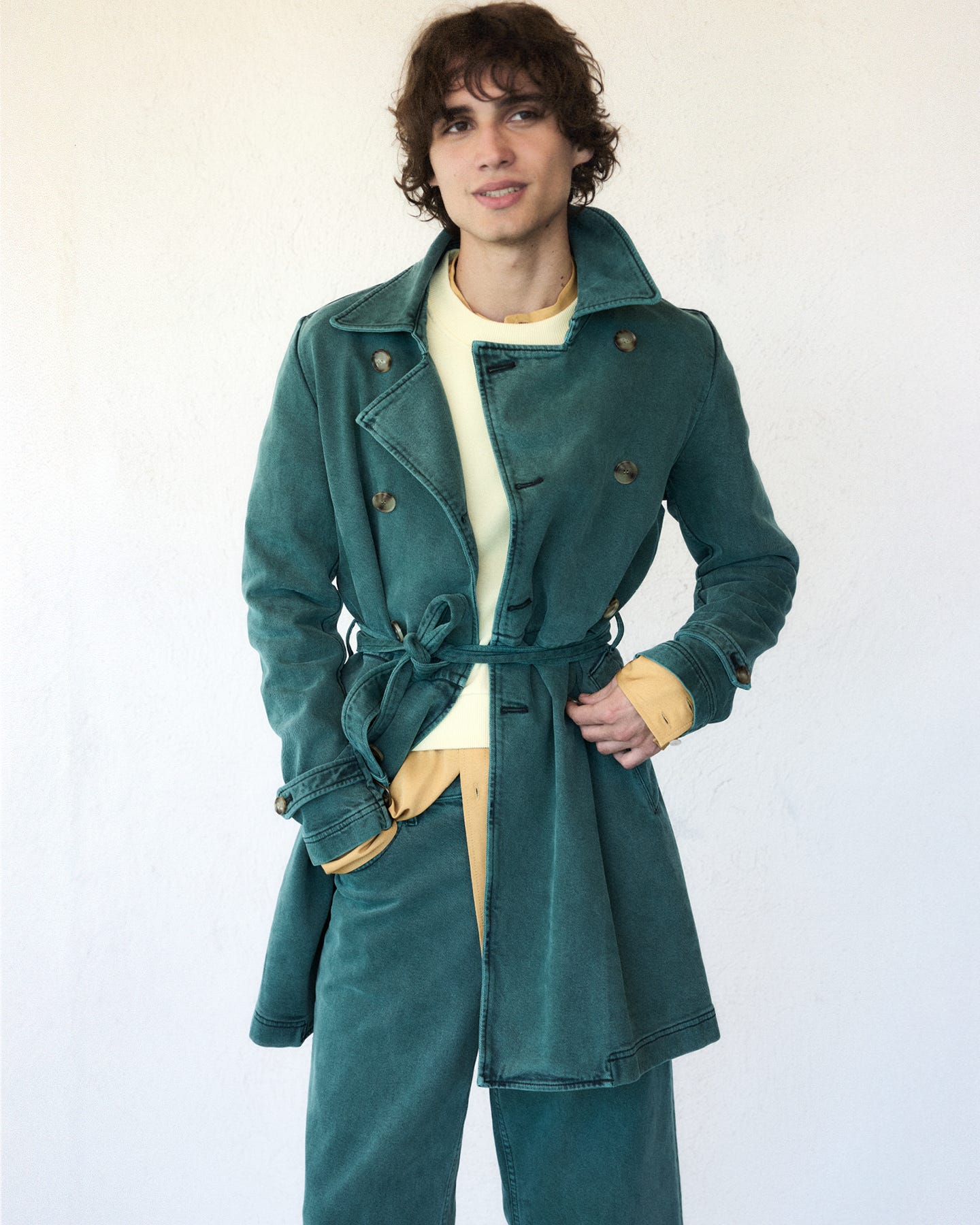
When we were at Sies Marjan, we had an amazing partnership with Barney’s, and then Barney’s went under and that was a huge hit for me and many other people. This time, it’s not Barney’s, but there are many other stores that are potentially going under. So it’s almost like the issues are the same. They’re just wider-spread and more complicated now. When I was fundraising, people were saying how impossible it is to get anything now, but was there ever a time when this was easy? Running a business has always been something that’s really, really complicated. But I’m a glass half-full person, so I also think that there is a lot that can be possible with creativity. It’s a chessboard. You’re sort of playing with the future and hoping that you win in the end. But it’s exciting. Like, okay, we can’t get that button. How do we solve this situation? I can cry and be like, “But I want that button!” Or I can accept that maybe this is meant to be, and I just need to find another button and make that button be the thing.
I want to get your thoughts about the pay-to-play model that is currently plaguing the fashion industry. So often, what we’re seeing today is actors that are contractually obligated to work with certain brands and get a kickback as a result. It’s quite prohibitive to brands that are not big dollar brands. What’s it like for you recognizing the importance of this and also having the difficulty of having to compete with people who are playing in a completely different framework?
I see the industry as we’re all playing a different sport. Like, I play tennis and Dior plays golf. They both have balls, but it’s a completely different set of rules. I cannot come with my tennis racket to a golf course and pretend to play golf with my tennis racket. It doesn’t work, you know? But what I find quite interesting is that there are some stylists, and Danielle Goldberg is one of them, who have this incredible capability of having to work with certain brands because we all have to, but then once in a while throwing in something on this amazing person that is not coming from those brands. And the attention that is happening there is tenfold because this person only wears brand X and then all of a sudden this person wears this thing that nobody has heard of. So I think there is also this amplifying effect that happens where Emma Stone is stuck with Louis Vuitton, but then when Emma Stone wears something from a young designer, all of a sudden that is a huge thing, you know? And I think that there is a win there as well. Of course it would be better if more big celebrities would wear more unknown brands, but I think there’s also a shift happening there where I can see that people are seeing that kind of dressing in a very monetary way. The big brands need to do what they need to do. But Greta Lee wore that amazing piece from this designer LII, and it was just incredible, and all of a sudden, attention appears that wasn’t there when she was wearing Loewe because it was just Loewe again, you know? So there’s something that’s really great about that moment as well. It’s great for the designer, great for the stylist, great for Greta. It works for everyone if we diversify that offering. Again, I’m a glass half-full person, so I like to be optimistic. If I do glass half-empty, then yeah, it can be pretty shitty.
Would you ever consider doing any kind of collaboration? When I was young and I used to shop at the H&M collaborations, part of the appeal was the idea that these collaborations would come out and the brand would lower their price point to the price point of the collaborator. Are there any brands you would put your stamp of approval on for a joint collection?
So many. I’m not opposed to collaborations at all. I also think that what you were saying is really interesting: making a version of your brand more accessible by lowering the price point. It is something that I am already trying to do as much as I can with my brand, but we are a small brand and have small quantities, so we have to upcharge. If I could make it lower, I would, because I really believe in that price point that I as a customer want to be in as well. So I would love to do something with Levi’s. H&M would be really interesting. I’ve never really thought that could be a possibility, but that could be really interesting. I also love to collaborate with non-fashion brands, where it is really more about artisans or museums or galleries. A collaboration with David Zwirner could be really interesting. Or with artists themselves. With Sies Marjan, we did one with Rem Koolhaas, which was really incredible. Film is also one of the most important parts of me that I try to keep separate from fashion because I want to keep it sacred, but there is a part of that where I would want to make a movie, but I also would love to do something with costumes or something that connects with the world of color. There are a lot of things I would like to do, but it needs to be the right thing at the right moment.
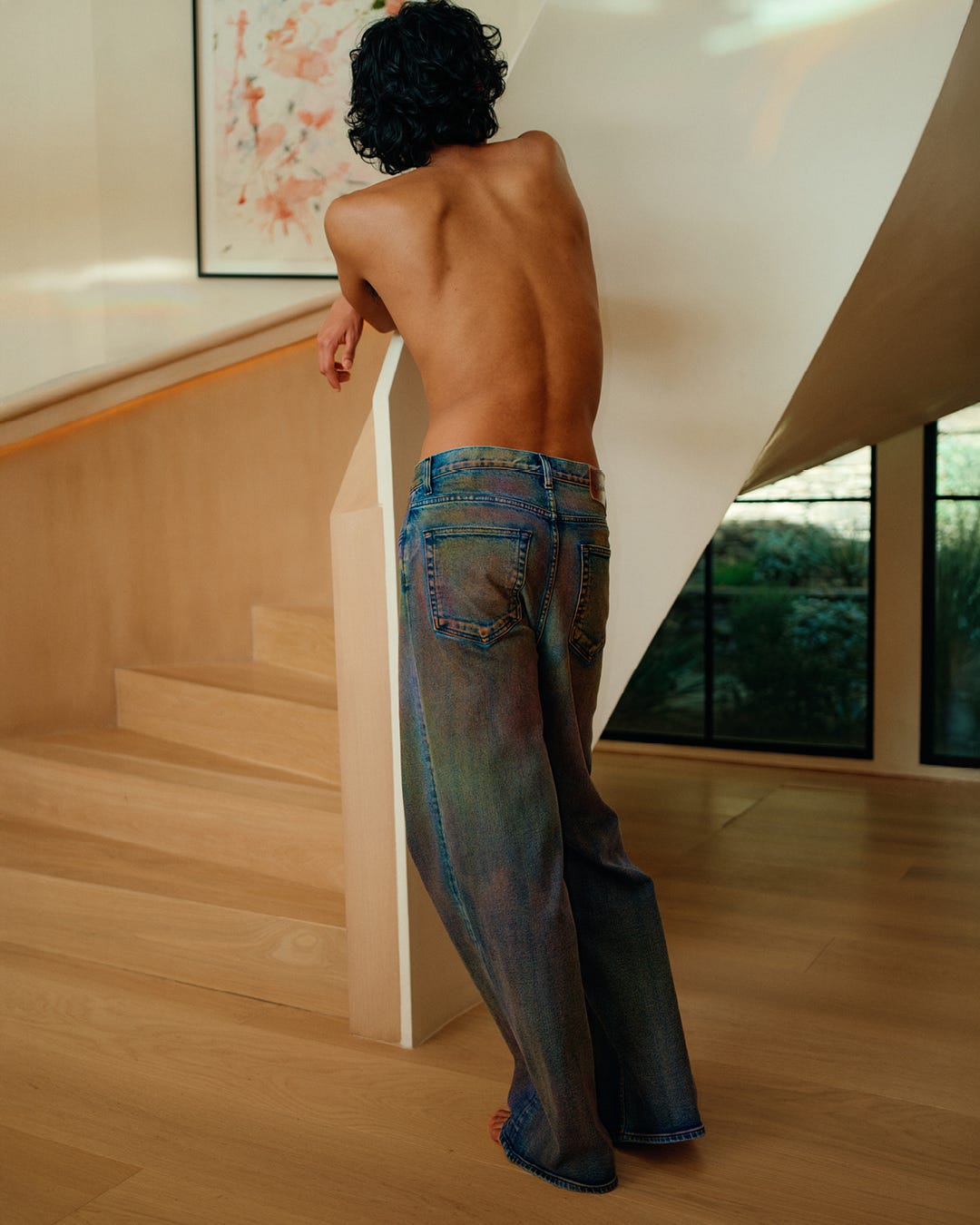
For more on Sanderlak’s latest collection visit their website here and for those in the Los Angeles area, you can shop Collection I in-store (4011 Sunset Blvd Los Angeles, CA 90029) with founder Sander Lak for three days only, March 27-29.