
Venice, Italy is a city famous for its gondolas, canals, biscotti, and more recently a solo dolphin nicknamed Mimmo. The bottlenose dolphin was spotted swimming in the Venetian Lagoon in summer 2025, and local researchers jumped on the opportunity to study the mammal. Their findings are described in a study published today in the journal Frontiers in Ethology and offers conservation methods that can protect this marine mammal from harm.
“We present the case of one of the most charismatic animals in one of the most iconic cities: a solitary dolphin in Venice,” Dr. Guido Pietroluongo, a study co-author and conservation veterinary pathologist at the Department of Comparative Biomedicine and Food Science at the University of Padova, said in a statement. “Our observations document this animal’s remarkable adaptation to an unusual context and highlight the need to manage human behavior to ensure its welfare.”

Mimmo swimming in the San Marco Basin
CREDIT: Fondazione Musei Civici di Venezia.
Typically, bottlenose dolphins live in small to medium-sized groups in coastal and open-sea waters. Every now and then, a dolphin might leave its pod and approach human settlements along the coast. Cases of dolphins entering coastal or urban areas are well-documented, so scientists need to know more about what drives this behavior in order to protect them.
Two dolphin species—common dolphins and bottlenose dolphins—used to be abundant throughout the Adriatic Sea, including in the Venetian Lagoon. However, common dolphins virtually disappeared before the 1970s due to human impact. As a species, bottlenose dolphins are generally more adaptable and resilient than common dolphins and still occur in the Adriatic Sea. However, they have been avoiding lagoon waters as of late.
As soon as Mimmo the dolphin was spotted in June 2025, scientists began weekly monitoring of the solitary mammal from boats. Over the next few months, the dolphin moved from the southern end of the lagoon north towards Venice at the northern end of the lagoon. The dolphin is still present closer to Venice. According to the team, dolphins are adapted to living there.
“Observing bottlenose dolphins in urban areas is not particularly surprising, as they are extremely adaptable and opportunistic marine mammals,” said Pietroluongo. “Mimmo appears healthy and is regularly observed feeding on mullets. Since his arrival in the lagoon, any behavior displayed has been typical of the species.”
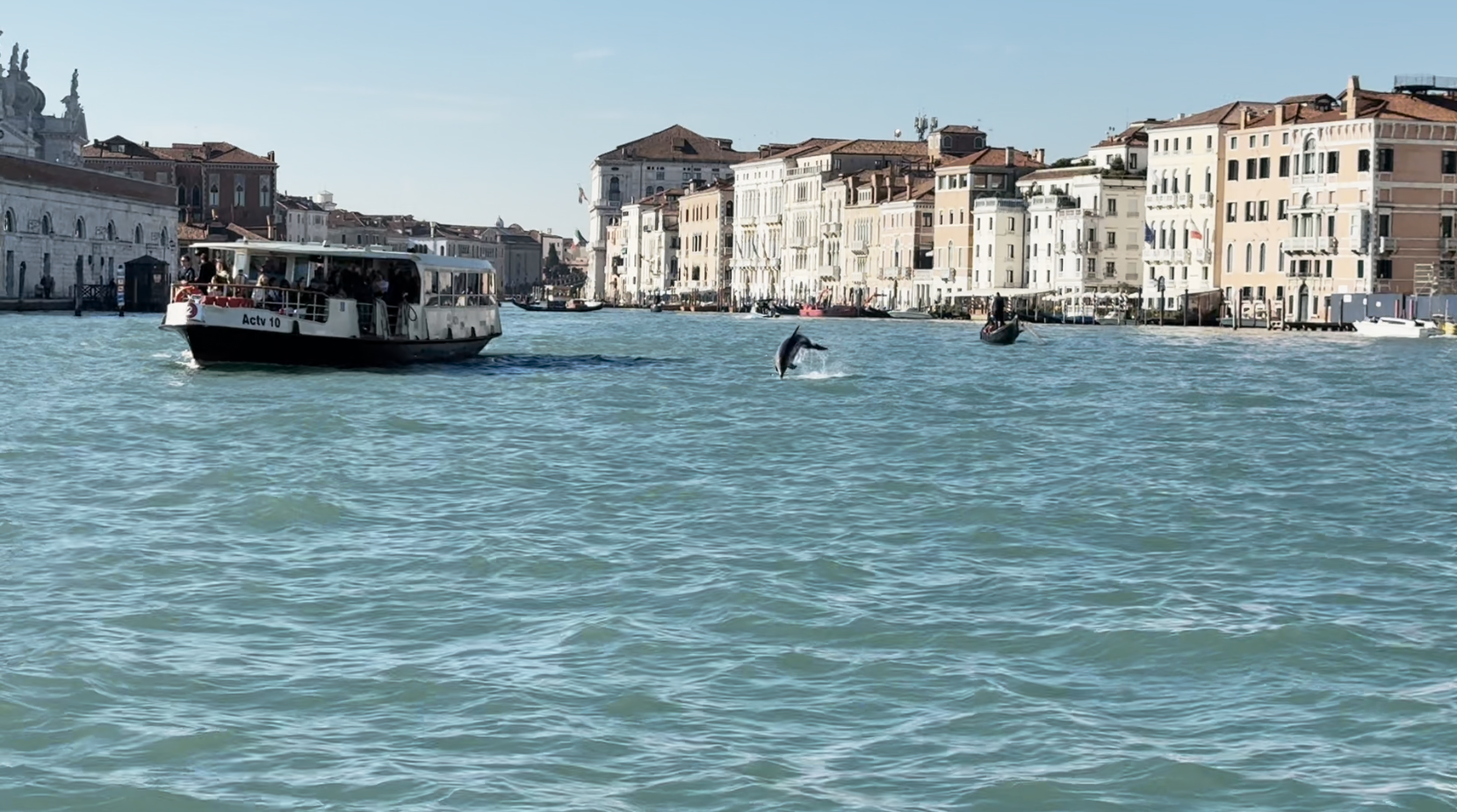
More worrying than the dolphin in the lagoon is its stay in the San Marco Basin. The basin in front of San Marco Square, Venice’s busiest and most popular tourist area. Staying this close to a hotspot of human—and pigeon—activity comes with several risks the dolphin would face less of in the open seas. For example, the risk of injury from boat propellers increases with more vessel traffic. The team does point out that dolphins in open waters also encounter significant human threats, primarily from fisheries.
In Venice specifically, humans pose the greatest danger to the dolphin, particularly through irresponsible boat driving. Enforcing speed limits and close approaches are necessary to keep the dolphin safe.
“This situation is primarily about managing human behavior rather than managing the dolphin,” added study co-author Dr. Giovanni Bearzi, who has been studying Adriatic dolphins for four decades. “Recognizing the priority of safeguarding a protected species, treating it as a wild animal, and behaving in an informed, aware, and responsible way is key in wildlife management.”
Early attempts at pushing the dolphin back into open water using sounds did not work and capturing the dolphin to displace it comes with more risk than reward. According to the team, conservation action should be guided by experts and not sensationalist narratives. These include a ban on harmful interactions with the dolphin and strictly enforcing existing regulations. Under current laws, any disturbance of a wild and protected animal, including trying to touch or feed it, is legally prohibited.
“What is truly unusual is not the dolphin’s presence, but the persistent difficulty humans have in respecting such animals today,” Bearzi concluded. “We need to appreciate the opportunities to coexist with and enjoy wildlife. Historical and contemporary documentation clearly shows that dolphins have accompanied human maritime activities for millennia, yet we still struggle to coexist with them appropriately.”

2025 PopSci Best of What’s New