

At A Glance
- Swap the crowds of Athens for Thessaloniki in this two-day travel guide to Greece’s second-largest city.
- Explore the city’s rich history through ancient Roman ruins, Byzantine churches, and Ottoman-era landmarks, including the Church of Hagia Sophia and the Rotunda.
- Wander the cobbled streets of Ano Poli for panoramic views, colorful Ottoman-style houses, and historic fortresses.
- Indulge in Thessaloniki’s celebrated food scene, from sesame-coated koulouri and bougatsa to fresh olives, feta, and local delicacies at Kapani and Modiano markets.
- Stroll along the waterfront, visit the iconic White Tower, and experience the city’s lively taverns and sunset views over the Thermaic Gulf.
It’s just past 6am as I drag my suitcase into Athens’ central railway station to board the train that will take me 500km north to Thessaloniki. I had spent the better part of the week ticking off Athens’ main sights and making a day trip to Delphi. All stunning, of course, but the crush of tourists was overwhelming, particularly at the Acropolis. As a tourist myself, the irony isn’t lost on me. Over-tourism is rampant in Greece with no real solution, except perhaps to branch out to the so-called second cities, which is exactly what I’m doing.
The Calm Only A Train Ride Away From Athens
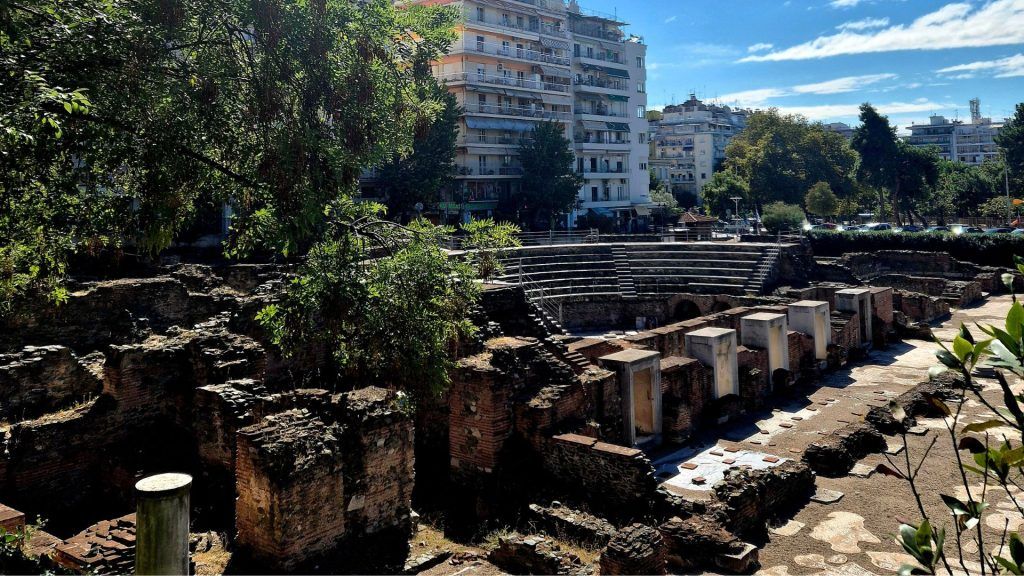
The train takes nearly 5 hours to reach Thessaloniki, Greece’s second-largest city. A short taxi ride to my hotel to drop my luggage, and I’m ready to explore. I get my first glimpse at Thessaloniki’s long and storied past just around the corner—the ruins of an ancient Roman forum dating to 2CE with a restored amphitheatre, two-level stoas (colonnaded porticos surrounding a market), and numerous cats. The forum was discovered by accident in the 1960s when the area was being dug up to construct the municipal courthouse. The excavated site is surrounded by low-rise residential buildings, cafes, restaurants, and hotels. Imagine hanging your laundry with a daily view of the theatre where gladiators fought over 2,000 years ago!
A History As Rich As Any In Greece
The capital of the region of Macedonia in northern Greece, Thessaloniki is located on the Thermaic Gulf, at the northwest corner of the Aegean Sea. The city was founded in 315 BC by Cassander of Macedon, who named it after his wife Thessalonike (Alexander the Great’s sister). Thessaloniki was an important metropolis during Roman times and later the co-capital of the Byzantine Empire. It was conquered by the Ottomans in 1430 who ruled over it for nearly 5 centuries, until it became part of the Kingdom of Greece in 1912.
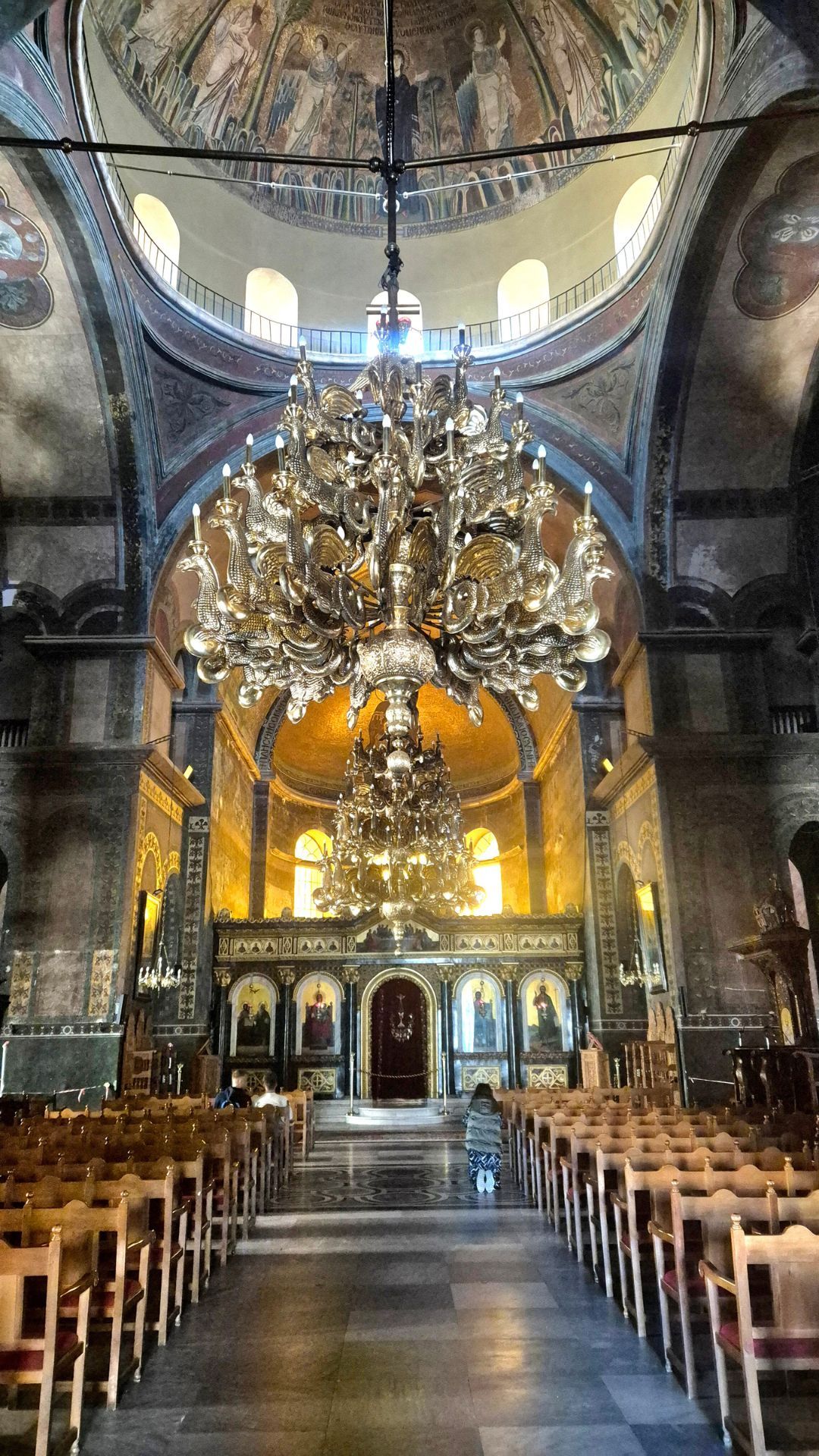
Among the most striking reminders of the city’s layered past is the Church of Hagia Sophia, an 8th-century church turned into an Ottoman mosque before reverting to Christian worship. Inside, 8th and 9th-century mosaics and 11th-century Byzantine frescoes adorn its dome and walls. A short walk away stand two 4th-century structures built by the Roman emperor Galerius—the monumental Rotunda (intended as his mausoleum) and the triumphal Arch of Galerius with sculpted marble reliefs. The ruins of the Palace of Galerius are a few steps away, again surrounded by residential blocks. If you’re looking for more churches to duck into to escape the heat, head to the Church of Saint Demetrius, which is dedicated to the city’s patron saint and is renowned for its early Christian mosaics.
A Greek Gourmand’s Delight
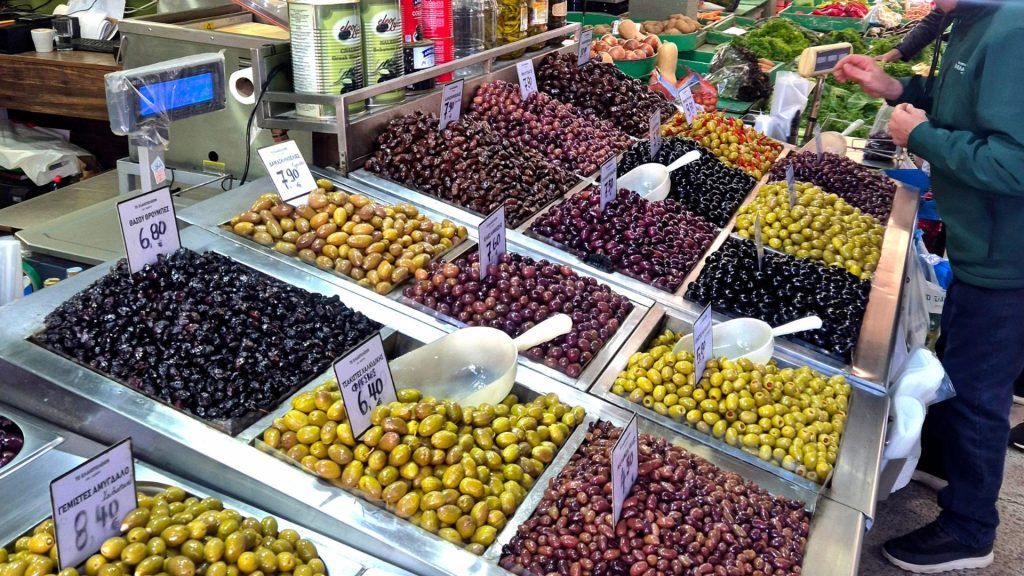
Thessaloniki is a UNESCO Creative City of Gastronomy, a fact that played no small part in my decision to visit. Since I had just two days, I signed up for a food tour. We begin with the city’s favourite takeaway breakfast of koulouri, a sesame-coated bread ring that’s crunchy on the outside and soft inside. We then pop into a grocery store to sample dolmades (grape leaves stuffed with herbed rice), followed by some loukoumi (Turkish delight). Our guide Eleni also introduces us to ‘spoon sweets’, or syrup-preserved fruits and vegetables that are spooned over thick Greek yoghurt—the perfect summer treat. There’s a cafe stop for thick and unfiltered coffee (like Turkish coffee, made over hot sand) followed by bougatsa (filo pastry stuffed with semolina custard). We trawl the food markets of Kapani and Modiano to see in-season produce and to try olives, olive oil, and feta cheese. For more gourmet discoveries, head to the Ladadika neighbourhood, which has many fantastic taverns and restaurants.
The View From Up Top
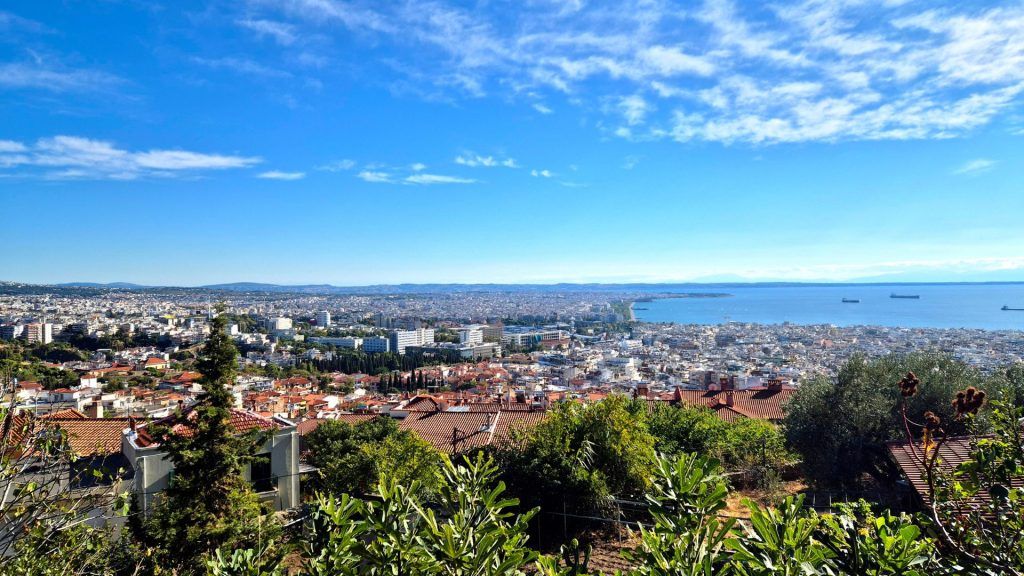
Perched above the modern city, the Ano Poli neighbourhood feels like stepping into another era with its cobbled streets and colourful Ottoman-style houses. The surviving Byzantine Walls trace the district’s historic boundaries, leading up to the Heptapyrgion or fortress. Visit the 14th-century Vlatadon Monastery (the only still-functioning Byzantine monastery in Thessaloniki), drop in at one of the cozy cafes or ouzeries (taverns), and take in sweeping views of the city and the sea. Pro tip: instead of sweating up the steep roads to Ano Poli, take the bus for just €0.60; the walk back down is far easier.
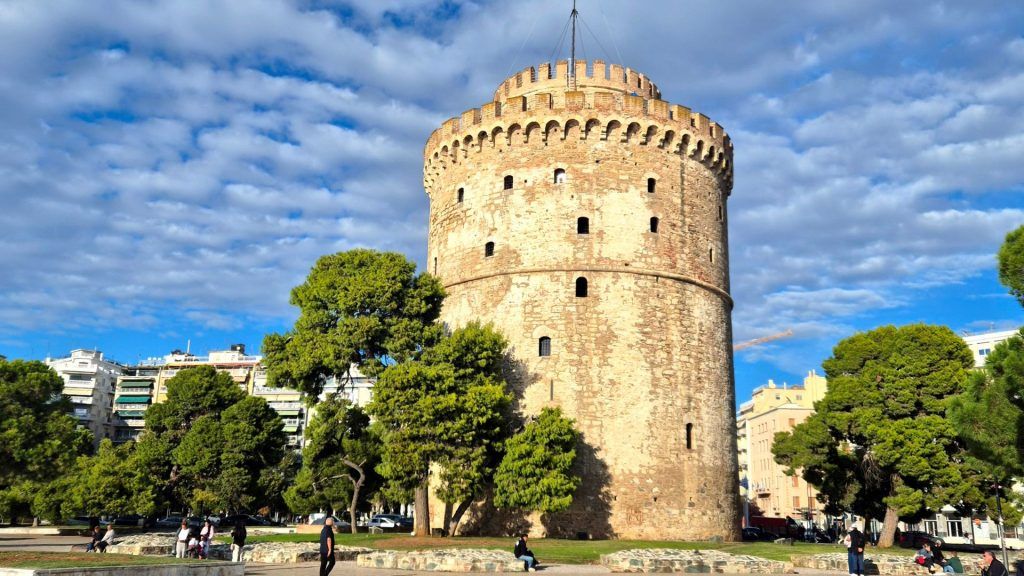
In the evening, I make my way to the city’s curving waterfront flanked by buildings, much like Mumbai’s Marine Drive. At one end of the promenade stands the White Tower, once the city prison, now a fantastic museum about Thessaloniki’s rich history. As the sun sets over the Aegean Sea, it’s time to join the locals on their way to Ladadika for some meze washed down with ouzo, and raise a toast to a different sort of Greek summer.
Note:
The information in this article is accurate as of the date of publication.

Written By
