
From Hollywood movies to shows on the silver screen, the fashion world has often been a subject of intrigue. Think of “The Devil Wears Prada,” which is set to be followed up with a sequel after two decades. Starring Meryl Streep and Anne Hathaway, it has gone on to be an absolute cult classic with iconic quotes (“Don’t be ridiculous Andrea, everyone wants this.”) and unforgettable looks.
But is the fashion industry really like that?
Sanjeeva Suresh, a fashion journalist who’s been there and done that (and is still doing that), admits: “It’s a bit of a catty industry.”
But of course, there’s more to it than meets the eye.

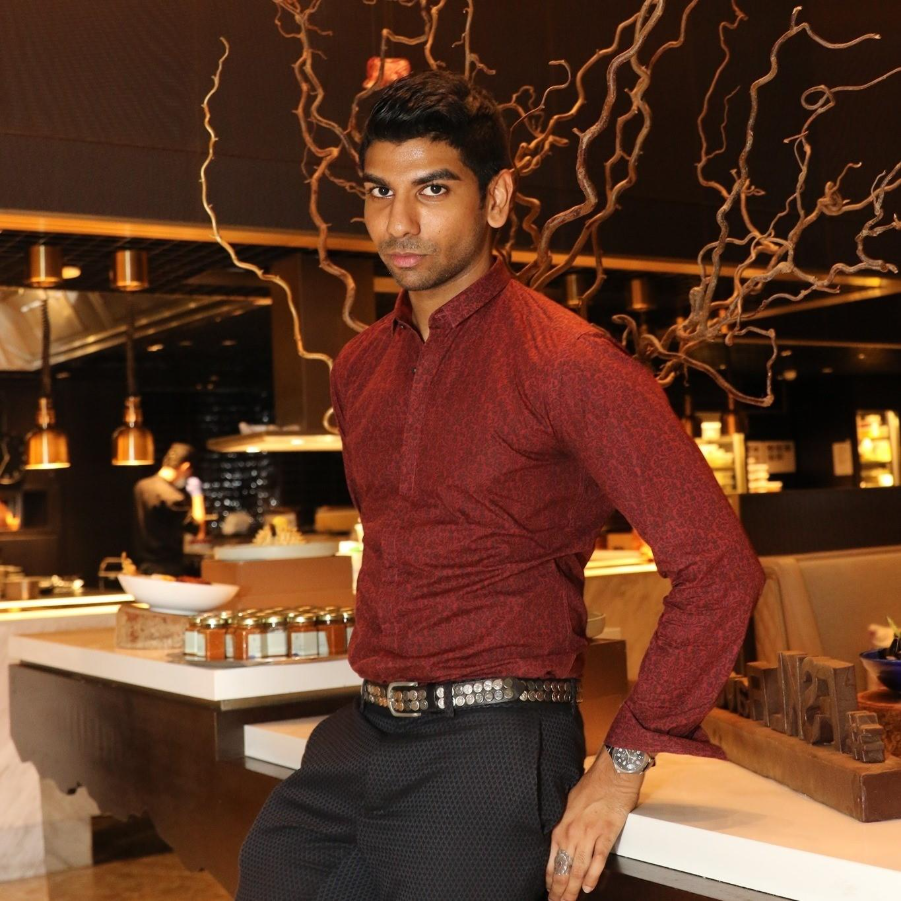
Suresh is currently an Associate Digital Editor at Heart Media Group. Source: Sanjeeva Suresh
What does a fashion journalist do every day?
A fashion journalist’s day is pretty typical, Suresh says. He’s been working in the industry for a number of years now, having written for numerous publications such as Esquire and Harper’s BAZAAR. Like other kinds of journalist, it has a lot to do with creating content, whether that be social media content or articles for the website.
A big part of that is coming up with story ideas and pitching those across different sections such as beauty, watches, fashion, and more.
But the content is never straightforward, Suresh says. “It’s not like, today Dior unveils their spring summer collection, so let’s do a Dior article on that. There always has to be a double, triple layer of rewriting because we need to keep in mind that like every single magazine is going to be given the same press release. So how do we then re-jig and recalibrate it so that like this Harper’s BAZAAR article, for example, is different from what Elle and Grazia are doing.”
And of course, there are the photoshoots.
“That’s where ‘The Devil Wears Prada’ becomes relevant because you have to run from doing loans from big brands. You pick up loads and you need to carry all these big bags, bring it to the photo shoot, steam the clothes, put it on the model, and the whole thing,” he says. “I used to dread doing shoots because it was just a very, very stressful day.”
But ultimately when he sees the finished product and it’s beautiful, that’s when all the effort feels worthwhile.
Another element of the job is all the events where you get to meet people in the fashion world.
“This is such an interesting industry because you get to meet and see so many amazing things,” he says. “It’s like you’re in an aquarium but not in the ocean in the sense that not all people in media can afford these luxury things. But we get exposed to so many things, and we get to touch certain things and taste some things that we wouldn’t typically get to if we weren’t in this industry.”
Suresh studied at Central Saint Martins at University of the Arts London. Source: Sanjeeva Suresh
Is The Devil Wears Prada a real story about the industry?
“Even when I was in Saint Martins, this notion of it being like ‘The Devil Wears Prada’ has been a joke, but also not a joke,” he says. “For example, the hecticness and the running around element of it is very true.”
Like what he mentioned, the portrayal of hectic photoshoots is pretty accurate. And what Andy Sachs goes through in terms of being thrusted into a glamorous event is pretty legit, too. Of course, Andy herself wasn’t so much a journalist as she was an assistant, so she didn’t have to deal with the writing deadlines as much.
Now working in Singapore as an associate digital editor, Suresh believes that the movie is definitely an exaggeration of what does exist in the fashion world.
Does working in the fashion industry even pay well?
Working as a fashion journalist is a very glossy gig — at least on the outside. You’ll be attending glamorous events and be in the presence of some high-profile icons, but the truth is that only the upper echelons get to enjoy (and keep) the luxuries.
This is especially true because the golden years of fashion journalism have passed. Back in the 90s and 2000s, which was when ‘The Devil Wears Prada’ was released, brands would vie for ad space in magazines. Nowadays, though, it’s the opposite — publications are the one who need to grab fashion houses’ attention.
“If you’re like an editor in chief, if you are the Miranda Priestly, then you’ll be gifted exclusive pieces,” Suresh says. “That was that era of like journalism when they had a lot more power than they have now.”
For those who aren’t as high up on the food chain, they might get loans to wear for events, but that’s usually it.
“At the end of the day, being in this industry, it’s something you do because you love it. Like no one enters journalism, or even fashion for that matter, to be rich. Unless you’re from the corporate side of things, you don’t enter the creative side being like, I want to make like a million dollars tomorrow. Like that’s just not going to happen,” Suresh says.
So, why do it then?
“You do it because you actually want to find out stories about people. Because you want to find out about fabrics, and sourcing, and how designers come up with their processes,” he says.
In other words: You do it for the passion.
Much of that is rooted in privilege, of course, and Suresh recognises that. It’s why he’s grateful that his family was able to afford his education at Central Saint Martins College of Art.
But like what ‘The Devil Wears Prada’ shows us, the fashion world isn’t just filled with “stuff.” It’s complex, it shapes culture, and it’s an industry that houses hundreds and thousands of dreams.