
At a migration dialogue in Rome on 26 February, interior ministers from Italy, Spain and Greece endorsed Pakistan’s proposal to create structured employment pathways while intensifying joint operations against human-smuggling networks. The meeting, hosted by Italy’s Matteo Piantedosi and attended by Spain’s Fernando Grande-Marlaska, Greece’s Athanasios Plevris and Pakistan’s Mohsin Naqvi, built on Italy’s pledge of 10,500 work visas for Pakistanis and explored extending similar schemes to sectors in Spain and Greece.
Officials highlighted a “visible decline” in irregular Pakistani arrivals along Mediterranean routes since Islamabad tightened airport and maritime checks last year. The quartet agreed to share biometric data of convicted smugglers, expedite deportations of serious offenders and stage coordinated information campaigns warning would-be migrants of dangers at sea.
Navigating the administrative steps for these new work-visa corridors can be daunting, and platforms like VisaHQ provide tailored support for applicants and sponsoring firms; their Italy portal (https://www.visahq.com/italy/) bundles requirements, fee calculators and courier services to streamline submissions and cut processing time.
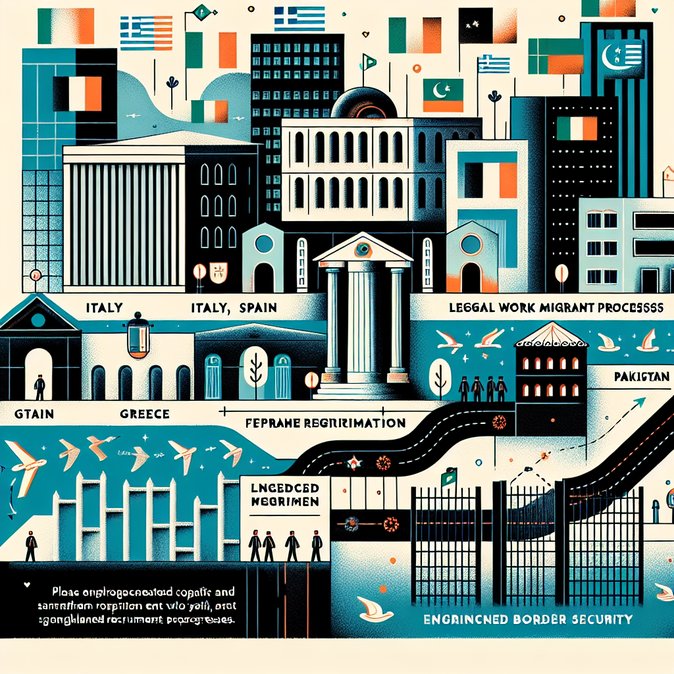
For EU Mediterranean states, the partnership offers a template for linking talent attraction with deterrence. Employers in agriculture and tourism welcomed the prospect of a vetted pool of seasonal workers, while compliance officers noted that joint vetting should reduce document-fraud risks.
Practically, the group will pilot an online matching platform—managed by Italy’s labour ministry—that lists EU vacancies and pre-screens Pakistani candidates for skills and language. The next ministerial review is slated for summer 2026 in Islamabad.
Companies planning large-scale hiring from Pakistan should watch the platform’s beta launch and prepare to align contracts with EU standard-employment clauses, including guaranteed accommodation and return travel, to remain eligible for fast-track labour clearances.