

Since 2005 Plastic Crimewave (aka Steve Krakow) has used the Secret History of Chicago Music to shine a light on worthy artists with Chicago ties who’ve been forgotten, underrated, or never noticed in the first place.
Some artists are so special to me that I’ll study every credit on their record sleeves, right down to the names of the studio musicians—and when those personnel aren’t named on the sleeve, as is so frequently the case, I’ll dig up that information elsewhere. Often I find that a session player is an innovator or even a star in their own right, and that sends me down an even deeper rabbit hole.
When I realized that vocalist Kitty Haywood had appeared on LPs by all three members of my holy trinity of Chicago progressive soul—Curtis Mayfield, Minnie Riperton, and Terry Callier—I knew I had to look harder at her oeuvre. The same goes for her singing siblings, who are integral to her career.
When Ayana Contreras wrote about the Haywood sisters on her Darkjive blog in 2013, she might’ve said it best: “They were quite literally part of the backbone of the Chicago Recording scene. Too many background vocalists faded away into the shadows, remaining anonymous. But these ladies were able to shine.”
Marilyn “Kitty” Haywood moved from Atlanta, Georgia, to Chicago with her parents in the 1940s as part of the Great Migration—a historic mass movement of Black Americans out of the Jim Crow south. In 1953, her father, Bishop Jacob M. Haywood, founded the First Progressive Church (at 73rd and Wabash), where his wife, Mary, led the music department.
Haywood and her two younger sisters, Vivian (later Harrell) and Mary Ann (later Stewart), learned music in church and from their mother, who gave them piano lessons at home. They attended Brownell Elementary School at 6741 S. Michigan, where they were asked to sing at PTA meetings.
Haywood and her sisters took typing classes at Parker High School on the south side and found work in the 60s as secretaries at what was then Presbyterian–St. Luke’s Hospital. Haywood wanted more, though. “I knew that there was something bigger for me to do. I had been blessed with the gift of singing,” she told the Sun-Times in 2024. (I tried to reach her myself, via Facebook and other online platforms, but I didn’t hear back.) “I just didn’t know where [my career] was going to go.”
Haywood soon caught the attention of local producers and arrangers, including Tom Tom Washington (aka “Tom Tom 84”), James Mack, and Carl Davis—all of whom worked at one point or another for legendary local label Brunswick Records and who collectively lent their talents to the likes of the Chi-Lites, Gene Chandler, and Earth, Wind & Fire. Haywood and her sisters would appear on countless sessions as harmony singers.
Haywood released her first solo single in 1969 on small Chicago label Weis Records (also home to blues pianist Lafayette Leake, soul singer Maurice Jackson, and the funkier Soul Merchants). Her gospel-infused 45, “What Happened to Our Good Thing” b/w “It’s So Lonely (Without You My Love),” was coproduced by Mavis Staples.

Especially thrilling to me is Haywood’s work with Charles Stepney, which began at around the same time. This genius producer, arranger, writer, and musician had a hand in two of the three albums in the Haywood holy trinity I mentioned earlier—they’re not just two of the best LPs where she appears, they’re also among the greatest records to ever come out of Chicago or anywhere else.
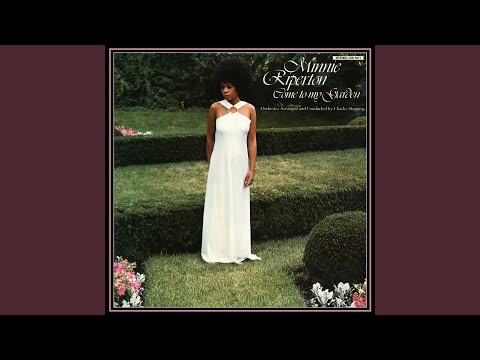
Minnie Riperton’s 1970 debut album, Come to My Garden, is one of Stepney’s undisputed triumphs as a producer and arranger. The heavenly platter features divine players such as guitarist Phil Upchurch (who passed away last month), pianist Ramsey Lewis, drummer Maurice White, and backup singer Elsa Harris (more on this gospel belter in a future SHoCM). Haywood’s gorgeous voice soars especially high and clear alongside Riperton’s unearthly falsetto on the groovy baroque-soul classic “Les Fleur” (often titled “Les Fleurs” on later pressings).
The other Stepney tour de force where Haywood sings is Terry Callier‘s 1972 masterpiece What Color Is Love, a timeless melange of folk, jazz, soul, and psychedelic music. The album features Upchurch too, plus top-flight players such as saxophonist Donald Myrick and percussionists Morris Jennings and Derf Reklaw. This song cycle reaches heady and emotional heights that I can’t possibly convey with words, and the background singers—Haywood, Vivian Harrell, and Shirley Wahls—are a crucial part of its exalted soundscape.
Haywood continued to work with Stepney in his psychedelic soul project, Rotary Connection. As the New Rotary Connection, they put out the beloved 1971 platter Hey, Love, featuring Riperton, Wahls, and Upchurch, among others. Haywood’s soprano graces the stone-cold acid-funk classic “I Am the Black Gold of the Sun.”

In 1974, Haywood started recording with her sisters as Kitty Haywood & the Haywood Singers (her niece Cynthia, Harrell’s daughter, joined in ’76). Their first single, “Keep This Thought (In Your Mind)” b/w “Big Black Cloud,” also benefits from Stepney’s hand. On this gooey, catchy 45, the Haywoods rival the Emotions as the city’s finest soul sisters. (Stepney worked with the Emotions as well.)
The funkier 1975 single “Loving You Is Mellow” (another Stepney production) sounds like it should’ve been a smash. But the sisters’ breakthrough instead came with 1976’s “Love Shock” b/w “Makin’ Love.” Produced by and featuring the Ohio Players (the Haywoods’ labelmates on Mercury Records), the dance-floor filler would lead to a funky fusion LP the following year, also called Love Shock. Its title track climbed onto the Billboard R&B chart in summer 1977, becoming the Haywoods’ only hit under their own name.

Haywood and her sisters had a banner year in 1976. The King of Chicago Soul, Curtis Mayfield, recruited them as backing vocalists for the music he was writing and producing for the movie Sparkle, whose story was inspired by the Supremes. The soundtrack album’s version of the dreamy, soulful hit “Something He Can Feel” (aka “Giving Him Something He Can Feel”) features Aretha Franklin as lead singer and the Haywoods in full harmonious force—though Cynthia, who was still in high school, missed the session because she had the measles.

Mayfield also employed Kitty & the Haywoods (as they were then credited) on some of his more neglected albums, Never Say You Can’t Survive (1977) and Do It All Night (’78). “Curtis was a real professional, and he taught us so much,” Haywood told the Chicago Defender in 2021. “They had their fun, but they never did any of that other stuff in front of us.”
In 1978, Kitty & the Haywoods worked with Capitol for the bumpin’ single “Disco Fairyland” b/w “Rock Me Baby,” and in ’81 they followed with the similarly polished disco-funk full-length, Excuse Me, I’ve Got a Life to Catch, featuring production and arrangements by saxophonist Gene Barge and Tom Tom Washington.
The final proper release from Kitty Haywood that I can find is a solo single from ’83, “Givin’ It Up” b/w “Could I Be Dreamin’.” It squeaked out on small Chicago label Lance, but in another timeline its modern, synthy soul could’ve given Whitney Houston or Patti LaBelle a run for her money on the charts.
By this time, the Haywoods were entrenched in the world of advertising. For more than 25 years, they remained in high demand to sing jingles for respected ad agencies such as Leo Burnett, Needham Harper & Steers, and the Black-owned Burrell Communications. The Haywood family worked on huge campaigns for Amoco, McDonald’s, Coca-Cola, Crest, and United Airlines. Cynthia Harrell was featured in Gatorade’s “Be Like Mike” ad campaign in the early 90s (the “Mike” in question was Michael Jordan), and she sang songs for popular video games such as “I Am the Wind” from 1997’s Castlevania: Symphony of the Night.
Kitty Haywood hasn’t done much in public lately, but her son Jason Weaver carries on the family tradition. His most famous role has been as the singing voice of young Simba in the 1994 animated film The Lion King. He played a young Michael Jackson in the 1992 miniseries The Jacksons: An American Dream, and later that decade he acted in the sitcoms Thea and Smart Guy. He currently has a recurring part in the Showtime series The Chi.
Mary Ann Stewart led an all-woman choir called the Annettes for around two decades. In the late 90s, her sons Laney, Mark, and Christopher “Tricky” Stewart partnered in RedZone Entertainment, which went on to produce hits for the likes of Beyoncé, Rihanna, and TLC.
Local label Mirror Ball recently released remixes of a demo by Charles Stepney and Kitty Haywood.
Kitty Haywood isn’t forgotten, though, and her recordings continue to find new ears in new ways. In October 2025, for instance, a dance remix 12-inch called You Make Me High appeared, credited to “Charles Stepney ft. Kitty Haywood.” It contains new mixes of an unreleased demo Haywood recorded with Stepney back in the day, rescued by Stepney’s daughters Eibur, Charlene, and Chanté, plus the original track. It was released by the local Mirror Ball label, run by DJ Terry Hunter of the Chosen Few and producer Eric Welton, aka Emmaculate.
I’d love to be able to buy an authoritative compilation of Haywood’s work, including of course her recordings with her sisters and niece. But until that compilation exists, I can keep listening to the beautiful, groundbreaking albums that her golden voice adorns.
The radio version of the Secret History of Chicago Music airs on Outside the Loop on WGN Radio 720 AM, Saturdays at 5 AM with host Mike Stephen. Past shows are archived here.