
Over the course of the last few weeks, the internet has been abuzz with memes, opinions, and breakdowns of Bad Bunny’s Superbowl performance — and rightfully so. Lovingly called the “Benito Bowl,” his set celebrated and drew attention to the social, political, and cultural milieu of Puerto Rico, and Latin America broadly. The global reactions to the singer’s aesthetic choices for the show underscore the extensive reach and impact of Latin American art and fashion. In their own way, Diego Bendezu, Marcelo Gutierrez, and Tanya Meléndez Escalante are part of this greater global reach, as three Latin American powerhouses taking the fashion world by storm, through photography, makeup, and education.
Part of a long history of Latin Americans who have both quietly and boldly shaped the myriad aspects of fashion, Diego Bendezu, Marcelo Gutierrez, and Tanya Meléndez-Escalante are three of the Latin American recipients of the 2026 Vilcek Prizes. Their works, inspired by their immigrant experiences and their cultural heritage, tackle different aspects of fashion but all underscore the resilience and influence of their respective cultures on the world.
Peruvian-born photographer, Diego Bendezu, who recently won the Vilcek Prize for Creative Promise in Fashion & Culture and an award of $50,000, is no stranger to the Superbowl. In 2024, he began collaborating with fashion designer Willy Chavarria. The following year, Chavarria designed the Kendrick Lamar Super Bowl LIX collection, and Bendezu photographed the campaign.
Immigration News, Curated
Sign up to get our curation of news, insights on
big stories, job announcements, and events happening in immigration.


His journey to becoming a successful editorial and commercial artist is very much rooted in his immigration story. In 2005, when he was nearly 12 years old, Bendezu moved from Ica, Peru to reunite with his mother and sister in Brooklyn, New York. Deeply impacted by his experience, Bendezu began gravitating toward stories of immigrants and capturing the beauty of working-class life.
His breakthrough project “Dear Lima” was a photo essay about Venezuelan immigrants working at a carwash in Lima, the capital of Peru. Instead of capturing the drudgery of the carwash, he made portraits of the workers with their individual styles, humanizing the way they would be seen through his photographs. “As an immigrant, I carry a deep empathy for those navigating new beginnings,” he said, “and that perspective is at the heart of my work.”
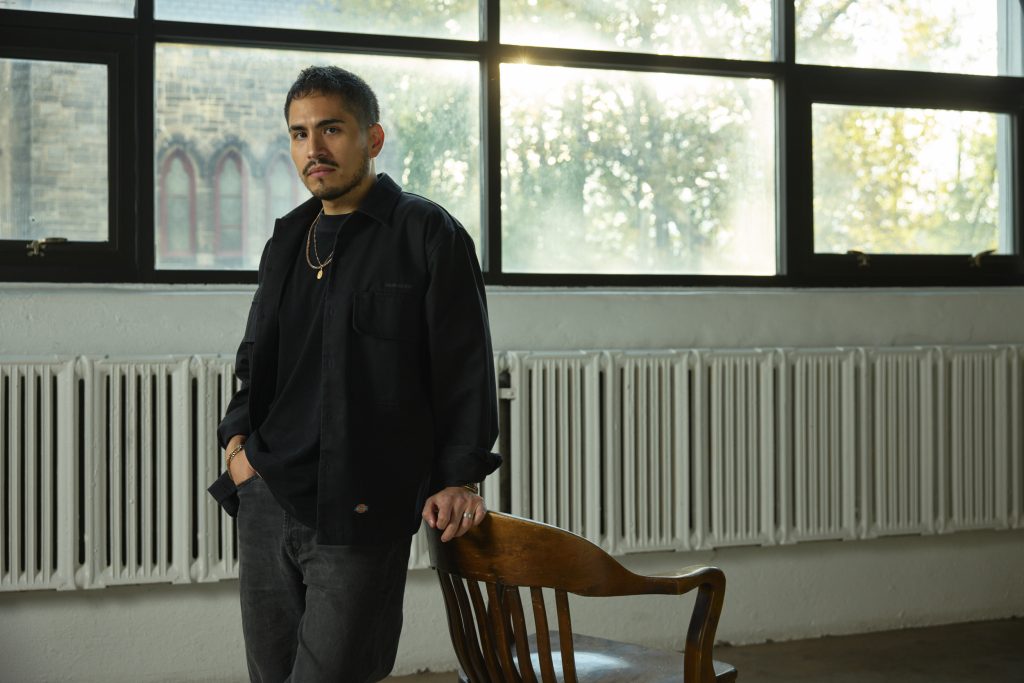
Despite photographing many largescale commercial projects, Bendezu is particular about his camera not being a tool of voyeurism but of acknowledgement. “Photography has become my way of giving flowers to those who rarely receive them,” he said. Through photography, Bendezu aims to highlight and preserve his Peruvian culture and showcase Latin American aesthetics. To that end, as part of an ongoing project, he has been documenting traditional Peruvian and South American dances, which might otherwise be lost to history. “I’m driven by the belief that fashion is not just an aesthetic field, but a powerful language through which we express identity, dignity, resistance, and belonging,” Bendezu said.
Similarly, Marcelo Gutierrez, a makeup artist from Colombia, sees fashion as a language. A few years after he was born, his family came to Miami as refugees. “I was the first in my family to learn English, which I practiced in places like the doctor’s office, where I helped translate for my parents,” he said. That responsibility taught him resilience and adaptability – traits, he says, are essential in his profession. By the time he was twenty, Gutierrez moved to New York without connections or money, ready to hustle and grind.
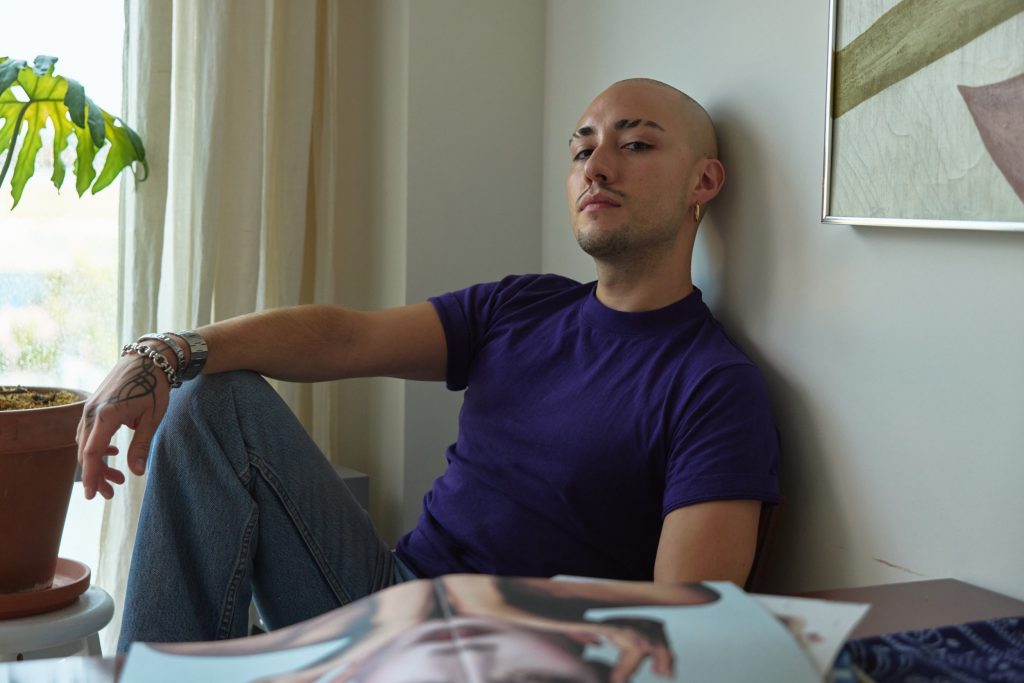
In New York, Gutierrez joined collectives like Hood by Air and Dis, now known as Torso Solutions, slowly building his community. The nightlife in New York, and particularly club culture, were formative to his burgeoning artistic vision. He began experimenting with makeup on himself, and would also meet other artists at the clubs. “When you move to New York or any new place, alone, you have no choice but to look inward and find what you’re made of,” Gutierrez said.
His introspection gave way to his artistic approach, and has made him a sought after make-up artist in the industry, with clients like Vogue, Harper’s Bazaar, Chanel, and Louis Vuitton. In 2025, when Madonna made her Met Gala return after six years, Gutierrez joined her and the Tom Ford team. “Fashion is an industry that rewards perseverance and obsession,” he said, “I’ve worked in it for over eleven years, building a consistent and evolving artistic practice without compromising my voice or vision of what fashion can be: not just image-making, but storytelling and cultural commentary.” The same year, Gutierrez worked with Canadian supermodel, Linda Evangelista, for Perfect magazine. For her look, he painted slits on her eyebrows, as an ode to Latine fashion history and queer culture.

Recently, Gutierrez was awarded $50,000 and the Vilcek Prize for Creative Promise in Fashion & Design. He wants his work to compel people to question deep-rooted notions of beauty. “I approach beauty as a subliminal, subversive language – not one that lectures, but one that gently broadens the definitions of who is seen, celebrated, or considered beautiful,” Gutierrez said.
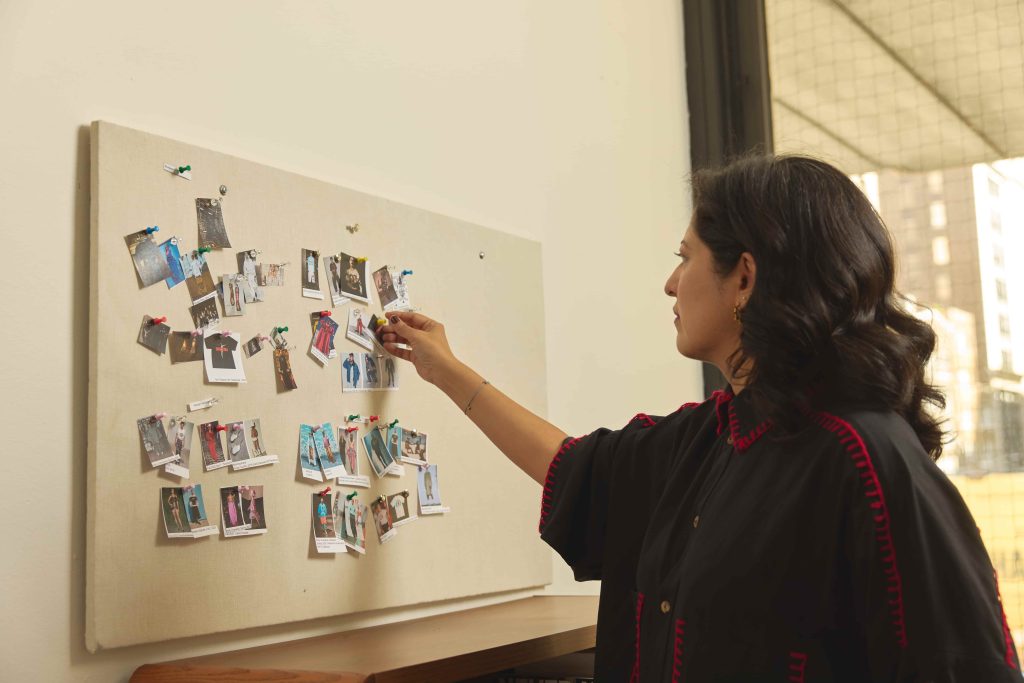
Tanya Meléndez-Escalante has also been attempting to subvert monolithic notions in the fashion industry. An arts administrator and fashion curator at The Museum at FIT (MFIT), Meléndez-Escalante won $100,000 and the Vilcek Prize in Fashion & Culture for designing exhibitions and programs to display the diverse fashion styles and talents across cultures in Latin America.
“I see fashion as an embodied and lived practice,” she said, “we can connect or disconnect with others through it.” In 2009, she started Cross Pollinations, her first program at MFIT, to partner students in New York with educational institutions around the world. Cross Pollinations, which still runs annually, is one of more than a hundred programs she started at MFIT.
Growing up in Mexico City, Mexico, Meléndez-Escalante knew she wanted to be a part of the fashion scene since she was five years old. Her mother taught pattern-making to middle schoolers, so she grew up seeing armies of sewing machines and different kinds of fabrics. When she got older, she attended a lecture at Mexico City’s Modern Art Museum and learned about the work of Mexican conceptual artists.
Realizing the potential for museums to reshape public understanding of arts and cultures, she began working on exhibitions that could change an archaic and erroneous worldview: that Latin America is an underdeveloped, homogenous land, with a singular aesthetic sense.

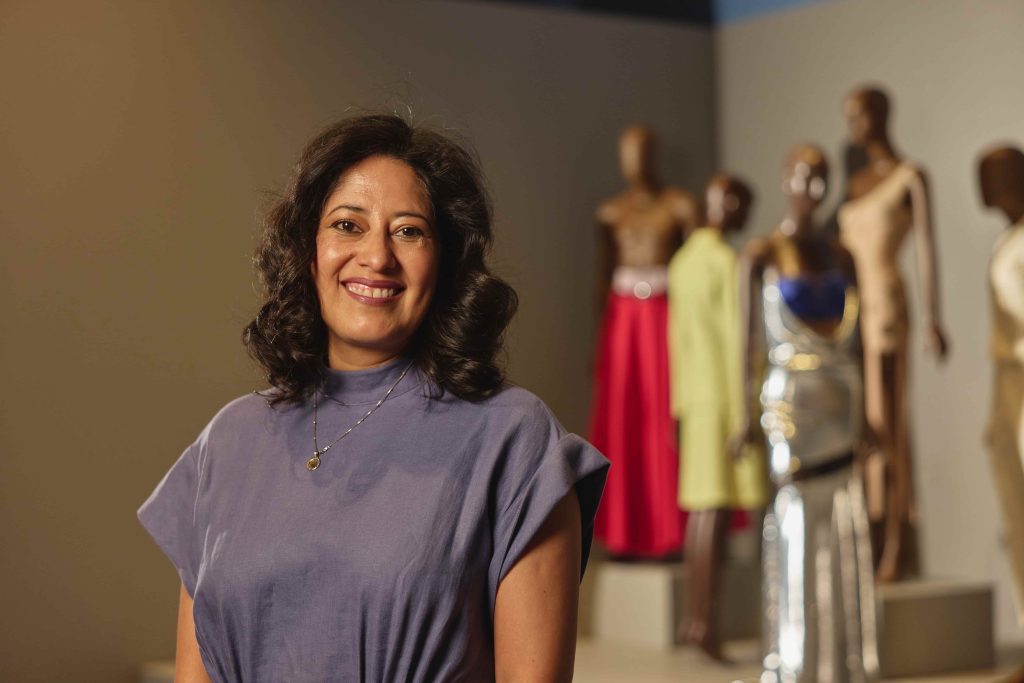
In 2023, Meléndez-Escalante co-curated ¡Moda Hoy!, an exhibition featuring creators from Latin American countries as well as designers of Latin American heritage, living in the United States. The exhibition encapsulated the rich and diverse fashions and traditions from across the region and over time.
“The place where I now live is very different from the place where I grew up, which are both very different from places I have visited. These experiences cause you to become deeply empathetic,” said Meléndez-Escalante, “This is what drives my work–the desire to create the same level of compassion and understanding for others through fashion.”
The Vilcek Foundation is now accepting applications for the 2027 Vilcek Prizes for Creative Promise in Biomedical Science and Culinary Arts. Individuals chosen for this prize will receive: an unrestricted cash award of $50,000; an opportunity to reflect on how the applicant’s experience as an immigrant has shaped their success; an invaluable endorsement from leaders in the culinary arts field; and a comprehensive public relations campaign to promote each applicant’s work. To learn more and apply, visit vilcek.org.