
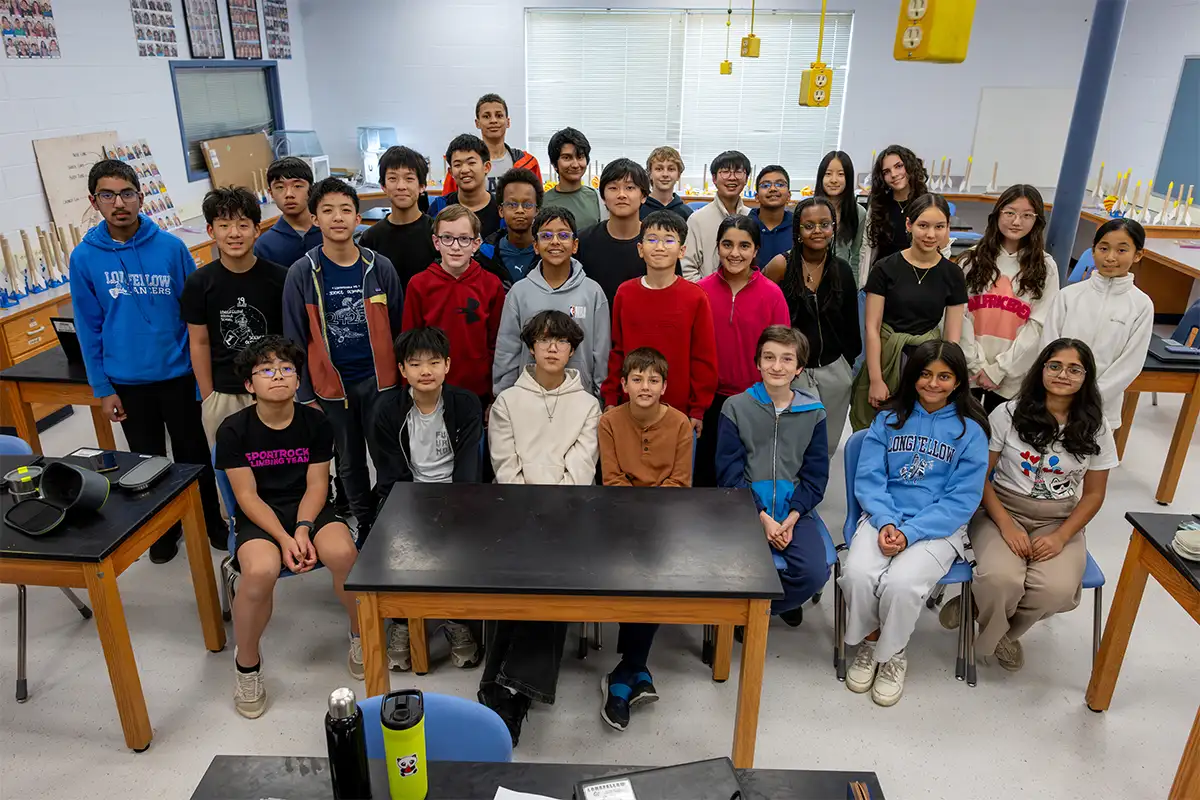
Aside from the determination to uphold the school’s 13 consecutive state titles, Longfellow Middle School’s Science Olympiad team prides itself on a fierce dedication to teamwork.
“The biggest thing is that this is a team event, so students will know how to collaborate, negotiate, and compromise,” says Hyunju Joung, one of the team’s coaches.
Science Subject Areas
Longfellow’s Science Olympiad is composed of 30 students who each choose three from more than 20 scientific subject areas to focus on. The include topics like water quality, meteorology, and forensics. The team has won the state championship 19 times since 2002 — and has finished as high as fifth place nationally.
For eighth grader Yonatan Nikolich, he enjoys the team-building aspect of learning about topics such as anatomy, experimental design, metric mastery, and code busters.
“It’s not enough to know a lot yourself. You also have to work well with your partner,” says Nikolich. “You spend a lot of time with each other discussing subjects and thinking about ‘What would we do if we got this question?’”
Competitive Tryouts
Nikolich joined Science Olympiad this year with the hopes of becoming involved with something science related. Originally on the team’s waitlist, he was eventually selected from a group of roughly 120 students who tried out to join at the beginning of the school year.
Tryouts consist of two rounds: a written test on general science knowledge and a building expo where students collaborate to build something with a set of materials. Nikolich says students must be familiar with Newton’s Laws, the periodic table, and laws of physics.
“Hopefully we can keep working hard as a team and can get some national rankings,” says Nikolich.
Hector Jr. Wong, Nikolich’s partner and fellow eighth grader, says that Science Olympiad is a great way to meet new people and explore different scientific topics. Wong’s chosen topics include life science (anatomy), dynamic planet (oceanography), and a build event called “mission possible” that involves making a Rube Goldberg machine.
“I hope there will be a lot of other passionate science enthusiasts who will carry on the legacy of our team — and also continue to work well as a team,” says Wong.
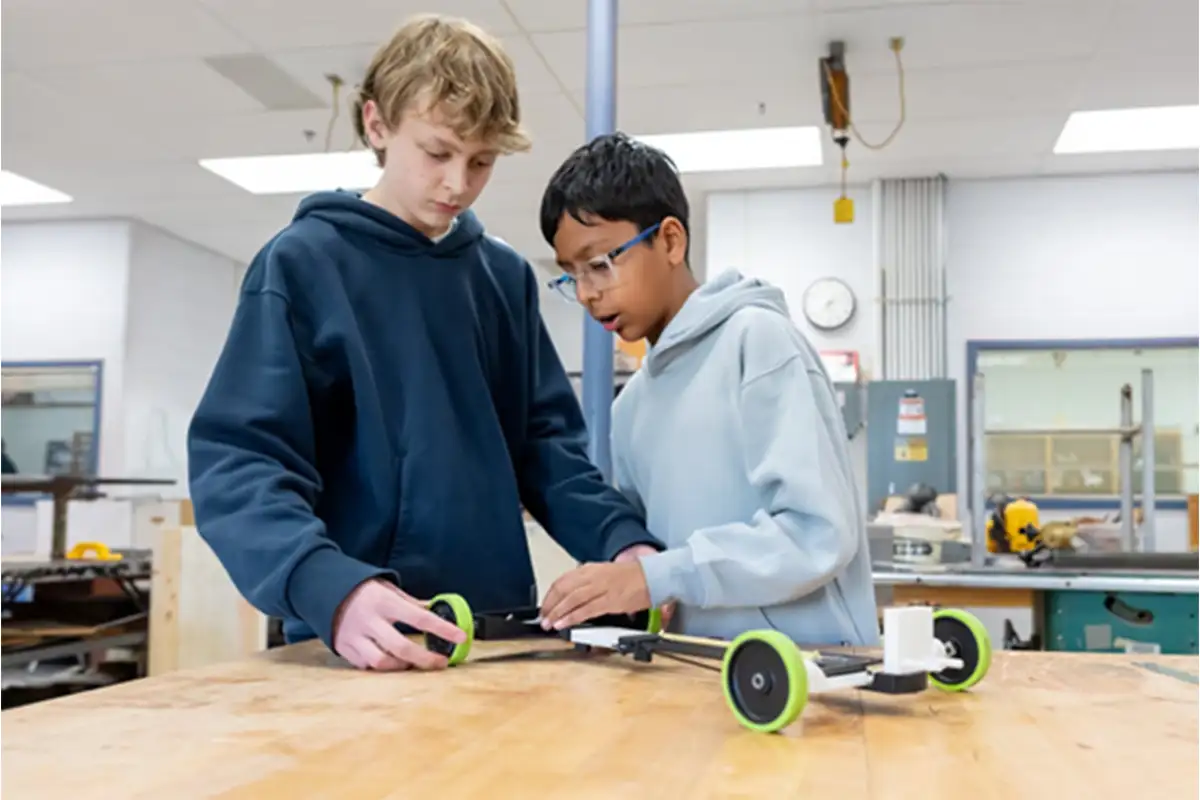
Parents and Volunteers
Parents and volunteers play vital roles in the Science Olympiad team, as they serve as “mentors” and help plan logistics of projects and tournaments.
Joung, who is one of two coaches for Longfellow’s Science Olympiad, is also a parent of a seventh grade member. Her oldest son — now a senior in high school — has participated in Science Olympiad for eight years since he was in fifth grade.
“Both myself and my husband were mentoring some of [my oldest son’s] events. We learned from each other, and my son made really strong bonds with his friends,” says Joung. “This was a major academic experience, and for friendships, too. Parents also made friends from this community.”
She praises the dedication of all those involved in Science Olympiad, as the team meets three times per week to study and practice science skills. Joung says that most of the students began Science Olympiad in elementary school, and they continue in middle school and high school.
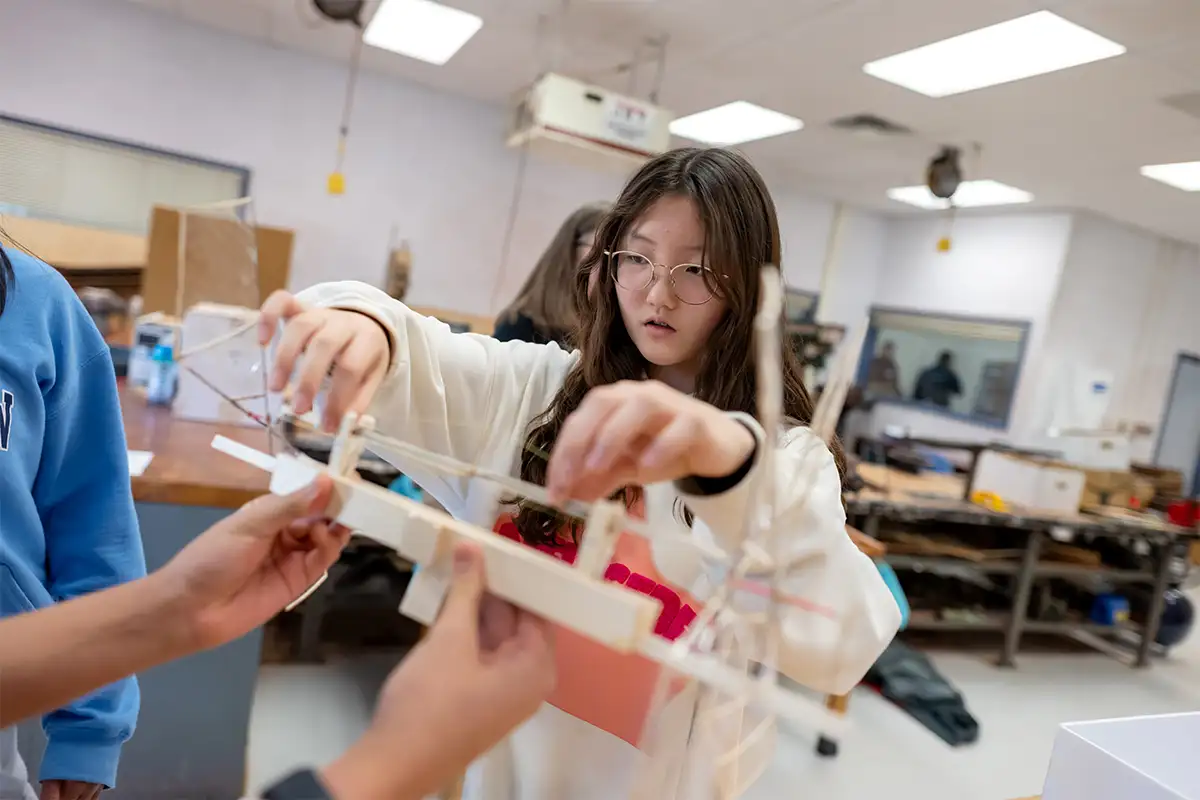
Preparing for Competition
Before regional, state, and national tournaments, Longfellow’s Science Olympiad team will practice its science skills with invitational tournaments for students to receive team and individual awards. This year, Longfellow will participate in 10 invitational tournaments.
Although not officially confirmed, the 2026 Virginia Science Olympiad Championship will likely be held at the University of Virginia on March 21.
In recent years, Virginia was able to send Longfellow Middle School and Cooper Middle School to the national championships, next scheduled for May 2026 at the University of Southern California.
Feature image courtesy Donnie Biggs/FCPS