
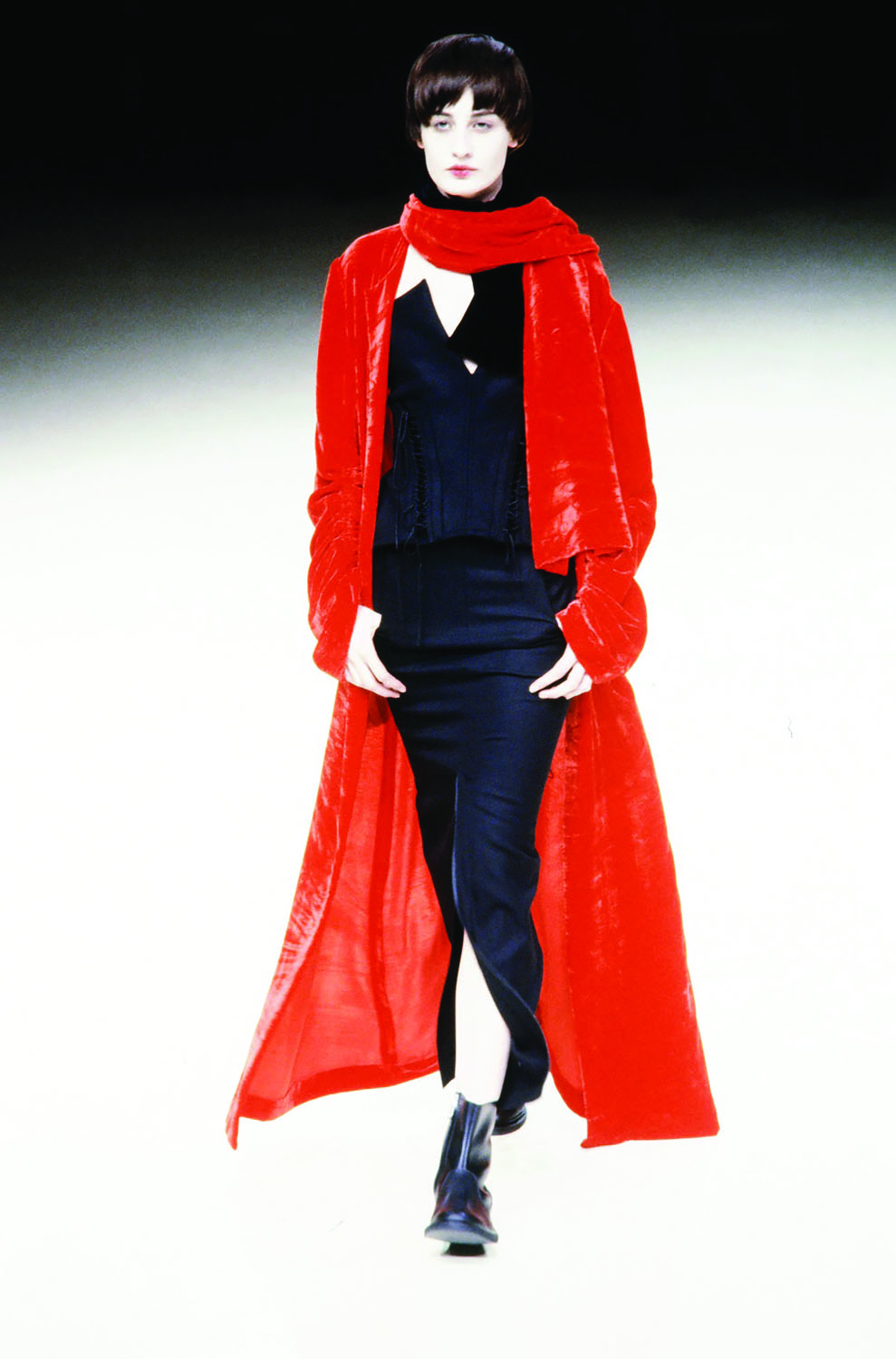
Grau: Luc, you often use very subdued colors. You, Yohji-san, have said many times that black, because it is understated, is sometimes the greatest statement.
Yamamoto: When I started helping my mother make clothes, we had so many customers who asked her to make things from fashion magazines—all those pages were covered with colorful floral prints. I would look at the photos and at the customer. I thought, It would be impossible to make this clothing for that person. I began to hate colors and prints. I started to always wear a black T-shirt so as not to disturb people’s eyes, and I still do now. This is the moment when my work in so-called fashion started. At that time, black was not a fashionable color at all. It was worn at funerals.
“I started to always wear a black T-shirt so as not to disturb people’s eyes, and I still do now. This is the moment when my work in so-called fashion started.” —Yohji Yamamoto
Grau: But look at your Spring/Summer 2026 collection. You also love color.
Yamamoto: Not really. I only love Japanese red. Japanese women used to wear kimonos, and the final piece was red. Maybe I can bravely say that the most appealing colors are black and red.
Tuymans: I started wearing black when I was 16, I think. Color for me is never straightforward. It’s about tonality, temperature. Flat color is like sculpture—there have to be layers. Now I work in a much more colorful manner, but it took me years to get the right contrast. I was always afraid to overdo it. Only a couple of years ago did I finally dare to play more with contrasts. Probably because I’m a bit older now.
Grau: Luc has thought a lot about what he wanted to discuss with you, Yohji-san, and has all these ideas. Luc, I would love for you to say what you’ve been thinking about in relation to Yohji-san.
Tuymans: The most interesting thing in Mr. Yamamoto’s work is the detail and the disregard of detail—a complex situation which is, on the one hand, very Japanese, and on the other hand, not at all.
Grau: Very Flemish, too.
Tuymans: Yes, it’s very close to where we actually meet.
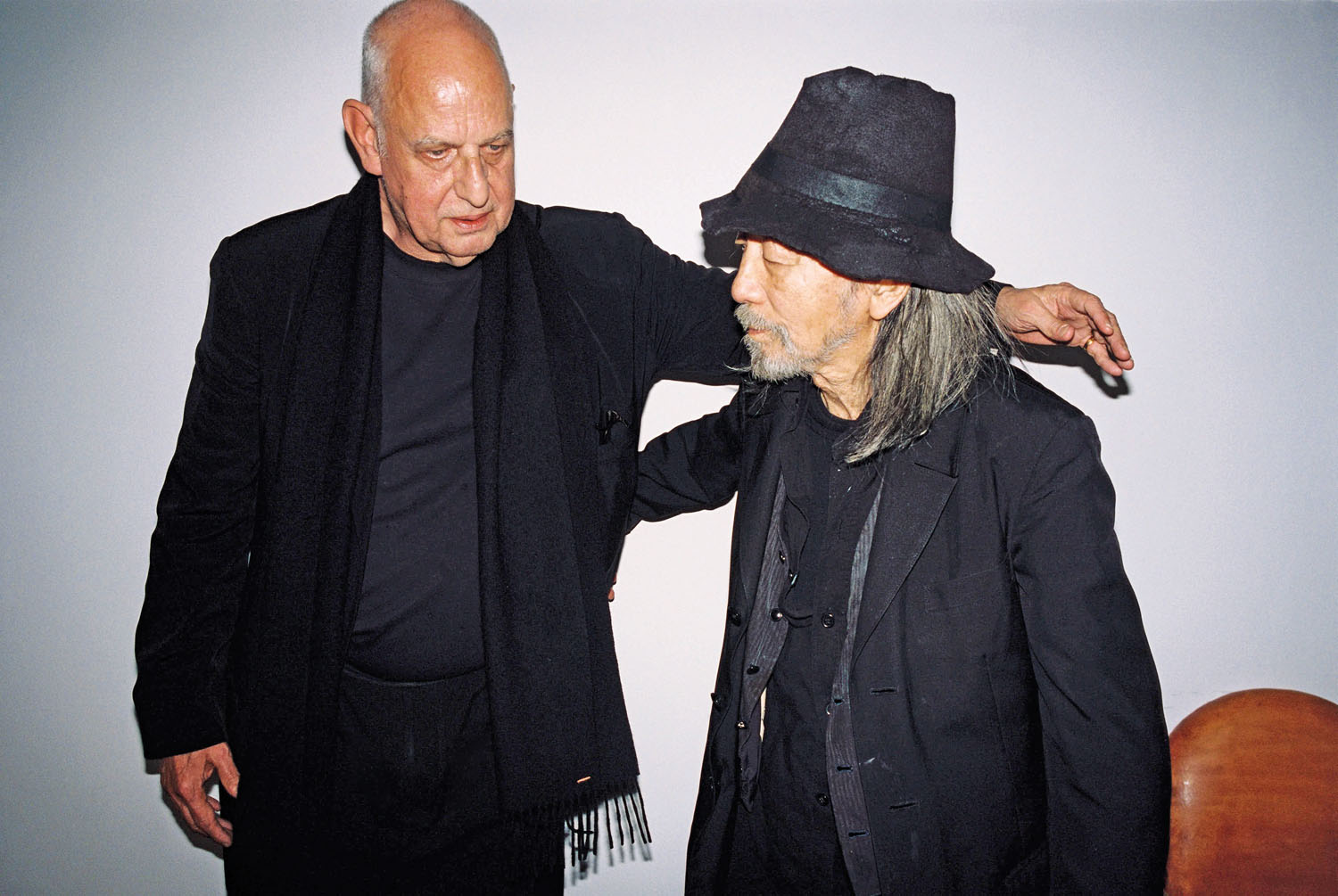
Grau: Do you agree with that, Yohji-san?
Yamamoto: I’m sorry to say, it’s only a technique to make people feel less bored.
Tuymans: That’s a good answer. I’m also fascinated by the deconstruction of the clothes, which was new when you did it. I have always had a great respect for designers. When I first saw a fashion show, I was like, What! All this work for half an hour? My work is immobile; it has to be still, contemplated. Your work moves around in society.
Grau: You are both passionate smokers. Luc, you wanted to quit, but can’t. You, Yohji-san, have never tried.
Yamamoto: I never thought about it.
Grau: What do you feel when you smoke?
Yamamoto: I started smoking cigarettes when I was 16 years old. I never, ever thought about stopping. I can die anytime. If I were to think about making my life longer, I would quit cigarettes. But I have never thought about that. Tomorrow, I can go up there or down there. But I’ll never stop.
Tuymans: It’s a way of transporting yourself somewhere else. Even though I tried to get rid of it, it keeps coming back because it is embedded in the work process. The dopamine slows me down, and gives me time to think.
Grau: My last question to both of you, Yohji-san and Luc, is: What can art do?
Yamamoto: Very often, art can make people feel braver or feel fantastic, but sometimes art can make people feel down, sad. It has this double power.
Tuymans: Art can make people reconsider, and maybe eventually think. It’s, in a very weird way, a distorted form of hope. And it’s a necessity in life.
You can purchase a copy of the Artists on Artists issue, featuring this conversation and many more, here.