
As if soaring above the brilliant blue ocean isn’t spectacular enough, the New England Aquarium’s aerial survey team recently experienced two back-two-back sightings of blue whales—a little déjà blue, per the aquarium’s clever social media post.
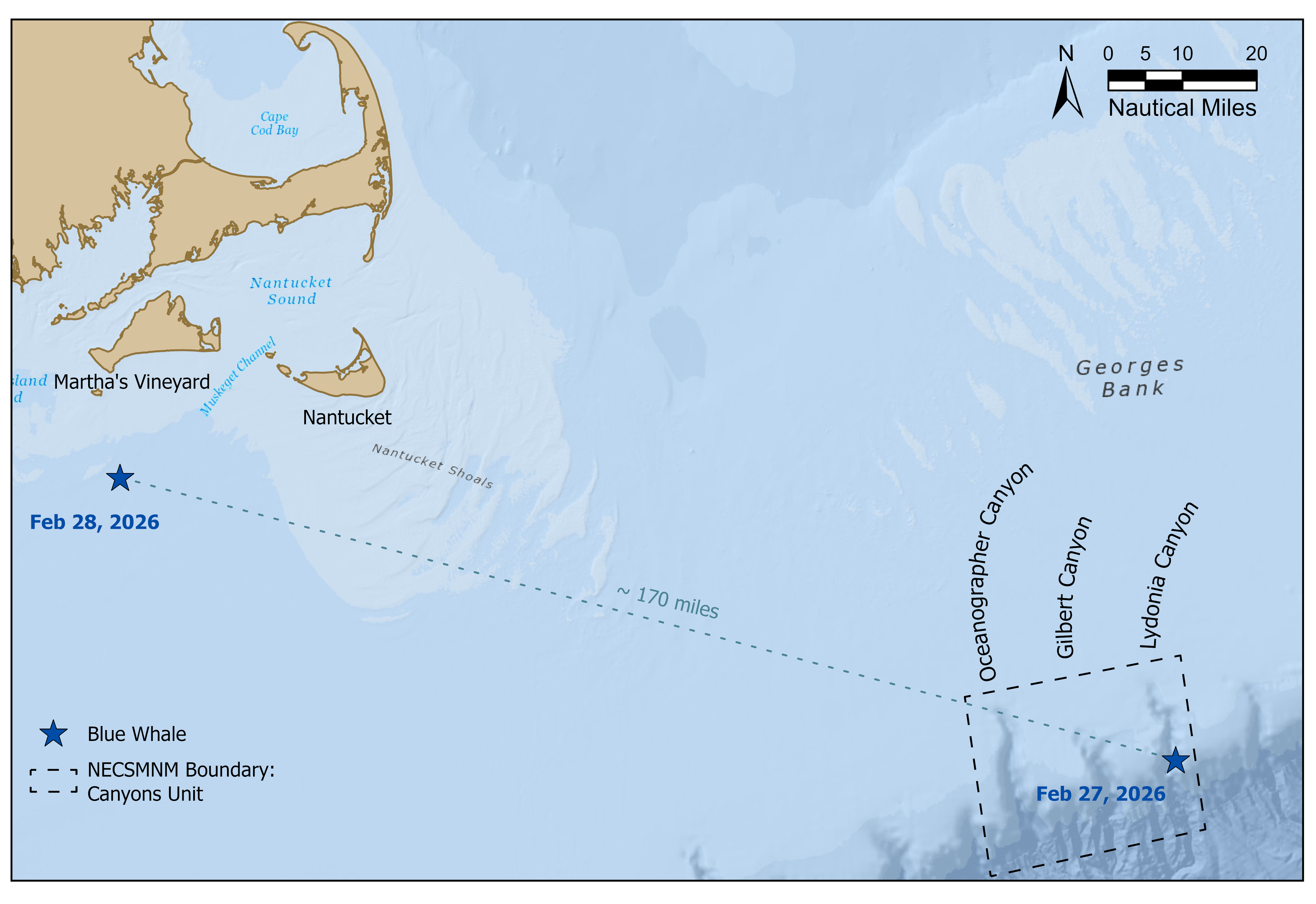
The first sighting occurred on February 27, when scientists from the Aquarium’s Anderson Cabot Center for Ocean Life spotted a blue whale (Balaenoptera musculus). The giant whale was swimming in the Northeast Canyons and Seamounts Marine National Monument, a marine sanctuary off the coast of Nantucket. The second sighting was of two other blue whales, and took place only 24 hours later. The team was flying over the waters of southern New England and saw them 15 miles south of Martha’s Vineyard.
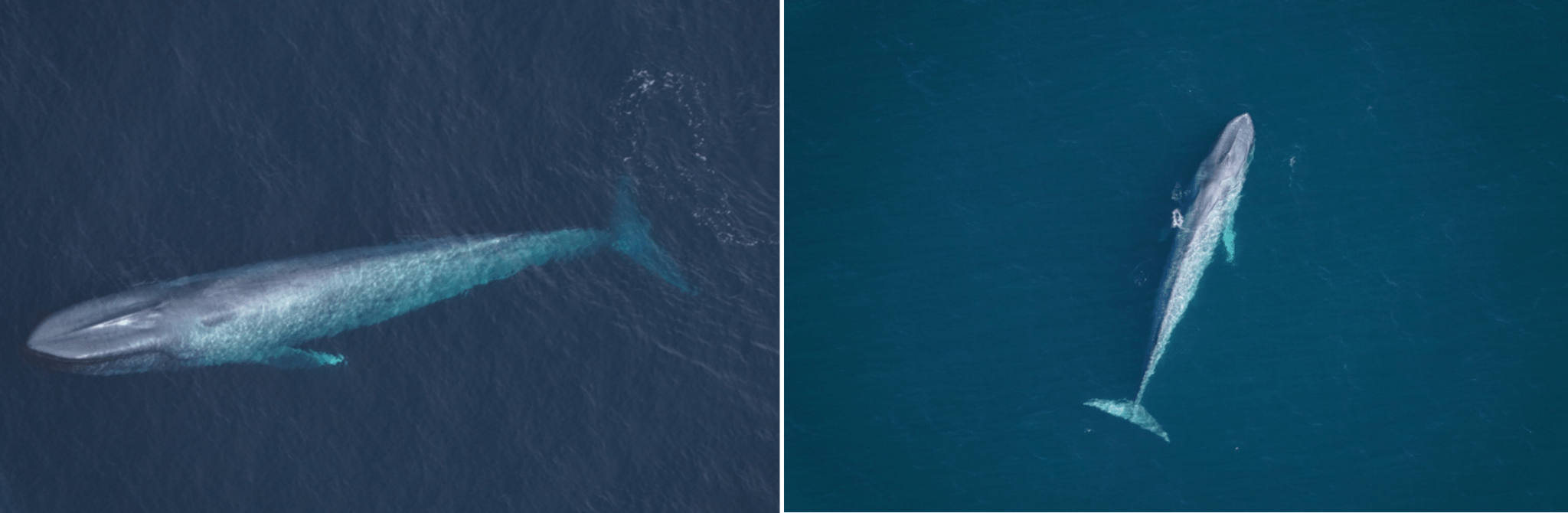
“Seeing blue whales outside of their Canadian feeding grounds is rare in the Atlantic,” Katherine McKenna, Associate Research Scientist in the Anderson Cabot Center for Ocean Life at the New England Aquarium, explained in a statement. “Finding them in two different areas of the ocean just 24 hours apart was a first for us.”
Blue whales are the largest animals to have ever existed on Earth, and they exist in every major ocean besides the Arctic. Commercial whaling activities seriously decreased their population—the species is categorized as endangered under the Endangered Species Act.
Researchers don’t know very much about the Western North Atlantic Blue whale population, and theorize that they might amount to just 400–600 whales. Thankfully, blue whales’ global numbers are going up.
“Aerial surveys are critically important for studying highly migratory species such as whales, sea turtles, and sharks, which can range across vast areas of the ocean,” McKenna, who was on both surveys, tells Popular Science. “These surveys help scientists estimate population sizes, determine where and when species occur, and monitor individual health.”
The blue whales were spotted in the wake of the latest back-and-forth on commercial fishing in the Northeast Canyons and Seamounts Marine National Monument. Last month, the Trump Administration revoked the prohibition of commercial fishing activities there.
“This Monument supports amazing species from the seafloor to the sea surface, and we see evidence of that during every aerial survey,” Jessica Redfern, Associate Vice President of Ocean Conservation Science also in the Anderson Cabot Center for Ocean Life, said in a statement published prior to the new blue whale sightings. “Removing protections for Northeast Canyons and Seamounts Marine National Monument puts these species at risk.”

2025 PopSci Best of What’s New